Five separate pressures are hitting cement plant operations directors at the same time in 2026, rising alternative fuel targets, AI-driven maintenance expectations, retiring engineers taking tribal knowledge with them, corporate ERP consolidation mandates, and ESG reporting that now reaches down to kiln-level CO2 data. Any one of these alone could justify a CMMS upgrade. Together, they're moving faster than any modernization cycle the industry has seen. Sign up to see a modern CMMS handle all five in a live configuration.
Why It Matters
Cement plants that modernized their CMMS between 2022 and 2024 are now publishing results that are hard to argue with: 68 percent fewer unplanned kiln stops, 84 percent PM compliance, and 72 percent faster audit response. These are measured outcomes, not projections.
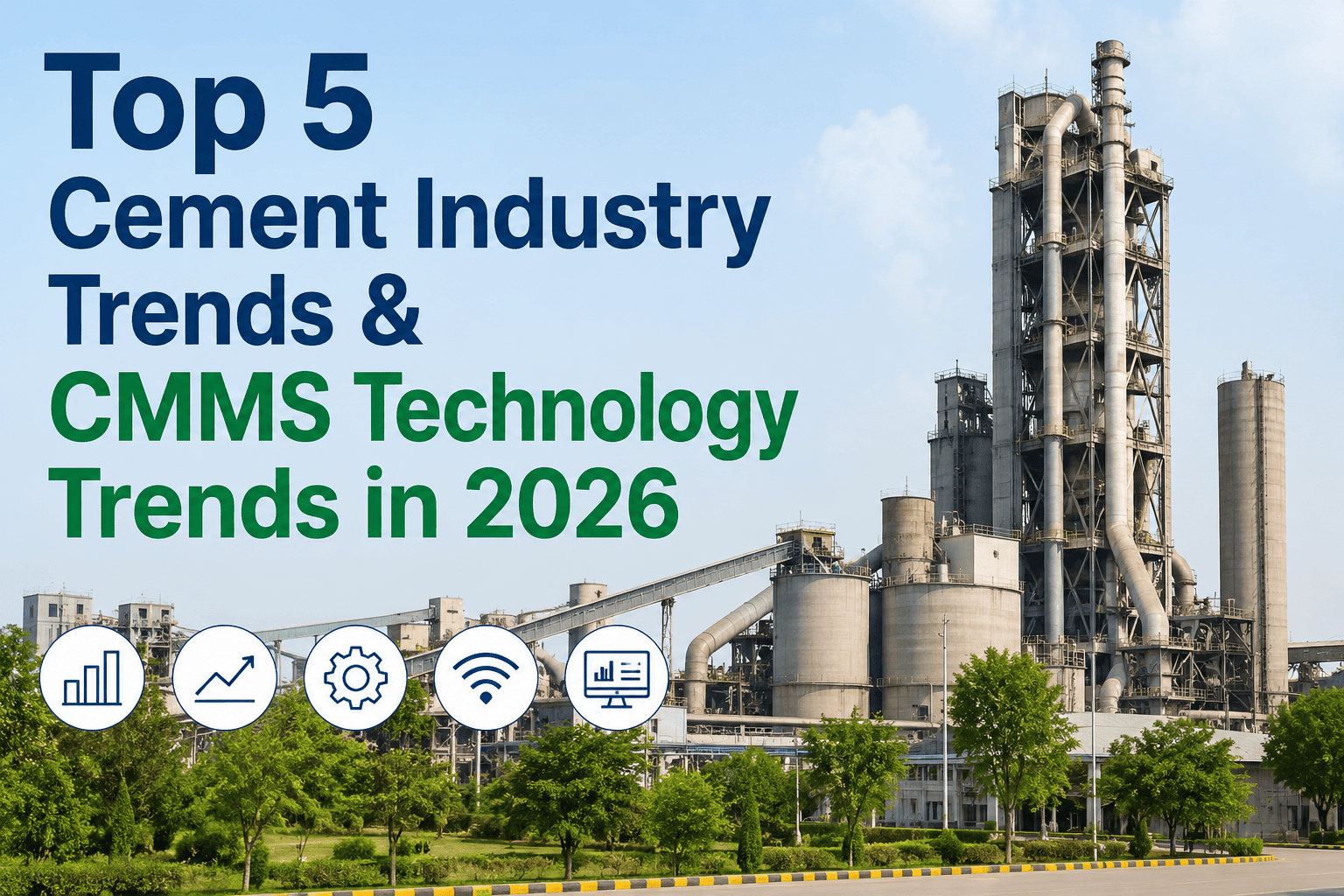
The 5 Forces Reshaping Cement CMMS
AI Predictive Maintenance
Machine learning flags kiln bearing and girth gear wear 4 to 8 weeks before failure
Mobile-First Field Work
Offline-capable apps replace shadow paper systems technicians never trusted
ERP Consolidation
Corporate mandates pushing plant CMMS onto standard SAP or ERP connectors
Retiring Engineer Knowledge Loss
Digital procedures and asset history capture what used to live in one person's head
ESG & CO2 Reporting
Sustainability data now required down to kiln-level intensity, not plant averages
AFR Performance Targets
Alternative fuel ratio tracking tied directly into maintenance planning cycles
Measured Results From Modernized Plants
Fewer Unplanned Kiln Stops
68%
PM Compliance Achieved
84%
Lower Emergency Repair Costs
52%
Faster Regulatory Audit Response
72%
All 5 Trends, One Platform
Oxmaint handles AFR tracking, AI predictive work orders, mobile-first field workflows, ERP connectivity, and ESG data aggregation in a single deployment. Sign up for a free trial to explore it on your own plant data, or book a demo to see it configured live.
Signs Your CMMS Isn't Ready
Predictive alerts, if they exist at all, don't generate a work order automatically with parts reserved
Field technicians keep a shadow paper system because the mobile app freezes underground or in tunnels
ERP integration is a custom project quoted in months, not a standard SAP connector
CO2 and energy data sit in a separate spreadsheet, disconnected from the maintenance record that explains it
Legacy Platform vs Modernized CMMS
| Factor |
Legacy Platform |
Modernized CMMS |
| Failure detection |
Reactive, identified after the equipment stops |
Predicted 4-8 weeks ahead, 73% lower repair cost |
| Field data entry |
Paper forms transcribed at a desktop after the shift |
Captured on mobile at the equipment, synced automatically |
| ERP connectivity |
Custom integration project, often 6+ months |
Native SAP and ERP connectors, live in weeks |
| ESG reporting |
Manual roll-up disconnected from maintenance records |
Kiln-level CO2 intensity tied directly to asset history |
The Takeaway
None of these five trends are roadmap items anymore, they're operational realities at plants that modernized between 2022 and 2024. The plants still deciding whether to act are the ones now behind on all five at once.
Frequently Asked Questions
Q
How far ahead can AI actually predict a kiln bearing failure?
Modern machine learning models identify kiln bearing degradation, girth gear wear, and vibration anomalies 4 to 8 weeks before breakdown, with AI-detected failures carrying roughly 73 percent lower repair cost than reactive identification.
Q
Why is mobile suddenly the priority instead of desktop reporting?
A desktop CMMS manages data, but a mobile CMMS manages work. Technicians abandon apps that require excessive taps or fail offline, reverting to paper. A mobile-first design with reliable offline caching keeps field data accurate and current.
Q
What does kiln-level ESG reporting actually require?
ESG and CDP reporting in 2026 now reaches down to kiln-level CO2 intensity data, not plant-wide averages. That means energy and emissions figures need to be tied to specific asset and maintenance records, not compiled separately after the fact.
Get Ahead Of All 5 Trends At Once
Oxmaint brings AI predictive maintenance, mobile-first field work, ERP consolidation, AFR tracking, and ESG reporting into one platform. Sign up for a free trial to explore it on your own plant data, or book a demo to see it configured for your kiln line.