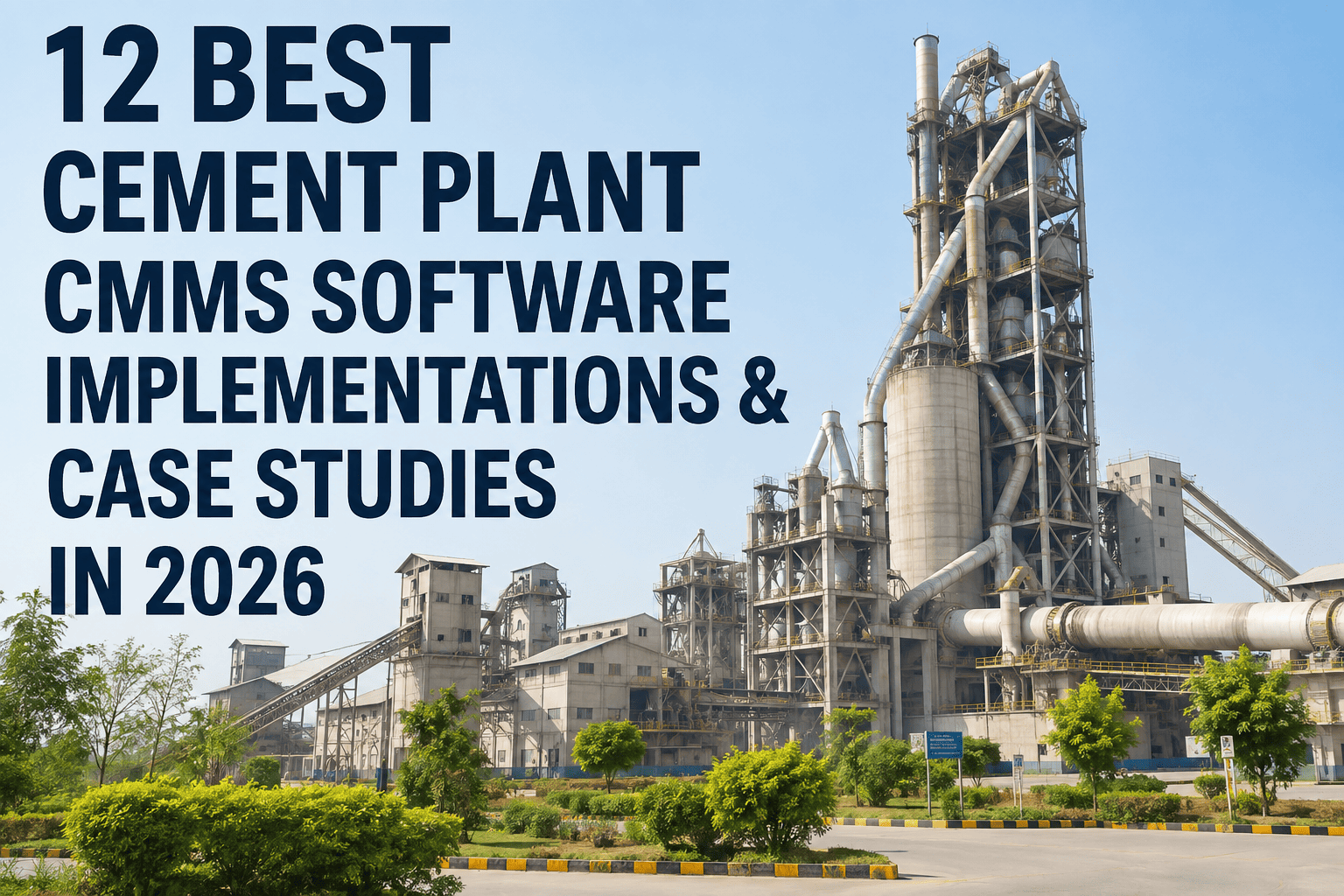
Most CMMS case studies read like generic success stories that could apply to any factory. A cement plant needs to know something more specific: did the system actually handle a kiln refractory replacement schedule, or a quarry excavator fleet, or a multi-site rollout across three plants with different ERP setups. Here are 12 real-world implementation scenarios that show what a cement-ready CMMS looks like in practice. Sign up to explore the same workflows in a free trial.
Why It Matters
A cement plant has more equipment categories than most industries in one site, kilns, mills, quarries, packing lines, and conveyors, each with different failure patterns. A CMMS implementation only proves itself once it has been tested against all of them.
12 Implementation Scenarios Across A Cement Plant
Kiln Reliability
Refractory life tracking and shell scan scheduling cut unplanned kiln stops
Raw Mill Grinding
Vibration-based PM triggers reduced roller and table wear replacements
Cement Mill Grinding
Grinding media consumption tracked against tonnage for cost per ton visibility
Quarry Fleet
Excavator and dumper maintenance synced with production dispatch schedules
Refractory Management
Lining thickness logs tied to next planned shutdown reduced emergency relines
Packing Plant
Bagging machine downtime tracking improved dispatch reliability during peak season
Preheater Tower
Cyclone blockage history logged per stage to catch recurring buildup patterns
Clinker Cooler
Grate plate wear scheduling reduced secondary air temperature deviations
Material Handling
Conveyor belt and idler PM scheduling cut material spillage incidents
Electrical & Instrumentation
Motor and drive calibration logs supported audit-ready compliance records
Multi-Site Rollout
Standardized asset hierarchy deployed across three plants inside one quarter
Spare Parts Inventory
Critical spares linked to specific assets reduced stockouts on long-lead items
What A Strong CMMS Case Study Actually Shows
A before-and-after metric, such as downtime hours or spare part stockouts, not just a satisfaction quote
A named equipment category, kiln, mill, or quarry fleet, rather than a vague reference to production equipment
A realistic implementation timeline that includes data migration, not just go-live day
Evidence the system worked offline in the field, not only from a desktop dashboard
See These Workflows On Your Own Plant Data
Sign up for a free trial to set up your kiln, mill, or quarry asset hierarchy in OxMaint, or book a demo to walk through a case study that matches your plant's biggest maintenance gap.
Implementation Scope By Plant Area
| Plant Area |
Primary CMMS Use |
Typical Rollout Time |
| Kiln & Preheater |
Campaign tracking, refractory life, shutdown planning |
4 to 8 weeks |
| Mills & Grinding |
Condition-based PM, media consumption tracking |
3 to 6 weeks |
| Quarry & Mobile Fleet |
Mobile work orders, fuel and hour-based PM |
2 to 4 weeks |
| Multi-Site Groups |
Standardized hierarchy, cross-plant reporting |
8 to 16 weeks |
The Takeaway
A cement plant does not need a single sweeping CMMS rollout to see results. Starting with the highest failure-cost area, usually the kiln or mills, and expanding from there is how most successful implementations actually happen.
Frequently Asked Questions
Q
Which plant area should we implement CMMS in first?
Start with the area carrying the highest failure cost, usually the kiln or the raw and cement mills, so the first phase delivers a measurable return before expanding to packing, quarry, and electrical systems.
Q
Can one CMMS handle both fixed kiln equipment and a mobile quarry fleet?
Yes, as long as the platform supports both fixed asset hierarchies and mobile, offline-capable work orders for equipment operating away from network coverage.
Q
How long does a full multi-site rollout usually take?
Most groups roll out a standardized CMMS across two to four plants in 8 to 16 weeks, depending on how much legacy data needs to be migrated and cleaned first.
Build Your Own Cement Plant Case Study
Sign up for a free trial to set up kiln, mill, quarry, and packing asset tracking in one place, or book a demo to see which implementation path fits your plant.