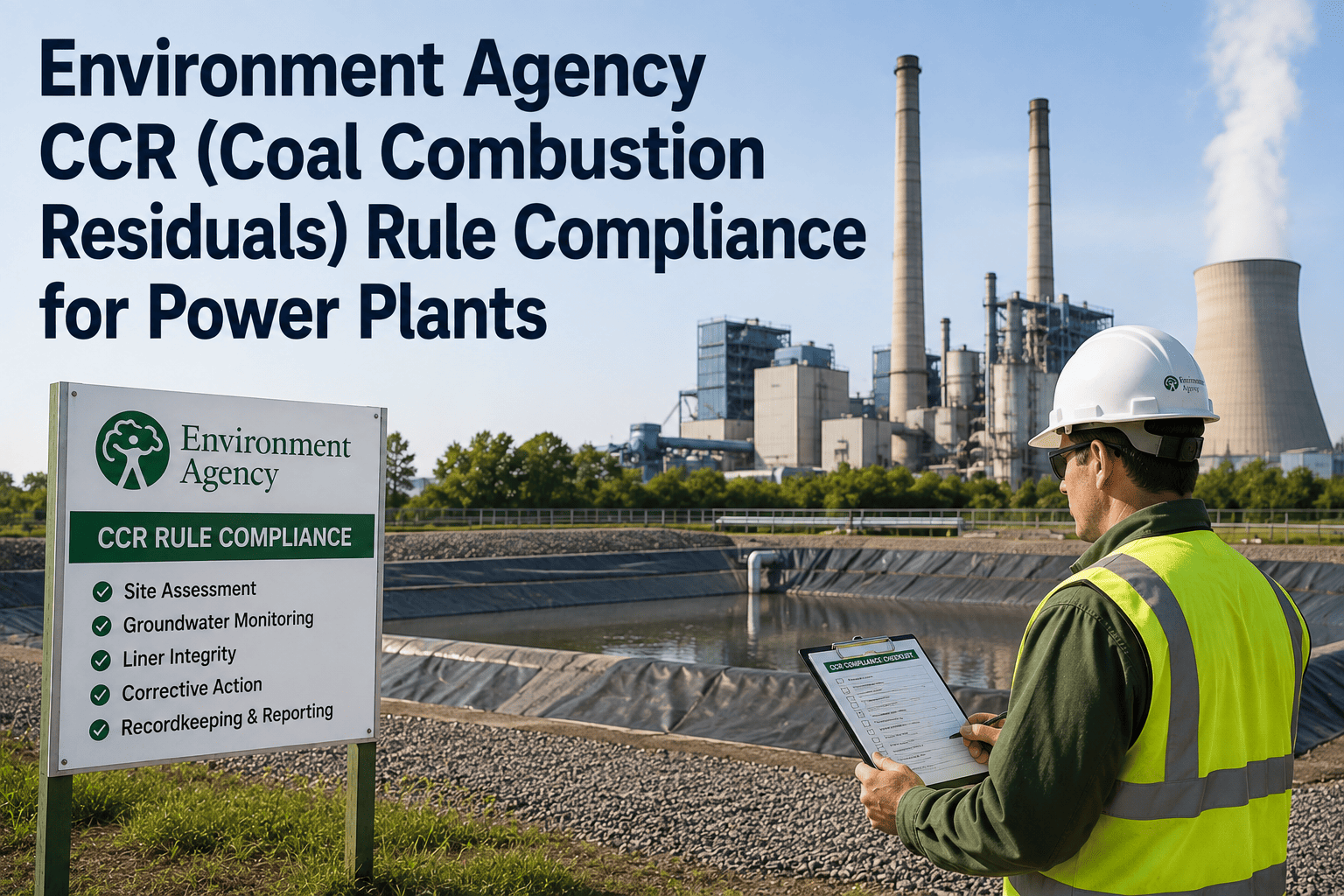
An ash pond doesn't get flagged in an inspection because the liner failed overnight. It gets flagged because a groundwater monitoring well was sampled late, a closure deadline for a legacy impoundment was tracked on the wrong calendar, or a dust control plan was written once and never checked against actual conditions. Sign up to run your CCR compliance program — ash ponds, groundwater monitoring, and dust control — from one CMMS that keeps every inspection, every sample, and every closure milestone audit-ready.
CCR exists because coal ash stored in a pond or landfill can leach heavy metals into groundwater long after the plant that produced it stops running. A facility can be doing everything right on the ground and still land in violation territory if it can't show the weekly inspections, the groundwater data, and the closure documentation that prove it. Between active impoundments, legacy impoundments at retired plants, and the management units connected to them, the paper trail is often bigger than the engineering.
The Three Areas A CCR Program Has To Cover
Legacy impoundments at inactive facilities and the CCR management units connected to older, unlined ash handling systems each carry their own compliance timeline, and those timelines have been revised more than once in the past two years. A unit tracked against last year's deadline instead of the current one is a compliance gap hiding in plain sight.
Where CCR Programs Actually Break Down
Oxmaint tracks every ash pond inspection, groundwater sample, and closure milestone against its own CCR deadline, flags anything approaching its window, and keeps the evidence attached and searchable. Sign up for a free trial to run it on your own facilities, or book a demo to see it set up for your fleet.
Why CCR Deadlines Keep Being Rewritten
In February 2026, EPA finalized a rule extending compliance deadlines tied to its 2024 legacy CCR surface impoundment requirements, giving facilities more time to identify CCR management units and complete groundwater monitoring setup. Around the same time, EPA proposed pushing the closure deadline for large unlined impoundments from October 2031 back from its original 2028 target, and a separate April 2026 proposal would rescind CCR management unit requirements altogether and let permit authorities make more site-specific closure decisions. Comments on that proposal remain open into mid-2026. None of that changes the underlying obligation to inspect, sample, and document — it just means the dates and unit classifications attached to those obligations keep shifting, and a program tracking them manually is one missed update away from working off a deadline that no longer applies.
CCR Compliance Basis By Area
Frequently Asked Questions
Oxmaint keeps ash pond inspections, groundwater sampling, and dust control checks tied to their unit, their deadline, and their evidence, all in one auditable log. Sign up for a free trial to run it on your own facilities, or book a demo to see it configured for your fleet.