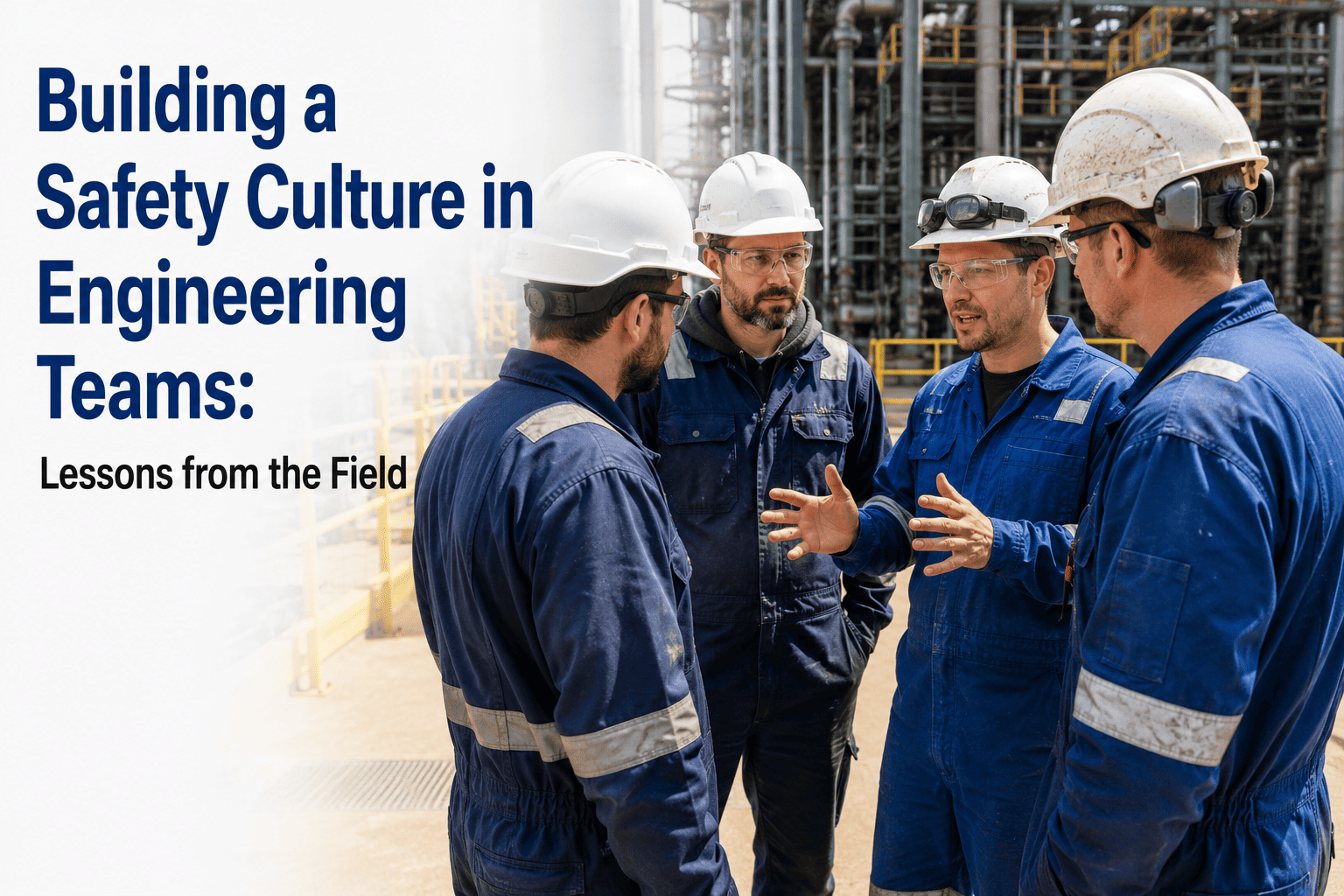
A maintenance team can hit zero recordable injuries for a full year and still be one bad shift away from a fatality. That sounds counterintuitive until you look at what zero actually measures: outcomes, not behaviour. Safety culture is the thing that decides whether your engineers report a near miss or quietly walk past it, whether a supervisor stops a job that feels wrong, and whether "we've always done it this way" gets challenged before someone gets hurt. None of that shows up on a lagging indicator until it is too late. A CMMS like OxMaint gives leadership the leading-indicator data that actually predicts where the next incident is likely to come from.
Turn Safety Observations Into Data You Can Actually Act On
Near-miss reporting, inspection completion, and corrective action tracking — captured in one system so leadership sees culture shift before injury rates do.
Why Safety Culture Cannot Be Declared From the Top
A memo from leadership announcing "safety is our number one priority" changes nothing on the shop floor by itself. Culture is what people actually do when nobody senior is watching — whether they take the extra two minutes for a proper lockout, or whether they skip it because the job is running late and nobody has ever been pulled up for cutting that corner before.
James Reason's research into organisational accidents found that most serious failures are not caused by one person's mistake in the moment. They happen when several smaller weaknesses — a rushed induction, a permit nobody really read, a supervisor too stretched to check — line up at the same time. Each weakness alone is survivable. Culture is what determines how many of those weaknesses exist in the first place.
The Bradley Curve: Where Is Your Team Actually Sitting?
The Bradley Curve maps four stages of safety maturity, and most engineering leaders are surprised to find their team a stage lower than they assumed. Injury rates fall as teams move along the curve — but only because behaviour, not paperwork, has genuinely changed.
Reactive
Safety happens after something goes wrong. Engineers rely on instinct, and incidents get blamed on individuals rather than examined for cause.
Dependent
Supervisors enforce the rules and safety becomes a compliance exercise — followed because it is checked, not because it is believed.
Independent
Engineers take personal ownership of their own safety, often without being told to, because it has become part of how they see good work.
Interdependent
The team looks out for each other. A colleague stopping an unsafe job is normal, expected, and never treated as an inconvenience.
Most engineering teams plateau at Dependent. Enforcement gets injury rates down to a point, then progress stalls — because rules without belief have a ceiling. The jump from Dependent to Independent is where culture work actually starts paying off, and it rarely happens through another toolbox talk alone.
Just Culture: The Difference Between Fair and Blame-Free
Teams that stop reporting near misses are not necessarily safer — they have often just learned that reporting gets punished. Sidney Dekker's work on just culture draws a sharp line: a fair culture protects honest mistakes from being treated as crimes, while still holding people accountable for genuine recklessness or negligence. The two are not the same thing, and engineering leaders who conflate them tend to build a culture where nobody tells them anything.
Ask What, Not Who
After a near miss, the first question is what allowed it to happen — not who is going to be blamed for it.
Protect Honest Mistakes
An engineer who reports their own slip should never be treated the same as one who knowingly cut a corner.
Still Hold the Line
A just culture is not a blame-free one. Genuine recklessness and repeated disregard for procedure still carry consequences.
The Indicators That Actually Move the Needle
Most engineering leadership teams track lagging indicators — injury rate, lost time, RIDDOR reports — because they are easy to report upward. The problem is that lagging indicators only confirm what already happened. Leading indicators tell you whether the next incident is becoming more or less likely, weeks before it shows up in an injury statistic.
| Indicator | Type | What It Actually Tells You |
|---|---|---|
| Near-miss reports per month | Leading | Rising rate signals a healthier reporting culture, not a more dangerous site |
| Inspection completion rate | Leading | Below 95% suggests checks are being skipped under time pressure |
| Corrective action closure time | Leading | Slow closure means hazards stay live long after they are identified |
| Lost time injury rate | Lagging | Confirms the outcome of conditions that existed weeks or months earlier |
A dropping near-miss rate alongside a flat injury rate is not good news — it usually means people have quietly stopped reporting, not that the work has become safer. Organisations with established leading-indicator programmes see substantially lower incident rates than those tracking lagging metrics alone. Book a demo to see how OxMaint surfaces these leading indicators automatically from daily maintenance activity.
Lessons From Teams That Turned Their Culture Around
The pattern across teams that genuinely shifted culture is rarely a single dramatic programme. It is a safety champion on each shift who other engineers actually trust, a supervisor who visibly thanks someone for stopping a job rather than quietly noting it against them, and leadership who read the near-miss reports instead of just collecting them.
How OxMaint Supports a Stronger Safety Culture
Frictionless Near-Miss Reporting
Let engineers log a hazard or near miss from the same app they use for work orders, removing the barrier that kills most reporting culture.
Leading Indicator Dashboards
Track inspection completion, corrective action closure time, and reporting trends in one view leadership actually checks.
Closed-Loop Corrective Actions
Every hazard identified is tracked to closure with an owner and a deadline, so reported issues are visibly fixed, not filed away.
Culture Trend Reporting
See engagement and reporting trends by team and shift, surfacing where culture is improving and where it is quietly slipping.
Give Leadership the Leading Indicators That Predict the Next Incident
Near-miss reporting, inspection tracking, and corrective action closure — built into the maintenance workflow your engineers already use.
Frequently Asked Questions
What is the difference between safety culture and safety climate?
Safety culture refers to the deep, long-held beliefs and values around safety across an organisation. Safety climate is a snapshot of how people currently perceive safety at work, and can shift more quickly than the underlying culture.
Why do near-miss reports matter if nobody was hurt?
A near miss is a free lesson — it shows exactly where a hazard exists without the cost of an injury. Teams that report near misses consistently tend to catch and fix problems long before they escalate into something serious.
Is Just Culture the same as a blame-free culture?
No. A just culture protects honest mistakes from being treated as misconduct, but it still holds people accountable for genuine recklessness or repeated disregard for procedure. The two are often confused, which undermines trust in the system.
Why do safety programmes plateau after initial improvement?
Enforcement-driven compliance, the Dependent stage on the Bradley Curve, has a ceiling. Further reduction in incidents usually requires a genuine shift toward personal ownership and peer accountability, not stricter rules alone.
What is a leading indicator in safety management?
A leading indicator is a proactive measure — such as near-miss reporting rate or inspection completion — that predicts future safety performance, in contrast to lagging indicators like injury rate that only confirm what has already happened.







