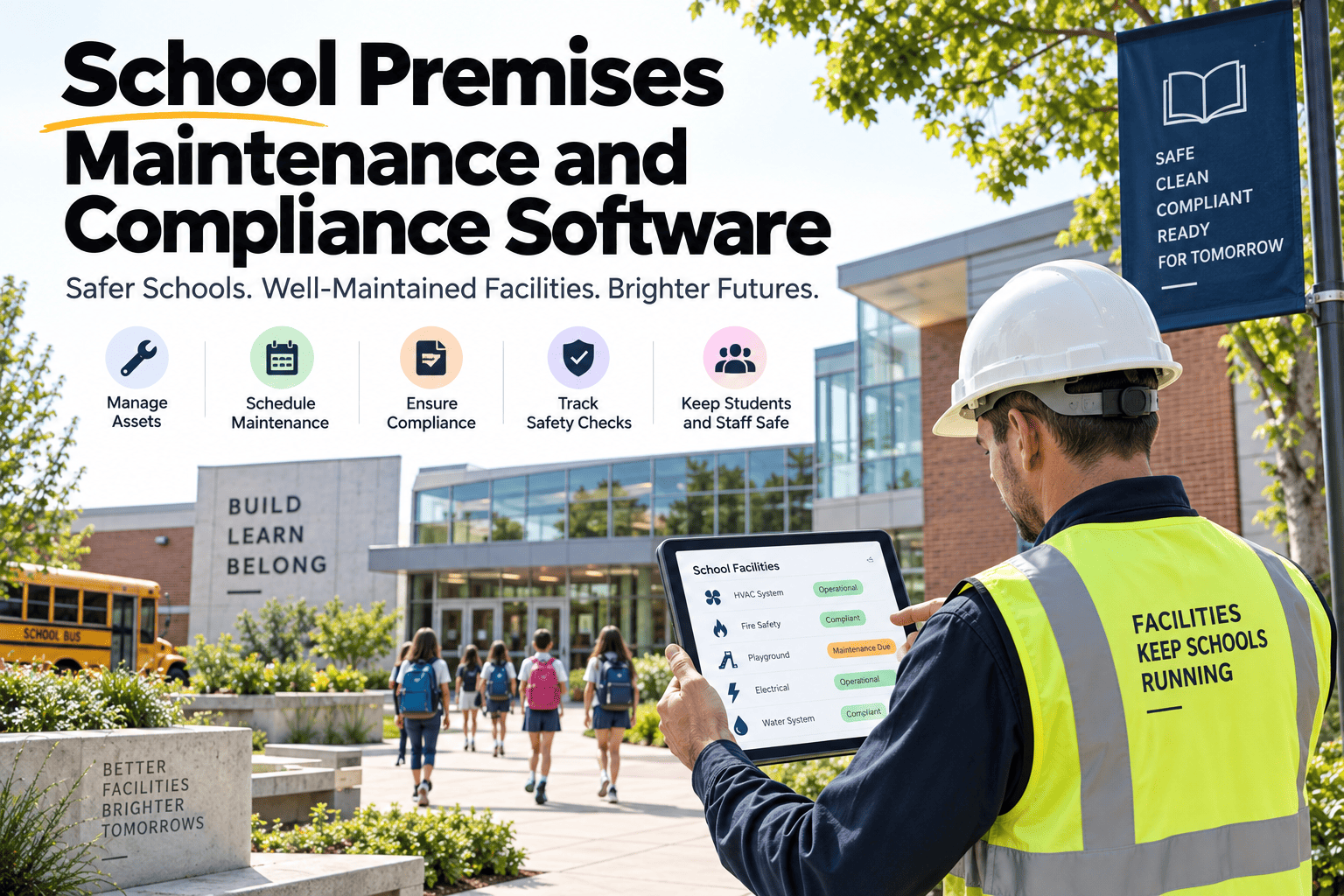
Planned Preventive Maintenance for PUWER Compliance in the UK
By Mark strong on May 23, 2026
PUWER — the Provision and Use of Work Equipment Regulations 1998 — places a clear legal duty on UK employers: work equipment must be maintained in efficient working order, in efficient working condition, and in good repair. That duty is not satisfied by work being done. It is satisfied by work being provable. For most UK businesses still managing preventive maintenance on spreadsheets and paper job cards, that distinction is where enforcement risk quietly builds. This guide explains exactly what PUWER demands from a planned preventive maintenance programme, where paper systems fail the standard, and what good looks like in 2026. Sign up free to see how OxMaint delivers PUWER-ready PPM records from day one, or book a demo with a UK compliance specialist.
PUWER Compliance Is a Maintenance Records Problem. OxMaint Solves It.
Digital PPM schedules, timestamped sign-offs, and instant audit exports — configured for your site before you go live. No IT project. No consultant required.
What PUWER Actually Requires From Your Maintenance Programme
Regulation 5 of PUWER is direct: every employer must ensure that work equipment is maintained in a state that does not present risk to health and safety. Regulation 6 extends this to inspection — where equipment is exposed to conditions causing deterioration, it must be inspected at suitable intervals and whenever exceptional circumstances that might jeopardise safety have occurred. Both regulations require that the results of inspections are recorded and kept available. The word "available" is the enforcement pressure point. Records that exist but cannot be produced under inspection timescales are treated the same as records that were never made. Book a demo to see how OxMaint makes every PUWER record instantly retrievable.
Regulation 5 — Maintenance
Work equipment must be maintained in efficient working order and good repair. A log of maintenance activity must be kept where the equipment has a maintenance log.
Risk: No systematic PPM schedule means gaps in maintenance are invisible until equipment fails or an inspector arrives.
Regulation 6 — Inspection
Equipment must be inspected at suitable intervals by a competent person. Inspection results must be recorded and made available to relevant people, including HSE inspectors on request.
Risk: Paper inspection records that cannot be retrieved quickly are legally equivalent to records that were never created.
The Five Ways Paper PPM Systems Fail PUWER
01
No Systematic Schedule — Just a Calendar Someone Checks
Paper-based PPM relies on a person remembering to check a spreadsheet or wall planner. When that person is absent, on leave, or managing a breakdown, the schedule slips. PUWER requires a systematic programme — not a manual reminder system that depends on one individual's attention.
OxMaint triggers PPM tasks automatically by frequency, runtime, or condition. Tasks escalate if not acknowledged — the schedule cannot slip silently.
02
Incomplete Sign-Offs That Cannot Prove Competency
A technician's first name scrawled on a paper job card does not demonstrate that a competent person carried out the inspection. PUWER Regulation 6 requires inspection by a competent person — and competency must be demonstrable, not assumed from a signature that could be anyone's.
OxMaint ties every task closure to a named technician with their qualification profile attached — creating a competency-linked audit trail on every inspection record.
03
Records That Cannot Be Produced Under Inspection Timescales
When an HSE inspector arrives unannounced, they expect relevant maintenance and inspection records to be produced promptly. A filing system that requires forty minutes of searching, or records that are stored off-site, does not meet the "available" standard in Regulation 6(3).
OxMaint stores all inspection results and PPM records against each asset. During an HSE visit, the full maintenance history for any piece of equipment is exportable in under two minutes.
04
No Link Between Inspection Findings and Corrective Actions
PUWER compliance is not just about completing inspections — it requires acting on what inspections find. Paper systems that record a finding but have no mechanism to generate and track a corrective work order cannot demonstrate that defects were addressed, or when.
OxMaint converts inspection findings directly into corrective work orders, linked to the originating inspection record — closing the loop that paper systems leave open.
05
No Asset-Level Maintenance History
PUWER requires that maintenance logs are kept where equipment has a maintenance log. A paper system that files job cards by date rather than by asset makes it impossible to quickly produce the complete maintenance history for a specific piece of equipment — which is exactly what an inspector or solicitor will ask for.
OxMaint organises every work order, inspection, and PPM task by asset — the complete history for any piece of equipment is instantly accessible, sorted by date, and exportable as a clean report.
Close Every One of These PUWER Gaps
OxMaint's digital PPM platform addresses every failure point above — automated scheduling, competency-linked sign-offs, instant exports, and asset-level history. Sign up free and see PUWER readiness improve within your first week.
Building a PUWER-Compliant PPM Schedule: What It Must Include
Defined Inspection Intervals
Each asset must have a documented inspection frequency based on manufacturer recommendations, risk assessment, and operating conditions. Intervals must be systematic — not left to judgement on the day.
Competent Person Assignment
Inspections must be carried out by a competent person. The PPM system must record who carried out each inspection and be able to demonstrate their competency — not just their name on a form.
Recorded Inspection Results
The results of each inspection — condition found, any defects identified, actions taken — must be recorded. A completed checklist with no observations is a valid record. A blank form is not.
Defect and Corrective Action Tracking
Where an inspection identifies a defect, the corrective action must be tracked through to completion — with the date resolved and the person who resolved it recorded. Open defects left unresolved are a direct PUWER breach.
Retrievable on Request
Records must be made available to HSE inspectors, employees, or their representatives on request. "Available" means promptly — not after a filing cabinet search or a request to a manager who holds the key to the records room.
Asset-Level Maintenance Log
Where equipment has a maintenance log, it must be kept up to date. The log should contain the full maintenance and inspection history for that specific asset — organised by asset, not by date filed.
PUWER Compliance Readiness: Self-Assessment
Run through these questions honestly. Each one maps to a specific PUWER requirement. If the answer to any is no, or "I would have to check," book a demo to see how OxMaint closes that gap.
Reg 5
Can you show a complete, up-to-date maintenance schedule for every piece of work equipment on site — without opening a spreadsheet and manually checking each row?
Reg 6
For each asset, can you confirm the last inspection date, who carried it out, and what their competency record shows — in under two minutes?
Reg 6(3)
If an HSE inspector arrived today and asked for the last twelve months of inspection records for a specific machine, could you produce them promptly and completely?
Defects
Are all defects identified during inspections tracked through to confirmed resolution — with the date closed and the technician recorded — rather than noted and informally dealt with?
Competency
Is the competency of every technician carrying out inspections recorded in the same system as the inspection records they create — not held separately in an HR spreadsheet?
How OxMaint Delivers PUWER Compliance Day-to-Day
Schedule Created
PPM tasks set by frequency, runtime, or condition for each asset
Task Auto-Triggered
Assigned to a qualified technician with checklist attached
Task Completed
Timestamped sign-off, observations recorded on mobile
Defect Raised
Finding converts to corrective work order, tracked to closure
Audit Export
Full PUWER record package exported in minutes for HSE or legal review
At a Glance: What Changes When You Move to Digital PPM
Paper PPM System
Inspection schedule depends on one person checking a calendar
Sign-offs illegible, incomplete, or anonymous
Defects noted on paper with no formal follow-up process
Asset history filed by date, not by equipment
HSE inspection prep takes hours of manual retrieval
Timestamped, named, competency-linked digital sign-offs
Defect findings convert to tracked corrective work orders
Complete asset maintenance log, searchable on mobile
Full PUWER compliance package exported in under 10 minutes
Key Numbers: What Digital PPM Delivers
41%
Fewer unplanned equipment failures within 6 months of digital PPM deployment
3.4x
Faster work order completion versus paper job card baseline
18%
Average total maintenance cost reduction in year one of CMMS deployment
5–7
Working days for a UK site to go fully live on OxMaint with full onboarding support
UK Businesses — Free to Start
PUWER Compliance Should Not Depend on a Filing Cabinet
OxMaint gives UK businesses the digital PPM platform that meets PUWER Regulations 5 and 6, produces audit-ready records automatically, and gives maintenance managers real-time visibility over their compliance position — from day one.
What does PUWER require specifically in terms of maintenance records?
Regulation 5 requires that work equipment is maintained in efficient working order and that a maintenance log is kept where the equipment has one. Regulation 6 requires that inspection results are recorded and made available to relevant persons, including HSE inspectors. The key practical requirement is that records are retrievable promptly — not just that they exist somewhere. Sign up free to see how OxMaint structures asset-level maintenance logs that satisfy both regulations.
How does OxMaint demonstrate that inspections were carried out by a competent person?
Every task closure in OxMaint is tied to a named technician. Technician qualification records — trade certificates, competency assessments, and expiry dates — are stored per person and linked to the work orders they complete. This means that any inspection record carries an auditable connection to the competency profile of the person who performed it. Book a demo to see this in practice.
Does OxMaint cover all types of work equipment, or only specific categories?
OxMaint covers any asset you register in the system — from production machinery and compressed air equipment to hand tools, vehicles, and electrical installations. PUWER applies to any work equipment used at work, so the platform's coverage is as broad as your asset register requires. Assets are registered with their own maintenance schedules, inspection frequencies, and document storage.
Can OxMaint help with other related regulations beyond PUWER?
Yes. OxMaint is used across UK sites for PSSR 2000 pressure system records, LOLER 1998 lifting equipment examinations, electrical safety compliance, and general HSE audit readiness. All compliance requirements are managed within the same platform — one system, one audit trail, one place to produce records for any regulatory requirement.