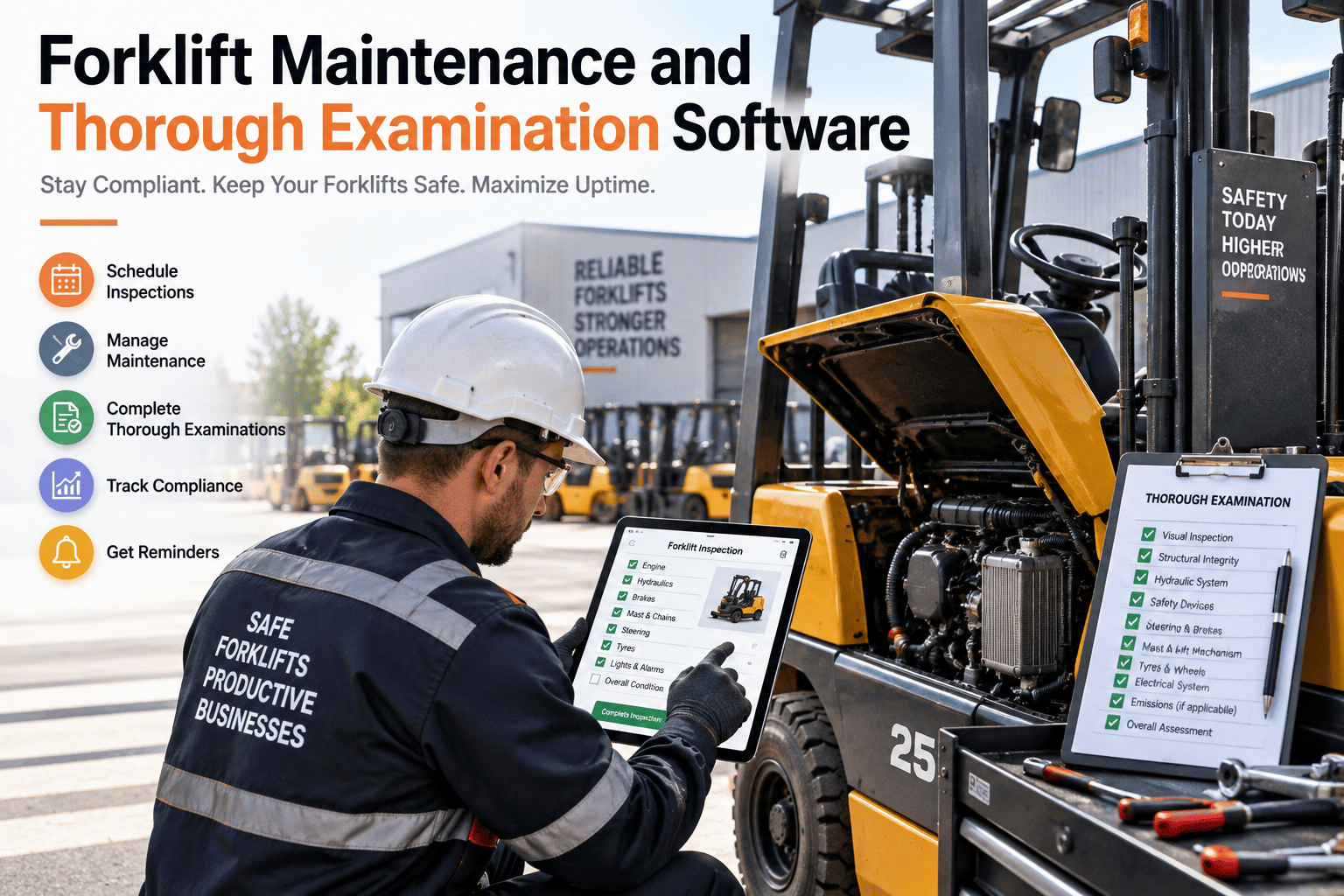
A missed LOLER thorough examination is not a paperwork problem — it is a legal-defence problem. The moment a 6-monthly interval on a MEWP or a 12-monthly on a forklift lapses, equipment is out of compliance regardless of condition, and any incident that follows lands in front of an HSE inspector without the document that would have justified use. Oxmaint schedules every LOLER exam, PUWER inspection and pressure-system check automatically, captures competent-person reports with photo evidence, and warns duty holders 30 days before any certificate lapses. Book a demo to see zero-missed-inspection compliance in action.
The Two Intervals That Decide Whether You're Compliant
Regulation 9 of LOLER draws a hard line between equipment that lifts loads and equipment that lifts people. Get the interval wrong on either side and every inspection that follows is scheduled against the wrong clock. The most common finding in HSE improvement notices is not defective equipment — it is a 12-month interval applied to accessories that should sit on a 6-month cycle. Slings, chains, and shackles are lifting equipment in their own right, with their own examination reports, regardless of how infrequently they are used.
- MEWPs and cherry pickers
- Passenger lifts & goods-passenger lifts
- Patient hoists & stairlifts
- Man-riding baskets on cranes / forklifts
- Slings, chains, shackles, eyebolts
- Lifting beams & spreader bars
- Overhead & gantry cranes
- Mobile & tower cranes (load-only use)
- Forklift trucks (load-only)
- Vehicle tail-lifts (goods only)
- Winches, jib cranes, hoists
- Runway beams & monorails
How Missed Inspections Actually Happen
No duty holder plans to miss an examination. Missed inspections are the byproduct of spreadsheets that get out of date, engineer surveyor reports filed in email folders, and asset registers that never quite match what is on the shop floor. The failure pattern is almost always the same across four points where compliance quietly breaks down.
Every one of those failure points is a scheduling and evidence problem, not an engineering one. That is exactly why a CMMS purpose-built for statutory inspections closes the gap. Sign up free to see how a live asset register stops the drift at point one.
What Oxmaint Automates — Mapped to the Regulation
A LOLER/PUWER system is only useful if it maps cleanly to the actual regulatory obligations a duty holder carries. Below is what Oxmaint does at each stage of the compliance cycle, and which regulation it satisfies. This is the view an HSE inspector effectively works through when they arrive on site and ask for records.
| Regulation | What the law requires | How Oxmaint handles it |
|---|---|---|
| LOLER Reg 9(3) Thorough examination at 6 or 12 months | Every asset examined by a competent person at the statutory interval, or per written scheme. | Interval set per asset. Work orders auto-generated. 30-day certificate-lapse warnings. |
| LOLER Reg 9(4) Exceptional-circumstances exam | Re-examination after any event liable to jeopardise safety (impact, modification, critical repair). | One-tap "trigger event" work order from a mobile — links back to the parent asset history. |
| LOLER Reg 10 Defect notification | Duty holder must remove equipment from service until any Cat A defect is rectified. | Cat A flag on a report auto-triggers a lock-out status and blocks further scheduling. |
| LOLER Reg 11 & Schedule 1 Written report retention | Reports kept until next report or minimum 2 years, and available to inspectors on request. | Every report stored digitally against the asset, exportable as an audit pack in one click. |
| PUWER Reg 6 Inspection of work equipment | Inspection at intervals suitable for the risk, with a record kept. | Custom PUWER checklists per asset class, photo evidence attached to each check. |
| PSSR Pressure-system exam | Written scheme of examination for pressure systems, followed to date. | Pressure vessels scheduled on the same platform — one compliance calendar across regimes. |
The Evidence Layer: What a Digital Certificate Actually Looks Like
Under Schedule 1, a thorough examination report has to contain specific fields — date of examination, identification of equipment, defects found, deadline for the next inspection, and the signature of the competent person. On paper this becomes a filing problem the moment a site has more than a few dozen assets. In Oxmaint the same information becomes a queryable record that an HSE inspector can be walked through in minutes, not days.
The point of the evidence layer is not neatness. It is that when the HSE arrives, the difference between a five-minute conversation and a formal improvement notice is whether the reports exist and can be produced. Book a demo to walk through a real audit-pack export against your own asset types.
Expert Review — What Actually Fails an HSE Audit
Getting Compliant Without Rebuilding Your Asset Register
The friction most duty holders assume they'll hit — rebuilding an asset register from scratch — isn't the reality of how Oxmaint gets deployed. Existing spreadsheets, engineer surveyor CSVs, and legacy CMMS exports import directly, and the platform reconciles duplicates against equipment serial numbers. Intervals are set per asset class as a default and overridden where a written examination scheme applies. Within the first cycle every asset carries a live next-due date, a compliance history, and a photo-evidence trail. Sign up free and import your current register to see what the compliance calendar looks like for your specific mix of lifting equipment and work equipment.
Who Uses Oxmaint for LOLER and PUWER Compliance
The platform is built for the specific mix of roles that carry duty-holder obligations day-to-day: facilities managers holding LOLER duty across passenger lifts and MEWPs, maintenance heads running mixed lifting and work-equipment fleets in manufacturing, HSE managers responsible for producing audit packs on demand, and third-party inspection companies delivering competent-person reports at scale. Each of those roles sees a different view of the same underlying compliance calendar, permissions scoped to what they actually need to act on. Sign up free and configure roles for your compliance team in the first setup session.