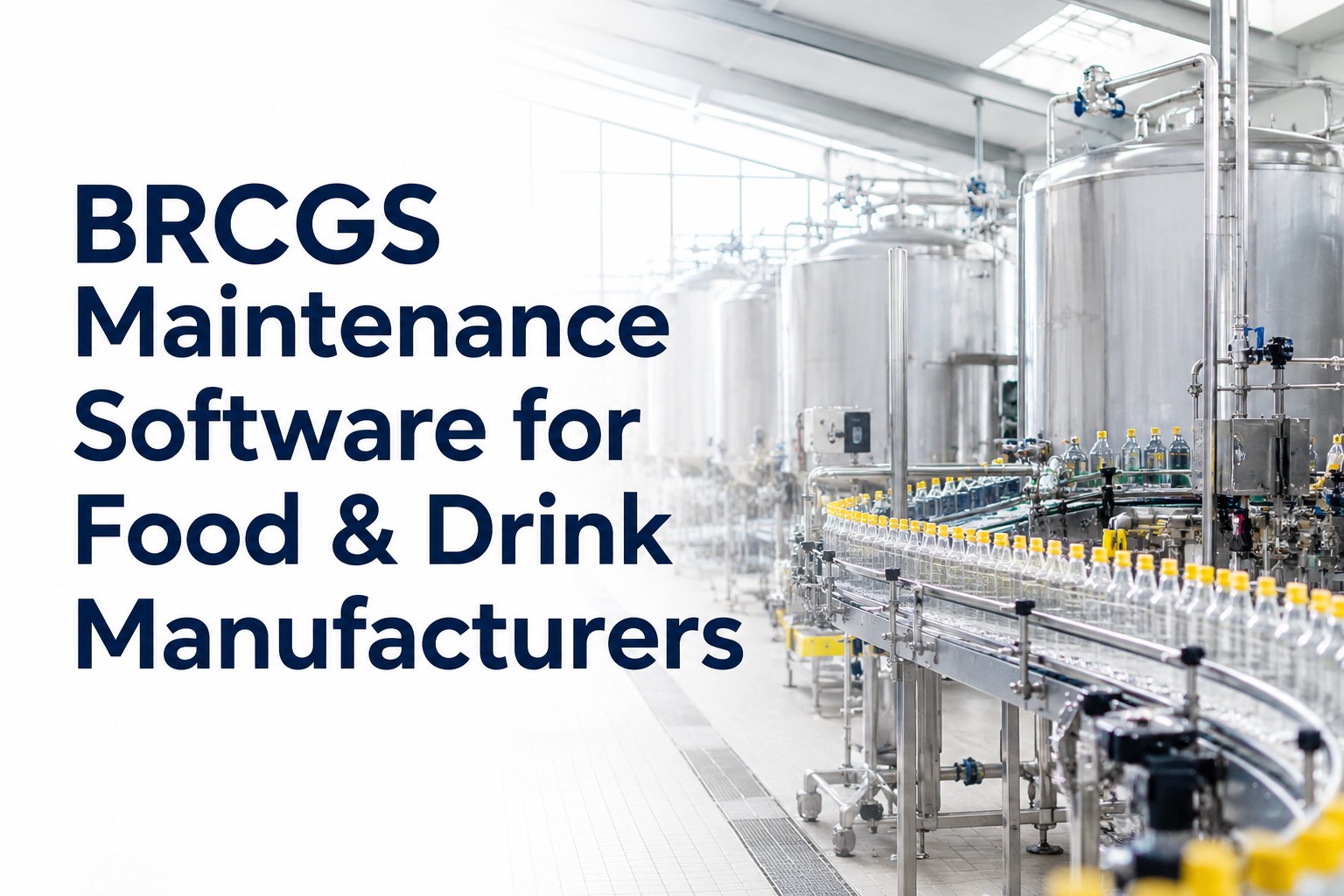
In a BRCGS audit, maintenance isn't a background function — it's a graded, clause-assessed part of the certification. Section 4.7 requires a planned maintenance programme covering every piece of production and product-handling equipment. Section 3.7 puts corrective and preventive actions into the twelve Fundamental Requirements — miss them and you face an automatic Critical non-conformance. Oxmaint gives food and drink engineering teams one platform for PPM, hygiene, contractor permits and audit-ready evidence against every Issue 9 maintenance clause. Book a food plant demo to see BRCGS-ready maintenance live.
Grade AA needs near-zero critical or major non-conformances
Across a full unannounced audit cycle, that requires a maintenance programme running with the same discipline on an ordinary Tuesday as during an audit visit — not a documentation sprint the week before.
Why BRCGS Auditors Focus on Maintenance
Equipment compliance is one of the most common non-conformity categories in BRCGS audits, which is why Issue 9 substantially revised Section 4.6 (equipment) and tightened requirements around maintenance, hygiene and contractor control. An auditor arriving on site will pull maintenance records first, then cross-check them against your food safety plan, allergen controls and hygiene schedules. When those records live in spreadsheets and inboxes, the cross-check turns into a two-day evidence hunt. When they live in a single CMMS indexed against the clause, it's a search bar.
How BRCGS Grades Findings — and Where Maintenance Sits
The grade you receive is a function of the type and volume of non-conformances against defined thresholds
Critical
Failure to meet a food safety or legal issue. Certification suspended pending re-audit. Missing planned maintenance evidence for CCP-relevant equipment sits here.
Fundamental
Failure against one of 12 Fundamental clauses — including Corrective & Preventive Actions (3.7). Auto-fail regardless of other findings.
Major
Substantial failure against a non-fundamental clause. Multiple majors quickly drop grade from AA to B or below.
Minor
Partial failure. Individually low-risk, cumulatively decisive — grade thresholds are counted, not weighted.
The Six Issue 9 Clauses Your CMMS Has to Support
Not every BRCGS clause touches maintenance, but the ones that do have specific evidence expectations. The list below is what an Issue 9 auditor typically asks the engineering team to produce, mapped to the clause reference so there's no ambiguity about what's being assessed.
| Clause | What the standard requires | What Oxmaint holds |
|---|
3.5.4
Contractor management |
Approved contractor list, work-scope control, competence records, on-site supervision. |
Contractor register, permit-to-work, inductions, work-order sign-off with photo evidence. |
3.7 (Fundamental)
Corrective & preventive actions |
Root-cause analysis, dated close-out, evidence that findings drive preventive change. |
CAPA records linked to source work orders; recurring findings surface as review flags. |
4.6
Equipment (major revision) |
Documented purchase specifications, food-contact approvals, verification schedules, calibration dates. |
Asset records with specification files, hygienic-design metadata, verification & calibration PPM. |
4.7
Maintenance |
Planned maintenance programme covering all equipment critical to product safety, legality and quality. |
PPM schedule per asset, criticality tags, overdue alerts, complete work-order history. |
4.11 (Fundamental)
Housekeeping & hygiene |
Documented cleaning schedules, verification records, allergen changeover controls, strip curtain checks (4.4.11). |
Hygiene tasks scheduled and evidenced with photos and sign-off, allergen-cycle triggers built in. |
6.1
Control of operations |
Process settings monitored and recorded, corrective actions on out-of-spec conditions. |
Condition-monitoring inputs feed the same audit trail as work orders and corrective actions. |
Every one of those clauses generates a specific artefact the auditor can request on the day. Sign up free to map Oxmaint against your BRCGS clause list during setup.
The Maintenance-to-Audit Evidence Trail
The evidence trail Issue 9 expects isn't complicated in principle — it's the linkages between artefacts that trip most sites up. A hygiene task without a completion signature, a corrective action without a close-out date, or an equipment record with no linked purchase specification each become findings on their own. Oxmaint enforces the linkages at the point of data entry so incomplete evidence never enters the audit trail in the first place.
Asset
MIXER-04
Food-contact approved · Zone: High Care
PPM Task
Blade & seal check
Monthly · Clause 4.7
Finding
Seal degradation
Photo attached · severity Minor
CAPA
Seal replacement
Owner assigned · Clause 3.7 linkage
Close-out
Verified & signed
Supervisor countersign · Hygiene reset
See a BRCGS Audit Trail on Live Data
Walk through a real food plant deployment — PPM against Clause 4.7, hygiene against 4.11, contractor permits under 3.5.4, and CAPA linkages against the Fundamental clauses. Thirty minutes, no slideware.
Hygiene, Allergens and Contractor Control
Issue 9 doesn't treat cleaning and contractor work as separate from maintenance — an auditor treats them as part of the same integrity picture. A hygiene task that runs late, an allergen changeover without a verified reset, or a contractor working on line without a signed permit each carry the same evidence expectation as a mechanical PPM. Oxmaint schedules all three streams against the same asset record, so the audit trail is unified rather than stitched together from three separate systems.
Hygiene & sanitation
Clause 4.11 (Fundamental)
Scheduled cleaning tasks per zone, verification records with sign-off, strip-curtain checks under 4.4.11, deviation-triggered escalations to the quality team.
Allergen changeover
Clause 5.3 (Fundamental)
Changeover protocols linked to the asset and product recipe, verification photos, allergen-reset sign-off before the line is released back to production.
Contractor control
Clause 3.5.4
Approved contractor list, competence records, permit-to-work with scope and duration, site induction records, on-site supervisor sign-off.
The unified audit trail is what turns three separate paper systems into one queryable record. Book a demo to see hygiene, allergen and contractor control against a single asset record.
Expert Perspective — What Actually Fails BRCGS Audits
The Issue 9 finding pattern is settled: sites don't lose grade because engineers can't fix machines. They lose grade because the maintenance programme exists on paper but the evidence trail has gaps — a PPM completed but not signed, a corrective action without a verified close-out, a hygiene task marked done with no photo against the food-contact zone.
Programme without evidence
Clause 4.7 requires a planned programme in operation — not just a written schedule. Missing completion evidence is the most common maintenance finding.
CAPA is Fundamental
Clause 3.7 sits in the Fundamental Twelve. A pattern of unresolved corrective actions escalates any audit outcome fast.
Equipment specification gaps
Issue 9 revised 4.6 with detailed requirements for documented purchase specs and food-contact approvals — often missing on older equipment.
Contractor documentation drift
Contractors who've worked on site for years without current competence records or scoped permits are a recurring 3.5.4 finding.
Getting BRCGS-Ready in the First 30 Days
Moving to a BRCGS-aligned CMMS doesn't require re-mapping every asset or rewriting your quality manual. Existing asset registers, PPM schedules and contractor lists import directly. Clause tags apply against equipment classes on day one so every generated work order carries the right BRCGS reference. Hygiene and allergen changeover tasks slot into the same platform as mechanical PPM. Within the first cycle every completed job carries the evidence fields an Issue 9 auditor expects, and the site-level audit pack export runs against real data — no pre-audit reconstruction. Sign up free to import your current PPM schedule and see the first BRCGS audit pack build itself.
Who Uses Oxmaint in Food & Drink Manufacturing
The platform is built for the specific engineering and quality roles that own BRCGS evidence day-to-day: maintenance managers running mechanical PPM against food-contact equipment, hygiene team leaders scheduling cleaning and allergen changeovers, quality managers holding the CAPA record for Clause 3.7, and site directors who need one dashboard showing readiness against the twelve Fundamental clauses. Each role sees the compliance calendar filtered to what they need to act on — the audit pack rolls up automatically. Sign up free and configure roles for your food plant team in the first setup session.
Run BRCGS-Ready Maintenance Every Day, Not Just Audit Week
Oxmaint gives food and drink engineering teams PPM, hygiene, allergen changeover, contractor permits and CAPA linkages in one platform — clause-mapped to Issue 9 and evidenced from every completed work order.
Frequently Asked Questions
Does Oxmaint guarantee BRCGS certification?
No CMMS can guarantee certification — the grade depends on the full audit, your food safety plan, culture, HACCP, supplier controls and dozens of other factors outside a maintenance platform. What Oxmaint does is remove the maintenance and engineering evidence gaps that most commonly generate Major and Minor non-conformances: incomplete PPM records, unclosed CAPAs, missing contractor permits, and hygiene tasks without verified sign-off. Sites use it to close those specific gaps ahead of Issue 9 audits.
How does Oxmaint handle allergen changeover?
Allergen changeover tasks are scheduled against the specific asset and product-recipe combination, with the changeover protocol attached. Line operators or hygiene technicians work through the protocol on mobile, capture verification photos at each step, and sign off completion before the asset status can be flipped from "changeover" back to "production ready". A supervisor countersignature can be enforced against Fundamental Clause 5.3 requirements. Every completed changeover leaves a time-stamped record tied to the batch it preceded.
Can our contractors use Oxmaint without a full user licence?
Yes. Contractors receive scoped access to receive their permit-to-work, complete site inductions, capture job evidence, and sign off on completion — without needing the full engineering user seat. Their competence records, insurance certificates and induction status are held against the contractor profile and checked automatically when a permit is issued, which is how Clause 3.5.4 requirements get evidenced without adding admin load on the engineering team.
What about SALSA and other food-safety schemes?
The same clause-tagging model works for SALSA, IFS, FSSC 22000 and retailer-specific standards. Most sites hold multiple certifications and Oxmaint lets you tag maintenance activity against multiple schemes at once — a single PPM record can simultaneously evidence BRCGS 4.7, SALSA equipment maintenance, and an internal retailer standard without duplicated data entry.
How does Oxmaint help during an unannounced audit?
Unannounced audits are exactly the case Oxmaint is designed for — the evidence exists because it was captured as a byproduct of every completed job, not assembled the week before. When the auditor arrives, the engineering lead pulls the site audit pack in one click, filtered by clause or date range. PPM history, hygiene sign-offs, allergen changeover records, contractor permits and CAPA close-outs are all there, indexed against the asset. No rebuild, no scramble.