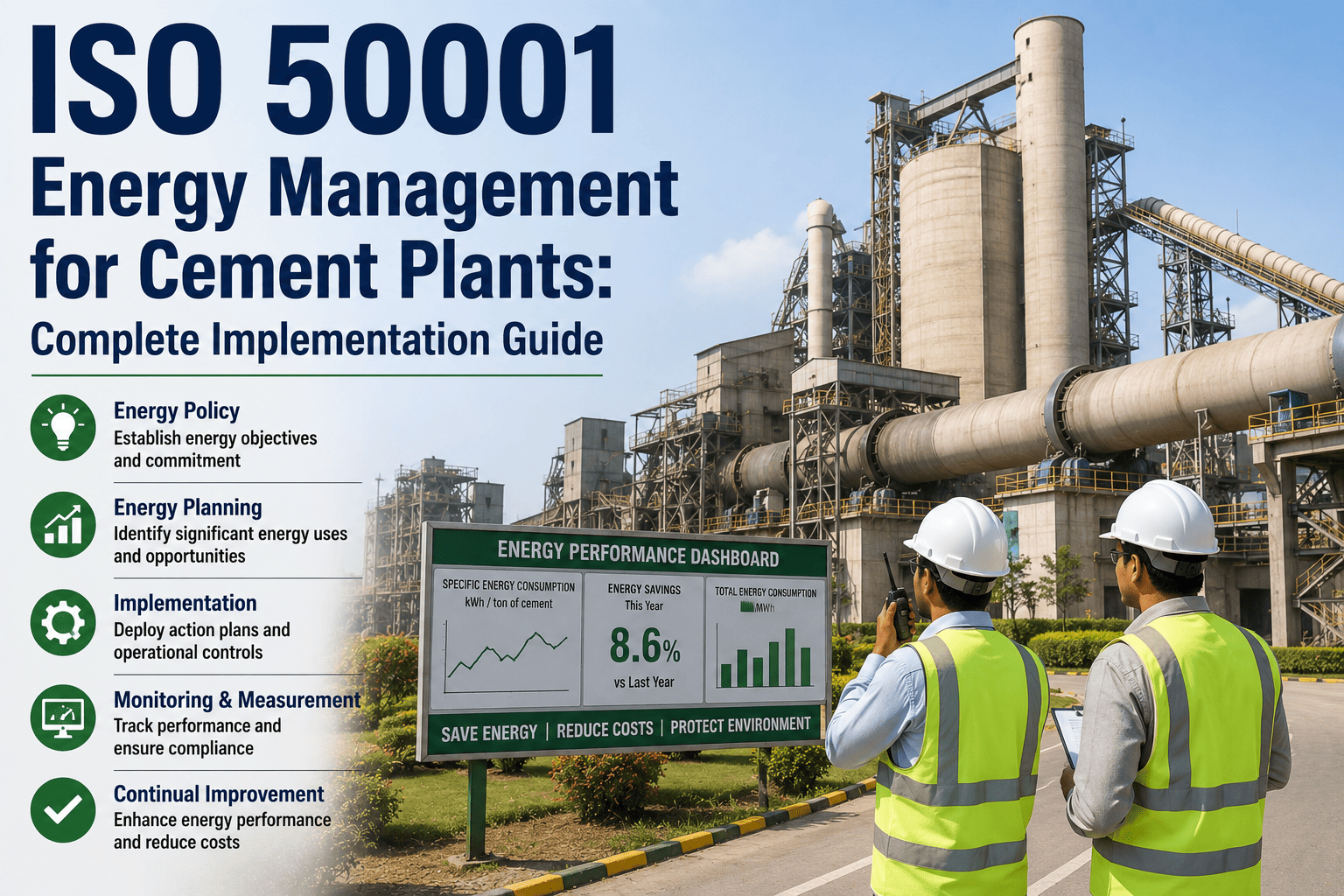
Energy is often the single largest cost line in a cement plant, yet most sites still track it the same way they did a decade ago — a monthly utility bill and a shrug when it goes up. ISO 50001 changes that by treating energy the way reliability engineers treat equipment: measured, targeted, and continuously improved. Done right, it turns kiln fuel use, mill power draw, and compressed air losses into tracked performance indicators instead of a fixed cost nobody questions. A CMMS like OxMaint ties energy-linked maintenance tasks and equipment performance data together — sign up free and your first energy monitoring checklist is running today.
Core Elements of an ISO 50001 Energy Management System
Energy Policy and Baseline
A documented commitment plus a historical energy baseline that every future improvement gets measured against.
Energy Performance Indicators
EnPIs such as kiln fuel per tonne of clinker or kWh per tonne of cement, tracked to show whether performance is actually improving.
Energy Audits
Structured reviews of major consuming equipment to identify losses and opportunities that routine monitoring alone would miss.
Significant Energy Uses
The kiln, mills, and fans that account for most plant energy use, prioritized for tighter monitoring and improvement action.
Monitoring and Targeting
Ongoing comparison of actual consumption against targets, flagging deviations before they compound into wasted cost.
Management Review
Periodic leadership review of energy performance and improvement plans, closing the loop for continuous improvement.
Significant Energy Uses in a Cement Plant
Energy Management Checklist by Frequency
OxMaint auto-assigns these tasks to your team, with readings and history logged per asset.
Common Energy Management Gaps and CMMS Prevention
| Gap | Impact | Root Cause | OxMaint Prevention |
|---|---|---|---|
| Untracked EnPI drift | Rising cost goes unnoticed | No daily reading discipline | Daily EnPI logging with deviation alerts |
| Maintenance-energy disconnect | Worn equipment wastes power | Maintenance and energy data kept separate | Asset records linking condition to energy performance |
| Compressed air leaks | Continuous avoidable energy loss | No scheduled leak audits | Quarterly leak audit checklist with tracking |
| Stale energy baseline | Misleading performance comparisons | Baseline never updated | Annual baseline review task with reminders |
| Missed audit findings | Improvement opportunities lost | Audit results not tracked to action | Digital audit findings linked to work orders |
| No management visibility | Energy program stalls | No structured reporting cadence | Quarterly performance summary for review |
OxMaint vs. Competitors
| Capability | OxMaint | MaintainX | UpKeep | Fiix | Limble | IBM Maximo |
|---|---|---|---|---|---|---|
| EnPI tracking templates | Yes | No | No | No | No | Custom |
| Significant energy use asset tagging | Yes | No | Limited | Limited | No | Yes |
| Maintenance-to-energy linkage | Yes | No | No | Limited | No | Custom |
| Audit finding tracking | Yes | Limited | Limited | Limited | Limited | Yes |
| Multi-site fleet view | Yes | Limited | Limited | Yes | Limited | Yes |
| Setup | Minutes | Hours | Hours | Days | Hours | Months |
Implementation Roadmap
Results
Data Security
Frequently Asked Questions
What is an EnPI in ISO 50001?
An energy performance indicator is a measurable value, such as kiln fuel per tonne of clinker, used to track whether energy performance is actually improving over time.
What counts as a significant energy use in a cement plant?
Significant energy uses are the assets that account for the largest share of consumption, typically the kiln system, raw mill, cement mill, and major fans.
How does maintenance connect to energy management?
Worn bearings, misaligned equipment, and air leaks all quietly increase energy use, so tracking maintenance condition alongside EnPIs helps catch losses early.
Can OxMaint support ISO 50001 across multiple plants?
Yes. OxMaint provides one dashboard across every plant with asset-specific energy checklists, EnPI tracking, and portfolio-wide reporting.