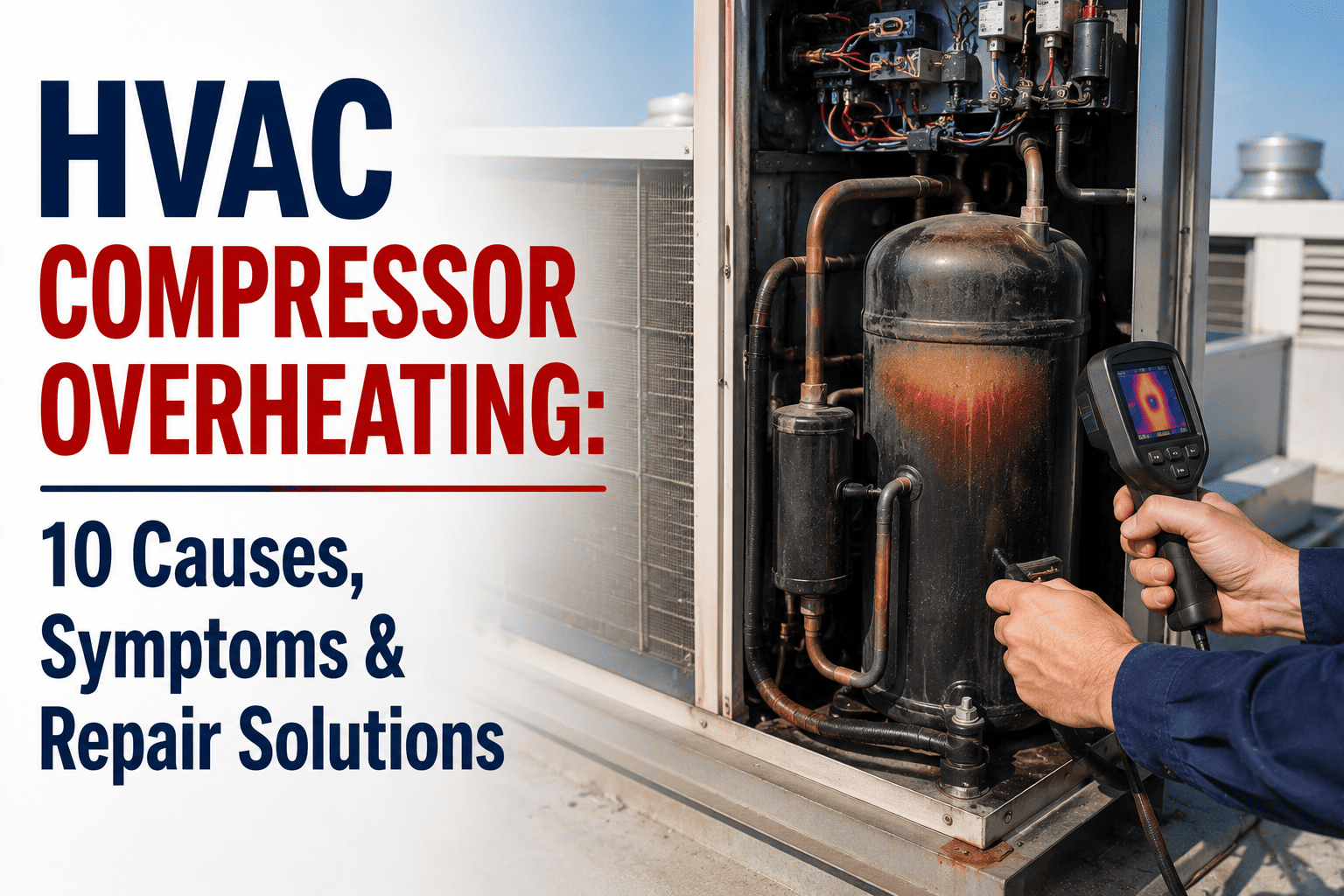
The compressor is the most expensive single component in any HVAC system — and overheating is the fastest way to destroy it. When a compressor runs too hot, its oil breaks down, internal windings degrade, and the thermal overload trips. If the underlying cause is not corrected, each restart cycle brings permanent damage closer. In commercial facilities, a failed compressor means days of downtime and replacement costs that routinely exceed $4,000. This guide covers the 10 root causes, how to recognize overheating before it causes failure, and how a CMMS like OxMaint protects compressors through structured preventive maintenance. Book a demo to see HVAC PM automation in action.
Protect Your Compressors With Automated HVAC PMs
OxMaint auto-schedules refrigerant checks, coil cleaning, electrical inspections, and airflow verifications — the core tasks that prevent compressor overheating in commercial HVAC systems.
Normal compressor discharge temperature. Oil maintains viscosity. Windings cool adequately. Full efficiency and design lifespan expected.
200 – 230°F
Caution Zone
Oil begins to thin and lose protective properties. Accelerated winding insulation degradation. Investigate root cause immediately.
230 – 260°F
Thermal Overload Trips
Internal thermal protector shuts compressor down. System locks out. Repeated trip-restart cycles cause cumulative winding damage.
Above 260°F
Failure Zone
Refrigerant oil carbonizes. Winding insulation burns. Acid forms in refrigerant circuit. Compressor replacement required — contaminated system must be flushed.
$4,000+
Average commercial compressor replacement cost
3–5 days
Typical downtime for compressor replacement and system flush
85%
Of compressor failures preceded by detectable warning signs
$180
Average cost of a refrigerant check PM that prevents compressor failure
10 Causes of HVAC Compressor Overheating
01
Critical
Low Refrigerant Charge
Why It Overheats
Refrigerant carries heat away from the compressor as it cycles. Low charge means less heat absorption — the compressor discharge temperature rises rapidly and the motor runs hotter than designed.
Symptoms
High discharge temperature. Warm supply air. Ice on suction line or evaporator coil. Low suction pressure on gauge manifold.
Fix
Locate and repair refrigerant leak. Recharge to manufacturer spec. Verify superheat and subcooling after recharge. Licensed technician required.
02
Critical
Dirty or Blocked Condenser Coil
Why It Overheats
The condenser coil is where the system rejects heat to the outdoors. A clogged coil traps heat in the refrigerant circuit, raising head pressure and compressor discharge temperature to dangerous levels.
Symptoms
High head pressure readings. Compressor short cycling on thermal overload. Debris visible on condenser fins. System capacity reduced in hot weather.
Fix
Clean condenser coil with approved coil cleaner. Clear 24 inches of clearance around outdoor unit. Schedule semi-annual condenser cleaning.
03
Critical
Condenser Fan Motor Failure
Why It Overheats
The condenser fan pulls or pushes air across the condenser coil to carry heat away. If the fan fails or slows, heat stays trapped around the coil — compressor head pressure and temperature spike immediately.
Symptoms
Outdoor unit running but fan not spinning. Compressor trips off quickly after startup in warm conditions. Outdoor cabinet extremely hot to touch.
Fix
Test motor amp draw and winding resistance. Inspect capacitor feeding condenser fan motor. Replace motor or capacitor as indicated by test results.
04
High Risk
Restricted Airflow — Dirty Indoor Filter or Coil
Why It Overheats
Low indoor airflow reduces the heat load the evaporator coil absorbs. With less heat to vaporize refrigerant, liquid refrigerant can return to the compressor — a condition called liquid slugging that destroys internal components.
Symptoms
Low suction pressure. Frost on evaporator coil. Reduced airflow from registers. Compressor operating with abnormally low superheat readings.
Fix
Replace filter and clean indoor coil. Allow system to stabilize before measuring superheat. Monthly filter inspection schedule prevents this failure mode entirely.
05
High Risk
Refrigerant Overcharge
Why It Overheats
Too much refrigerant raises discharge pressure above design limits. The compressor works harder against elevated head pressure, generating excess heat and drawing more current than its motor windings can sustain.
Symptoms
High suction and discharge pressures. High subcooling reading. Compressor running hot. Often occurs after incorrect recharge without proper subcooling verification.
Fix
Recover excess refrigerant to bring system within manufacturer pressure and subcooling specifications. Verify charge by weighing in to exact spec.
06
High Risk
Non-Condensable Gases in Refrigerant Circuit
Why It Overheats
Air or nitrogen in the refrigerant circuit does not condense at normal operating temperatures. It accumulates at the top of the condenser, raises head pressure, and forces the compressor to work against abnormally high discharge pressure.
Symptoms
High head pressure inconsistent with outdoor ambient temperature. Pressure readings elevated even after condenser coil is clean. System charged correctly but still overheating.
Fix
Recover refrigerant, evacuate system to 500 microns or below, recharge to manufacturer spec by weight. Identify how air entered the system — typically through a leak or improper service procedure.
07
High Risk
Inadequate Compressor Lubrication
Why It Overheats
Compressor oil lubricates internal moving parts and carries heat away from bearings and pistons. Oil dilution from liquid refrigerant, oil contamination, or low oil charge increases internal friction and operating temperature.
Symptoms
Unusual mechanical noise from compressor. Elevated discharge temperature with normal operating pressures. Acid test of oil sample shows contamination.
Fix
Oil acid test during service visits. Flush system if acid is present. Verify correct oil type for refrigerant used. Identify root cause of oil dilution — typically liquid slugging.
08
Preventable
High Ambient Temperature Around Outdoor Unit
Why It Overheats
Outdoor units installed in recessed mechanical pits, against south-facing walls, or in spaces with restricted airflow operate with elevated inlet air temperature — reducing the condenser's ability to reject heat effectively.
Symptoms
Overheating occurs only during peak summer hours. Unit performs normally in the morning and evening. Outdoor unit cabinet temperature unusually high relative to ambient.
Fix
Ensure minimum 24-inch clearance on all sides and 48 inches above unit. Install shade structure over unit — never block airflow. Consider relocating if ambient conditions are unresolvable.
09
Preventable
Worn or Failed Compressor Capacitor
Why It Overheats
A weak start or run capacitor causes the compressor motor to draw excess current during startup and operation. The motor works harder than designed, generating heat above normal operating levels with every start cycle.
Symptoms
Hard start — compressor hums before engaging. Takes multiple attempts to start. Compressor runs hotter than normal after an unusually long startup period.
Fix
Test run and start capacitors with capacitor tester or multimeter. Replace if reading is below 90% of rated microfarad value. Quarterly electrical inspection catches this before failure.
10
High Risk
Compressor Short Cycling
Why It Overheats
Each compressor startup draws 3 to 6 times normal running current and generates a heat spike. Short cycling — turning on and off every few minutes — stacks these heat spikes without adequate cool-down time between them.
Symptoms
Compressor running in cycles under 5 minutes. Thermal overload tripping repeatedly. Compressor body hot to touch shortly after startup. Rising energy bills.
Fix
Diagnose short cycling root cause — oversizing, thermostat fault, refrigerant issue, or electrical problem. Install crankcase heater if not present. Allow 5-minute minimum off-time before restart.
A $180 PM Prevents a $4,000 Compressor Replacement
OxMaint auto-schedules refrigerant checks, condenser coil cleaning, capacitor testing, and airflow verifications — the preventive tasks that catch compressor overheating causes before they become failures. Sign up free or book a demo today.
Symptoms Checklist: Is Your Compressor Overheating?
Shut Down Immediately
Compressor body hot enough to cause burns on contact
Burning or electrical smell from outdoor unit
Thermal overload tripping within 5 minutes of restart
Breaker tripping immediately when compressor energizes
Loud grinding or knocking from outdoor unit compressor
Investigate Within 24 Hours
System short cycling — running under 5 minutes per cycle
Supply air warmer than expected for outdoor conditions
Discharge line unusually hot to touch near outdoor unit
Compressor hard-starting — humming before engaging
Energy consumption notably higher than prior months
Log and Monitor Closely
Gradual decline in cooling capacity over several weeks
Outdoor unit running longer than typical to reach setpoint
Condensate production lower than normal
Occasional thermal lockout with normal restart after cool-down
Slight hum or vibration change from outdoor unit
Compressor Overheating Diagnostic Sequence
Step 1
Measure Discharge Temperature
Use a clamp thermometer on the discharge line near the compressor. Above 220°F is a clear overheating signal — record the value and check all contributing factors.
→
Step 2
Check High and Low Side Pressures
High head pressure with normal suction points to a condenser or refrigerant overcharge issue. Low suction pressure with normal head pressure points to a refrigerant deficit or airflow restriction.
→
Step 3
Inspect Condenser Fan and Coil
Verify condenser fan is spinning at correct speed. Inspect coil for debris, dirt, or blocked airflow. High head pressure with clean coil and working fan points to non-condensables or overcharge.
→
Step 4
Test Capacitor and Electrical
Measure capacitor microfarad rating and contactor condition. Check compressor amp draw against nameplate RLA. Elevated amp draw with normal pressures indicates internal motor degradation.
→
Step 5
Verify Superheat and Subcooling
Calculate target superheat and subcooling for current conditions. Deviations confirm refrigerant charge, metering device, or airflow issues. Document readings in CMMS for trend comparison.
Preventive Maintenance Schedule
Structured PM is what separates a $180 service call from a $4,000 compressor replacement. Every task below can be auto-assigned and tracked in OxMaint.
Monthly
Inspect and replace indoor air filter
Verify condenser unit clearance and airflow
Listen for abnormal compressor sounds
Note any signs of short cycling or thermal trips
Quarterly
Test run and start capacitor condition
Measure compressor amp draw vs. nameplate RLA
Inspect contactor contacts for pitting and wear
Clean condenser coil exterior of debris and dust
Semi-Annual
Refrigerant pressure check — verify superheat and subcooling
Deep clean condenser coil with approved coil cleaner
Test condenser fan motor amp draw and blade condition
Check crankcase heater operation before heating season
Annual
Full refrigerant leak test on entire system
Oil acid test — check for contamination or acid formation
Compressor winding resistance measurement
Verify all safety controls — high-pressure, low-pressure, thermal overload
Cause vs. Risk vs. Prevention: Quick Reference
Cause
Failure Speed
Cost Impact
Key Prevention Task
Low refrigerant charge
Days to weeks
Critical — full compressor loss
Semi-annual refrigerant pressure check
Dirty condenser coil
Days in heat
High — compressor burnout
Semi-annual condenser coil cleaning
Condenser fan failure
Hours
High — compressor burnout
Quarterly fan motor amp test
Failed capacitor
Weeks to months
Medium — winding damage
Quarterly capacitor test
Dirty indoor filter or coil
Weeks
Medium — liquid slugging
Monthly filter replacement
Non-condensable gases
Weeks
High — pressure damage
Proper vacuum and recharge procedures
Short cycling
Months
High — cumulative damage
Monthly cycle observation and logging
High ambient installation
Seasonal
Medium — reduced lifespan
Annual clearance and siting inspection
How OxMaint Protects Your Compressors
Scheduled Before Failure Happens
Refrigerant checks, coil cleaning, and capacitor tests auto-schedule per unit — before conditions deteriorate to compressor-threatening levels.
Amp Draw and Pressure Trending
Log compressor amp draw, discharge temperature, and refrigerant pressures over time. Trending data exposes gradual degradation invisible to single-point inspections.
Overheating Event Documentation
When a thermal trip or overheating event is reported, OxMaint generates a corrective work order with a diagnostic checklist — ensuring root cause identification is part of every response.
Warranty and Audit Evidence
Every PM creates a timestamped record. Manufacturers require documented maintenance for warranty claims — OxMaint generates the full service history automatically.
78%
Fewer Unplanned HVAC Shutdowns
45%
Reduction in Emergency Repair Costs
100%
Compliance Audit Pass Rate
Days
Time to Full Deployment — Not Months
Frequently Asked Questions
What is the normal operating temperature for an HVAC compressor?
Normal compressor discharge line temperatures run between 150°F and 200°F depending on refrigerant type, outdoor ambient, and system load. Discharge temperatures above 220°F indicate a developing overheating problem. Above 260°F, internal damage and refrigerant oil breakdown become likely. Sign up for OxMaint to track discharge temperature readings across service visits per unit.
Can a compressor recover from overheating?
A single overheating event that trips the thermal overload and is corrected promptly — by addressing the root cause before restarting — often leaves the compressor undamaged. Repeated overheating events without root cause correction cause cumulative winding insulation damage that eventually leads to winding failure. The thermal overload is a warning, not a reset button.
How do I know if my compressor is about to fail?
Key warning signs include elevated amp draw above nameplate RLA, discharge temperatures consistently above 220°F, hard starting, short cycling, and thermal overload trips. A winding resistance test by a technician can confirm insulation degradation before failure occurs. Book a demo to see how OxMaint tracks these indicators over time.
What is the most common cause of commercial HVAC compressor failure?
Low refrigerant charge and dirty condenser coils account for the majority of premature commercial compressor failures. Both are entirely preventable — low refrigerant with semi-annual pressure checks and condenser coil issues with semi-annual cleaning. The combined cost of these two PMs is a fraction of a single compressor replacement.
Can OxMaint track compressor health across a multi-building portfolio?
Yes. OxMaint manages every HVAC unit across every site — with asset-specific PM templates, amp draw and pressure trending, overheating event documentation, and portfolio-wide compliance reporting. Facility managers get a single dashboard showing PM status, overdue tasks, and maintenance history per compressor. Start free and deploy your first PM in minutes.
Free to Start — PM Running in Days
Every Compressor. Every Check. Every Reading Logged. One Platform.
OxMaint turns compressor protection from reactive guesswork into a documented, preventive, audit-ready program — deployed in days, not months. Sign up free or book a demo with our team.