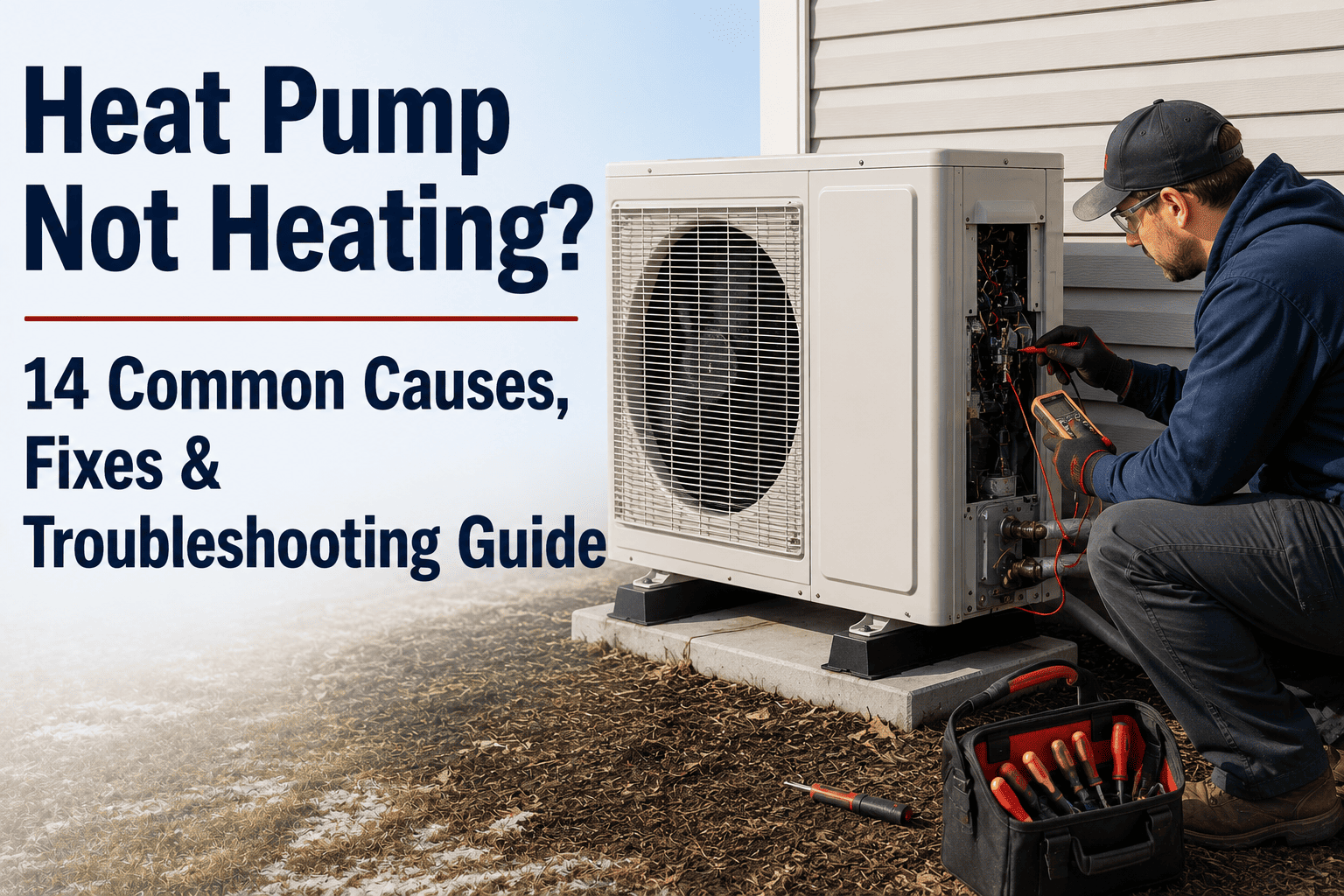
Heat Pump Not Heating? 14 Common Causes, Fixes & Troubleshooting Guide
By Mark strong on June 5, 2026
Your heat pump switched to heat mode — but the air coming out feels cold, or nothing comes out at all. Before you panic or call for an expensive service visit, most heat pump heating failures trace back to one of 14 well-known causes — many of which you can diagnose and fix yourself in minutes. Sign up free or book a demo to see how OxMaint keeps HVAC equipment running year-round with automated PM scheduling.
Stop Reactive HVAC Maintenance
OxMaint automates heat pump PM schedules, tracks filter changes, logs inspections, and keeps your team ahead of every failure — before tenants feel the cold.
Unlike a furnace that burns fuel, a heat pump extracts latent heat from outdoor air — even at freezing temperatures — and moves it indoors via refrigerant. A reversing valve switches the refrigerant flow direction to toggle between heating and cooling. When any part of this chain breaks down, heating stops. Understanding this helps you pinpoint the fault fast.
1
Outdoor unit absorbs heat from air
→
2
Refrigerant carries heat indoors
→
3
Indoor coil releases heat into air
→
4
Blower distributes warm air through ducts
14 Common Causes — Diagnosed at a Glance
DIY Fix
01
Wrong Thermostat Setting
Set to "Cool" instead of "Heat," or fan stuck on "On." Check mode and switch fan to "Auto."
DIY Fix
02
Clogged Air Filter
Dirty filters block airflow, forcing the system to overwork and shut down. Replace every 30–90 days.
DIY Fix
03
Tripped Circuit Breaker
Electrical overload trips the breaker. Reset once — if it trips again, call a technician.
DIY Fix
04
Outdoor Unit Blocked
Snow, ice, leaves, or debris around the coil restrict heat absorption. Clear 18 inches of clearance.
DIY Fix
05
Normal Defrost Mode
Cold air during defrost cycles (5–15 min) is normal — the system is melting ice off the outdoor coil.
DIY Fix
06
Thermostat Battery Dead
A blank or unresponsive thermostat screen often means dead batteries. Replace AA or AAA batteries first.
Pro Required
07
Refrigerant Leak
Hissing sounds, ice on coils, and declining heat output indicate a refrigerant leak. Only certified technicians can handle refrigerant.
Pro Required
08
Faulty Reversing Valve
Valve stuck in cooling position means heat pump works fine in summer but blows cold in winter.
Pro Required
09
Failed Compressor or Capacitor
The compressor is the heart of the system — a failed capacitor means the compressor won't start at all.
Pro Required
10
Frozen Indoor or Outdoor Coils
Ice buildup beyond normal defrost indicates airflow restriction, low refrigerant, or a faulty defrost board.
Pro Required
11
Failed Auxiliary Heat Strips
Backup electric heat strips that activate in extreme cold — if these fail, heating stops below 35°F.
Pro Required
12
Dirty Evaporator or Condenser Coils
Coil fouling reduces heat transfer efficiency by up to 40%. Annual coil cleaning is essential for performance.
Pro Required
13
Faulty Contactor or Relay
The contactor controls power to the outdoor unit. Worn contacts prevent the compressor and fan from starting.
Pro Required
14
Undersized or Aging Unit
A heat pump losing efficiency year-over-year, or one sized too small for the space, cannot meet heating demand in cold weather.
Quick Troubleshooting Flowchart
Heat pump running but not heating
↓
Thermostat set to HEAT mode?
No — Switch to Heat, set 3°F above room temp
Yes — Continue below
Air filter clean?
No — Replace immediately
Yes — Continue below
Circuit breaker tripped?
Yes — Reset once, monitor
No — Continue below
Outdoor unit clear of ice/debris?
No — Clear 18" clearance, wait for defrost
Yes — Call HVAC technician
Heat Pump Maintenance Schedule
Most heating failures are preventable. The table below shows what needs to happen — and when. OxMaint auto-generates every task below, assigns it to the right technician, and logs results for audit-ready compliance documentation.
Task
Frequency
Who
What to Check
Air filter inspection/replacement
Monthly
Facilities Staff
Visible dirt, restricted airflow, MERV rating match
Outdoor unit clearance check
Monthly
Facilities Staff
Debris, vegetation, ice accumulation within 18 inches
OxMaint pre-builds every checklist above — monthly, quarterly, annual — and assigns them automatically so no inspection gets skipped. Sign up free and deploy in minutes.
Refrigerant leak — do not run the system. Low refrigerant accounts for the majority of serious heating failures.
Breaker Trips Repeatedly
Indicates an underlying electrical fault — compressor drawing excess current, short circuit, or failing contactor.
Ice That Does Not Clear
Frost beyond the normal 15-minute defrost cycle points to defrost board failure, low refrigerant, or restricted airflow.
Loud Clicking, Grinding, or Banging
Mechanical failure inside the compressor or outdoor fan motor — continuing to run risks further damage.
Spike in Energy Bills
System working harder to compensate for failing components — a 20%+ bill increase with no usage change warrants inspection.
System Over 10–15 Years Old
Aging heat pumps decline in efficiency every year — a professional assessment determines repair vs. replacement ROI.
Why Facilities Teams Use CMMS for Heat Pump Management
For single-family homeowners, a yearly service call is enough. But property managers, facility directors, and commercial HVAC teams maintaining dozens of units across multiple buildings face a different challenge — one that manual tracking and spreadsheets consistently fail.
Every Filter Change Logged
OxMaint creates recurring filter replacement tasks per unit — no unit gets skipped, every change is timestamped and documented.
Trend-Based Failure Prediction
Track motor current draw, coil condition scores, and refrigerant readings over time — catch decline before breakdown.
Pre-Season Readiness
Trigger an entire portfolio-wide pre-heating-season inspection campaign with one click — all units, all technicians, all deadlines set.
Audit-Ready Documentation
Every inspection, repair, and technician note is stored with timestamp and photo evidence — instantly exportable for audits or insurance claims.
68%
of heat pump failures are preventable with scheduled PM
3x
longer equipment lifespan with documented maintenance programs
40%
reduction in emergency HVAC calls reported by OxMaint customers
Free to Start — No Credit Card Needed
Every Heat Pump. Every PM Task. One Platform.
OxMaint turns reactive HVAC firefighting into a structured, documented, audit-ready maintenance program. Deploy in days, not months. Sign up free or book a demo with our team today.
Why is my heat pump blowing cold air in heat mode?
The most common reasons are: thermostat set to Cool instead of Heat, the system is in a normal defrost cycle (lasts 5–15 minutes), a clogged air filter restricting airflow, or a faulty reversing valve that is stuck in cooling position. Check thermostat settings and replace the filter first before calling a technician.
Is it normal for a heat pump to blow cool-feeling air?
Yes. Heat pumps supply air between 85–93°F — which feels cool compared to a furnace blowing 120–140°F air. If your home is gradually warming up, the system is working normally. If the temperature never rises, you have a real heating problem to diagnose.
How often should commercial heat pumps be serviced?
Filters should be checked monthly. A full technician inspection — covering coils, refrigerant, electrical connections, and safety devices — should happen twice yearly: once before the heating season and once before the cooling season. OxMaint auto-schedules both and tracks every result per unit.
Can OxMaint manage heat pumps across multiple properties?
Yes. OxMaint gives you a portfolio-wide dashboard showing every heat pump's PM status, upcoming tasks, and open work orders across all sites — from a single login. Ideal for property managers and facility directors managing 10 to 10,000+ units.
What documentation do I need for HVAC compliance audits?
Maintenance logs with dates and technician sign-offs, filter replacement records, refrigerant handling documentation (EPA Section 608), and safety inspection results. OxMaint generates all of this automatically as your team works, exportable as a complete audit package on demand.