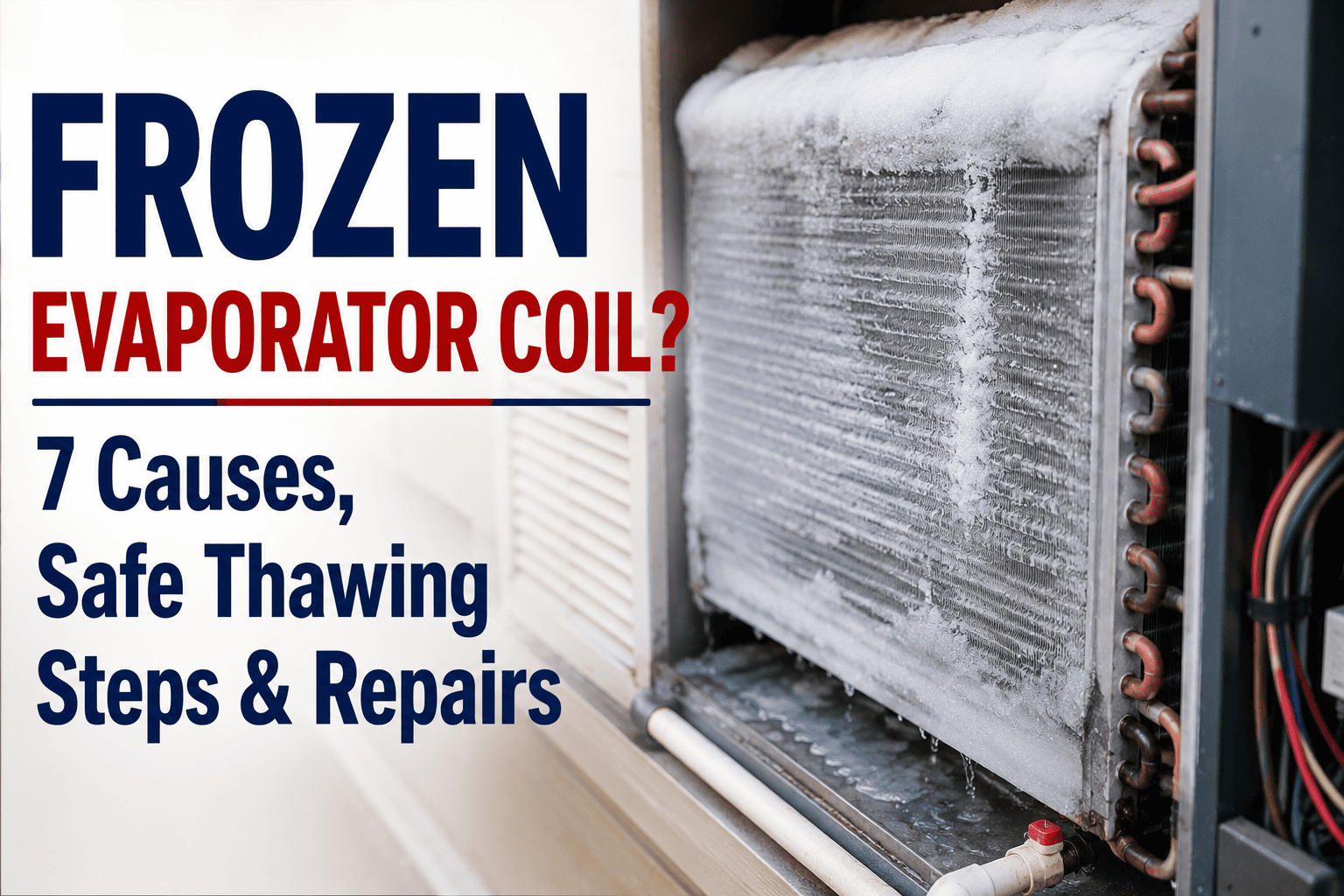
A frozen evaporator coil does not just reduce cooling — it blocks it entirely. When ice builds up on the coil, airflow stops, water damage begins, and the compressor starts working against conditions it was never designed for. In commercial facilities, a frozen coil means tenant complaints, emergency calls, and potential compressor replacement if the root cause goes unaddressed. This guide covers the 7 causes, how to thaw a coil safely, and how a CMMS like OxMaint prevents coil freeze-ups through structured preventive maintenance. Book a demo to see HVAC PM automation in action.
Stop Frozen Coils Before They Start
OxMaint auto-schedules filter changes, refrigerant checks, airflow inspections, and coil cleaning — the four tasks that prevent 90% of evaporator coil freeze-ups in commercial HVAC systems.
Warm return air flows across the coil. Refrigerant absorbs heat. Coil surface stays above freezing. Condensation drips into the drain pan normally.
↓
Trigger Condition
Airflow drops or refrigerant pressure falls. The coil surface temperature drops below 32°F. Moisture in the air begins to freeze on contact with the fins.
↓
Full Freeze
Ice block forms across coil surface. Airflow is completely blocked. System either overheats the compressor or shuts on high pressure. Water damage begins as ice thaws uncontrolled.
32°F
Coil surface temp at which freezing begins
2–8 hrs
Typical time from trigger to full coil ice block
$4,000+
Compressor replacement cost if freeze-up goes unaddressed
90%
Of freeze-ups preventable with monthly PM tasks
7 Causes of a Frozen Evaporator Coil
01
High Risk
Low Refrigerant Charge or Refrigerant Leak
What Happens
Low refrigerant lowers suction pressure. The evaporator coil drops below freezing temperature even in normal airflow conditions. Ice forms rapidly on fins and eventually blocks the entire coil face.
Warning Signs
Warm air from supply vents despite system running. Ice visible on suction line at indoor unit. Hissing or bubbling sounds near refrigerant lines.
Fix
Locate and repair leak. Recharge refrigerant to manufacturer spec. Licensed technician required. Do not just recharge without fixing the leak source.
02
Preventable
Restricted Airflow — Dirty or Clogged Filter
What Happens
Insufficient warm return air reaches the coil. The refrigerant over-cools the coil surface because there is not enough heat load to absorb. Moisture freezes onto fins within hours.
Warning Signs
Reduced airflow at supply registers. Visibly dirty filter at return grille. Increased static pressure in duct system. System running longer cycles without cooling effectively.
Fix
Replace filter immediately. Inspect coil for ice. Allow full thaw before restarting. Establish monthly filter inspection schedule in CMMS.
03
Preventable
Dirty Evaporator Coil
What Happens
A layer of dust and debris on the coil fins insulates the coil surface, reducing heat transfer efficiency. The coil runs colder than designed and freeze-up occurs more easily.
Warning Signs
Gradual decline in cooling capacity over weeks or months. Higher-than-normal energy bills. Fine frost forming on coil surface even before full freeze.
Fix
Clean coil with approved no-rinse coil cleaner. Schedule semi-annual indoor coil cleaning as part of HVAC PM program.
04
Medium Risk
Blower Motor Failure or Slow Fan Speed
What Happens
A failing blower motor or incorrect fan speed setting reduces air movement across the coil. The effect is identical to a clogged filter — too little heat load, coil over-cools and freezes.
Warning Signs
Weak airflow from all registers despite clean filter. Audible motor humming or slow spin. Coil freezing recurs after filter replacement and coil cleaning.
Fix
Measure motor amp draw. Verify fan speed setting on variable-speed units. Replace motor if seized or drawing low amperage. Check belt tension on belt-drive systems.
05
Medium Risk
Metering Device Failure (TXV or EEV)
What Happens
A failed or stuck-open thermostatic expansion valve allows too much refrigerant into the coil. The coil floods with liquid refrigerant, drops to extremely low temperatures, and freezes instantly.
Warning Signs
Very low suction pressure readings. Frost forming along the entire suction line back toward the compressor. Freeze-up occurs quickly even with clean filter and full refrigerant charge.
Fix
Check superheat at the coil outlet. Verify TXV bulb is properly clamped to suction line. Replace metering device if superheat is abnormally low and coil floods.
06
Low Risk
Operating in Low Ambient Temperatures
What Happens
Running air conditioning when outdoor or indoor ambient temperature is below 60°F causes refrigerant pressures to drop unnaturally low. The coil surface falls below freezing and ice forms.
Warning Signs
Freeze-up occurs only on cool nights or in shoulder seasons. System operates fine during warmer periods. Server rooms or data centers running AC in cold months.
Fix
Install low-ambient controls or head pressure controls on outdoor unit. Avoid running cooling equipment when ambient temperature is below manufacturer minimum.
07
Medium Risk
Blocked or Closed Supply and Return Registers
What Happens
Closed registers in unused rooms or blocked return vents reduce total system airflow below the minimum required for safe coil operation — triggering a freeze-up identical to a dirty filter.
Warning Signs
Freeze-up follows room reconfiguration or seasonal office changes. Some registers visibly closed or obstructed by furniture. Duct static pressure higher than design.
Fix
Open all supply registers to at least 80% of capacity. Keep return air grilles completely unobstructed. Rebalance airflow if zones have been modified.
The #1 Prevention Tool Is Already in Your Hands
Monthly filter changes and semi-annual coil cleaning prevent the majority of frozen coil events. OxMaint auto-assigns both tasks, tracks completion with photo evidence, and alerts supervisors when overdue. Sign up free or book a demo to see it live.
Never chip or scrape ice off an evaporator coil — you will damage fins and refrigerant tubing. Follow this sequence every time.
1
Shut Down the Compressor
Set the thermostat to Fan Only mode — not OFF. This keeps the blower running to circulate warm room air across the coil and accelerate thawing. Compressor must be off.
Allow 1 to 4 hours
2
Protect the Area From Water Damage
Place towels or a wet-dry vac near the air handler. Check that the condensate drain line is clear and the drain pan has capacity. A fully frozen coil can release significant water volume during thaw.
Do this before thawing begins
3
Replace the Filter
While the system thaws, replace the air filter regardless of its visible condition. If restricted airflow caused the freeze, a new filter is the first corrective action. If filter is clean, investigate other causes.
Do this during thaw period
4
Confirm Full Thaw Before Restart
Visually inspect the coil — no ice visible on fins or suction line. Drain pan should be empty or draining. Do not restart cooling until the coil is completely clear. Restarting on a partially frozen coil damages the compressor.
Verify before restart
5
Restart and Monitor
Resume normal cooling operation. Monitor the first 30 minutes closely — check supply air temperature at a register, listen for abnormal sounds, and verify the coil does not refreeze within the first hour.
Monitor for 30 to 60 min
6
Identify and Fix the Root Cause
Thawing the coil fixes the symptom, not the problem. If the root cause — low refrigerant, dirty coil, blower failure, metering device fault — is not corrected, the coil will freeze again within hours or days.
Do not skip this step
Never do these during a freeze-up: Do not chip or scrape ice off the coil. Do not use a heat gun or open flame near refrigerant lines. Do not restart the compressor while the coil still has ice on it. Do not ignore the water — a fully frozen coil releases enough water to cause ceiling damage below the unit.
Frozen Coil vs. Normal Coil: Know the Difference
Normal Evaporator Coil
Cool and slightly damp to the touch — condensation present
Fins visible and unobstructed — no frost or ice layer
Strong airflow from all supply registers
Supply air 15 to 20°F below return air temperature
Condensate draining steadily into drain pan
Frozen Evaporator Coil
Visible ice or heavy frost covering fins — partial or complete
Little to no airflow from registers despite system running
Supply air barely cooler than return air — no temperature drop
Water pooling around base of air handler — overflow from drain pan
Ice visible on suction line running toward outdoor unit
Preventive Maintenance Checklist
Structured PM is the only reliable way to prevent frozen evaporator coils at scale. Every task below can be auto-assigned and tracked in OxMaint.
Monthly
Inspect and replace air filter
Verify all supply and return registers are open and unobstructed
Check condensate drain pan for standing water
Listen for abnormal sounds during operation
Quarterly
Measure blower motor amp draw
Test condensate drain line — pour water to verify flow
Check supply-to-return temperature differential
Inspect coil visually for frost or debris buildup
Semi-Annual
Clean evaporator coil with approved coil cleaner
Refrigerant pressure check by licensed technician
Measure superheat and subcooling at coil
Inspect TXV bulb contact and metering device condition
Annual
Full refrigerant leak test on entire system
Blower wheel removal cleaning and balancing check
Duct static pressure measurement and balance verification
Low-ambient control calibration where installed
How OxMaint Prevents Frozen Coil Events
Auto-Scheduled Filter Changes
Monthly filter inspection tasks auto-assign to the right technician and escalate if overdue — eliminating the leading cause of frozen coil events.
Refrigerant Trend Logging
Track refrigerant pressure readings across service visits. Trending data surfaces slow leaks before they drop system charge to freeze-up territory.
Photo Evidence Per Task
Technicians attach coil photos, pressure readings, and temperature differentials to each work order — creating a verifiable maintenance trail per unit.
Freeze Event Work Orders
When a freeze-up is reported, OxMaint generates a corrective work order with root-cause checklist items — ensuring thaw procedure compliance and cause documentation.
78%
Fewer Unplanned HVAC Shutdowns
45%
Reduction in Emergency Repair Costs
100%
Compliance Audit Pass Rate
Days
Time to Full Deployment — Not Months
Frequently Asked Questions
How long does it take for a frozen evaporator coil to thaw?
With the compressor off and the fan running in Fan Only mode, most residential and light commercial coils thaw completely in 1 to 4 hours depending on how thick the ice has built up. Do not restart the compressor until you have visually confirmed all ice is gone and the drain pan is empty. Sign up for OxMaint to log freeze events and track root cause corrections per unit.
Can I run my AC with a frozen evaporator coil?
No — operating a cooling system with a frozen coil is one of the fastest ways to destroy a compressor. With the evaporator blocked by ice, the compressor is either starved of refrigerant load or forced to run under high-pressure conditions it cannot sustain. Shut the system down immediately and follow the thaw procedure above.
Why does my evaporator coil keep freezing after I change the filter?
If the coil refreezes after a filter change, the root cause is something else — most likely low refrigerant charge, a dirty coil surface, a failing blower motor, or a faulty metering device. A licensed HVAC technician should measure system pressures, check superheat, and verify blower airflow before the next restart. Book a demo to see how OxMaint tracks recurring freeze events across your HVAC fleet.
How often should evaporator coils be cleaned?
In commercial facilities, semi-annual coil cleaning — once before cooling season and once at season end — is the standard recommendation. High-dust environments such as manufacturing, food service, or warehousing may require quarterly cleaning. OxMaint auto-schedules coil cleaning PMs per unit and tracks completion with photo evidence.
Can OxMaint manage evaporator coil maintenance across multiple buildings?
Yes. OxMaint manages your full HVAC fleet across every site — with asset-specific PM templates for filter changes, coil cleaning, refrigerant checks, and blower inspections. Facility managers get a single dashboard showing PM compliance rates, overdue tasks, and maintenance history per unit. Start free and deploy your first PM in minutes.
Free to Start — PM Running in Days
Every Coil. Every Filter. Every Check. One Platform.
OxMaint turns evaporator coil maintenance from a reactive emergency into a documented, preventive program — deployed in days, not months. Sign up free or book a demo with our team.