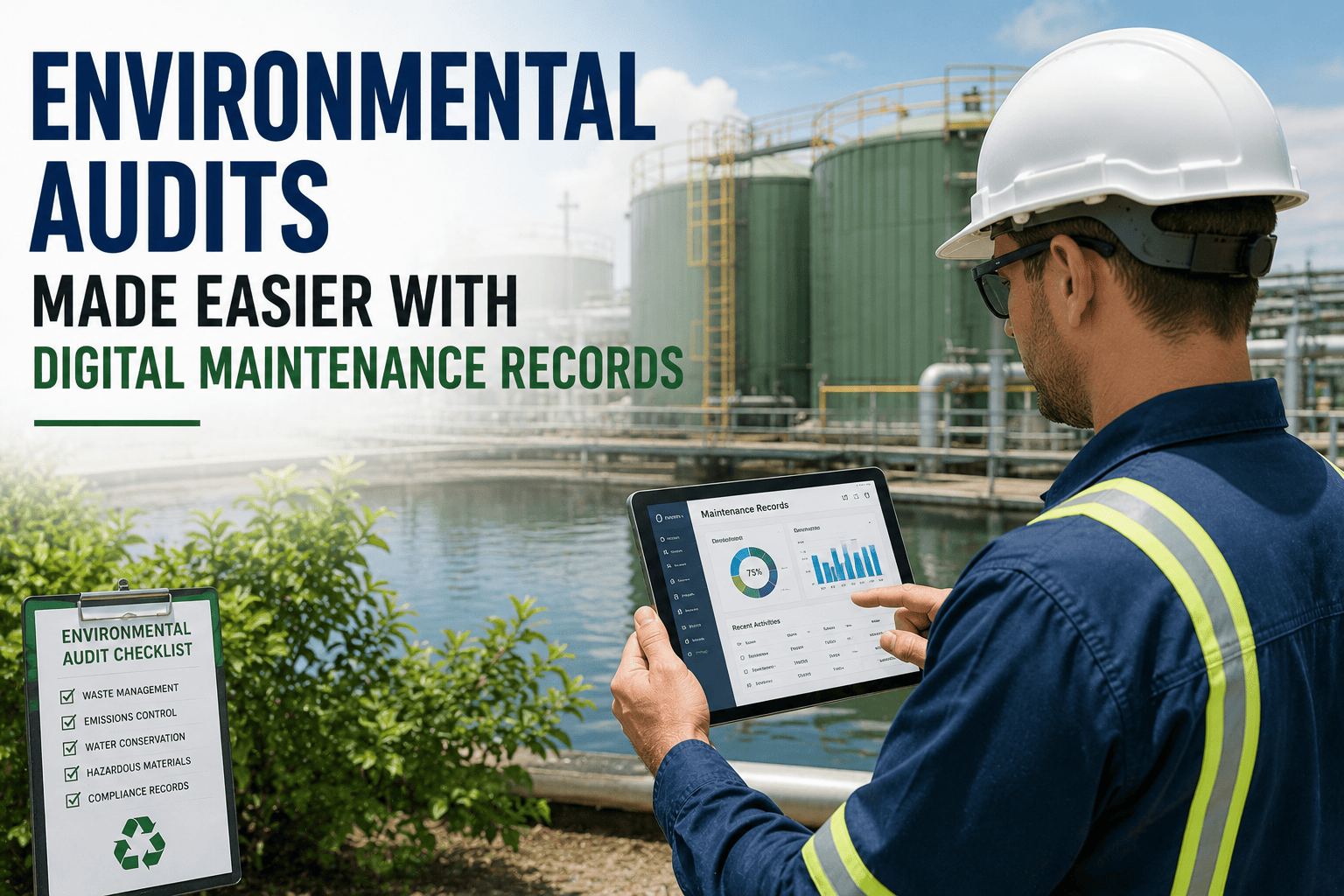
A permit condition doesn't read like a maintenance instruction, but that's exactly what most of them are. "Maintain abatement equipment in efficient working order" is a PM schedule. "Calibrate monitoring instruments in line with MCERTS" is a calibration task. "Report any exceedance without delay" depends entirely on whether an alarm or an inspection caught the fault first. Whether your site answers to the EA, SEPA, NRW, or DAERA, the permit itself is really a checklist of maintenance obligations written in regulatory language. A CMMS like OxMaint maps each permit condition to the asset and PM task behind it, so nothing gets missed between the schedule and the report.
Turn Permit Conditions Into Tracked Maintenance Tasks
Map EA, SEPA, NRW, and DAERA permit conditions to real PM schedules, automate statutory reminders, and export reporting-ready evidence in one place.
Four Regulators, One Underlying Question
Whichever body issued your permit, the question at every inspection is the same: can you prove the equipment behind each condition was maintained and working when it mattered?
Environment Agency
Covers England, regulating installations under the Environmental Permitting Regulations and IED, with BAT conclusions setting the maintenance bar.
SEPA
The Scottish Environment Protection Agency issues PPC permits and expects the same abatement and monitoring maintenance evidence as EA sites.
NRW
Natural Resources Wales regulates permitted installations across Wales, with compliance assessment scoring that weighs directly on maintenance records.
DAERA
Northern Ireland's environmental regulator, applying equivalent permit conditions where abatement and monitoring equipment upkeep is non-negotiable.
Permit Conditions That Are Actually Maintenance Tasks
Read past the legal phrasing and most conditions map cleanly onto a PM task, a calibration interval, or an inspection frequency your maintenance team already owns.
| Permit Condition | Underlying Maintenance Task | If Missed |
|---|---|---|
| Abatement equipment kept in efficient working order | Scrubber, filter, or condenser PM schedule | Emission exceedance, enforcement notice |
| Monitoring equipment calibrated to MCERTS | Instrument calibration certificate | Invalid emissions data, compliance score drop |
| Report exceedances without delay | Alarm testing and response log | Late reporting, loss of regulator trust |
| Site condition report accuracy | Tank, bund, and containment inspection | Land contamination liability |
Where BAT, IED and COMAH Meet the Maintenance Schedule
BAT-Associated Emission Limits
BAT conclusions set the emission ceiling, but staying under it is a function of how well abatement equipment is maintained day to day.
IED Article 21 Reviews
Permit reviews triggered by updated BAT conclusions expect maintenance techniques as evidence that operating conditions are being met.
COMAH Safety-Critical Equipment
Safety-critical elements identified in a COMAH safety report need their own maintenance trail, distinct from routine site upkeep.
Reporting Deadlines
Annual returns and compliance assessments are only as strong as the maintenance and calibration records behind each data point.
Permit Compliance Maturity
Reactive
Maintenance evidence is chased down after a compliance assessment visit is already scheduled, not before.
Maintained But Siloed
PM records exist and are current, but nobody has mapped them against the specific permit conditions they support.
Integrated & Reporting-Ready
Every permit condition is tied to an asset and a PM task, so an annual return or spot check pulls straight from live data.
The Numbers Behind Permit Non-Compliance
A regulator doesn't just want the emission figure — they want proof of the maintenance behind it, on demand and without a scramble. Sign up free to map your permit conditions to real PM tasks, or book a demo to see how a reporting deadline looks when the evidence is already there.
Never Miss a Reporting Deadline Again
Standardised statutory reminders, permit-mapped PM tasks, and one-click evidence export — built for EA, SEPA, NRW, and DAERA reporting cycles.
How OxMaint Maps Maintenance to Permit Conditions
Map Conditions to Assets
Each permit condition is linked to the specific asset and PM task that satisfies it, instead of sitting in a separate document.
Schedule Against Limits
PM frequency is set to match BAT-associated limits and calibration intervals, not a generic maintenance calendar.
Auto-Flag Statutory Tests
Statutory inspection and calibration dates are tracked automatically, so a lapsed test never becomes a compliance finding.
Export for Reporting
Annual returns and compliance assessments pull directly from the same live maintenance record, ready to submit.
Frequently Asked Questions
Do EA, SEPA, NRW and DAERA all expect the same maintenance evidence?
The regulators differ in process, but the underlying expectation is consistent: abatement and monitoring equipment must be maintained, calibrated, and evidenced against the conditions written into the permit.
How does BAT relate to my maintenance schedule?
BAT conclusions set the emission or performance limit your permit must meet, and the maintenance schedule for the equipment involved is usually the practical mechanism for staying inside that limit.
What happens if a statutory calibration lapses?
A lapsed calibration can invalidate the emissions or monitoring data reported under your permit, which regulators typically treat as a compliance gap regardless of whether an actual exceedance occurred.
Can maintenance software actually reduce reporting deadline risk?
Yes, when PM tasks are mapped directly to permit conditions, the same system that schedules the work can also generate the evidence trail needed for annual returns and compliance assessments.
Is COMAH maintenance tracked separately from routine EHS maintenance?
Safety-critical equipment identified under COMAH usually needs its own distinct maintenance trail, but it can still live in the same system as routine PM work provided it is clearly flagged and tracked to its own intervals.