Every facility manager knows the feeling — an unexpected HVAC breakdown on a Monday morning, a packed building, and a repair bill that wipes out three months of your maintenance budget. In 2026, commercial HVAC maintenance is no longer optional spend. It's risk management. Sign up for Oxmaint to start tracking your HVAC assets today, or book a demo to see how facilities teams cut reactive costs by up to 67%.
Facility Management & HVAC
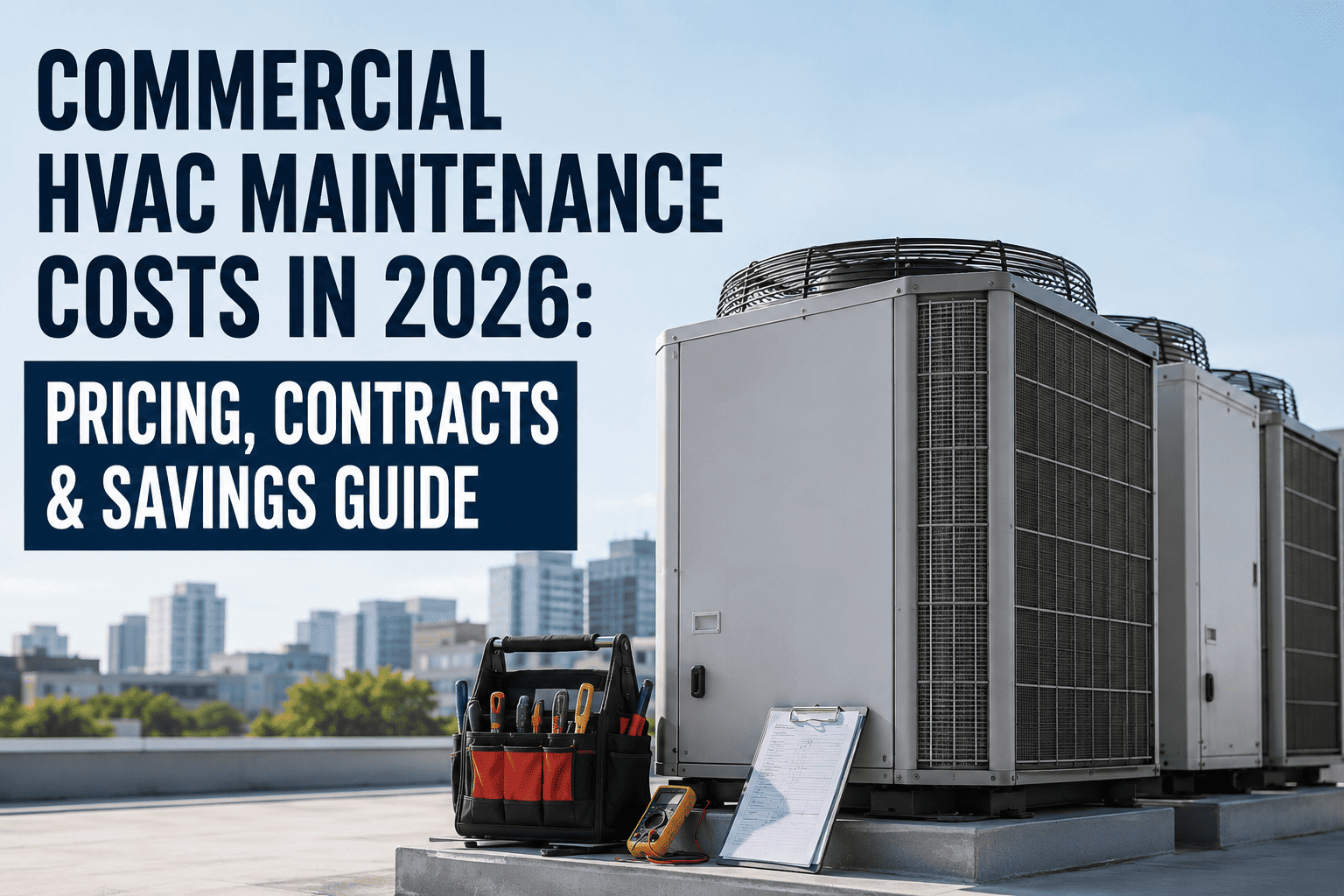
Commercial HVAC Maintenance Costs in 2026: Pricing, Contracts & Savings Guide
10–12 min read
$0.15–$0.30
per sq ft per year — industry benchmark for commercial HVAC maintenance budgeting
$2,500–$10,000
average cost of a single emergency compressor repair — one avoided breakdown covers years of PM contracts
67%
reduction in emergency repair cost per event with planned preventive maintenance vs reactive callout
$1,000–$10,000+
annual contract range for commercial HVAC, scaled to building size and system complexity
What Does Commercial HVAC Maintenance Actually Cost in 2026?
The honest answer is: it depends on what you're maintaining, where you are, and how you're contracting. But the data is clear enough to plan around. Commercial HVAC maintenance costs break down across three dimensions — per-visit fees, annual contract pricing, and per-square-foot budgeting benchmarks. Understanding all three helps facility managers build realistic budgets and evaluate whether their current contracts are competitive.
Per Visit
$200 – $1,000+
Single maintenance visit, depending on building size and number of units. Service call fees range $180–$350 separately.
Annual Contract
$1,000 – $10,000+
Full-year PM agreement covering 2–4 visits. Large facilities (hospitals, campuses) can exceed $10,000 per year.
Per Square Foot
$0.15 – $0.30/sq ft
Industry rule of thumb for annual budgeting. Hot-humid climates add 20–35% versus temperate regions.
Emergency Repair
$1,500 – $10,000
Reactive callout without a contract. After-hours and weekend premiums apply. Compressor replacements hit the top of this range.
Cost by Building Type: What Should You Budget?
System complexity, occupancy type, and operating hours all shift the maintenance cost curve. A retail unit running two rooftop units behaves very differently from a hospital with 24/7 critical systems. Use this as a benchmarking reference — and sign up for Oxmaint to track your actual spend against these benchmarks in real time.
Small Retail / Office
1,000–5,000 sq ft
$500 – $1,500
1–3 RTUs
Mid-Size Office
5,000–20,000 sq ft
$1,500 – $4,000
VRF / Multi-zone split
Large Commercial
20,000–100,000 sq ft
$4,000 – $10,000
Chiller, AHU, BMS
Hospital / Campus
100,000+ sq ft
$10,000 – $50,000+
Critical systems, 24/7 coverage
The 4 Contract Types: Which One Are You Paying For?
Not all HVAC maintenance contracts are equal — and the difference between a labour-only agreement and a full-coverage contract can mean tens of thousands of dollars in unexpected exposure. Most commercial HVAC contracts fall into four categories. Knowing which tier you're on determines your true total cost of ownership.
Tier 1
Full Coverage
Lowest Risk
Labour, parts, materials, and 24/7 emergency response included. Fixed annual cost — the contractor assumes all repair risk. Highest upfront cost, most predictable budget.
$3,000 – $10,000+/yr
Tier 2
Labour Only
Moderate Risk
Labour costs fixed, you pay for parts separately. Reduces budget volatility on the labour side but leaves you exposed to parts markup on emergency components.
$1,500 – $5,000/yr
Tier 3
Scheduled PM Only
Moderate Risk
Fixed visits at agreed intervals — quarterly or bi-annual. No emergency labour cover. Reactive repairs billed separately. Good baseline for low-criticality assets.
$1,000 – $3,500/yr
Tier 4
Time & Materials
Highest Risk
No contract. Call when you need it. Maximum flexibility, minimum predictability. One compressor failure can cost more than 3 years of a Tier 1 contract.
$180–$350 per call
What Drives Your HVAC Maintenance Cost Up?
If your maintenance spend keeps creeping, the answer usually sits in one of five areas. Identifying the driver is the first step to controlling it. Facilities teams using Oxmaint to track maintenance data pinpoint cost drivers in weeks rather than quarters — book a demo to see how cost analysis works across a multi-site portfolio.
Deferred Maintenance
Skipped PM visits lead to 2–3x higher repair costs within 18 months. Fouled coils alone account for 30–40% of efficiency degradation cases.
Ageing Equipment (10+ Years)
Systems aged 10–15 years require 2–3x the maintenance budget of newer equipment. Beyond 15 years, repair-vs-replace analysis becomes critical.
Climate Zone
Hot-humid climates increase annual HVAC maintenance cost by 20–35% versus temperate regions due to higher system load and corrosion exposure.
No Performance Tracking
Without COP or energy trending data, performance degradation goes undetected until a breakdown occurs — by which point reactive repair costs dominate.
Emergency / After-Hours Calls
Weekend and after-hours HVAC service calls carry significant premiums. Reactive-only facilities pay far more per event than contract customers.
Preventive Maintenance vs Reactive: The Real Cost Difference
The numbers on planned vs reactive maintenance are stark. A structured bi-annual PM programme doesn't just reduce downtime — it materially changes the cost profile of maintaining an HVAC estate. This is the core ROI case for structured maintenance contracts and the reason facility managers tracking these outcomes with Oxmaint consistently report measurable cost reduction within the first year. Start your free trial and build your PM schedule today.
74%
reduction in unplanned failures within 12 months of structured bi-annual PM
18–22%
energy efficiency recovery from coil cleaning and refrigerant optimisation
Predictable
annual cost with contract pricing and parts discounts
Warranty
manufacturer warranty maintained — most require documented quarterly service
VS
$1,500–$10,000
per emergency repair event — compressor, heat exchanger, or controls failure
+20–35%
higher energy bills from fouled coils and refrigerant charge loss going undetected
Unpredictable
budget variance — one compressor failure can exceed a full year of PM contract cost
Voided
manufacturer warranties voided by lack of documented maintenance records
5 Strategies to Reduce Commercial HVAC Maintenance Costs
Cost reduction in HVAC maintenance isn't about spending less on PM — it's about spending it smarter. These five strategies are consistently used by high-performing facilities teams to control costs without compromising reliability.
01
Centralise Your Asset Register
Scattered spreadsheets and paper logs make it impossible to see which assets are approaching end-of-life, costing you in emergency repairs on systems that should have been replaced. A centralised CMMS keeps your entire HVAC fleet visible in one place.
02
Automate PM Scheduling
Missed PM visits are the leading cause of avoidable breakdowns. Automated scheduling with mobile-triggered work orders eliminates the gap between what's planned and what actually gets done.
03
Track COP and Energy Performance
Performance degradation — fouled coils, refrigerant loss, controls drift — is invisible without trend data. COP monitoring catches the 18–22% efficiency losses before they become repair events.
04
Negotiate with Data, Not Assumptions
Contractors price risk. If you can demonstrate a clean maintenance history and low repair frequency, you negotiate from a position of strength. Documented asset performance is your leverage.
05
Plan Replace-vs-Repair Decisions Early
Maintenance costs on 15+ year systems spike sharply. Tracking repair spend per asset over time shows exactly when cumulative maintenance cost exceeds replacement value — before the crisis, not after.
Stop Managing HVAC Costs Reactively
Oxmaint gives facility managers a single platform to schedule PM, track asset performance, log compliance records, and generate the cost data that drives better contract negotiations. Purpose-built for commercial HVAC fleets of any size.
Frequently Asked Questions
QHow much should I budget per square foot for commercial HVAC maintenance?
The widely used industry benchmark is $0.15–$0.30 per square foot per year. Hot-humid climates, older equipment, or high-occupancy buildings (hospitals, data centres) will push toward the top of that range or exceed it. Use the benchmark as a floor for planning, then adjust based on your actual asset age and system type.
QWhat is the difference between a labour-only and full-coverage HVAC contract?
A labour-only contract fixes your technician costs but leaves you paying for parts at the contractor's price — which can be significant during component failures. A full-coverage contract bundles parts, labour, and emergency response into a fixed annual fee. The premium you pay for full coverage is almost always recovered the first time a compressor or heat exchanger fails.
QHow often should commercial HVAC be serviced?
The standard is quarterly for commercial systems, or twice yearly minimum for lower-criticality assets. Critical environments — healthcare, data centres, 24/7 operations — often require monthly inspections. Manufacturer warranties frequently require documented quarterly service, so skipping visits carries both operational and warranty risk.
QIs it worth signing a commercial HVAC maintenance contract?
For most commercial facilities, yes. A single avoided emergency repair ($1,500–$10,000 for a compressor) covers multiple years of a mid-tier PM contract. Contracts also give you priority scheduling, parts discounts, and documented maintenance records that protect manufacturer warranties and support compliance requirements.
QWhat is the biggest driver of HVAC maintenance cost overruns?
Deferred maintenance — skipping PM visits — is the primary cause. Fouled coils alone account for 30–40% of efficiency degradation cases that eventually become repair events. Ageing equipment (10–15+ years) is the second major driver, requiring 2–3x the maintenance budget of newer systems. Both are visible and manageable with proper asset tracking.
Oxmaint: HVAC Asset Management Built for Facility Teams
PM scheduling, work order management, asset cost tracking, compliance records, and energy performance monitoring — all in one platform. Facility managers at commercial properties, healthcare sites, and multi-building portfolios use Oxmaint to turn reactive HVAC spend into controlled, predictable maintenance operations.