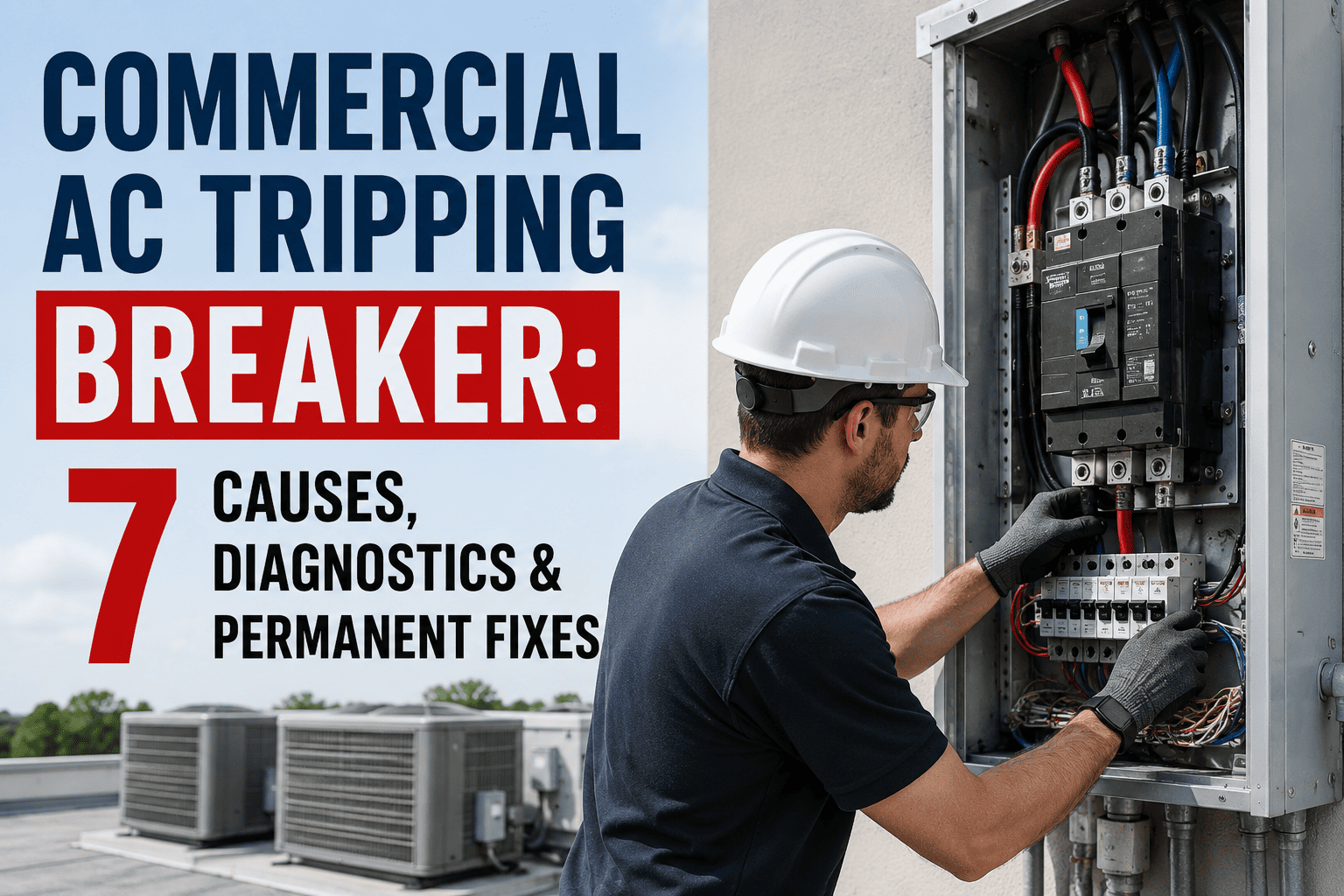
When a commercial AC trips its breaker, it is not an inconvenience — it is your electrical system issuing a formal warning. Resetting the breaker without diagnosing the cause is like silencing a fire alarm and walking away. The underlying fault is still there, still drawing excess current, and still driving your system toward compressor failure, motor burnout, or an electrical fire. Emergency HVAC repairs cost 2 to 3 times more than planned repairs, and a single after-hours compressor failure can exceed $1,500 in labor alone before parts are factored in. A CMMS like OxMaint tracks electrical component health, schedules preventive checks, and ensures the warning signs that precede breaker trips are caught — documented, actioned, and resolved — before they escalate.
Catch Electrical Faults Before They Trip Your Breaker Again
OxMaint automates HVAC electrical inspection schedules, tracks capacitor and contactor age, and logs every fault event against the asset — so your team finds the cause, not just the symptom.
Why a Tripped Breaker Is a Symptom, Not the Problem
A circuit breaker does one job: protect your building's wiring from an overcurrent event that could cause a fire or damage equipment. When an AC system trips its breaker repeatedly, the breaker is functioning correctly — but something in the HVAC circuit is drawing more current than it should. Book a demo to see how OxMaint helps facility teams build the electrical inspection records that make these root causes visible.
Trips immediately on startup
Compressor hard start, shorted winding, or failed capacitor
Trips after running 10–30 min
Overheating from dirty coils, low refrigerant, or failing motor
Trips on hot days only
System overcurrent under peak load — often compressor or condenser fan
Trips immediately when reset
Hard short circuit — requires immediate power isolation, do not reset again
7 Causes of a Commercial AC Tripping Its Breaker
Capacitors store and release energy to help the compressor and fan motors start and sustain operation. As a capacitor degrades, it loses its rated microfarad value and can no longer deliver the starting boost motors need. The motor compensates by drawing excess current directly from the circuit — often enough to trip the breaker on startup or during a high-load run cycle. A failed capacitor that tests significantly below rated value is one of the fastest, lowest-cost fixes for a chronically tripping AC.
Test capacitor with a multimeter set to capacitance mode. Compare measured µF value against the rated µF printed on the capacitor label. A reading more than 10% below rated value indicates replacement is needed.
Replace the capacitor with an exact-rated replacement. Capacitors are low-cost parts ($15–$80) but store charge even when power is off — discharge before handling or have a technician perform the swap.
The compressor is the highest-current-drawing component in any AC system. When it begins to fail — through worn motor windings, seized mechanical components, or internal electrical shorts — it draws dramatically elevated current at startup, often called "locked rotor amperage." A compressor that trips the breaker immediately on startup, or that draws high amps during normal operation, is communicating that it is near the end of its service life. Continuing to reset and restart accelerates winding damage.
Use a clamp meter to measure compressor amperage at startup. Compare to rated load amps (RLA) on the nameplate. Locked rotor amps significantly above RLA confirm compressor stress. Disconnect compressor wiring and re-energize — if rest of system runs normally, the fault is internal to the compressor.
Install a hard start kit to provide additional starting torque and reduce inrush current — this can extend a struggling compressor's life while planning replacement. Full compressor replacement is required for shorted windings or seized components.
A fouled condenser coil cannot reject heat efficiently. The compressor is forced to work harder and longer to achieve the same cooling effect — drawing elevated current throughout the run cycle. The Department of Energy found that a moderately dirty coil increases electricity use by 39% for a 3-ton unit and 47% for a 5-ton system. That additional electrical draw can push a circuit that was operating near its rated capacity over the edge, tripping the breaker during peak summer load.
Visually inspect condenser coil fins for dust, debris, and biological fouling. Check compressor discharge line temperature — elevated discharge temps under normal conditions confirm reduced heat rejection. Measure operating amperage and compare to nameplate RLA.
Clean condenser coils with a coil cleaner approved for the fin material. Rinse from inside out to push debris clear of the coil. Schedule quarterly coil inspections and annual professional cleaning for commercial units in high-particulate environments.
Low refrigerant charge prevents proper heat absorption, causing the system to run continuously without reaching setpoint. Extended run cycles mean the compressor draws current for longer periods than the circuit is designed to sustain. Additionally, low refrigerant causes the compressor to overheat — triggering the internal thermal overload protector and drawing a surge of current when it attempts to restart after cooling down.
Measure suction and discharge pressures with a manifold gauge set. Low suction pressure below manufacturer specification indicates undercharge. Inspect visible refrigerant lines for oil staining or frosting — both point to a leak site.
Refrigerant handling requires EPA 608 certification. A licensed technician must locate and repair the leak before recharging. Do not recharge without leak repair — refrigerant loss will recur and the compressor will sustain further thermal damage.
The contactor is an electrically operated switch that controls power to the compressor and condenser fan motor. When contactor contacts become pitted, burned, or welded from repeated arcing, they create high-resistance connections that generate heat and can cause short circuits. A shorted or partially welded contactor can keep the compressor energized continuously, or cause immediate breaker trips on startup as current bypasses the normal circuit path.
With power off, inspect contactor contacts visually for blackening, pitting, or burning. Check contact gap — contacts that appear fused or have insufficient gap are compromised. Test coil resistance with a multimeter.
Replace the contactor — commercial heavy-duty models cost $40–$85 and take under an hour to replace. Contactor replacement is one of the most cost-effective preventive components to swap on a scheduled basis before failure occurs.
Frayed conductors, corroded terminals, loose connections at the disconnect, or undersized wiring for the system's actual electrical load all create resistance in the circuit. Resistance generates heat, heat accelerates insulation breakdown, and insulation breakdown creates the path for a short circuit that trips the breaker instantly. In commercial buildings, wiring that has degraded over years of thermal cycling is among the most dangerous and commonly overlooked causes of repeated breaker trips.
Visually inspect all wiring at the disconnect, control panel, and unit terminals with power off. Look for discoloration from heat, frayed insulation, and corrosion at terminal screws. An electrician can perform a megohmmeter test to identify insulation breakdown not visible to the eye.
Tighten all terminal connections to manufacturer torque specs. Replace any wiring with compromised insulation. If wiring is undersized for the system's electrical load, the wire run must be replaced — do not upsize the breaker as a workaround.
Circuit breakers age and weaken over years of thermal cycling. An older breaker may begin tripping at currents well below its rated amperage — nuisance tripping that mimics a system fault. Conversely, a breaker sized too small for the system's actual load (a common error during equipment upgrades) will trip under normal operating conditions. Most commercial AC systems require 20–60 amp dedicated circuits depending on tonnage; mismatched breakers are common after equipment replacements.
Verify the breaker amperage rating matches the system's minimum circuit ampacity (MCA) listed on the unit nameplate. Have an electrician test the breaker's actual trip threshold — a breaker tripping significantly below its rated value is mechanically failed and requires replacement.
Replace the breaker with a correctly rated unit. This is an electrician's job — do not upsize the breaker to stop nuisance trips without confirming the wiring gauge can handle the higher rating. Always match breaker size to the unit's nameplate MCA specification.
Step-by-Step Diagnostic Sequence
Follow this sequence before escalating to a service call. Many trips are resolved at Step 2 or 3. Sign up free and log each step as a checklist in OxMaint — creating an audit trail your technician can reference before arrival.
Do Not Reset Immediately
If the breaker trips on startup or immediately on reset, stop. Repeated resets on a hard short can cause wiring fires. Allow the system to sit for 30 minutes to let any thermal overload cool down before attempting one controlled reset.
Check and Replace the Air Filter
A severely restricted filter starves the evaporator coil of airflow, freezes the coil, and causes the compressor to work under abnormal pressure conditions. Replace the filter, allow frozen coil to thaw fully (2–4 hours with system off), then attempt restart.
Inspect Condenser Unit Clearance
Confirm the condenser unit has adequate clearance on all sides (minimum 2 feet), that fins are not visibly clogged with debris, and that the condenser fan blade spins freely by hand with power off. A blocked or seized fan causes immediate compressor overload.
Test the Capacitor
With power off and the capacitor discharged, test with a capacitance meter. Compare reading to rated µF on the label. A reading more than 10% below rated value means the capacitor is the likely cause — replace before further testing.
Inspect Contactor and Wiring
With power off, inspect contactor contacts for blackening or pitting. Check all wiring connections at the disconnect and unit terminals for looseness or visible heat damage. Tighten any loose connections and note any discolored insulation for technician review.
Measure Running Amperage
Once running, use a clamp meter on the compressor power lead. Compare to the nameplate RLA. Amperage consistently above RLA confirms the compressor or system is operating under excessive load — escalate to a licensed technician for refrigerant, compressor, and electrical assessment.
Breaker Trip Pattern Reference
| When It Trips | Most Likely Cause | Urgency | DIY or Technician |
|---|---|---|---|
| Instantly on startup | Failed capacitor, shorted compressor winding, or hard short in wiring | Urgent | Technician |
| Immediately when reset | Hard short circuit — wiring, compressor, or contactor | Do not reset again | Electrician + Technician |
| 10–30 min after startup | Dirty coils, failing motor overheating, or low refrigerant | Moderate | DIY coil check first |
| Only during peak heat | System overcurrent under peak load — coils or compressor | Moderate | DIY coil check first |
| Randomly or intermittently | Loose wiring connection with thermal cycling, or aging breaker | Moderate | Electrician |
| After running normally for seasons | Capacitor degradation, contactor wear, or motor aging | Scheduled | Technician — planned visit |
Preventive Tasks That Stop Breaker Trips Before They Happen
- Inspect and replace air filters — prevent coil freeze and compressor overcurrent
- Clear debris from around outdoor condenser units (minimum 2-foot clearance)
- Listen for unusual sounds at startup — rattling, grinding, or hard-start hesitation
- Clean condenser coil fins and inspect for corrosion or physical damage
- Inspect wiring at disconnect and unit terminal block for looseness or heat discoloration
- Test capacitor µF value — replace any reading 10%+ below rated value
- Inspect and replace contactors showing visible pitting or burning on contact surfaces
- Measure and log compressor running amperage against nameplate RLA — trend over time
- Verify refrigerant charge is within manufacturer specification by a licensed technician
- Test breaker trip threshold if the unit is over 10 years old
How OxMaint Keeps Commercial AC Electrical Health on Track
Scheduled Electrical Inspections
Attach capacitor tests, contactor inspections, and wiring checks to each AC unit as recurring PM tasks — auto-generating work orders on monthly, quarterly, and annual cycles so nothing is skipped between seasons.
Amperage and Component History
Log compressor amperage readings and component test results against each asset over time. A rising amperage trend across quarterly readings is an early signal of compressor stress — visible before the first breaker trip.
Work Order Tracking Per Unit
Every breaker trip event, repair, capacitor replacement, and contactor swap is logged against the specific asset — building a fault history that makes repeat failures visible and informs repair-versus-replace decisions.
Fleet-Wide Asset Registry
Track every commercial AC unit across your portfolio by install date, equipment age, last service, and electrical component history — filtering to surface the units most overdue for electrical inspection before a trip event occurs.
The Next Breaker Trip Is a Preventable Event
OxMaint tracks capacitor age, compressor amperage trends, and wiring inspection history — so your team catches the warning signs weeks before the circuit trips again.
Frequently Asked Questions
Is it safe to keep resetting the breaker when the AC trips it?
No — and this is one of the most common mistakes in commercial facility management. Each reset attempt on a system with a hard short or failing compressor subjects the wiring and motor windings to another inrush current event. If the breaker trips immediately on reset, do not reset it again. Isolate the unit and call a licensed technician. Repeated resets on a failing compressor accelerate winding damage and can create a wiring fire risk. Sign up free to log and track every trip event per unit in OxMaint.
What is the most common reason a commercial AC trips its breaker?
A failing run capacitor is the single most common cause — and one of the cheapest to fix. Capacitors degrade gradually over years of operation, losing their rated microfarad value. As they weaken, the compressor and fan motors draw increasing startup and run current from the circuit until the breaker can no longer sustain it. Testing the capacitor with a multimeter is the first diagnostic step after checking filters and condenser clearance.
How do dirty condenser coils cause breaker trips?
When condenser coils are fouled with dirt, debris, or biological growth, the coil cannot reject heat efficiently. The compressor must work harder and longer to achieve the same cooling — drawing elevated current throughout the run cycle. The Department of Energy found that a moderately dirty coil increases electricity consumption by 39% on a 3-ton unit. That additional draw pushes circuits operating near rated capacity into sustained overcurrent, eventually tripping the breaker during peak load. Book a demo to see how OxMaint tracks coil cleaning schedules per unit.
When does a tripping AC breaker mean compressor replacement?
Compressor replacement is indicated when the unit trips immediately on startup after capacitor replacement has been confirmed, when clamp meter readings show the compressor drawing at or above locked rotor amperage, or when resistance testing reveals shorted or grounded motor windings. Isolating the compressor wiring and re-energizing the unit is the definitive test — if the rest of the system runs normally, the fault is internal to the compressor.
How does a CMMS prevent AC breaker trips?
A CMMS like OxMaint prevents breaker trips by ensuring the maintenance tasks that catch electrical deterioration — capacitor testing, contactor inspection, wiring checks, coil cleaning — happen on a scheduled cycle rather than reactively. It logs component age and test results per asset, making rising amperage trends and aging components visible before they become breaker trips. Facilities using structured PM programs report 50–70% fewer emergency HVAC service calls and significantly lower repair costs over the equipment's lifetime.