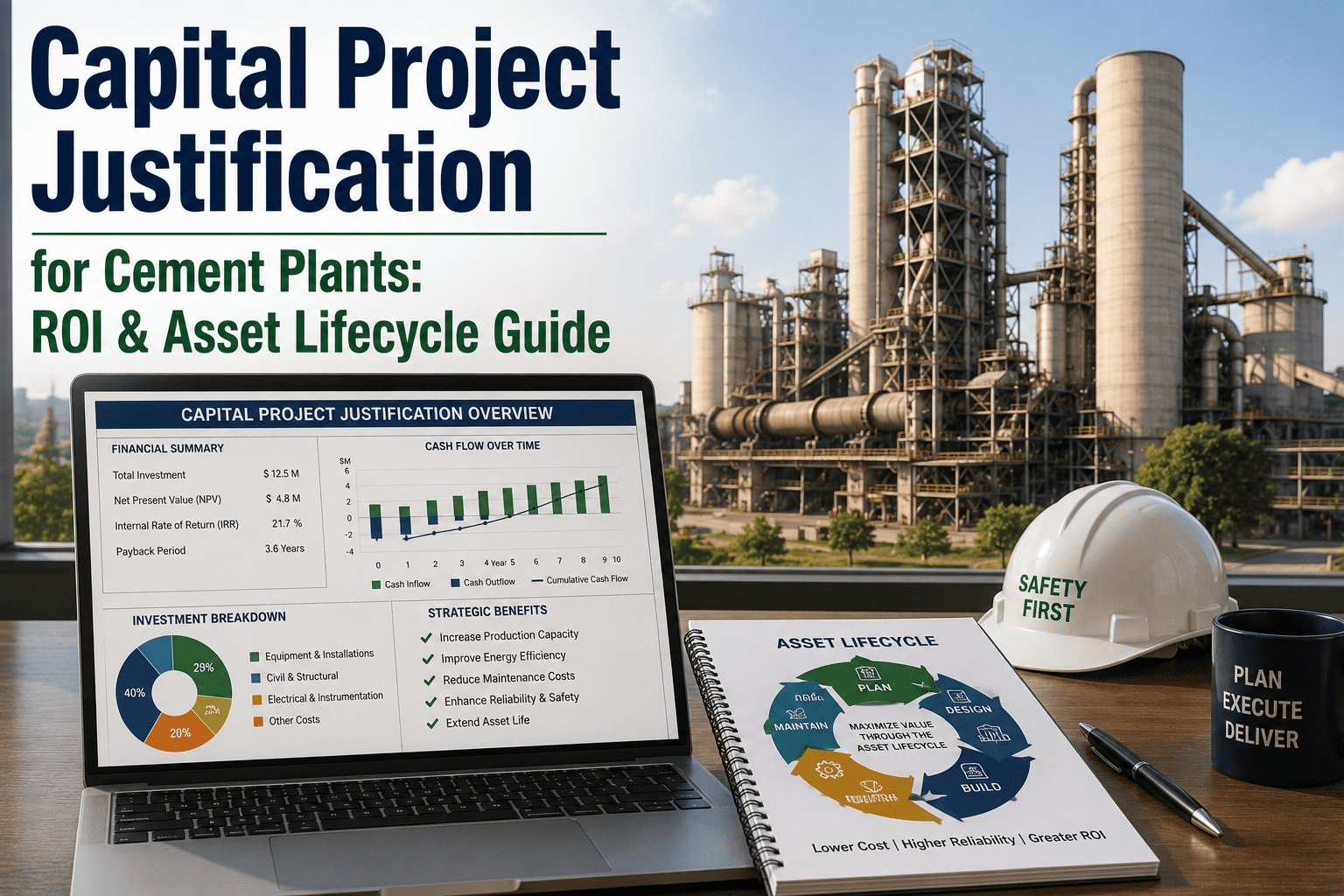
A maintenance manager who asks for a new raw mill motor because "it keeps breaking down" rarely gets the budget approved. A maintenance manager who shows five years of repair cost, downtime hours, and a clear payback period usually does. The difference isn't the equipment, it's the business case. Sign up to see how Oxmaint turns your maintenance history into the numbers finance actually wants to see.
4 Costs
Core cost categories a lifecycle cost analysis has to account for
3-5 yrs
Maintenance history most finance teams want before approving a replacement
60-70%
Of an asset's lifetime cost that typically comes from operation and maintenance, not the purchase price
1 Number
Payback period finance teams look for before scanning the rest of the proposal
Why Good Capex Requests Still Get Rejected
Finance doesn't reject a request because the equipment isn't failing, they reject it because the request doesn't speak their language. "It breaks a lot" isn't a number finance can compare against other projects competing for the same budget. Repair cost trends, downtime hours converted to lost production value, and a clear payback period are.
The 4 Components of Lifecycle Cost
| Cost Component |
What It Includes |
| Acquisition cost |
Purchase price, installation, commissioning, and any process downtime during changeover |
| Operating cost |
Energy consumption, spare parts, and labor required to run the asset day to day |
| Maintenance cost |
Preventive work, repairs, and the downtime hours each failure has historically cost |
| Disposal or salvage value |
Residual value recovered or decommissioning cost owed at end of life |
Every Number Finance Asks For Is Already in Your CMMS
Oxmaint keeps five years of repair cost, downtime hours, and parts spend attached to every asset, so building a capex business case is a report, not a research project. Sign up for a free trial and pull your first asset history report, or book a demo to see a lifecycle cost report generated live.
Worked Example: Repair vs Replace an Aging Raw Mill
| Cost Factor |
Continue Repairing |
Replace This Year |
| Annual repair cost trend |
Rising year over year based on five-year history |
Reset to baseline warranty-covered cost |
| Unplanned downtime hours |
Increasing as component wear accelerates |
Reduced sharply with new bearings and drive components |
| Energy efficiency |
Declining as wear increases power draw per ton ground |
Improved with modern drive and grinding efficiency |
| Upfront cost |
Low this year, but climbing each subsequent year |
High this year, offset by lower cost in later years |
Turning the Comparison Into a Payback Period
Add the projected repair cost and downtime cost saved per year, divide the net capital cost of the new mill by that annual saving, and the result is the payback period finance will scan for first. A three to four year payback on a mill with a fifteen year expected life is usually an easy approval.
Gut-Feel Request vs Data-Backed Business Case
Gut-Feel Request
"This mill keeps failing and needs to be replaced" with no supporting numbers
No comparison against other capital projects competing for the same budget
Finance has no payback period to weigh against the purchase price
Data-Backed Business Case
Five years of repair cost and downtime hours pulled straight from work order history
A clear lifecycle cost comparison between continuing to repair and replacing
A calculated payback period finance can weigh against every other capex request
Frequently Asked Questions
Q
How many years of maintenance history does a business case need?
Three to five years is typically enough to show a meaningful repair cost trend and smooth out any single unusual year, though older or highly cyclical equipment may benefit from a longer window if the data is available.
Q
What payback period is considered strong for a capex request?
This varies by company policy, but a payback period well under half the asset's expected useful life is generally viewed favorably, since it leaves years of positive return after the investment pays for itself.
Q
Where should this maintenance history actually come from?
A CMMS is the most reliable source, since every work order, part cost, and downtime hour is already logged against the asset, rather than being reconstructed from memory or scattered spreadsheets when a capex request is due.
Build Your Next Capex Case on Data, Not a Feeling
Oxmaint keeps repair cost, downtime hours, and parts spend attached to every asset, so your next lifecycle cost analysis and payback calculation is a report away instead of a research project. Sign up for a free trial and pull your first asset history report, or book a demo to see it built around your equipment.
Capital Justification