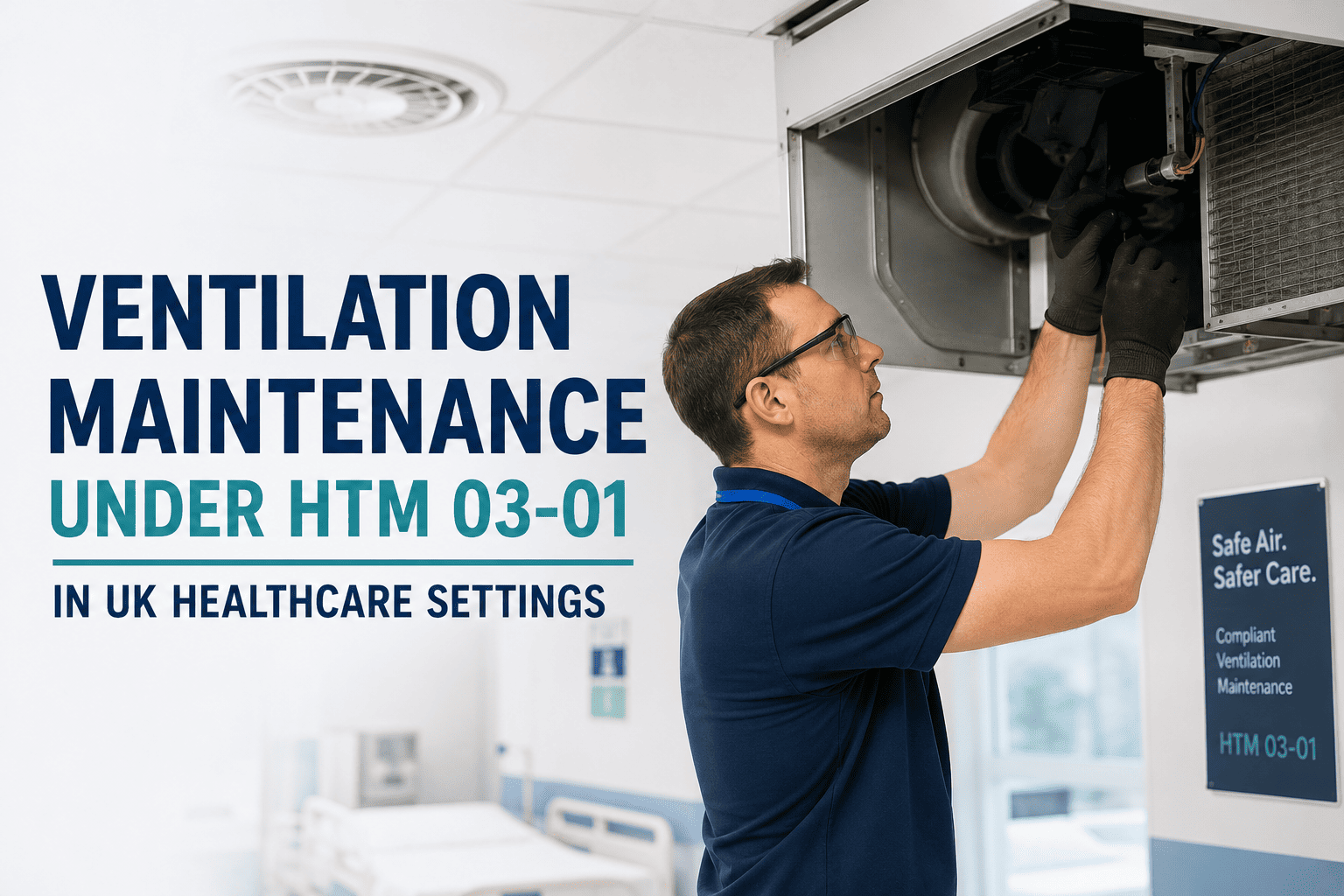
Operating theatre ventilation isn't a comfort system, it's an infection control system, and HTM 03-01 treats it that way.The performance of all critical ventilation systems, such as those serving operating suites, should be verified annually, with clearly defined roles carrying that verification through from design intent to day-to-day operation. Getting the numbers right on paper means little if the estate can't produce the verification record, the competency evidence, and the maintenance history the moment an inspector or an infection control officer asks for it. A CMMS like OxMaint keeps that HTM 03-01 record live across every theatre, isolation room, and clean room on the estate.
Track HTM 03-01 Verification Across Every Room
Air change rates, pressure differentials, and annual verification records for theatres, isolation rooms, and clean rooms, all in one place.
The Numbers Verification Is Judged Against
| Room Type | Air Change Requirement | Other Key Measure |
|---|---|---|
| Operating theatre, UCV theatre, or lay-up prep room | 18 or more air changes per hour | Differential pressure maintained at 80% or more of design |
| Anaesthetic room or operating department recovery | 12 or more air changes per hour | Clean-to-less-clean pressure gradient maintained throughout |
| Other rooms using anaesthetic gases | 8 or more air changes per hour | Noise in operating suite rooms kept at or below 50 dB(A) |
| All other clinical rooms | At least 80% of the recommended air change rate | Verified annually alongside high-risk critical systems |
Who Actually Owns Each Part of Compliance
AE(V)
The Authorising Engineer advises on ventilation safety and provides independent technical assurance to the estate.
AP(V)
The Authorised Person controls the day-to-day Safe System of Work: permits, isolations, contractor control, and records.
CP(V)
The Competent Person carries out the maintenance and periodic testing that supports verification of every system.
VSG
The Ventilation Safety Group oversees safety, resilience, and governance, reporting to the Board via the Designated Person.
Getting Through Annual Verification
Confirm Competence Before Access
The site AP(V) assesses and records the verification engineer's competence before any work on the system begins.
Measure Airflow and Pressure
Supply and extract rates, room air changes, and differential pressures are measured directly, not estimated from panel readings.
Check Mode and Design Intent
Confirm the system is running in the mode it was designed for, with seals, doors, and stabilisers free from obstruction.
Record Against the Pass Marks
Results are logged against the specific air change, pressure, and noise thresholds the room type is judged against.
HTM 03-01 Compliance Maturity
Verified When Prompted
Annual verification happens close to a deadline, with roles and records assembled reactively rather than tracked continuously.
Verified but Fragmented
Verification results exist, but AP(V), CP(V), and VSG records sit in separate places, complicating a full compliance picture.
Continuously Tracked
Every room's air change, pressure, and verification history is live and immediately producible for any review or audit.
Why Records Need to Outlast the Audit
Commissioning information, operational management routines, and maintenance records should be kept for at least five years, well beyond the life of any single annual verification cycle. That retention period matters because HSE and other bodies have a statutory right to inspect these records at any time, not just at the point of a scheduled review.
HTM 03-01 itself isn't law, but it's treated as the benchmark that legal and regulatory cases are measured against, which means a gap in the record can matter just as much as a gap in the ventilation performance itself. Sign up free to start tracking your ventilation verification history today, or book a demo to see a full HTM 03-01 record across your estate.
Keep Every Room's Verification History Ready
Air change rates, pressure differentials, and role-based sign-off tracked continuously, retained well beyond the five-year minimum.
Frequently Asked Questions
Is HTM 03-01 a legal requirement?
Not directly, but it's widely treated as best practice and is often referenced in legal and regulatory cases involving healthcare estates, effectively setting the expected standard.
What's the difference between AP(V) and CP(V)?
The AP(V) controls the day-to-day safe system of work, including permits and contractor access, while the CP(V) is the person who actually carries out the maintenance and periodic testing.
How long must ventilation records be retained?
Commissioning, operational, and maintenance records should be kept for a minimum of five years, since HSE and other bodies can request them at any time.
Do all clinical rooms need the same air change rate?
No, specific thresholds apply to operating theatres, anaesthetic rooms, and rooms using anaesthetic gases, while other clinical rooms are judged against a percentage of their recommended rate.
Who checks the competence of a visiting verification engineer?
The site's own Authorised Person (Ventilation) is responsible for assessing and recording a verification engineer's competence before any work begins on the system.