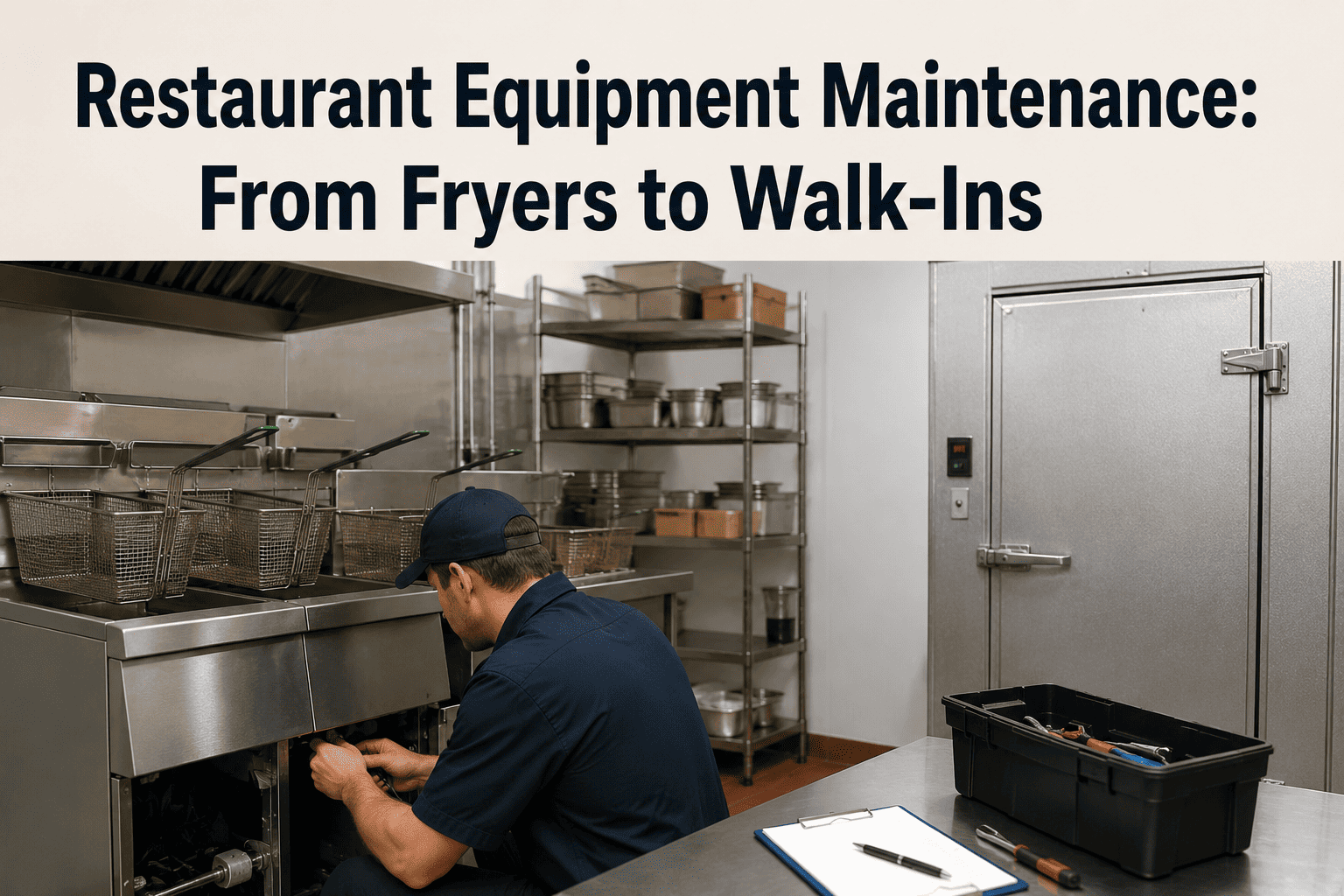
Restaurant Equipment Maintenance: From Fryers to Walk-Ins
By Mark strong on July 11, 2026
A fryer that trips mid-Friday-dinner-rush doesn't wait for a convenient moment. Neither does a walk-in compressor giving out on a Saturday delivery day, or a dishwasher jamming halfway through a full house. Restaurant kit rarely fails quietly — it fails at the exact moment it's under the most load, in front of the most guests. The kitchens that avoid this aren't luckier. They run a preventive maintenance programme built around the handful of assets that actually stop service when they go down.
6
core kitchen assets are behind most service-stopping equipment failures
3x
higher cost for an emergency repair call versus a scheduled service visit
Peak
hours are when unmaintained equipment is statistically most likely to fail
12mo
is the typical interval for a statutory commercial gas safety inspection
Stop Guessing When the Fryer Will Fail Next
Oxmaint schedules PM for every piece of kitchen equipment automatically, so oil changes, gasket checks, and gas safety visits happen before they become a mid-service breakdown. Sign up for a free trial and load your kitchen's asset list in one sitting.
The Kit That Decides Whether Service Runs Smoothly
Not every appliance in a kitchen carries equal risk. These six are where a missed service interval turns into a stopped ticket line.
Fryers
Oil TestElement Check
Degraded oil and a slow-heating element are the two silent causes of failed food safety checks and tripped breakers. A weekly oil quality test catches both before they show up on the line.
Highest-risk interval: daily filtration, weekly deep clean
Combi Ovens
DescaleDoor Seal
Scale buildup on the steam generator is the leading cause of uneven cook results and costly boiler replacements. A missed descale cycle is invisible until output quality drops mid-service.
Highest-risk interval: descale every 2–4 weeks by water hardness
Walk-In Fridges & Freezers
Gasket CheckCoil Clean
A worn door gasket forces the compressor to run near-constantly, quietly ageing the whole unit toward a total failure — usually discovered when an entire delivery of stock is at risk.
Highest-risk interval: gasket and coil check monthly
Ice Machines
SanitizeFilter Swap
Ice machines are a top source of food safety citations when sanitation is skipped, and the biggest driver of slow ice production when a water filter is left past its rated cycle count.
Highest-risk interval: sanitize every 3–6 months
Commercial Dishwashers
DescaleSpray Arm Clean
Limescale on heating elements and blocked spray arm jets are the two most common reasons a dishwasher stops hitting sanitizing temperature — a compliance issue before it's a breakdown.
Highest-risk interval: descale and jet clean weekly
Extraction & Gas Safety
Grease CleanGas Check
Grease-loaded extraction ductwork is a fire-risk finding on almost every kitchen safety audit, and gas appliance checks under CFSP-aligned schedules are non-negotiable for insurance and compliance.
Highest-risk interval: statutory gas check annually
A Simple PM Schedule That Covers the Whole Kitchen
Most kitchens don't need a complex maintenance system — they need this schedule actually followed every week.
Equipment
Daily / Weekly Task
Missed-Service Risk
Fryers
Daily oil filtration, weekly oil quality test
Failed food safety audit, tripped element
Combi Ovens
Descale cycle every 2–4 weeks
Uneven cooking, boiler replacement cost
Walk-Ins
Weekly gasket seal check, monthly coil clean
Compressor strain, full stock loss
Ice Machines
Weekly clean, quarterly sanitize and filter swap
Health citation, slow ice output
Dishwashers
Weekly descale and spray arm clean
Sanitizing temperature failure
Extraction
Monthly grease clean, annual gas safety check
Fire risk finding, insurance non-compliance
Put This Schedule on Autopilot Across Every Site
Oxmaint turns this exact PM schedule into recurring work orders, technician checklists, and a compliance record ready for any audit. Book a demo to see your kitchen equipment list configured live.
Weekly, at minimum, alongside daily filtration. Oil quality directly affects both food safety and how hard the heating element has to work, so a slipping test schedule usually shows up as a breakdown within weeks.
QWhat does CFSP mean for restaurant gas safety?
CFSP-aligned scheduling refers to structured commercial catering gas safety inspection practices — regular checks on gas appliances, ventilation, and interlock systems by a qualified engineer, typically documented annually for insurance and compliance purposes.
QWhy do walk-in fridges fail more in summer months?
Higher ambient kitchen temperatures make the compressor work harder to hold set point, so any existing gasket wear or dirty condenser coil becomes a full failure point far faster than it would in cooler months.
QHow does Oxmaint help F&B teams manage kitchen equipment PM?
Oxmaint schedules recurring PM tasks for every asset — fryers, combi ovens, walk-ins, ice machines, dishwashers, and extraction systems — and logs each completed task as a timestamped, audit-ready record technicians can complete from a mobile checklist.
Keep the Kitchen Running Before Service Starts, Not After It Stops
Oxmaint gives F&B operations one PM schedule for every piece of kitchen equipment, with compliance records ready for the next audit. Sign up for a free trial or book a demo to see it built around your kitchen's exact asset list.