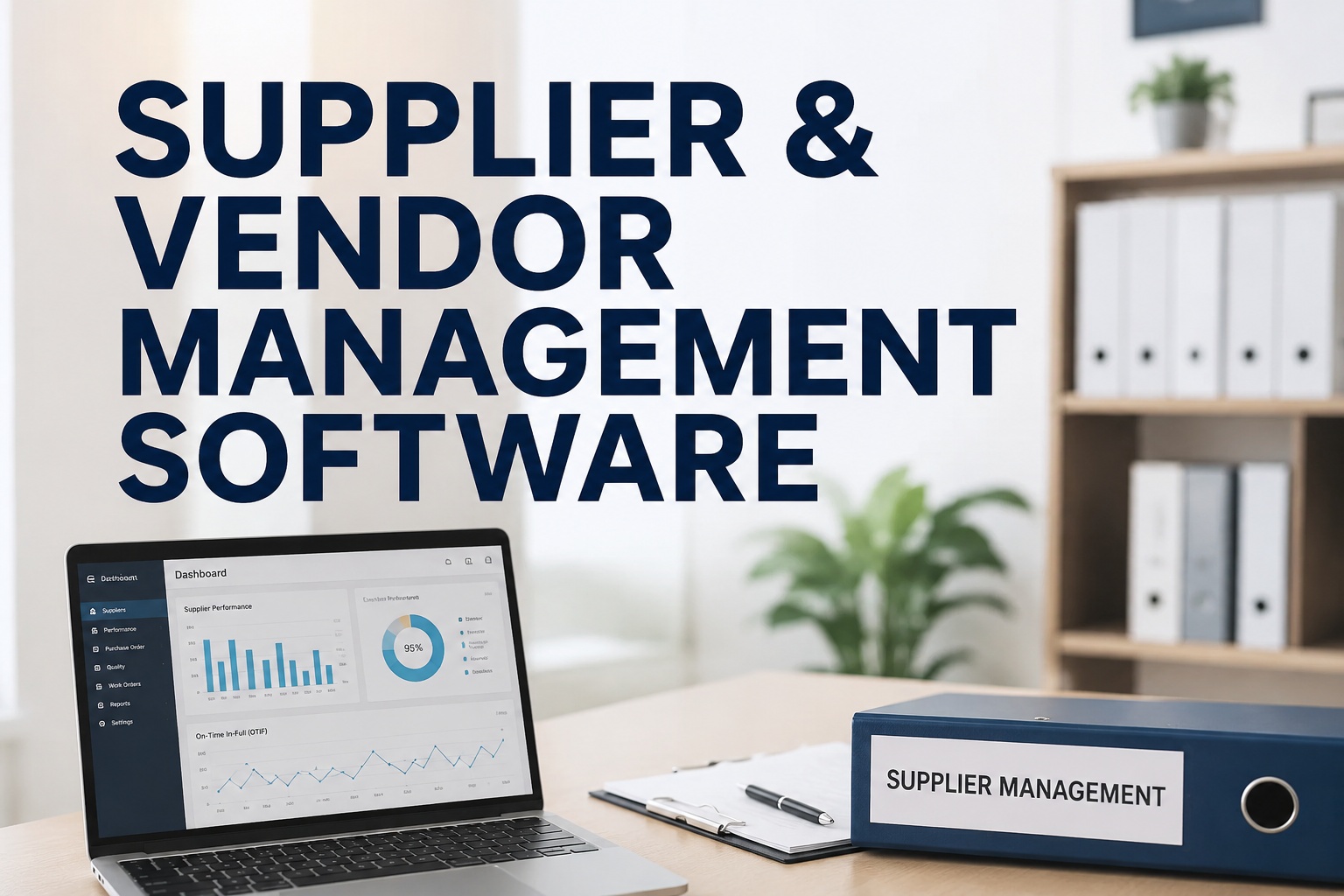
Every maintenance manager has been here: the critical spare arrives late, wrong quantity, or defective. The work order slips 48 hours, the line stays down, and the supplier's next quarterly review is still weeks away. Meanwhile procurement is negotiating pricing with the same vendor — with no visibility into what happened on the shop floor. The disconnect between what maintenance experiences and what procurement measures is where MRO supplier performance quietly rots. Oxmaint connects supplier records, POs, delivery data and work orders in one platform. Book a demo to see supplier management workflows in action.
SUPPLIER PERFORMANCE · GROUNDED IN OPERATIONAL EVIDENCE
Scorecards built from what actually happened, not what should have
The strongest MRO procurement organisations connect supplier data to work orders, PM outcomes and shop-floor reality — closing the loop between what was promised in the contract and what happened on the line.
95-98%
World-class OTIF benchmark for manufacturing MRO suppliers
75-90%
Typical mid-market UK manufacturing OTIF band (Zoho Inventory 2026)
15-25%
Supply chain risk reduction from structured scorecard governance
The Weighted Scorecard — How Real MRO Suppliers Get Judged
A supplier scorecard is not a table of metrics — it's a weighted composite that reduces multi-dimensional performance into a single defensible score procurement can act on. The weighting is the whole game: over-index on price and you'll accept 68% OTIF from the cheapest supplier while lines go down. Over-index on delivery and you'll pay 40% premium for reliability you didn't need. The industry-standard MRO weighting reflects what operations teams actually need from spare parts suppliers.
Quality (PPM · Defect Rate)
Defects per million received. The gold-standard operational measure.
35%
Delivery (OTIF · Lead Time)
On-time and in-full delivery rate. Directly impacts line uptime.
30%
Cost (PPV · Total Cost)
Purchase Price Variance against benchmark and total landed cost.
20%
Corrective Actions
Responsiveness and closure time on quality/delivery issues.
10%
Compliance & Documentation
Certification currency, PPAP status, ESG and audit compliance.
5%
The OTIF Reality Check — Where Your Suppliers Actually Sit
OTIF (On-Time, In-Full) is the single hardest supplier metric to fake — it's derived from ERP receipt data against PO promised dates and quantities. It's also the most operationally consequential: a supplier at 78% OTIF is failing to deliver on 1 in 5 orders, which cascades directly into maintenance backlog and line downtime. The bars below show where UK manufacturing MRO suppliers typically sit against world-class benchmarks.
World-classGlobal top-quartile MRO suppliers
97%
StrategicContracted MRO suppliers with SLAs
91%
Typical UKMid-market manufacturing MRO baseline
83%
DistressedSuppliers requiring escalation
68%
Exit-riskContract termination threshold
<60%
0%25%50%75%100%
Oxmaint calculates OTIF automatically from receipt data logged against POs — no spreadsheet extraction, no manual formula, no month-end reconciliation. Sign up free to see live supplier OTIF calculation.
The Procurement-Maintenance Data Bridge — Why It Matters
Traditional supplier management runs in a silo: procurement sees POs, invoices and delivery notes; maintenance sees work orders, downtime and equipment failures. The connection between the two — did that late-arriving bearing extend a work order? did the defective seal cause an unplanned stop? — happens only in someone's head, if at all. Oxmaint is the bridge: every PO ties to the work order that consumed the part, and every supplier issue ties back to the operational consequence it caused on the shop floor.
PROCUREMENT
Supplier records & contracts
Purchase orders & approvals
Delivery receipts & PPV
Vendor scorecards
Oxmaint
MAINTENANCE
Work orders & PM cycles
Parts consumption per asset
Downtime tied to spares
Defect-tagged returns
See Live MRO Supplier Workflows
Walk through supplier profiles with live OTIF and PPM, PO-to-work-order traceability, weighted scorecard configuration, and procurement analytics tied to maintenance outcomes — against your own supplier list. Thirty minutes with the Oxmaint team.
Where Traditional MRO Supplier Management Actually Breaks Down
The failure modes at scale are consistent across UK and European manufacturing: OTIF calculated once a quarter from an exported ERP file, so bad suppliers coast for 90 days before anyone notices. Defective spare parts logged in a maintenance CMMS that procurement never sees — so the same vendor keeps winning the next tender. Purchase Price Variance tracked at line-item level but never rolled up against total cost of ownership including downtime. Scorecard reviews conducted with data that's 45 days old and detached from the actual work orders that consumed the parts. A connected platform closes every one of these gaps by design. Sign up free to eliminate the procurement-maintenance data gap.
Expert Perspective — What Separates Real Supplier Management from Spreadsheet Management
Every procurement organisation says it manages supplier performance. Very few actually do. The tell is how they answer one question: "What's your current OTIF for supplier X, and can you show me the 90-day trend right now?" If the answer involves opening an export, running a pivot, or "let me get back to you tomorrow" — that's not supplier management, that's supplier reporting. Real supplier management means the scorecard updates itself as receipts land, procurement sees defect-tagged returns from maintenance the same day they're logged, and quarterly reviews open with data everyone in the room already trusts. Once that data flow is instrumented, the conversations with suppliers change entirely — from anecdotal complaints to specific evidence with dates, POs and work orders attached.
01
Live OTIF from receipts
Every PO receipt automatically updates supplier OTIF. Rolling 13-week and 12-month views maintained without export.
02
Defect-tagged returns visible
Maintenance-logged spare defects flow to supplier record. Procurement sees quality issues the same day they occur.
03
Weighted scorecards configurable
Configure the weighting model per commodity category. Quality-critical items weighted differently from consumables.
04
Work-order traceability
Every part consumed traces back to the PO and the work order it went into. Total cost of ownership becomes visible.
Who Uses Oxmaint for Supplier & Vendor Management
The platform is used by the specific operational roles that carry MRO procurement and supplier accountability across UK and European industrial sites: procurement managers running consolidated supplier reviews across multi-site operations, MRO buyers managing spare parts sourcing across dozens of vendors, maintenance managers escalating supplier-related downtime issues, supply chain managers analysing OTIF and lead-time performance across the vendor base, operations managers tracking supplier-caused disruption to production plans, inventory managers coordinating replenishment against supplier reliability, and category managers negotiating framework agreements with data-backed evidence rather than anecdotes. Each role sees the same supplier data filtered to their view — scorecards, PO pipeline, defect queue or category analysis. Sign up free to configure roles for your procurement team.
Getting Supplier Management Live
Deployment starts with importing your existing supplier list, PO history and current spare parts catalogue into the Oxmaint MRO module. Each supplier record carries contact details, contract terms, commodity categories and existing performance baseline. Historical OTIF and PPM data can be back-loaded from ERP exports to establish the trend. Weighted scorecard models are configured against your commodity categories — critical spares weighted differently from consumables. Once live, receipts flowing through Oxmaint automatically update supplier metrics; defect-tagged returns from maintenance work orders update quality scores in real time. Most deployments move from initial scoping to live scorecards inside 30-45 days. Book a walkthrough to see live UK procurement deployments.
Turn Supplier Data Into Real Procurement Leverage
Oxmaint gives procurement, MRO and maintenance teams one platform for supplier records, weighted scorecards, live OTIF and PPM, and full traceability from PO to work order — grounded in operational evidence, not spreadsheet snapshots.
Supplier management software is a platform that centralises supplier records, contracts, purchase order history, delivery performance, quality data and scorecards in one place — replacing scattered spreadsheets and disconnected ERP exports. The most effective platforms for industrial and MRO contexts connect procurement data with maintenance and work order data, so supplier performance is judged against actual operational evidence (defective parts caused this downtime, late delivery extended this work order) rather than transaction data alone. Oxmaint sits in this category — built for industrial and MRO supplier management where procurement and maintenance need shared visibility.
What is a supplier scorecard and what should it measure?
A supplier scorecard is a weighted composite score that reduces multi-dimensional supplier performance into a single defensible number procurement can act on. For MRO suppliers, the industry-standard weighting sits around Quality 35% (PPM, defect rate), Delivery 30% (OTIF, lead time adherence), Cost 20% (PPV against benchmark), Corrective Actions 10% (responsiveness on issues) and Compliance 5% (certifications, PPAP, ESG). Weightings should be configurable per commodity category — critical spares weighted differently from general consumables — and reviewed on rolling windows (13-week for delivery/quality, 12-month for cost and risk) to give stability without lag.
What does OTIF mean and why does it matter for MRO?
OTIF stands for On-Time, In-Full — the percentage of supplier deliveries that arrive both on the promised date and in the complete promised quantity. Formula: (Orders Delivered On Time AND In Full ÷ Total Orders) × 100. World-class manufacturing MRO suppliers hit 95-98% OTIF; mid-market UK manufacturing baseline sits at 75-90%; anything under 60% is exit-risk territory. OTIF matters more than any other supplier metric for MRO because it directly translates into maintenance backlog and line downtime — every failed delivery extends a work order or delays a PM. Oxmaint calculates OTIF automatically from PO receipts against promised dates and quantities.
Can supplier performance be linked to maintenance work orders?
Yes — this is the specific value of the Oxmaint approach. Every purchase order links to the work order the parts were consumed against; every spare part consumed traces back to the supplier who provided it; every defect-tagged return from maintenance flows automatically to the supplier's quality record. This means procurement sees the operational consequences of supplier issues in real time (not through anecdotal complaint escalation), maintenance sees the delivery pipeline against their planned work, and scorecards reflect actual operational impact — not just the transaction data ERP systems capture in isolation.
Can Oxmaint manage MRO suppliers alongside maintenance?
Yes — Oxmaint is architected specifically for the industrial MRO context where procurement and maintenance operate on the same asset base. Supplier records, POs and delivery data live in the same platform as work orders, PM schedules and spare parts inventory. This eliminates the traditional silo between procurement systems and CMMS, and gives both teams the shared operational picture that structured supplier governance actually requires. Multi-site industrial groups running consolidated MRO categories across UK and European operations use the platform to standardise supplier evaluation and drive better commercial terms with data-backed evidence.