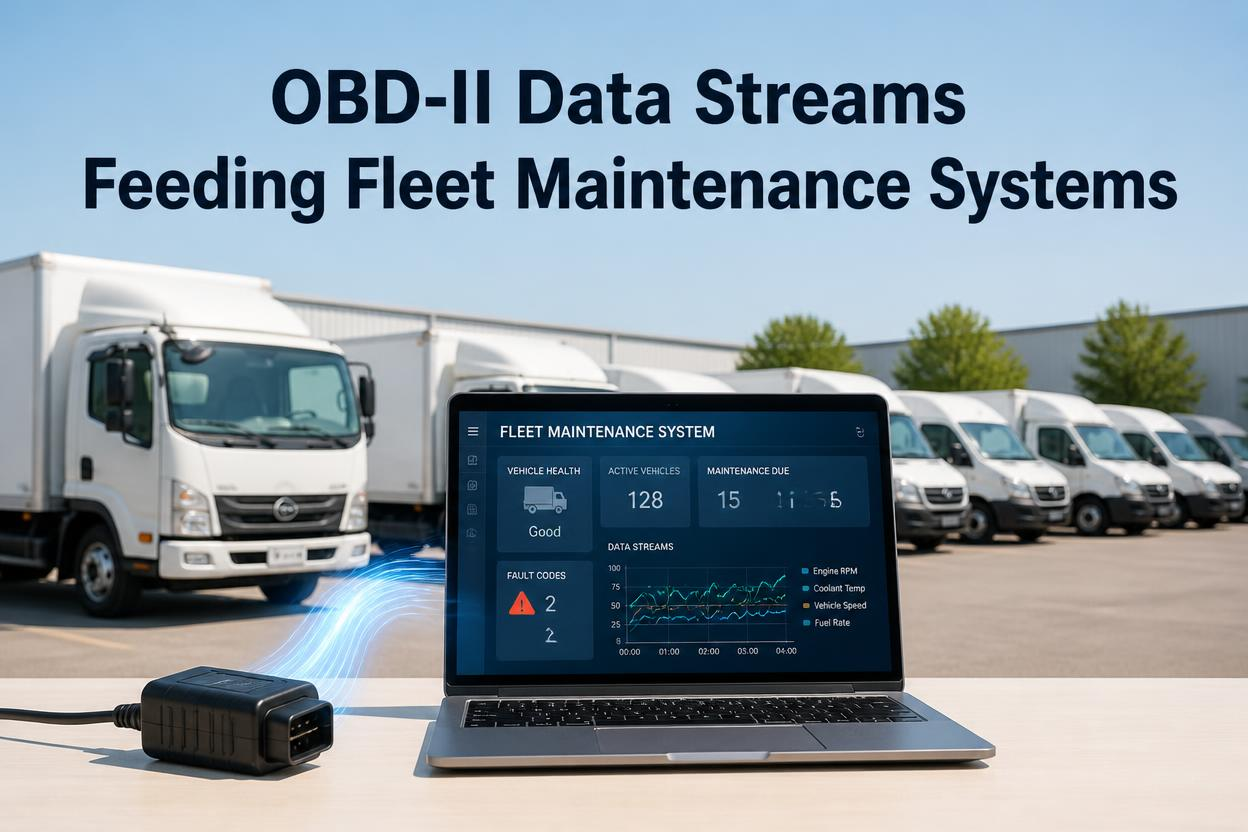
Every vehicle in a modern fleet is already talking. The engine control unit, transmission, and emissions system generate a constant stream of live data through the OBD-II port, and most of it never reaches anyone who could act on it. It sits in the vehicle until a workshop technician plugs in a scan tool during a scheduled service, weeks after the fault first appeared. Feeding that same OBD-II stream directly into a fleet maintenance system turns a reactive breakdown call into a work order raised the moment a fault code appears. A CMMS like OxMaint takes that live telematics feed and turns it into scheduled work before the vehicle ever misses an MoT or sits on the hard shoulder.
Turn OBD-II Fault Codes Into Work Orders Automatically
Stream engine, transmission, and emissions data straight from your fleet's OBD-II ports into scheduled maintenance work, before a fault becomes a breakdown.
What's Actually Streaming Off the CAN Bus
The OBD-II port isn't a single signal — it's a window into several vehicle systems, each generating data that means something different to a maintenance planner.
Engine Data
RPM, coolant temperature, and oil pressure trends flag wear long before a warning light forces the vehicle off the road.
Transmission Data
Shift patterns and gearbox temperature reveal early clutch or fluid issues that don't yet trigger a dashboard alert.
DTC Fault Codes
Diagnostic trouble codes report the specific system in fault, giving a workshop the exact part to check before the vehicle even arrives.
Emissions Data
Catalytic converter and oxygen sensor readings surface the faults most likely to cause an MoT emissions failure.
From Fault Code to Work Order
| DTC Category | What It Signals | Typical Maintenance Action |
|---|---|---|
| P0xxx — Powertrain | Engine or emissions system fault | Schedule diagnostic inspection before next route |
| P07xx — Transmission | Gearbox sensor or shift fault | Book transmission fluid and filter check |
| C0xxx — Chassis | Braking or suspension system fault | Ground vehicle pending safety inspection |
| Pending vs confirmed codes | Intermittent fault not yet repeated | Flag for monitoring, no immediate downtime |
How the Data Actually Reaches Maintenance
Vehicle Generates the Signal
The ECU broadcasts live sensor data and fault codes continuously over the CAN bus while the vehicle is running.
Telematics Device Captures It
An OBD-II telematics unit reads the stream and transmits it over cellular network without driver involvement.
Maintenance System Interprets It
Fault codes and sensor thresholds are matched against known failure patterns for that make and model.
A Work Order Is Raised
A qualifying fault automatically creates a work order against the vehicle, with the fault code attached for the technician.
Fleet Diagnostics Maturity
Scan Tool at Service
Fault codes are only read when a vehicle is already booked in, so weeks of early warning data go unused.
Streaming but Unlinked
Telematics data streams in real time, but it sits in a separate dashboard nobody checks against the maintenance schedule.
Streamed and Actioned
Fault codes flow directly into the maintenance system and raise work orders before the driver notices a problem.
Why This Matters Before the Next MoT, Not After
A fault that would fail an MoT rarely appears the morning of the test. Emissions and braking-related codes typically show up weeks earlier as intermittent, pending codes that a live feed catches immediately, while a scan tool at the next scheduled service catches them only if the vehicle happens to be booked in before the test date.
The hardware to capture this data is already common across most modern fleets. The gap is usually what happens to the signal after it leaves the vehicle. Sign up free to connect your fleet's OBD-II feed to automatic work orders, or book a demo to see a live fault code turn into a scheduled job.
Catch Fleet Faults Before the MoT Does
Live OBD-II fault codes matched to known failure patterns, raising work orders automatically before a breakdown or test failure.
Frequently Asked Questions
Does every vehicle in a mixed fleet support OBD-II streaming?
Most vehicles built from the mid-2000s onward support OBD-II, though vans and HGVs vary in which additional data channels they expose beyond the standard fault codes.
What's the difference between a pending and a confirmed fault code?
A pending code means the fault has been detected once and needs to repeat before it's confirmed, so it's useful for early monitoring without triggering unnecessary downtime.
Can OBD-II data actually prevent an MoT failure?
It can flag the emissions and braking-related faults most likely to cause a failure weeks in advance, giving enough time to schedule a repair before the test date.
Does this replace scheduled preventive maintenance?
No, it works alongside scheduled PM by adding condition-based triggers for faults that wouldn't otherwise surface until the next service interval.
How much driver involvement does this require?
None for the data capture itself, since the telematics device reads and transmits fault codes automatically without any action from the driver.