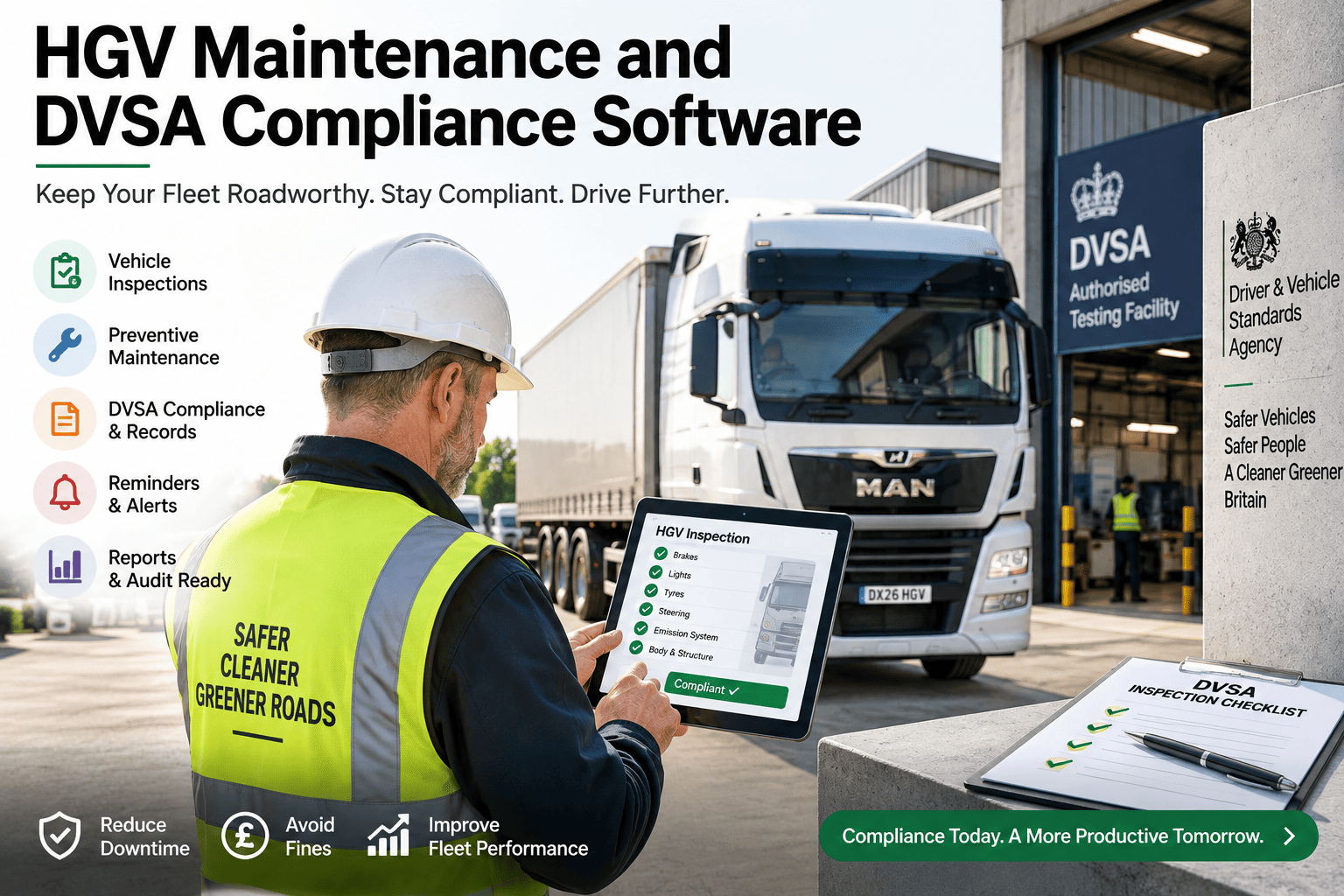
Three separate compliance regimes, one operator licence, and a Traffic Commissioner who doesn't care which department dropped the ball. Vehicle roadworthiness, driver hours, and O-licence undertakings get managed in three different spreadsheets at most fleets — which is exactly how a missed safety inspection on one vehicle turns into a public inquiry that puts the whole licence at risk. Sign up to run all three from one place, or book a demo to see the compliance playbook in Oxmaint.
3
Compliance regimes every O-licence holder has to run simultaneously
6-10
Weeks between safety inspections, depending on the operator's own risk assessment
3
Years of rolling history that feed an operator's OCRS score
15
Months maintenance records must be retained and ready to produce on request
Before You Build the Playbook
The Traffic Commissioner doesn't assess vehicle condition, driver hours, and licence undertakings separately. A pattern of vehicle defects gets read alongside a pattern of tachograph infringements, because both point to the same underlying question — is this operator actually in proper control of its fleet.
The Three Pillars of a Compliant Fleet
Every DVSA encounter and every Traffic Commissioner decision comes back to these three areas.
Pillar 1
Vehicle Roadworthiness
Daily walkaround checks, scheduled safety inspections, and the annual MOT test at an authorised testing facility.
Pillar 2
Driver Hours and Records
Tachograph downloads, working time compliance, valid CPC and licence checks for every driver on the road.
Pillar 3
O-Licence Undertakings
The promises made to the Traffic Commissioner about maintenance systems, operating centres, and financial standing.
Where You Sit on OCRS Right Now
The Operator Compliance Risk Score determines how often your vehicles get stopped, using a rolling three-year picture across roadworthiness and traffic events.
| Band |
What It Means |
Enforcement Impact |
| Blue |
DVSA Earned Recognition member |
Lowest priority for roadside checks, remote monitoring instead |
| Green |
Low risk, good compliance record |
Minimal targeted stops or premises visits |
| Amber |
Moderate risk, some defects or infringements |
More frequent checks than green |
| Red |
High risk, persistent defects or offences |
Priority target for roadside checks and audits |
| Grey |
No DVSA encounters recorded yet |
No score to base targeting on |
Keep Every Safety Inspection Ahead of the Deadline
Oxmaint tracks safety inspection intervals, MOT dates, and defect history per vehicle, ready to evidence to DVSA on request.
From Daily Check to Public Inquiry: The Escalation Path
Almost no operator ends up in front of the Traffic Commissioner because of one bad day. It's a chain of smaller gaps that DVSA and the Commissioner read as a pattern.
01
Daily Walkaround Check
The first and cheapest line of defence
A driver-completed check before every journey, with defects reported and logged, not just noticed and forgotten by the next shift.
02
Scheduled Safety Inspection
Every 6 or 10 weeks, based on your own risk assessment
A full inspection by a competent examiner, catching what a daily check can't, with results filed against the vehicle's maintenance history.
03
A DVSA Encounter Finds a Defect
A roadside check, an annual test, or a premises visit
A single defect at this stage is manageable. It's logged, weighted by severity, and starts contributing to the rolling OCRS picture.
04
A Pattern Forms Across the Fleet
The point where OCRS shifts from green toward amber or red
Repeated defects of a similar type, or infringements clustering around certain drivers or vehicles, signal a systemic issue rather than a one-off.
05
Traffic Commissioner Public Inquiry
Licence curtailment, suspension, or revocation are all on the table
By this stage the operator has to demonstrate, in person, that the systems behind the pattern have genuinely changed, not just that the latest defect was fixed.
Setting Your Safety Inspection Interval
DVSA doesn't fix a single interval for every operator. It's a risk-based decision, and getting it wrong in either direction has a cost.
Shorter Interval, Around 6 Weeks
High mileage or heavy-duty use
Older vehicles or a mixed-age fleet
Vehicles operating in harsh conditions
A recent history of defects on that vehicle type
Longer Interval, Up to 10 Weeks
Newer vehicles with a clean inspection history
Lower annual mileage
Strong daily walkaround compliance already in place
Consistent first-time MOT passes over recent years
Quick Reference: The Compliance Calendar
| Requirement |
Frequency |
Owner |
| Driver walkaround check |
Before every journey |
Driver |
| Scheduled safety inspection |
Every 6 to 10 weeks, per risk assessment |
Transport manager |
| Annual MOT test |
Annually, at an authorised testing facility |
Transport manager |
| Tachograph download and analysis |
Regularly, per fleet policy |
Transport manager |
| Maintenance record retention |
Kept for 15 months minimum |
Transport manager |
Frequently Asked Questions
Q
Is DVSA Earned Recognition worth it for a smaller fleet?
It depends on scale. The scheme requires an accredited IT system feeding data to DVSA continuously, plus setup time and ongoing subscription cost. For very small fleets the overhead can outweigh the benefit of fewer roadside checks, but for growing fleets the reduced enforcement attention and reputational signal to customers often justify it.
Q
What's the difference between OCRS and Earned Recognition?
OCRS is a risk score DVSA calculates from your enforcement history and uses to decide who to target for roadside checks. Earned Recognition is a voluntary scheme you actively apply to join, sharing ongoing compliance data in exchange for reduced targeting and a blue OCRS band. Joining Earned Recognition takes you out of the standard OCRS scoring model entirely.
Q
Does one defect at the roadside put an O-licence at risk?
Rarely on its own. A single defect, promptly fixed and documented, is a normal part of running a fleet. It's a repeated pattern across vehicles or drivers, or a failure to act on a known issue, that tends to trigger closer DVSA attention and eventually a Traffic Commissioner referral.
Q
Can maintenance software actually help at a Traffic Commissioner hearing?
Yes. A Public Inquiry usually turns on whether an operator can show robust systems, not just good intentions. A complete, timestamped maintenance and inspection history per vehicle is exactly the evidence that demonstrates a genuine system was in place, rather than paperwork assembled after the fact.
Run Your Whole Fleet Compliance Playbook in One Place
Oxmaint tracks safety inspections, MOT dates, and defect history against every vehicle, with a full audit trail ready for DVSA or the Traffic Commissioner whenever it's asked for.
Safety Inspection Scheduling
MOT and Defect Tracking
Audit-Ready Records
Fleet Compliance Dashboard