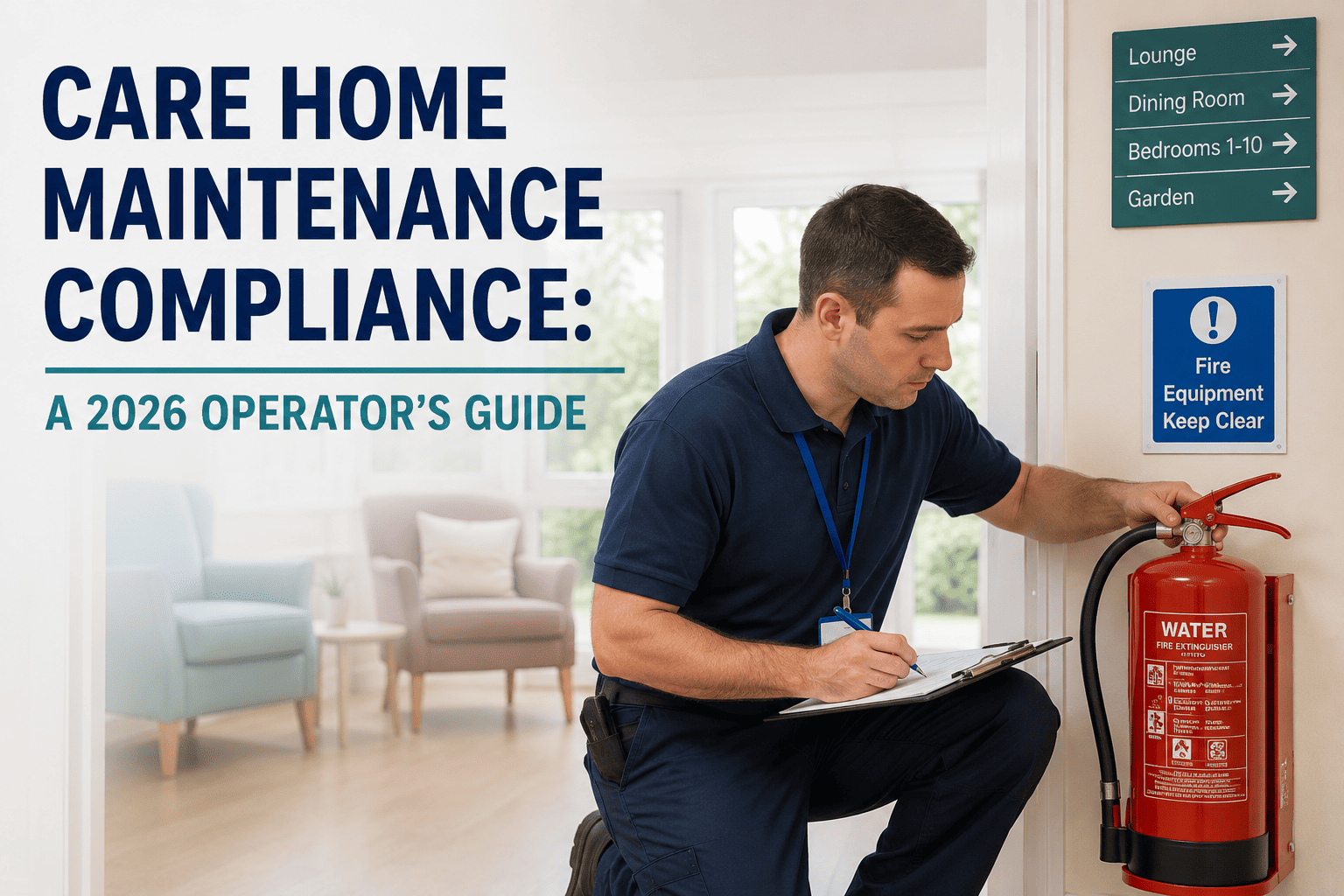
A care home operator isn't managing one compliance regime, they're managing at least five running in parallel: CQC's Fundamental Standards, fire safety, legionella control, gas and electrical safety, and lifting equipment under LOLER. Each has its own inspector, its own paperwork, and its own consequences for getting it wrong.CQC itself doesn't work to a fixed inspection timetable the way LOLER does, using a risk-based approach that draws on notifications, complaints, and a service's current rating instead, which means the records need to be ready at any moment, not just before a scheduled visit. A CMMS like OxMaint keeps every one of these regimes tracked and evidenced in a single place.
Track Every Compliance Regime in One Calendar
Fire safety, legionella, gas, electrical, and LOLER records tracked and evidenced together, ready for CQC's risk-based inspection model.
The Five Regimes at a Glance
| Compliance Area | Typical Frequency | Governing Standard |
|---|---|---|
| Gas safety | Annual check by a Gas Safe registered engineer | Gas Safety (Installation and Use) Regulations |
| Electrical safety (EICR) | Every 5 years, sooner for older buildings or medical device reliance | BS 7671 wiring regulations |
| Lifting equipment (LOLER) | Every 6 months for equipment lifting people, 12 months for load-only equipment | Lifting Operations and Lifting Equipment Regulations 1998 |
| Legionella | Risk assessment required, reviewed periodically | A legal requirement, and a supporting document CQC requires at registration |
The Records Behind Each Regime
Fire Safety
Fire risk assessments, alarm servicing, emergency lighting tests, and door inspections all need a current, dated record.
Legionella
A written risk assessment plus ongoing water temperature monitoring evidences control of a genuine resident safety risk.
Gas & Electrical
Annual gas certificates and periodic EICRs need to be current and matched to every relevant appliance and circuit.
LOLER
Lifting equipment such as hoists and slings must be thoroughly examined at suitable intervals by a competent person.
Building a Single Compliance Calendar
List Every Statutory Obligation
Map fire, legionella, gas, electrical, and lifting equipment requirements against the specific assets and areas they cover.
Set Reminders Ahead of Deadlines
Schedule alerts well before each certificate expires, not on the day it lapses, to leave time for rebooking.
Store Certificates Against the Asset
Attach every certificate directly to the hoist, boiler, or circuit it covers, not a shared folder nobody can search quickly.
Review the Calendar Every Quarter
A quick quarterly check catches any regime quietly slipping before it becomes a finding at inspection.
Care Home Compliance Maturity
Certificates in a Drawer
Compliance records exist somewhere on site, but nobody can produce all five regimes quickly without a scramble.
Tracked but Siloed
Each regime is tracked individually, often by different contractors, with no single view across the whole home.
Unified and Inspection-Ready
All five compliance regimes sit in one system, producible instantly whenever CQC's risk-based model triggers a visit.
Why "Risk-Based" Means "Always Ready"
Services rated Outstanding or Good can go two to four years between full CQC inspections, but any concern raised by a whistle-blower, a member of the public, or CQC's own monitoring data can trigger an unannounced visit at any time. That unpredictability is exactly why a compliance calendar built around a known audit date doesn't work for care homes the way it might for a fixed-cycle regime like LOLER.
The homes that handle inspections calmly aren't the ones who prepare in the week before. They're the ones whose fire, legionella, gas, electrical, and lifting equipment records are current every single day, because an unannounced visit doesn't wait for a convenient time. Sign up free to build your unified compliance calendar today, or book a demo to see all five regimes tracked in one place.
Be Ready for an Inspection on Any Given Day
Fire safety, legionella, gas, electrical, and LOLER records unified, current, and instantly producible whenever CQC calls.
Frequently Asked Questions
How often does CQC actually inspect a care home?
There's no fixed schedule; CQC uses a risk-based approach, meaning well-rated services may go a few years between full inspections while any concern raised can trigger an unannounced visit at any time.
How often does lifting equipment need examining under LOLER?
Equipment used to lift people, such as hoists, needs thorough examination every six months, while equipment used only for loads can typically be examined every twelve months.
Is a legionella risk assessment mandatory for care homes?
Yes, it's a legal requirement and CQC requests it as a supporting document during the registration process for care homes.
How often should an EICR be carried out in a care home?
The standard guideline is every five years, though older buildings or homes relying heavily on electrical medical devices may need more frequent inspections.
Does gas safety compliance require anything beyond the annual check?
The core legal requirement is an annual check by a Gas Safe registered engineer, though homes should also maintain records of any repairs or remedial work identified during that check.







