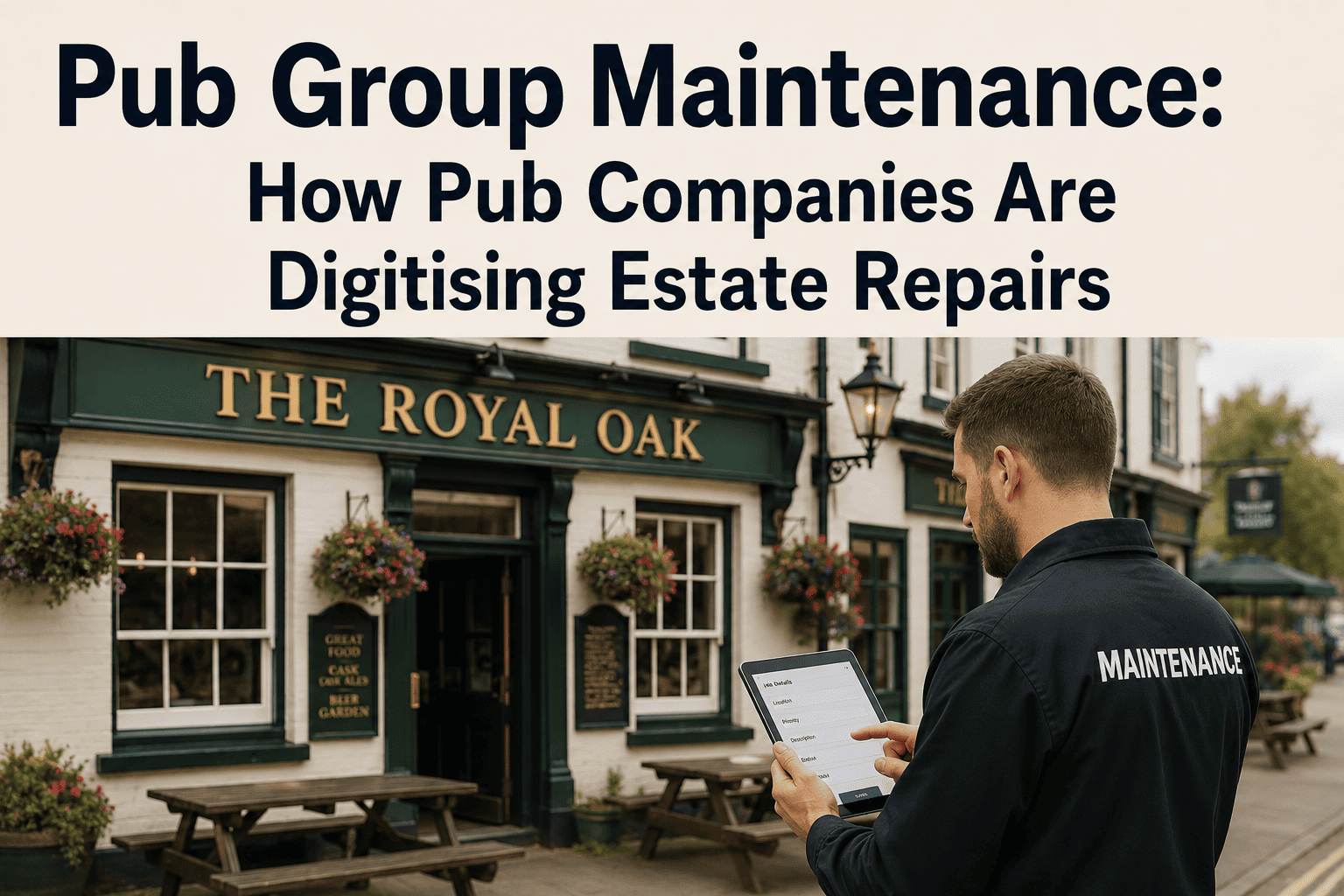
A pub company doesn't manage one building — it manages hundreds, spread across market towns and city centres, split between tied houses, leaseholds, and managed sites, each with a different answer to the question "whose job is this repair?" A cellar cooling failure in a tied house and the same failure in a leasehold property can trigger two completely different repair paths. At Stonegate, Greene King, or Mitchells & Butlers scale, that complexity multiplied by thousands of sites is exactly where paper-based repair logs and spreadsheet CapEx trackers start to break down.
3
distinct repair responsibility models across tied, leasehold, and managed pub estates
1000s
of sites a typical UK pub company portfolio spans, often with one central ops team
Cellar
cooling failures are among the fastest repairs to turn into lost trading hours
CapEx
backlogs grow fastest when repair priority is judged site by site instead of estate-wide
One Repair System Across Every Site Type in the Estate
Oxmaint gives pub company ops teams a single view of repairs across tied, leasehold, and managed houses, with contractor jobs and CapEx requests tracked from one dashboard. Sign up for a free trial and load your first sites in an afternoon.
Three Estate Types, Three Different Repair Problems
A single maintenance policy rarely fits a pub company's whole estate. Each ownership model changes who approves the repair, who pays, and how fast it needs to move.
Tied Houses
Company-owned, tenant-operated
Landlord repairing obligations sit with the pub company for structure and major plant, while the tenant covers day-to-day upkeep — a split that creates constant disputes over who logs and who pays for a given repair.
Biggest risk: repair responsibility disputes delaying the fix
Leasehold / Free Houses
Independently operated, lease-bound
Lease terms dictate exactly which repairs the operator handles versus what falls back to the freeholder, and mismatched expectations at renewal are where the most expensive disputes surface.
Biggest risk: deferred repairs surfacing at lease renewal
Managed Houses
Company-operated, central control
Full repair responsibility sits with head office, which sounds simpler but means every site competes for the same central contractor pool and the same CapEx approval queue.
Biggest risk: contractor and CapEx bottlenecks at scale
Prioritising Repairs When Every Site Is Asking First
With hundreds of sites reporting issues, the ops team's real job is ranking them correctly — not just logging them. A simple estate-wide tier system solves most of the guesswork.
| Repair Category |
Fast-Track Trigger |
Cost of Delay |
| Cellar Cooling | Any temperature alarm during trading hours | Spoiled stock, forced closure of draught lines |
| Gas & Fire Safety | Any failed statutory check, no exceptions | Licence risk, insurance non-compliance |
| Roof & Structural | Active leak or visible movement reported | Escalating repair cost, potential closure |
| Kitchen Equipment | Any fault affecting food service capability | Menu restriction, lost food revenue |
| Décor & Fixtures | Scheduled refurbishment cycle only | Guest perception, brand standard drift |
Give Every Site Manager the Same Repair Priority Logic
Oxmaint applies one consistent fast-track and CapEx priority system across every site in the estate, so a cellar cooling fault in Leeds gets the same urgency as one in Bristol. Book a demo to see the priority engine configured for your estate.
What Changes When the Whole Estate Runs on One System
Pub companies moving off spreadsheets and paper job sheets see the same pattern show up across the estate.
Faster contractor dispatch once jobs route automatically instead of by phone59%
Fewer repair responsibility disputes with a shared, timestamped repair log48%
Improvement in CapEx planning accuracy with a single cross-estate repair backlog view65%
Reduction in emergency callouts once cellar cooling and gas safety checks are scheduled centrally52%
Frequently Asked Questions: Pub Group Maintenance
QWho is responsible for repairs in a tied pub house?
It depends on the lease and tenancy agreement, but generally the pub company retains landlord repairing obligations for the building structure and major plant like cellar cooling, while the tenant covers day-to-day fixtures and fittings — the exact split should always be checked against the individual agreement.
QHow should a pub company prioritise CapEx across hundreds of sites?
Start with a fast-track tier for anything affecting trading capability or statutory compliance — cellar cooling, gas and fire safety, structural leaks — then rank remaining requests by cost of delay rather than by which site asked first or loudest.
QCan one platform handle tied, leasehold, and managed sites together?
Yes. Each estate type can carry different repair responsibility rules and approval workflows while sitting in the same portfolio dashboard, so head office keeps one view even though tenants, leaseholders, and managed teams each see only what applies to their site.
QHow does Oxmaint help pub company operations teams manage contractors?
Oxmaint routes repair jobs to approved contractors automatically, tracks job completion and cost against each site, and rolls every job into a single estate-wide repair and CapEx record — replacing phone-based dispatch and scattered invoices.
One System, Every Site, Every Repair Type
Oxmaint brings tied houses, leaseholds, and managed sites onto one repair and CapEx platform, with contractor jobs tracked from report to close. Sign up for a free trial or book a demo to see your estate mapped in.