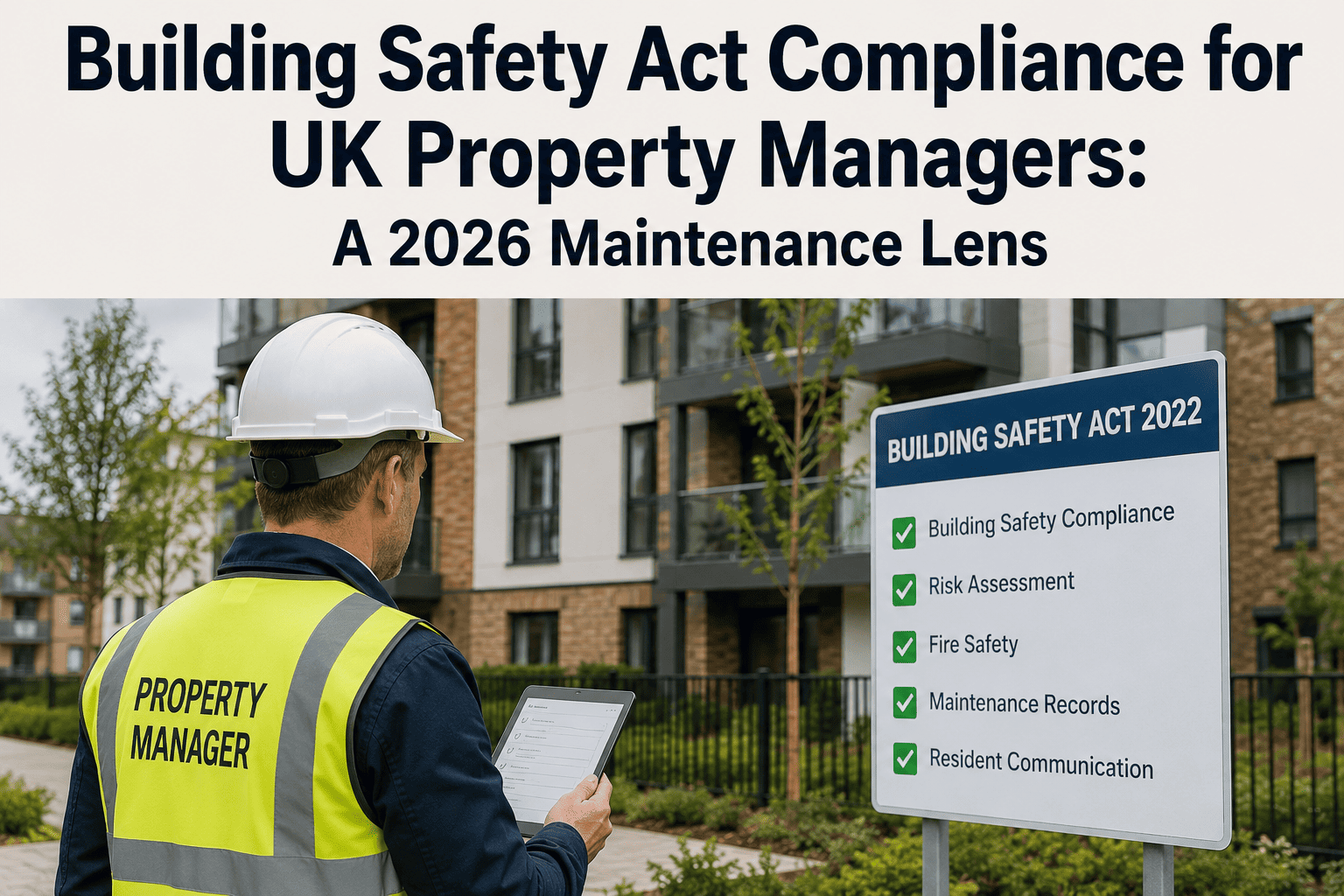
Since April 2024, "we'll get to the paperwork eventually" has stopped being a viable maintenance philosophy for anyone responsible for a UK higher-risk building. The Building Safety Act 2022 turned building safety records from a filing cabinet exercise into a legal duty with criminal consequences attached. For property directors, that means the maintenance log isn't just internal housekeeping anymore — it's evidence a regulator can ask to see, and increasingly does.This is general informational content, not legal advice. Building-specific obligations under the Act should always be confirmed with qualified legal counsel and the current guidance published by the Building Safety Regulator.
Turn Your Maintenance Log Into Golden Thread Evidence
Oxmaint timestamps every completed PM task, inspection, and repair against the asset it belongs to, building the maintenance side of your Golden Thread as work happens — not reconstructed from memory before an audit. Sign up for a free trial and see it mapped to your building.
Who's Who Under the Building Safety Act
Three roles carry most of the practical weight for a property director managing a higher-risk building. Getting them straight is the first step to knowing whose desk a given obligation lands on.
One point worth flagging for property directors still working from older guidance: the standalone Building Safety Manager role that was originally proposed alongside the Act was removed before Royal Assent. A PAP can still appoint someone to help carry out safety duties day to day, but the legal responsibility itself stays with the PAP regardless of who's doing the hands-on work.
The Golden Thread: What Actually Belongs In It
The Golden Thread is the digital, continuously updated record of a building's safety-critical information, and it has been a legal requirement since regulations introduced in April 2024. It isn't a one-time submission — it's meant to stay live for the entire occupied life of the building, which is exactly where ongoing maintenance data fits in.
Where Maintenance Evidence Fits the Regulator's Expectations
A property director doesn't need to master every regulation to know what to keep — the pattern is consistent across almost every category the BSR looks at.
| Maintenance Record | Why It Matters to the Regulator | Risk of Missing It |
|---|---|---|
| Fire door & compartmentation checks | Direct evidence of fire spread risk management | Core to any compliance notice review |
| Structural inspection logs | Shows ongoing monitoring of structural stability risk | Gap here undermines the whole Safety Case |
| Cladding & external wall records | Central to remediation timelines and duty to remediate | Directly tied to escalation and prosecution risk |
| Lift & evacuation equipment PM | Supports resident evacuation strategy evidence | Undermines PEEPs-related obligations |
| Resident engagement log | Evidences the PAP's Section 91 engagement duty | Weakens proof of ongoing participation |
Stop Rebuilding Your Safety Case From Memory
Oxmaint keeps fire door checks, structural inspections, and lift PM in one auditable record tied to each asset, ready whenever the Building Safety Regulator asks. Book a demo to see it structured against your building's actual asset register.
The Enforcement Ladder: How Non-Compliance Escalates
The BSR's published enforcement approach follows a clear escalation path rather than jumping straight to prosecution — but each rung is a real legal step, not a friendly reminder.
Issued when the regulator believes an accountable person has contravened, or is likely to contravene, a safety requirement, with a set period to remedy it.
Used where the contravention places residents in imminent danger, compressing the timeline for action considerably.
The BSR can apply to a tribunal to appoint an independent manager where an accountable person repeatedly fails to act and residents remain at risk.
Ignoring a compliance or urgent action notice is a criminal offence, carrying an unlimited fine and up to two years' imprisonment on indictment.
Two other 2026 developments are worth watching closely if you manage an HRB portfolio: the Building Safety Levy comes into force on new residential developments from 1 October 2026, and a proposed Remediation Bill would introduce a formal Duty to Remediate, with criminal prosecution risk for landlords who fail to fix unsafe buildings over 18 metres without reasonable excuse. Neither is a reason to wait on maintenance evidence — both point the same direction, toward more scrutiny, not less.
Frequently Asked Questions: Building Safety Act Compliance
Your Golden Thread Should Build Itself, Not Wait for an Audit
Oxmaint keeps fire safety checks, structural inspections, and PM history in one auditable record for every higher-risk building in your portfolio. Sign up for a free trial or book a demo to see your buildings mapped in.