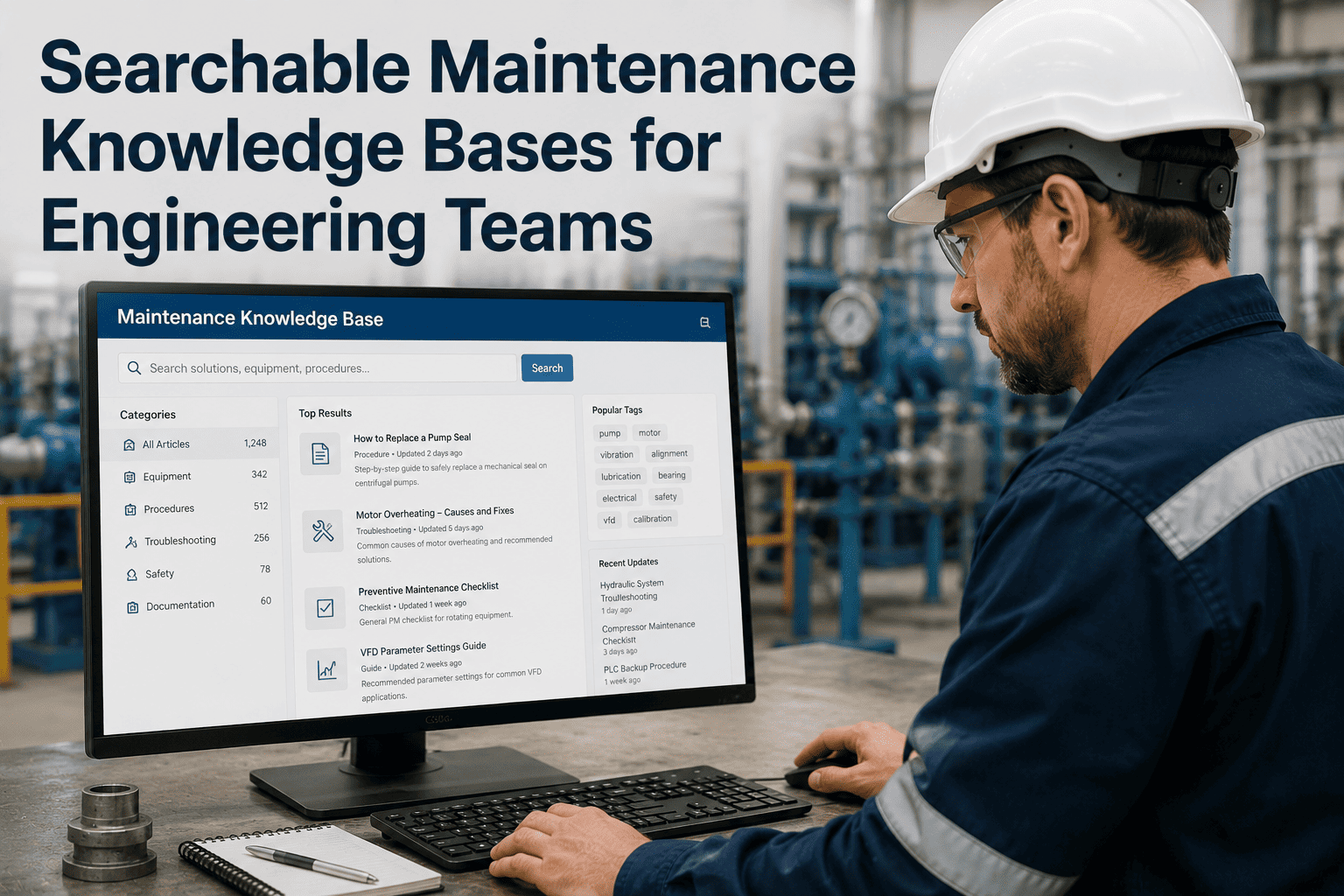
A packaging line goes down at 10pm on a Friday. The fault code points to a servo drive, but a new drive doesn't fix it. The technician on call has two years of experience — the person who'd know in thirty seconds retired eight months ago. That specific failure pattern, learned over fifteen years, left the building with him. It's still in nobody's search results, because it was never written down anywhere a search could reach.
Turn Work Order History Into A Searchable Knowledge Base
AI-generated troubleshooting guides built from your own completed work orders and technician notes — searchable by asset, fault, or symptom.
Why Most Plant Knowledge Bases Die Within A Year
A wiki launches with good intentions, a handful of enthusiastic entries, and no plan for what happens next. Equipment gets modified, procedures change, and the pages don't. Within a year the knowledge base is a mix of current and outdated information that technicians learn to distrust — and a resource nobody trusts is a resource nobody opens.
The second failure is structural: knowledge capture is treated as an extra task instead of a byproduct of work already being done. Asking a technician to "write it up later" competes with the next work order, and later rarely comes.
What A Knowledge Base Engineers Actually Use Looks Like
Structured By Asset
Every article sits against the specific asset it applies to, not a generic folder someone has to guess the category of.
Built From Work Orders
Completed work orders and technician notes are the raw material, so the knowledge base grows from work already done.
AI-Powered Search
A technician searches by symptom or fault code, not by guessing the exact title someone gave an article years ago.
Contribution Is The Job
Closing a work order with a diagnosis note is the contribution — no separate writing task competing for time.
From Tribal To Searchable
Capture
Diagnostic notes and repair steps are captured as part of closing the work order, not as an afterthought.
Structure
AI organises raw notes and historical work orders into troubleshooting guides tied to the specific asset and fault.
Validate
A senior technician or engineer reviews the generated guide once, building trust in what the system produces.
Search & Reuse
The next technician facing the same fault finds the answer in seconds instead of calling around for it.
Capture Tribal Knowledge Before It Retires
Build a searchable knowledge base directly from years of work order history — no separate documentation project required.
How OxMaint Builds The Knowledge Base For You
AI-Generated Troubleshooting Guides
Historical work orders and technician notes are analysed to auto-generate fault diagnosis guides per asset.
Fault & Symptom Search
Technicians search by what they're seeing, not by remembering an exact article title from months ago.
Linked To Work Orders & SOPs
Every knowledge base article connects back to the asset's work order history and current SOPs, not a standalone wiki.
Mobile Access At The Asset
A technician standing at the machine pulls up the relevant guide on their phone, at the moment they need it.
The knowledge already exists in years of closed work orders — it's just never been searchable. Sign up free to see your own work order history turned into a knowledge base your team will actually open.
Frequently Asked Questions
How is an AI-built knowledge base different from a traditional plant wiki?
A traditional wiki depends on someone remembering to write an article; an AI-built knowledge base is generated from work orders and notes that already exist, so it grows automatically as work gets done.
How do you stop a maintenance knowledge base from going stale?
Tying articles to live work order data rather than a one-time writing project means the content updates as new work orders close, instead of freezing at launch.
Will technicians actually contribute to a knowledge base?
Adoption is far higher when contribution happens inside the normal work order close-out step, rather than as a separate documentation task competing with the next job.
Can a knowledge base help before a senior technician retires?
Yes — running a knowledge capture pass on their historical work orders and notes while they're still on staff lets them validate the output, rather than trying to extract it after they're gone.
Should a knowledge base replace formal SOPs?
No — SOPs remain the controlled, approved procedure; the knowledge base captures the diagnostic context and edge cases around them that a formal document isn't built to hold.
Stop Losing Knowledge When People Leave
Build a searchable, AI-powered knowledge base from the work order history your team is already generating every day.