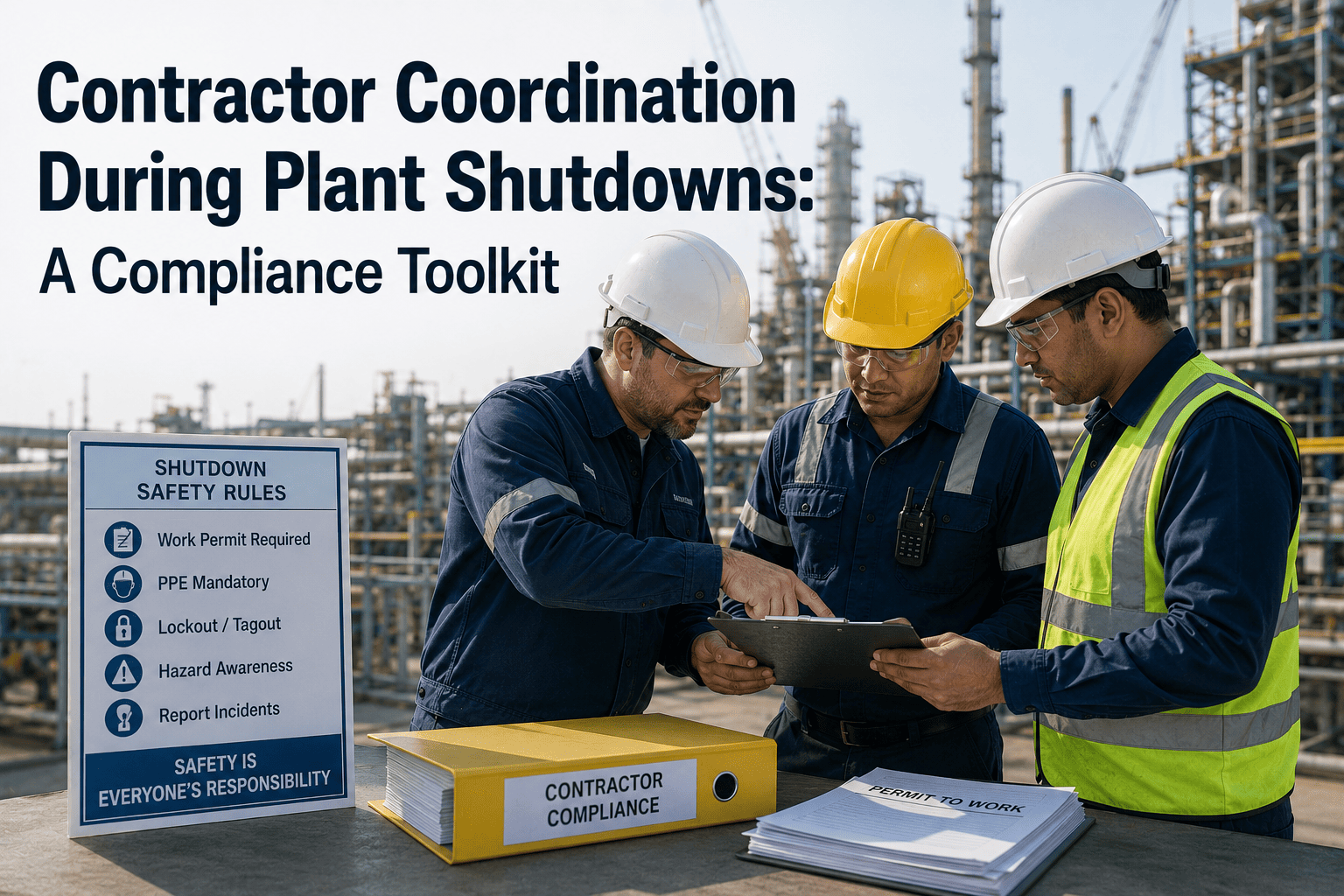
A major turnaround can bring more than a thousand contractors onto a site that normally runs with a few hundred permanent staff, working around the clock across three shifts, each one needing an induction, a RAMS review, and a permit before they can touch anything. Run fifty permits a day through a manual sign-off process and the bottleneck isn't the work itself — it's the paperwork standing between a competent contractor and the job they're there to do. Worse, if the site alarm goes off at 3am on day four, someone needs an accurate headcount of exactly who's on site and where, within minutes. A CMMS like OxMaint keeps induction, RAMS, permit, and muster data in one system, so a thousand-person shutdown doesn't run on paper clipboards and radio calls.
Run Inductions, Permits, and Musters From One System
Digital induction, permit-to-work workflow, and real-time headcount — so a thousand-contractor shutdown doesn't depend on a clipboard and a radio.
The Daily Volume a Major Shutdown Actually Runs
The scale of a large turnaround is easy to underestimate until the daily numbers are written down. Each of these activities has to happen correctly, every single day, without becoming the bottleneck that stops work starting on time.
| Activity | Typical Daily Volume | Bottleneck Risk |
|---|---|---|
| Contractor inductions | Dozens to hundreds during ramp-up | High at shutdown start |
| Permits issued | 50+ on a large turnaround | High if approval is manual |
| RAMS reviewed | Tens per day across trades | Moderate — depends on reviewer capacity |
| Headcount musters | At least once per shift, more if drilled | Critical during an emergency |
Four Compliance Checkpoints Before Anyone Touches Equipment
SSIP / Competency Check
Contractor company accreditation and individual competency certificates are verified before anyone is added to the site roster.
Site Induction
Site-specific hazards, emergency procedures, and muster points are covered before badge and site access are issued.
RAMS Approval
Risk assessments and method statements are reviewed and signed off against the specific job scope before a permit can be requested.
Permit-to-Work Issue
The final checkpoint — a permit tied to the approved RAMS, the specific asset, and the isolation status confirmed before work starts.
Permit Backlog Risk Levels
On-Time Issue
Permits are approved and issued within the planned turnaround time, and crews start work as scheduled without waiting on paperwork.
Queue Building
Approval requests are outpacing reviewer capacity. Crews start experiencing short delays, and the queue needs active management before it grows.
Work Stoppage Risk
The backlog has grown large enough that crews are standing idle waiting on permits, directly threatening the critical path schedule.
From Contractor Arrival to Work Start
Pre-Register & Verify
Competency certificates and SSIP accreditation are checked before the contractor arrives on site, avoiding a bottleneck at the gate.
Mass Induction
Site-specific safety induction is delivered efficiently at volume, often digitally, to avoid queuing hundreds of workers on day one.
RAMS & Permit Approval
Risk assessments are reviewed against the specific job, and a permit is issued once isolation and RAMS approval are both confirmed.
Muster Point Assignment
Every contractor is assigned a muster point as part of induction, so an emergency headcount has a known structure to work from.
The Numbers Behind a Major Shutdown
The paperwork isn't a formality layered on top of the shutdown — it's the mechanism that keeps a thousand people on an active industrial site safe and accounted for. Sign up free to see induction, RAMS, and permit status tracked together instead of across separate spreadsheets and folders.
How OxMaint Supports Contractor Coordination
Digital Contractor Induction
Inductions are delivered and recorded digitally, letting large contractor volumes be processed without a physical queue at the gate.
Permit-to-Work Digitisation
Permits are requested, reviewed, and issued digitally, with backlog visibility so an amber queue gets caught before it turns red.
RAMS Approval Workflow
Risk assessments are routed to the right reviewer and linked directly to the permit they support, keeping approval traceable.
Real-Time Headcount & Muster
Site presence is tracked live against muster point assignment, giving an accurate headcount within minutes of an emergency.
Coordinate a Thousand Contractors Without a Thousand Clipboards
Digital induction, permit workflow, RAMS approval, and real-time muster — built so your next shutdown runs on one system, not five.
Frequently Asked Questions
How far in advance should contractor competency checks happen?
Ideally weeks before mobilisation, so SSIP accreditation and individual certification issues can be resolved before the contractor is due on site, rather than discovered at the gate on day one.
What causes most permit-to-work delays during a shutdown?
Manual approval chains and RAMS reviews queued behind a limited number of reviewers are the most common causes, particularly during the first few days when volume peaks before a routine is established.
How often should a muster drill be run during a major turnaround?
Most sites run at least one muster drill early in the shutdown to validate the process while contractor numbers are high, in addition to being ready to execute a real muster at any point.
Can digital induction fully replace an in-person site briefing?
Digital induction can efficiently cover standard site information and competency verification, but most sites still combine it with a short in-person briefing covering the specific hazards and current conditions during the shutdown.
Why does headcount accuracy matter so much more during a shutdown than normal operations?
Contractor numbers and turnover are far higher than during routine operations, and many workers are unfamiliar with the site layout, making an accurate, real-time headcount essential for a safe and fast emergency response.