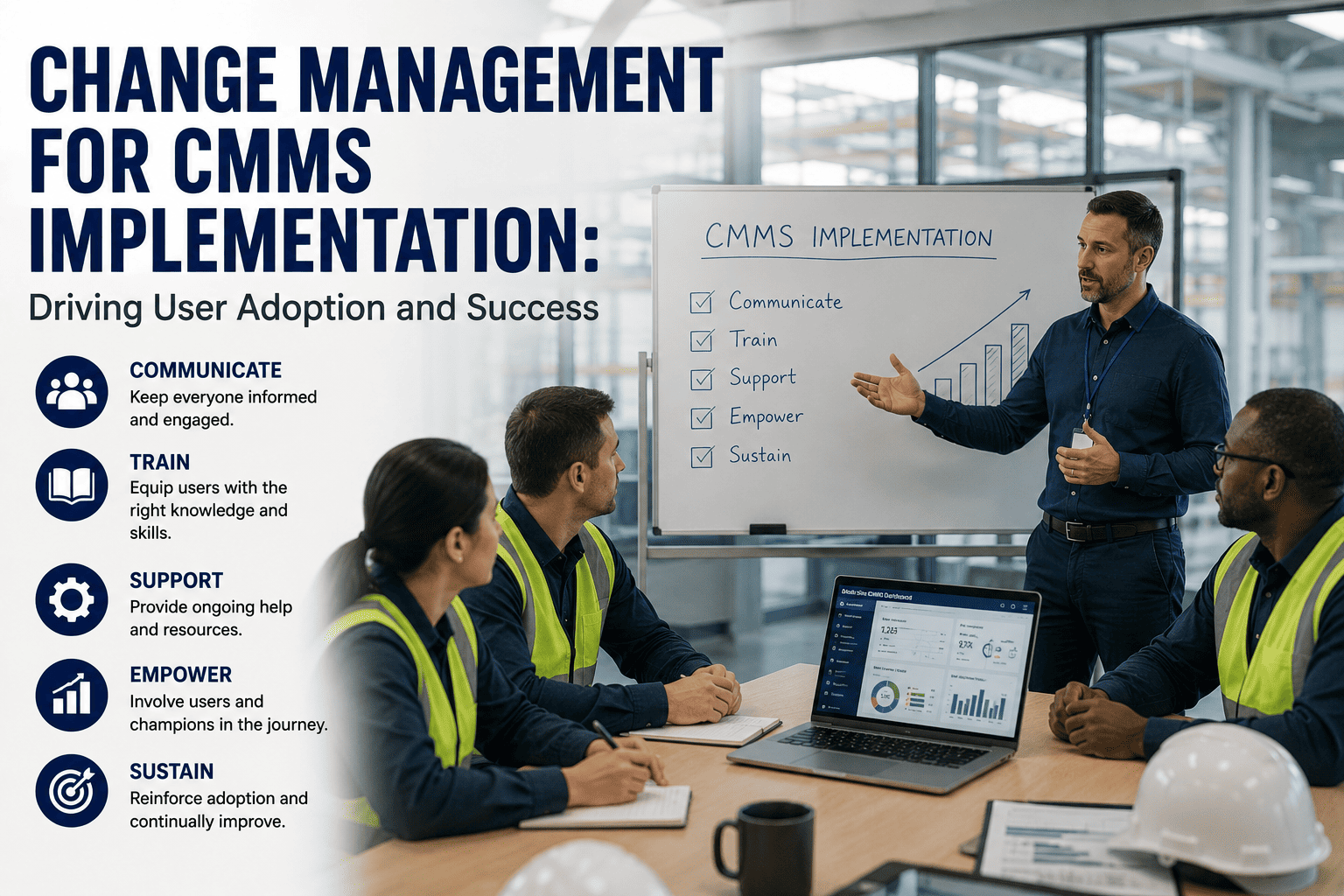
Three months after a confident go-live, the executive team is still excited, IT checked every box, and the vendor delivered all the contracted training. Meanwhile maintenance technicians are quietly back on paper work orders, supervisors are maintaining shadow spreadsheets, and the expensive new system is showing 30% login rates. This is not a rare failure story — research consistently shows that 70% of digital transformation projects underperform not because the technology failed, but because the people never fully adopted it. A CMMS like OxMaint is built around the reality that adoption is a change management problem first and a software problem second.
Software Doesn't Fail — Adoption Does
OxMaint pairs mobile-first design with a change management framework built for real technician resistance — not just a training video and a go-live date.
Why Technicians Resist a CMMS — and It Is Rarely About the Software
Maintenance teams do not resist new systems because they hate technology or fear progress. They resist for legitimate, predictable reasons that organizations consistently overlook in the rush to go live. Book a demo to see how OxMaint is designed around these specific concerns rather than around them.
"Every work order is timestamped, every task tracked — this is a surveillance tool, not a help."
Frame the CMMS as a technician empowerment tool — mobile access eliminates trips to the office, and equipment history prevents repeat failures the technician gets blamed for.
"I've done this job for fifteen years without a screen — this makes me look slower, not better."
Pair new users with power-user mentors and assign respected senior technicians as visible champions — peer credibility moves faster than any top-down mandate.
"Logging everything before, during, and after every job means management cares more about paperwork than the actual fix."
Design mobile workflows that are genuinely faster than the paper process they replace — if logging a work order takes longer than writing it down, the resistance is justified.
"Nobody asked us before they bought this — we just got told to use it."
Involve technicians in configuration before launch through workshops that gather real pain points — ownership built before go-live reduces resistance after it.
The Adoption Timeline — Phased, Not Big Bang
Rushing implementation to 30 days creates problems that take six or more months to fix. Sign up free and work through this phased adoption sequence inside OxMaint at a pace your team can actually absorb.
Pilot with Parallel Records
Run hands-on training of 4+ hours per user. Begin pilot operations while keeping parallel manual records as a safety net. Hold daily 15-minute check-ins to surface friction immediately.
Identify and Train Champions
Identify users who mastered the system quickly. Provide advanced training and assign them as peer trainers ahead of the wider rollout — credibility with peers matters more than another management memo.
Expand to the First Wave
Train the highest-impact department first. Pair every new user with a power-user mentor. Discontinue parallel tracking for the pilot group once confidence is established.
Organization-Wide Default
Complete training for all remaining users. Set the explicit expectation that all work goes through the CMMS. Address adoption laggards directly and share weekly metrics that demonstrate real benefit.
Leading Indicators That Adoption Is Actually Working
Login Frequency
Daily and weekly login rates by user group reveal adoption gaps before they become entrenched habits of working around the system entirely.
Work Order Completion Rate
A high creation rate with low completion rate signals technicians are logging work orders but finishing the job off-system — a quiet but telling resistance pattern.
Feature Utilization
Tracking which features are actually used versus ignored shows whether training translated into real behavior change or stayed theoretical.
Shadow System Sightings
A supervisor's personal spreadsheet still circulating after go-live is the clearest possible signal that trust in the new system has not yet been earned.
What Leadership Actually Needs to Do — Not Just Approve
Use the System Visibly, Personally
If the maintenance director does not use the CMMS themselves, technicians will not either. Adoption follows demonstrated example far more reliably than it follows a policy memo.
Involve Technicians Before Configuration, Not After
Run workshops to gather pain points and workflow preferences before the system is configured. A team that helped shape the tool has a stake in its success.
Protect the Pilot's Honest Feedback
A pilot only works if early users feel safe reporting what genuinely does not work. Punishing or dismissing pilot complaints guarantees the same problems resurface at full scale.
Set a Firm Cutover and Hold It
Once the parallel-tracking period ends, remove the ability to submit requests outside the CMMS. A "soft" transition where the old method remains available guarantees it stays the default.
Share the Numbers, Not Just the Mandate
Weekly metrics showing reduced downtime, faster repairs, or fewer repeat failures make the case for the system more persuasively than any compliance requirement ever will.
How OxMaint Is Built for Adoption, Not Just Deployment
Mobile-First by Design
Technicians log work orders, parts used, and completion status from a phone in the field — eliminating the office trip that makes paper feel faster than digital.
Adoption Analytics
Track login frequency, completion rates, and feature use by team, surfacing exactly where training gaps or quiet resistance are forming before they calcify.
Role-Specific Onboarding
Technicians, planners, and managers see workflows tailored to their actual job — practical, role-relevant training instead of one generic feature tour for everyone.
Equipment History at a Glance
Every technician can pull an asset's full repair history instantly — the concrete, visible benefit that turns "another system to log into" into a genuinely useful tool.
Build Adoption Into the Rollout, Not as an Afterthought
OxMaint combines mobile-first technician tools with the change management structure that turns a software purchase into a system your whole team actually uses.
Frequently Asked Questions
Why do most CMMS implementations fail despite good software?
Research consistently shows that roughly 70% of digital transformation projects underperform because the people never fully adopted the tool, not because the technology itself failed. Common patterns include technicians perceiving the system as surveillance rather than support, training that demonstrates generic features instead of role-specific workflows, and a "big bang" launch with no pilot phase to catch problems early. Sign up free to build a change management plan alongside your OxMaint rollout from day one.
Why do technicians see a CMMS as a surveillance tool?
Because every work order is timestamped and every task tracked, some technicians interpret the system as a way for management to monitor them rather than a tool meant to help them. The most effective counter is reframing and demonstrating the CMMS as a technician empowerment tool — showing concretely how mobile access removes trips to the office and how equipment history prevents the same failure from recurring and being blamed on the technician again.
How much does a phased rollout improve adoption compared to launching everywhere at once?
Phased implementations achieve 75 to 85% user adoption rates, compared to 45 to 55% for big-bang approaches that roll out to the entire organization simultaneously — while also delivering measurable benefits 40 to 60% faster. A 2 to 4 week pilot with a small group catches roughly 80% of configuration and workflow problems before they reach the full team. Book a demo to see how OxMaint supports a structured, phased rollout.
What metrics actually indicate whether CMMS adoption is succeeding?
Login frequency by user group, work order completion rates (not just creation rates), and feature utilization are the clearest leading indicators. A high rate of work orders created but never marked complete is a strong signal that technicians are logging the start of a job in the system but finishing it off-system — a quieter form of resistance than simply refusing to log in at all.
What is the single most important leadership action for driving CMMS adoption?
Visible, personal use of the system by leadership. If the maintenance director or plant manager does not use the CMMS themselves and instead asks an assistant to handle it, technicians read that signal clearly and adopt the same level of commitment. Adoption follows demonstrated behavior far more reliably than it follows a written policy or a mandate from a rollout announcement.