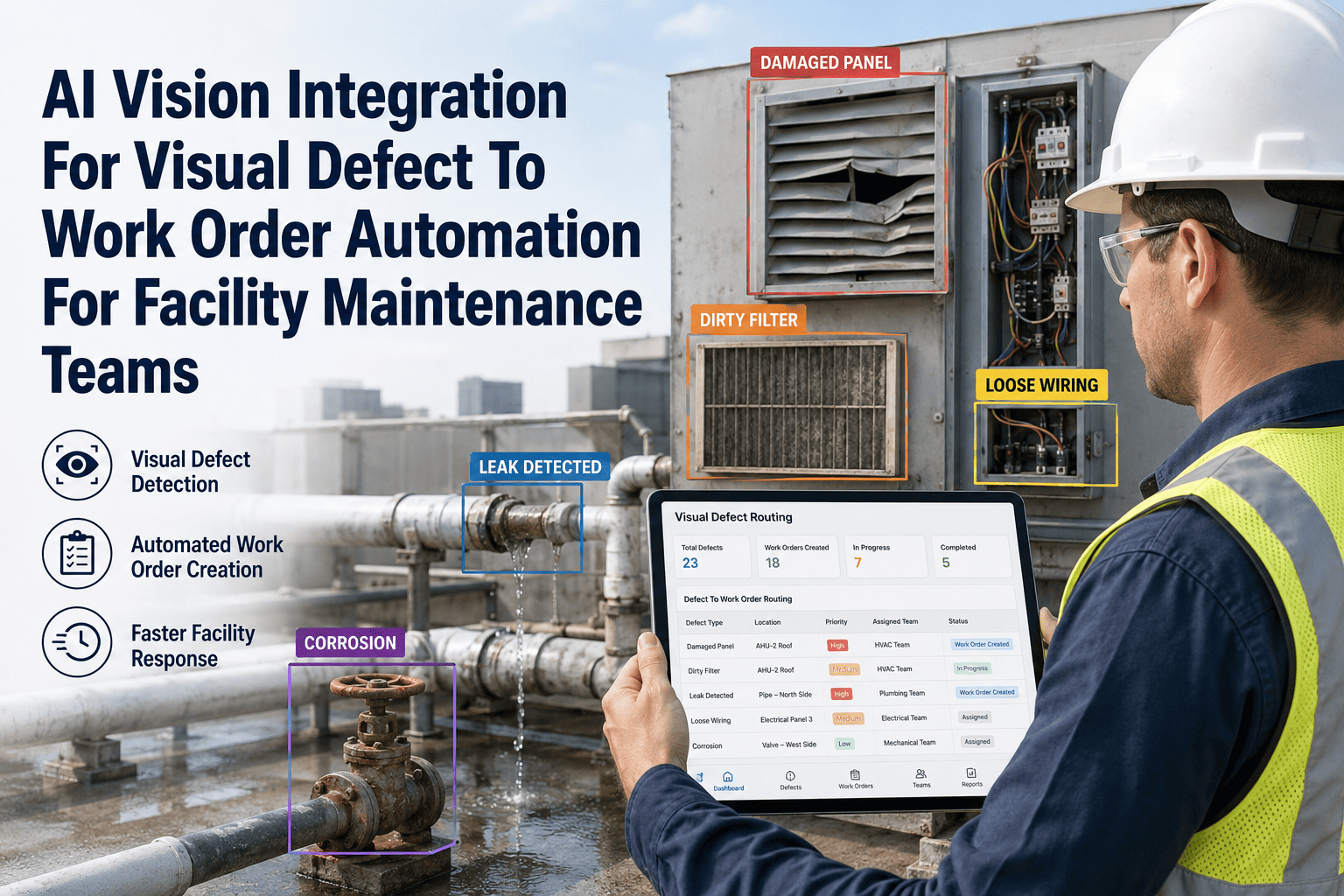
Steel plants run on equipment that fails violently when it fails — a cracked refractory lining or a worn crane hook gives little warning before becoming a safety incident or a multi-day shutdown. Inspectors document these conditions with photos constantly, but in most plants that evidence never reaches a structured maintenance system fast enough to act on. OxMaint's AI Vision engine reads inspection photos from the mill floor and converts them directly into classified, prioritized CMMS work orders. Book a demo to see it running on steel plant inspection data.
Steel Plant · AI Vision to CMMS Data
How AI Vision Turns Maintenance Photos Into Actionable CMMS Data
02
seconds to classify a defect photo
04
major asset zones covered by the model
01
unified record per defect, from photo to closure
Mill Zone Coverage
Where AI Vision Classification Applies Across the Plant
Refractory & Furnace Lining
Spalling, cracking, and erosion patterns identified from inspection camera photos and routed before a breakout risk develops.
Crane & Lifting Equipment
Hook wear, cable fraying, and structural deformation flagged from routine crane inspection photos.
Rolling Mill Rolls
Surface defects and wear patterns on work rolls classified to support change-out scheduling.
Conveyor & Material Handling
Belt damage, idler misalignment, and structural corrosion identified from routine walk-down photos.
Convert Inspection Photos Into Action Before the Next Heat
OxMaint classifies and routes mill floor defects from photos in seconds, keeping pace with continuous production schedules.
Data Output
What a Classified Photo Becomes in the CMMS
| Photo Input |
Classification Output |
CMMS Action |
| Refractory crack pattern |
Critical — structural |
Immediate work order, shift supervisor alert |
| Crane hook surface wear |
High — lifting safety |
Inspection scheduled before next lift cycle |
| Roll surface pitting |
Medium — quality risk |
Added to next planned change-out window |
| Conveyor idler misalignment |
Medium — mechanical |
Logged for next maintenance shift |
Expert Review
What Steel Industry Researchers Say About Visual Inspection Data
Refractory degradation is one of the leading causes of unplanned furnace downtime in integrated steel plants, and plants using continuous visual monitoring to track lining condition consistently identify wear patterns earlier than those relying solely on scheduled offline inspections.
— Iron and Steel Technology, Refractory Maintenance Research
Automated classification of crane and lifting equipment defects from inspection photos is gaining adoption in heavy industry as a way to standardize severity scoring across inspectors, reducing the variability that has historically affected manual safety assessments.
— Journal of Loss Prevention in the Process Industries, Heavy Equipment Safety Studies
FAQs
Frequently Asked Questions
Can the system handle photos taken in high-heat, low-visibility mill environments?
The classification model is built to handle variable lighting and partial obstruction common in mill environments, and accuracy improves further as it processes more photos specific to your plant conditions.
Start a free trial to test it against your own inspection photos.
How are critical safety defects escalated differently from routine ones?
Defects classified as critical trigger an immediate alert to the shift supervisor in addition to the standard work order, ensuring safety-relevant findings are not just logged but actively pushed to decision-makers.
Book a demo to see the escalation rules in action.
Can inspection data feed into our existing reliability program?
Yes, classified defect history accumulates into asset records that support failure-pattern analysis, which can feed directly into existing reliability-centered maintenance programs.
Does this replace certified inspectors for safety-critical equipment?
No, it supports certified inspectors by giving them a faster way to log and route findings, while final safety determinations remain with qualified personnel.
Sign up free to see how it fits alongside your existing inspection program.
AI Vision for Steel Plants
Turn Every Mill Floor Photo Into a Tracked, Routed Action
OxMaint connects inspection photos to classified, prioritized CMMS work orders built for the pace of continuous steel production.