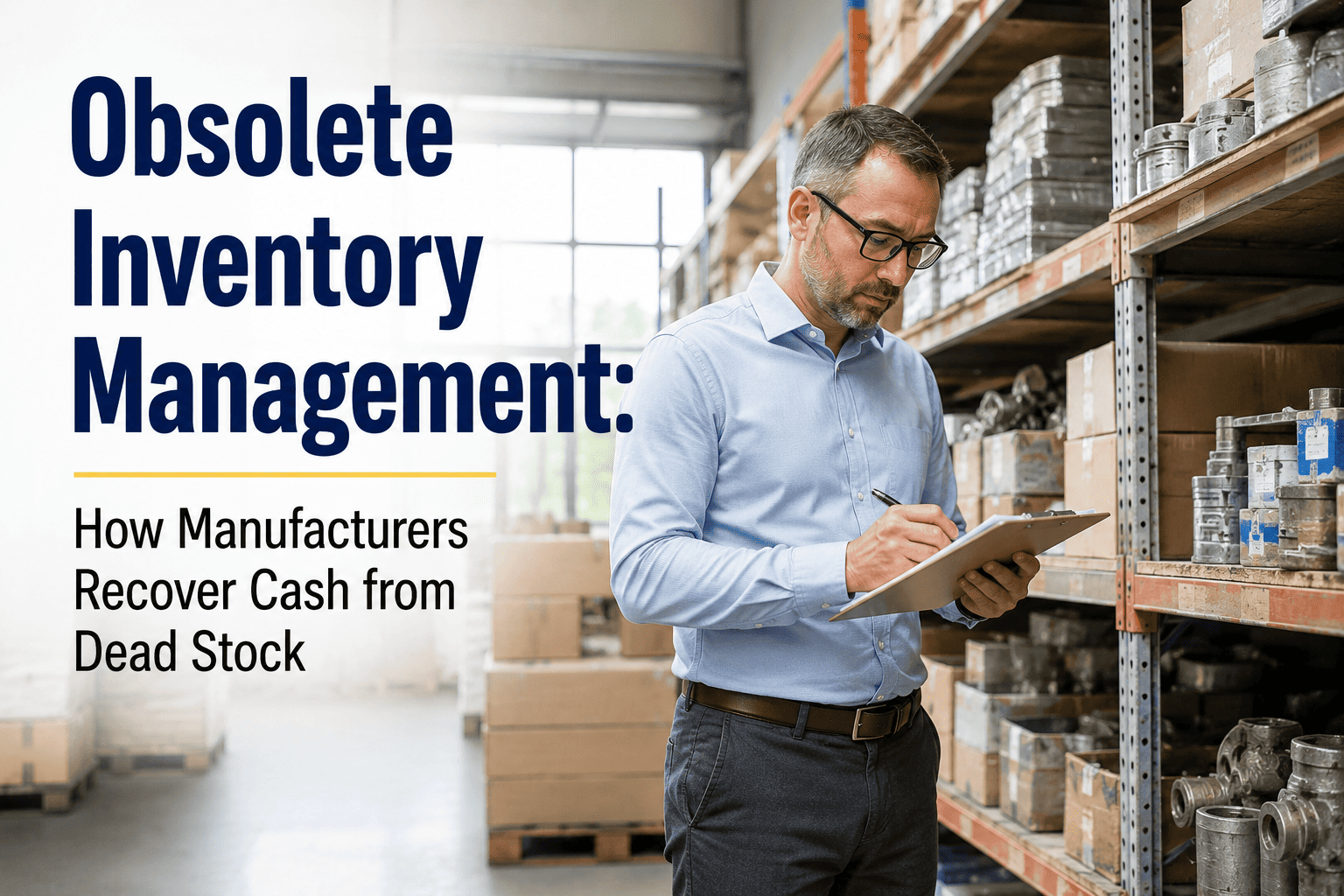
Walk into the storeroom of almost any manufacturing facility and you will find it. Shelves of spare parts for machines that were replaced years ago. Bearings and seals ordered in bulk that never moved. Components for a product line that was discontinued before the stock was ever touched. Studies show that 20 to 40% of MRO inventory at the average facility is excess or obsolete — capital sitting on shelves doing nothing, costing between 20 and 30 cents per dollar per year just to hold. The problem is not that manufacturers do not know the stock is there. The problem is that no one has a system to identify it, classify it, and act on it before it accumulates further. Sign up free on OxMaint to link your parts inventory directly to your equipment records and automatically flag obsolete stock — or book a demo to see how it works across a live facility.
Stop Paying to Store Parts You Will Never Use
OxMaint links every spare part to the equipment it belongs to. When a machine is retired, all linked parts are flagged automatically. ABC criticality classification, consumption tracking, and reorder automation — built into your CMMS, not a separate spreadsheet.
The Real Cost of Obsolete Inventory — It Is Not Just the Purchase Price
Most manufacturers calculate dead stock cost as the value on the balance sheet. That is the smallest part of the problem. The carrying cost — warehousing, insurance, opportunity cost, and eventual write-down — runs at 20 to 30% of inventory value per year. A facility holding £500,000 in obsolete stock is spending £100,000 to £150,000 annually just to keep it.
Why Obsolete Inventory Accumulates in Manufacturing
Obsolete inventory is almost never the result of a single bad decision. It accumulates through a combination of disconnected systems, poor data, and the absence of a formal review process. Understanding the cause is the first step to preventing the next wave. Sign up on OxMaint to link parts to equipment records and get visibility before stock becomes stranded.
Step-by-Step: How Manufacturers Identify and Classify Obsolete Stock
Before any recovery strategy can work, the obsolete stock must be found and classified. This is the process that most manufacturers skip — leading to reactive write-downs rather than proactive cash recovery. Book a demo to see how OxMaint surfaces obsolete and slow-moving parts automatically from your equipment and inventory data.
Recovery Strategies: What to Do with Obsolete Stock Once You Find It
Recovery rate drops with time. A part that recovers 40–60p in the pound at surplus value today may be scrap-only within 18 months. The classification step determines which route delivers the most value — and acting fast on the highest-value items is where the cash comes back.
The Prevention Side: How to Stop Obsolete Inventory Accumulating Again
Recovery is a one-time event. Prevention is the structural change that stops the same problem building up again. The root cause in most facilities is the same: parts inventory is managed independently of equipment records, so when machines change, the parts list does not. Sign up free on OxMaint to connect your parts inventory to your equipment lifecycle from day one.
PARTS
CLASS
TRACK
MAX
What the Numbers Look Like in Practice
Recovery estimates based on 18–32% recovery of total carrying value through surplus sales, vendor returns, and internal redistribution. Actual recovery depends on part type, age, condition, and market availability.
Frequently Asked Questions
How do I define obsolete inventory in a manufacturing context?
In manufacturing and MRO, a part is typically classified as obsolete when it has had zero consumption for 24 months and is no longer linked to any active equipment. A part is slow-moving if it has had no consumption for 12 months but is still associated with operating assets. The distinction matters: slow-moving stock may still be needed; obsolete stock will never be used again and should be prioritised for disposition. Sign up free on OxMaint to run automated last-movement reports and equipment-linked obsolescence flags across your entire inventory.
What is the carrying cost of obsolete inventory and why does it matter?
Carrying costs for MRO inventory typically run at 20 to 30% of inventory value per year — covering warehousing, insurance, capital cost, and risk of further deterioration. A facility holding £1 million in obsolete stock is spending £200,000 to £300,000 annually simply to store it, with no prospect of a return. That cost continues until the stock is disposed of, which is why acting quickly on obsolescence identification directly improves working capital.
Can obsolete spare parts be sold, and where?
Yes. Industrial surplus brokers, MRO-specific online marketplaces, and direct sales to other manufacturers in the same sector are all viable channels. Recovery rates range from 30 to 60% of original value for recently purchased, commonly used components in good condition. Specialist electrical, hydraulic, and process equipment parts can recover more through niche markets. Recovery rates fall sharply for parts older than 5 years or with limited market demand. Book a demo to see how OxMaint's disposition workflow manages the classification and prioritisation process.
How does a CMMS help prevent obsolete inventory from accumulating?
A CMMS prevents obsolete inventory accumulation by linking every spare part to the equipment it supports. When that equipment is retired, the linked parts are automatically flagged for review — rather than sitting on the shelf indefinitely with no connection to the change. Combined with last-movement tracking, ABC classification, and demand-driven reorder levels, a CMMS shifts parts management from reactive write-downs to proactive working capital control. Sign up free on OxMaint to connect your parts inventory to your equipment lifecycle today.
Turn Storeroom Dead Stock Into Working Capital
OxMaint links every spare part to the equipment it belongs to, tracks last-movement dates, flags slow-moving and obsolete stock automatically, and gives you the consumption data to right-size your inventory. Start free — no hardware, no long setup, first digital inventory review running within a week.