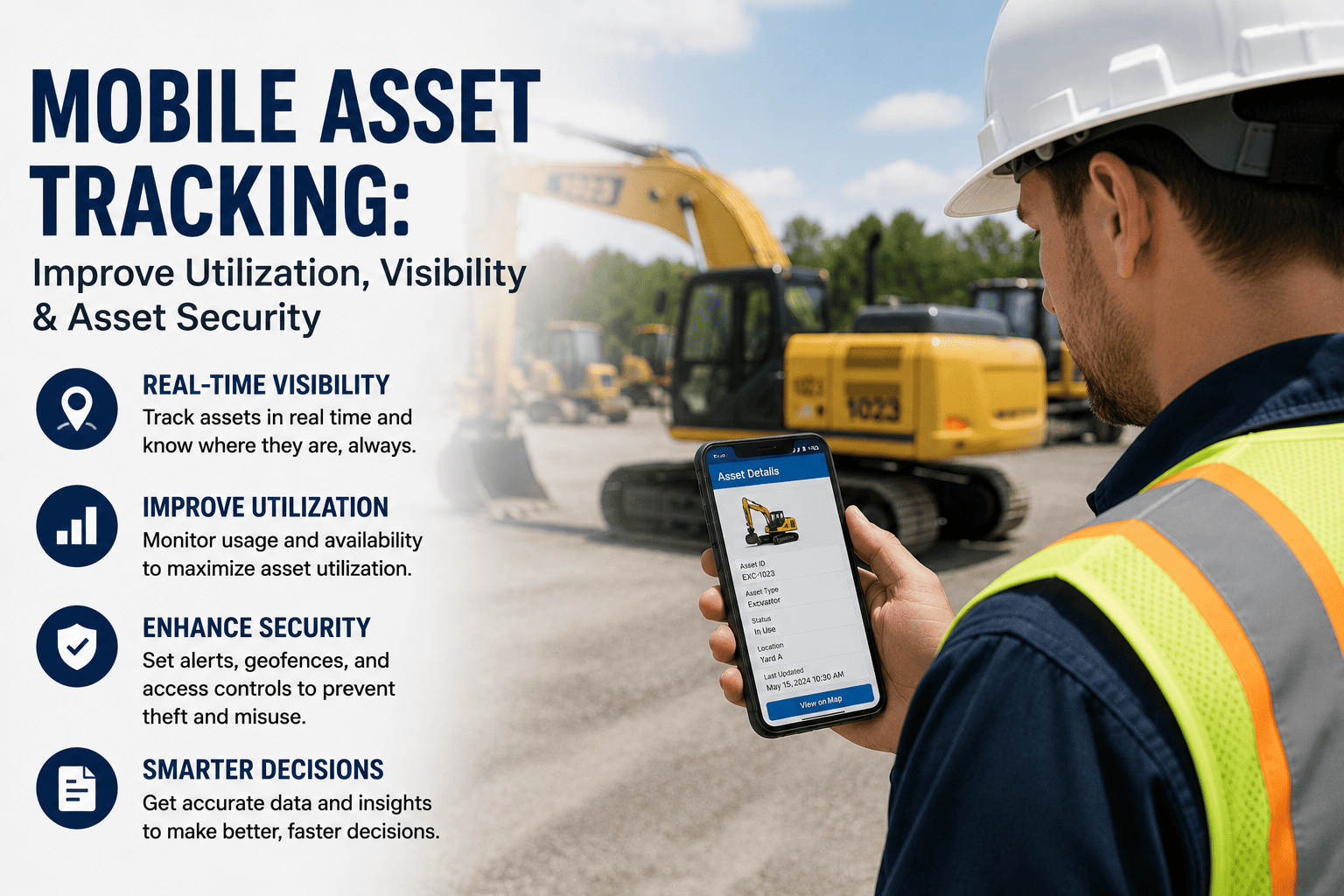
An $80,000 excavator parked overnight on a remote job site is one of the easiest large assets in the world to steal — no fence, minimal lighting, and a piece of equipment built specifically to move itself onto a truck. Construction equipment theft costs the industry over $1 billion annually, and fewer than 21% of stolen machines are ever recovered without tracking in place. With GPS tracking, recovery rates climb above 85%. The gap between those two numbers is the entire business case for mobile asset tracking. A CMMS like OxMaint connects that location data directly to maintenance history, utilization reporting, and the rest of your asset register — so tracking isn't a separate system bolted on the side.
Know Where Every Mobile Asset Is, Right Now
OxMaint connects GPS, RFID, and IoT location data to your full asset record — utilization, maintenance history, and security in one dashboard, not three disconnected apps.
Mobile Assets Break the Rules That Govern Fixed Equipment
A fixed asset sits in one place, so a barcode and an annual walk-through are usually enough. A mobile asset — an excavator that moves between three job sites a month, a tool cart that travels between crews, a forklift that changes hands every shift — needs a tracking strategy built around constant motion, not periodic verification. Book a demo to see how OxMaint handles mobile assets without forcing your team into a separate tracking platform.
Live Visibility Across Every Job Site
The core value of mobile tracking is replacing "where is that excavator?" phone calls with an answer that's already on a screen. Sign up free and pull this same view for your own equipment inside OxMaint.
Three Tracking Technologies, Layered by Purpose
Engine-Connected Trackers
Monitors engine hours, fault codes, and fuel use directly from the CAN bus. The industry standard for basic location plus maintenance-trigger data on powered equipment.
Real-Time Diagnostics
Adds deep diagnostics on top of location — fault codes, idle time, fuel burn — feeding directly into predictive maintenance triggers rather than calendar-based scheduling.
Hidden Recovery Tracker
A concealed, independent tracker that survives even if the primary hardwired unit is disabled or removed — the redundancy that actually recovers a stolen asset.
Combining a visible hardwired unit with a hidden battery-powered backup is sometimes called a "ghost tracking" strategy — the visible unit deters casual theft, while the hidden one defeats anyone who disables the obvious tracker.
Theft Prevention: Layers That Actually Stop Loss
Visible Deterrence
Visible tracking decals alone cause many opportunistic thieves to move to an easier, unmonitored target — a low-cost first layer of protection.
Geofencing Alerts
A virtual boundary around the job site triggers an immediate alert the moment equipment crosses it outside scheduled working hours.
Anomaly Pattern Detection
Movement outside an asset's typical operating hours or route gets flagged automatically, rather than discovered the next morning when the equipment is gone.
Rapid Recovery Data
Continuous location history gives law enforcement an active trail to follow, instead of a last-known location from whenever someone happened to check.
Matching Tracking Hardware to Asset Type
| Asset Type | Recommended Tracker | Why |
|---|---|---|
| Powered vehicles needing dispatch/compliance | Wired cellular telematics | Seconds-level real-time data and engine diagnostics for regulated fleets |
| Excavators, loaders parked overnight | Hardwired + hidden battery backup | Layered protection against both casual theft and tracker tampering |
| Tool carts, attachments, trailers | Compact battery-powered tag | Low cost per unit, frequent enough location pings for yard-level visibility |
| Lighting towers, generators (non-critical timing) | Simple wired tracker, engine-hour based | Verifies billing hours and basic maintenance scheduling without telematics cost |
Utilization: The Hidden ROI Beyond Theft Prevention
Theft prevention gets the headlines, but utilization data is often the larger financial win. Identifying equipment sitting idle across job sites lets fleet managers redeploy existing assets instead of renting or purchasing more — and a modest utilization improvement compounds across an entire fleet.
Increase in construction equipment utilization through GPS-driven idle asset identification
Typical timeframe for fleet managers to report positive ROI after implementing GPS tracking
Insurance premium discounts commonly offered for GPS-tracked equipment fleets
How OxMaint Brings Mobile Tracking Into Your Maintenance Workflow
Live Location Dashboard
See every tracked asset's current location, status, and utilization across all job sites in one view — not a separate app your team has to check on top of the CMMS.
Geofence & Anomaly Alerts
Set virtual boundaries per site and get notified immediately on unauthorized movement, idle time thresholds, or after-hours equipment use.
Engine Hours Into PM Triggers
Connect engine-hour and telematics data directly to preventive maintenance schedules, so service triggers off actual usage instead of a fixed calendar date.
Utilization Reporting
Identify chronically idle equipment across the fleet automatically, supporting redeployment decisions instead of unnecessary new equipment purchases.
Stop Losing Equipment You Can't See
OxMaint puts live location, utilization, and maintenance history on every mobile asset in one dashboard — so theft, idle time, and missed service all get caught before they cost you.
Frequently Asked Questions
How much does mobile asset tracking actually cost?
Costs vary widely by technology. Simple battery-powered tags can run as low as $12–$30 per device per month with no contract, while wired cellular telematics systems with full diagnostics typically cost $30–$50 per device per month. For a fleet of 50 tracked assets, a realistic first-year total including hardware, installation, and subscriptions runs around $35,000, dropping to roughly $15,000 in subsequent years for subscriptions alone. Sign up free to see how OxMaint consolidates this tracking data with your existing maintenance budget.
How quickly does GPS tracking pay for itself?
Most fleet managers report positive ROI within about 11 months of implementation. The payback comes from multiple directions at once: recovering a single stolen excavator can cover tracking costs for an entire fleet for years, a 10% utilization improvement can delay or eliminate the need to purchase additional equipment, and many insurers offer 5 to 15% premium discounts for GPS-tracked fleets.
What is a "ghost tracking" strategy?
Ghost tracking combines a visible, hardwired tracking unit with a separate, hidden battery-powered backup tracker on the same asset. The visible unit deters casual or opportunistic theft outright, while the hidden unit provides a fallback if a more determined thief locates and disables the obvious tracker. This layered approach is considered the industry standard for protecting high-value, frequently relocated equipment. Book a demo to see how OxMaint supports multi-tracker asset records.
Does GPS tracking really improve equipment recovery if stolen?
Yes, substantially. Industry data shows recovery rates above 85% for GPS-tracked equipment compared to below 21% for untracked equipment. The difference comes down to continuous location history — law enforcement has an active trail to follow rather than a last-known location from whenever someone happened to notice the equipment was missing.
How does mobile tracking improve equipment utilization, not just security?
Once every asset's location and active/idle status is visible across all job sites, fleet managers can identify equipment sitting unused at one site while a different site is renting a comparable unit. Redeploying that idle asset instead of acquiring new equipment is a direct cost avoidance, and tracking data shows utilization gains around 20% are common once this visibility exists.