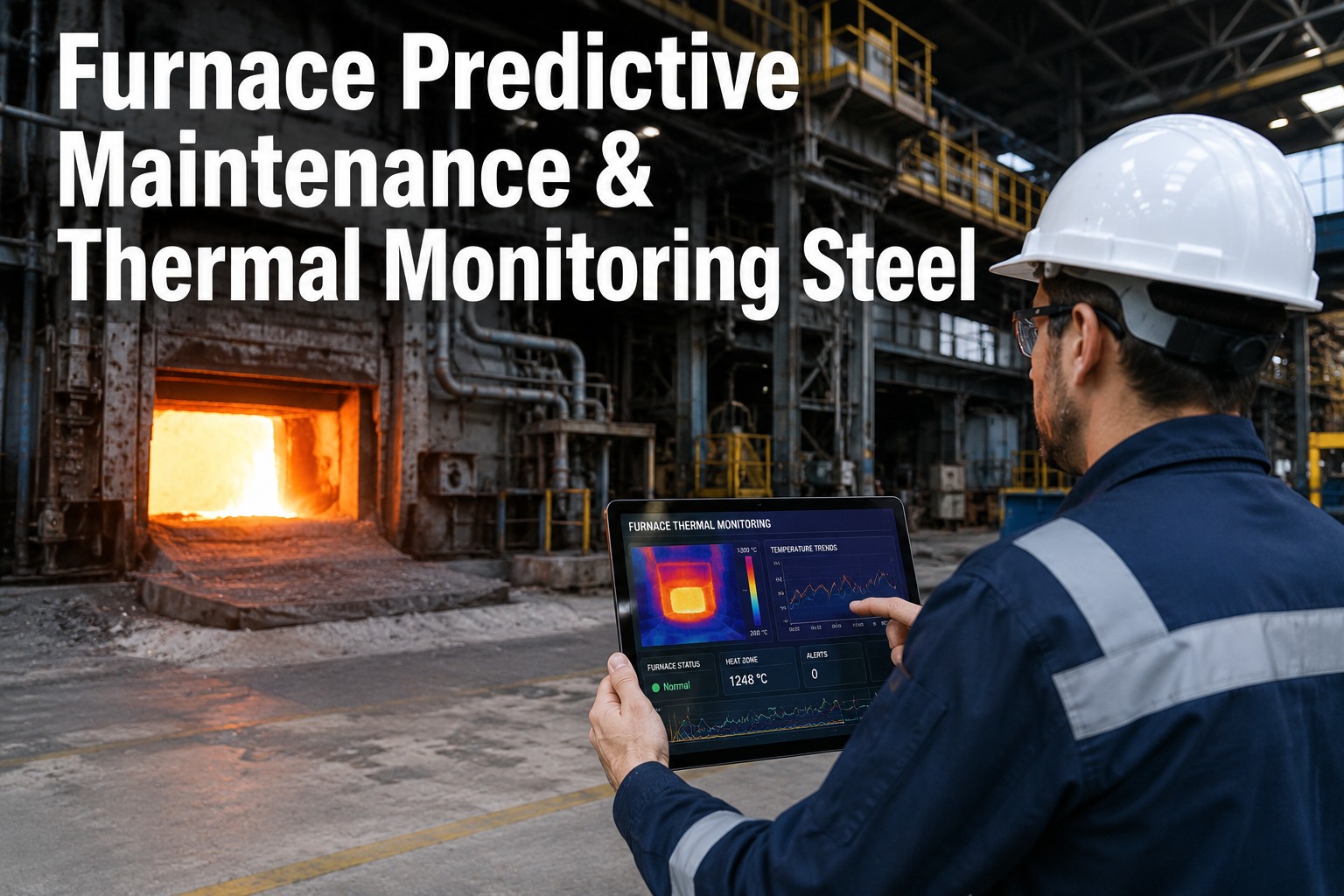
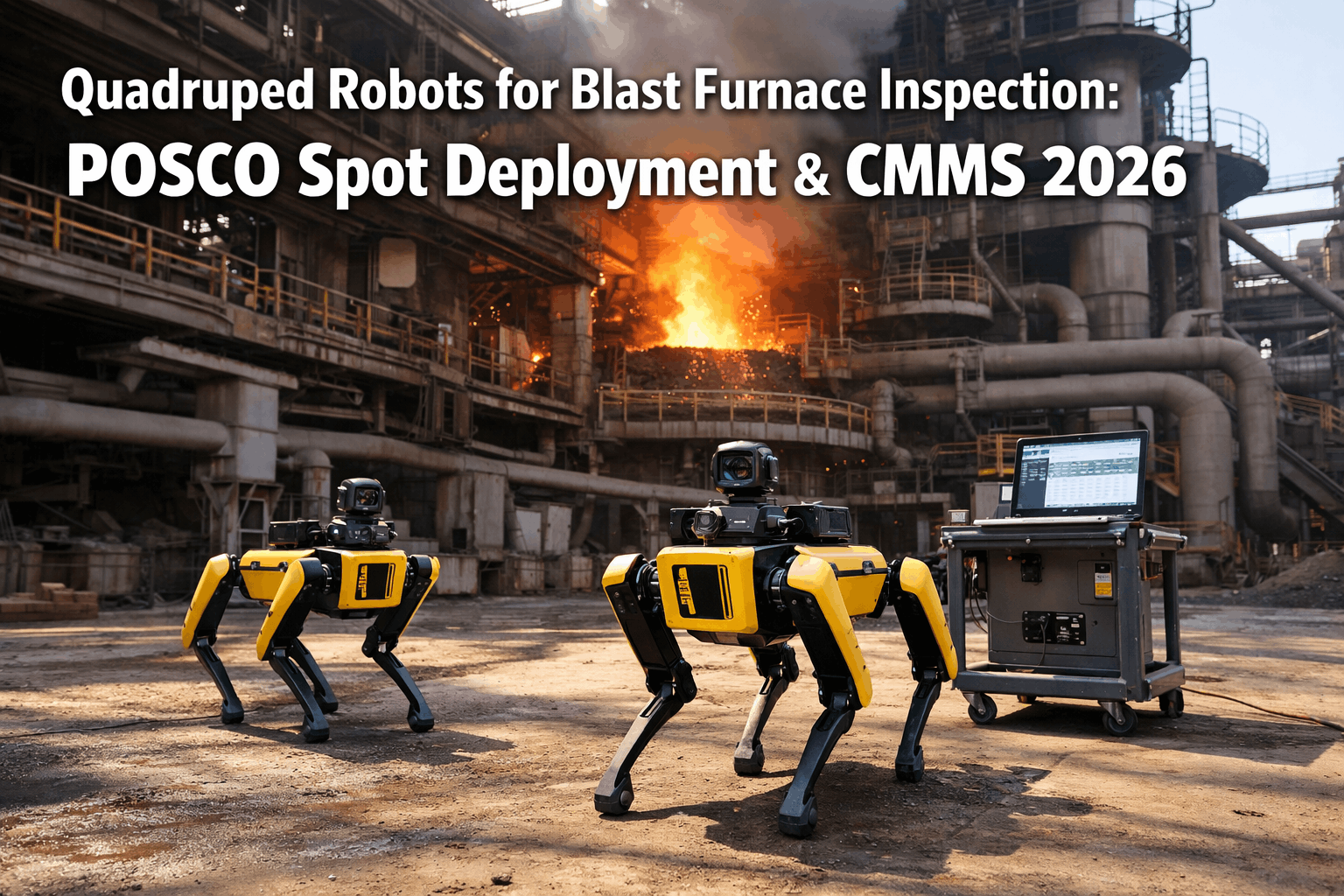
Steel plant predictive maintenance has evolved from manual vibration routes into full AI-driven programs that integrated mills now rely on to cut unplanned downtime by 30 to 50 percent. This 2026 complete guide covers the technology stack, asset criticality tiering, alert workflows, and CMMS integration needed to build a steel PdM program that scales past pilot without collapsing under alarm fatigue. Whether you are monitoring blast furnaces, continuous casters, rolling mills, or overhead cranes, the disciplined execution of predictive maintenance in steel plants is the single highest-leverage reliability initiative available today. To see how OxMaint's AI-powered CMMS operationalizes these strategies on your shop floor, you can Start Free Trial or book a personalized walkthrough with our team.
Is Your Reactive Maintenance Strategy Costing You Millions in Unplanned Downtime?
Integrated steel mills lose $50,000 to $200,000 for every hour of unplanned line stoppage. AI-powered predictive maintenance shifts teams from firefighting failures to preventing them — before a blast furnace, caster, or rolling mill forces an emergency outage.
Why Steel Plant Predictive Maintenance Matters in 2026
A single hour of unplanned downtime at an integrated steel mill can cost $50,000 to $200,000 in lost production, scrap, and energy — and that is before accounting for catastrophic equipment damage.
Consider a 180-asset steel plant spending $42,000 annually on manual vibration route collection and reactive repairs. After implementing an AI-driven predictive maintenance platform, the plant identified a premature bearing degradation on a hot strip mill gear box 14 days before catastrophic failure. The early warning saved an estimated $310,000 in emergency repair costs and 22 hours of lost production — paying back the entire software investment in under 90 days.
The 5 Core Technologies for Steel Plant Condition Monitoring
Modern steel PdM requires a layered technology stack. No single sensor type catches every failure mode — integrated mills deploy these five complementary technologies to achieve full asset coverage.
Vibration Monitoring
The backbone of predictive maintenance for rotating equipment. High-frequency tri-axial accelerometers detect bearing defects, gear mesh abnormalities, and rotor imbalance in rolling mill drives, pumps, and fans. ISO 10816 vibration severity standards provide baseline thresholds for alert generation.
Thermal Imaging
Infrared cameras and continuous thermal sensors monitor electrical connections, motor windings, refractory hot spots, and ladle preheaters. Thermal anomalies often precede electrical failures by weeks, allowing planned interventions during scheduled outages rather than emergency shutdowns.
Oil Analysis
Elemental and ferrographic oil analysis detects wear metal particles, contamination, and lubricant degradation in heavy gearboxes and hydraulic systems. Monthly sampling combined with real-time inline sensors catches lubrication breakdown before it destroys critical transmission components.
Acoustic Emission
Acoustic emission sensors detect crack propagation, leakage, and early-stage bearing degradation in high-stress assets like blast furnace shells, continuous caster segments, and pressure vessels — capturing ultrasonic stress signals long before vibration patterns shift.
Motor Current Signature Analysis
MCSA extracts mechanical load signatures from electrical current draw, detecting rotor bar degradation, shaft misalignment, and load oscillations in large mill motors and fan drives — without installing any mechanical sensors on the asset itself.
How to Tier Steel Plant Assets for PdM Coverage
Not every asset deserves a $3,000 sensor. A disciplined asset criticality tiering model — aligned with ISO 55000 — ensures maintenance budgets flow to the assets where failure causes the highest production, safety, and environmental impact.
| Tier | Asset Examples | Failure Impact | Monitoring Strategy | Coverage Target |
|---|---|---|---|---|
| Tier 1 | Blast furnace, main mill motor, continuous caster | Production stop, safety risk, $100K+/hr loss | Continuous online monitoring, all 5 technologies | 100% of assets |
| Tier 2 | Overhead cranes, hydraulic power units, fans | Partial line slowdown, $10-50K/hr loss | Wireless vibration + quarterly oil sampling | 80-90% of assets |
| Tier 3 | Secondary pumps, conveyors, utility systems | Localized impact, redundant capacity available | Monthly vibration route, visual inspection | 50-70% of assets |
| Tier 4 | Lighting, minor utilities, non-critical spares | Minimal production impact | Run-to-failure with stocked spares | Reactive only |
Building a Steel PdM Program That Scales Past Pilot
70% of predictive maintenance pilots never scale. The reason is rarely the technology — it is the absence of a disciplined alert workflow, CMMS integration, and a clear path from pilot to plant-wide rollout.
Assess and Baseline
Audit asset criticality, document existing failure modes, and establish baseline OEE and MTBF metrics. Select 10-15 Tier 1 assets for pilot deployment — enough to prove value, few enough to manage alert volume.
Deploy Sensors and Integrate CMMS
Install monitoring hardware on pilot assets and wire alerts directly into your CMMS. The critical step: every alarm must auto-generate a work order with diagnostic context — no manual data entry, no alarm fatigue.
Tune Alert Thresholds
Use the first 60 days of data to tune alarm thresholds and eliminate false positives. A well-tuned system should produce 5-15 actionable alerts per month on 15 assets — not 500 daily notifications that get ignored.
Prove ROI and Scale
Quantify caught failures, avoided downtime, and maintenance savings from the pilot. Present the ROI case to leadership and expand coverage to all Tier 1 and Tier 2 assets across the plant within 12 months.
See OxMaint on Your Assets — Book a 30-Minute Demo
Watch how AI-driven condition monitoring, automated work order generation, and real-time analytics integrate seamlessly into your steel plant's reliability workflow.
How OxMaint Powers Steel Plant AI Maintenance
OxMaint is an AI-powered CMMS and EAM platform built to close the gap between condition monitoring data and maintenance execution. Here is how OxMaint solves the specific challenges of predictive maintenance in steel plants.
Auto-Generated Predictive Work Orders
Every PdM alert from vibration, thermal, or oil sensors automatically generates a work order in OxMaint — complete with diagnostic data, failure mode, and recommended action. Eliminate manual entry and cut alarm-to-action time by 90%.
AI Failure Prediction Engine
Machine learning models analyze historical failure patterns, sensor trends, and operating context to predict remaining useful life (RUL) on critical assets — giving planners weeks of lead time to schedule repairs during planned outages.
Integrated Spare-Parts Inventory
When a predictive alert fires, OxMaint instantly checks spare parts availability and reserves components — ensuring the bearing, coupling, or motor is staged before the technician is dispatched. No more finding out the part is out of stock mid-repair.
Reliability Analytics and KPI Dashboards
Real-time dashboards track OEE, MTBF, MTTR, and PM compliance across every asset tier. Automated compliance reporting keeps you audit-ready for ISO 55000 and safety regulators — without compiling spreadsheets manually.
Why Steel PdM Programs Collapse Under Alarm Fatigue
The number one killer of predictive maintenance programs is not technology failure — it is alarm fatigue. When a steel plant deploys hundreds of sensors without a tuned alert workflow and CMMS integration, reliability teams drown in notifications and eventually ignore them all.
- 500+ daily sensor alerts with no prioritization or filtering
- Manual data entry from sensor dashboards into work order system
- Alerts arrive after failure has already begun — no lead time
- No link between condition data and spare parts availability
- Predictive data siloed from maintenance execution and planning
- False positive rate above 40% erodes team trust in the system
- 5-15 prioritized, actionable alerts per month per 15-asset pilot
- Auto-generated work orders with full diagnostic context
- AI predicts failures 7-21 days in advance with RUL estimates
- Automatic spare parts reservation triggered by every alert
- Seamless CMMS integration from sensor to work order to analytics
- Machine learning tuning reduces false positives below 10%
Steel Plant Predictive Maintenance: Top Questions Answered
What is predictive maintenance in a steel plant?
Predictive maintenance in a steel plant uses sensor data — vibration, thermal, oil analysis, acoustic emission, and motor current — combined with AI analytics to predict equipment failures before they occur. Unlike preventive maintenance on fixed schedules, PdM triggers interventions based on actual asset condition, reducing unplanned downtime by 30-50% and cutting maintenance spend by 20-40%.
How much does a steel PdM program cost to implement?
A pilot program covering 10-15 Tier 1 assets typically costs $30,000 to $80,000 for sensors, integration, and software licensing. Most integrated steel mills achieve full payback within 6-12 months by catching a single critical failure. You can explore OxMaint's pricing and start a Start Free Trial to evaluate the platform on your assets.
Which steel plant assets should be monitored first?
Start with Tier 1 critical assets where failure causes the highest production loss and safety risk: blast furnaces, continuous casters, main rolling mill drives, and overhead charging cranes. These assets have the highest ROI for PdM investment and typically represent 10-15% of total plant equipment but account for 70-80% of unplanned downtime cost.
How does CMMS integration work with predictive maintenance?
When a sensor detects an anomaly, the condition monitoring system sends an alert directly to the CMMS, which auto-generates a work order with diagnostic data, priority level, and recommended repair steps. This eliminates manual data entry and ensures predictive insights translate immediately into planned maintenance actions. Book a 30-minute demo at Calendly to see this workflow live.
How do you prevent alarm fatigue in steel PdM systems?
Alarm fatigue is prevented through three disciplines: tiered alert thresholds tuned over 60 days of baseline data, AI-driven false-positive filtering that reduces noise below 10%, and automatic work order generation so every alert has a clear, owned action. A well-tuned system produces 5-15 actionable alerts per month on a 15-asset pilot — not hundreds of daily notifications.
Stop Reacting to Failures. Start Predicting Them.
Join the integrated steel mills using OxMaint to cut unplanned downtime 30-50%, eliminate paper work orders, and predict equipment failures before they happen.
Free 14-day trial · No credit card required