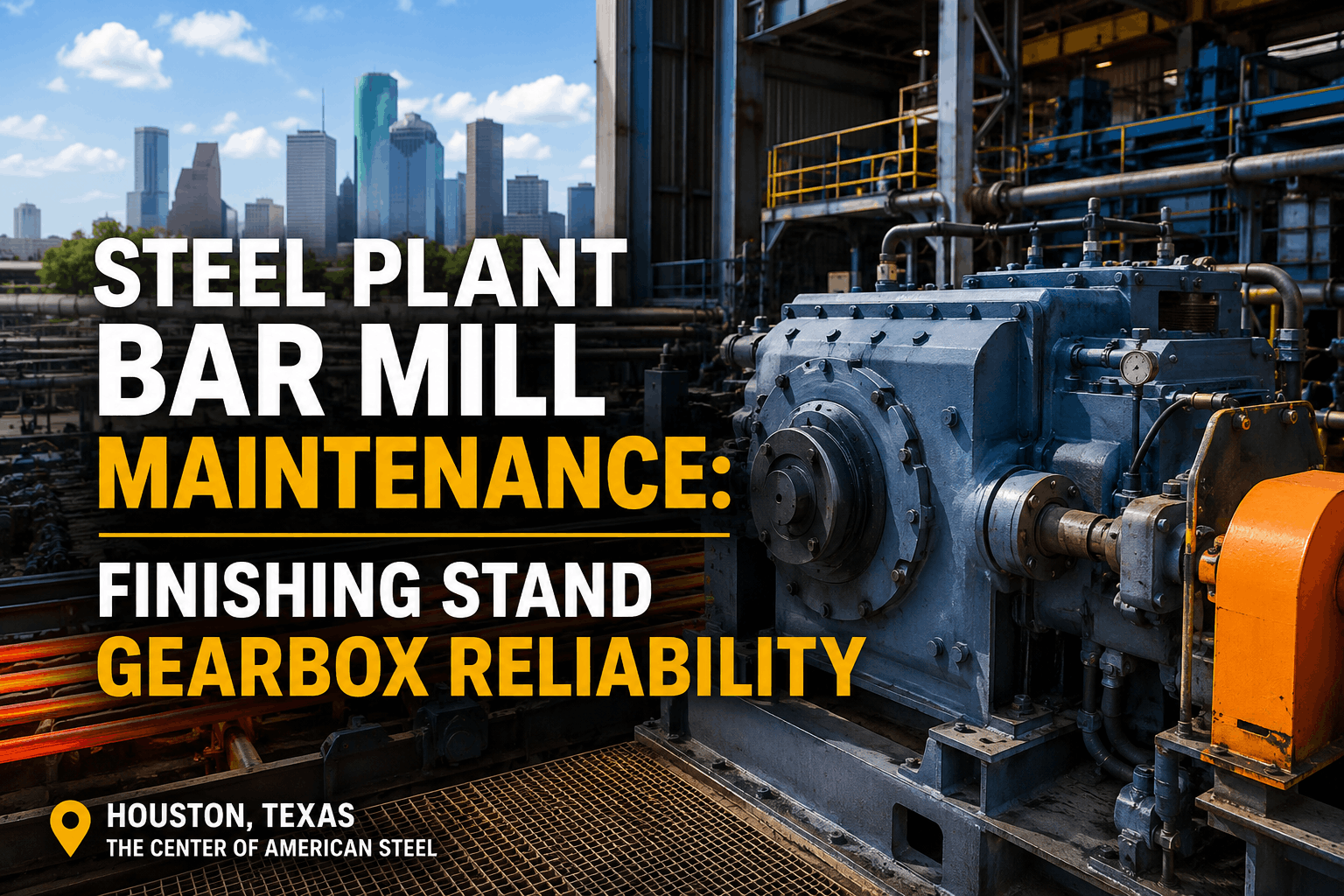
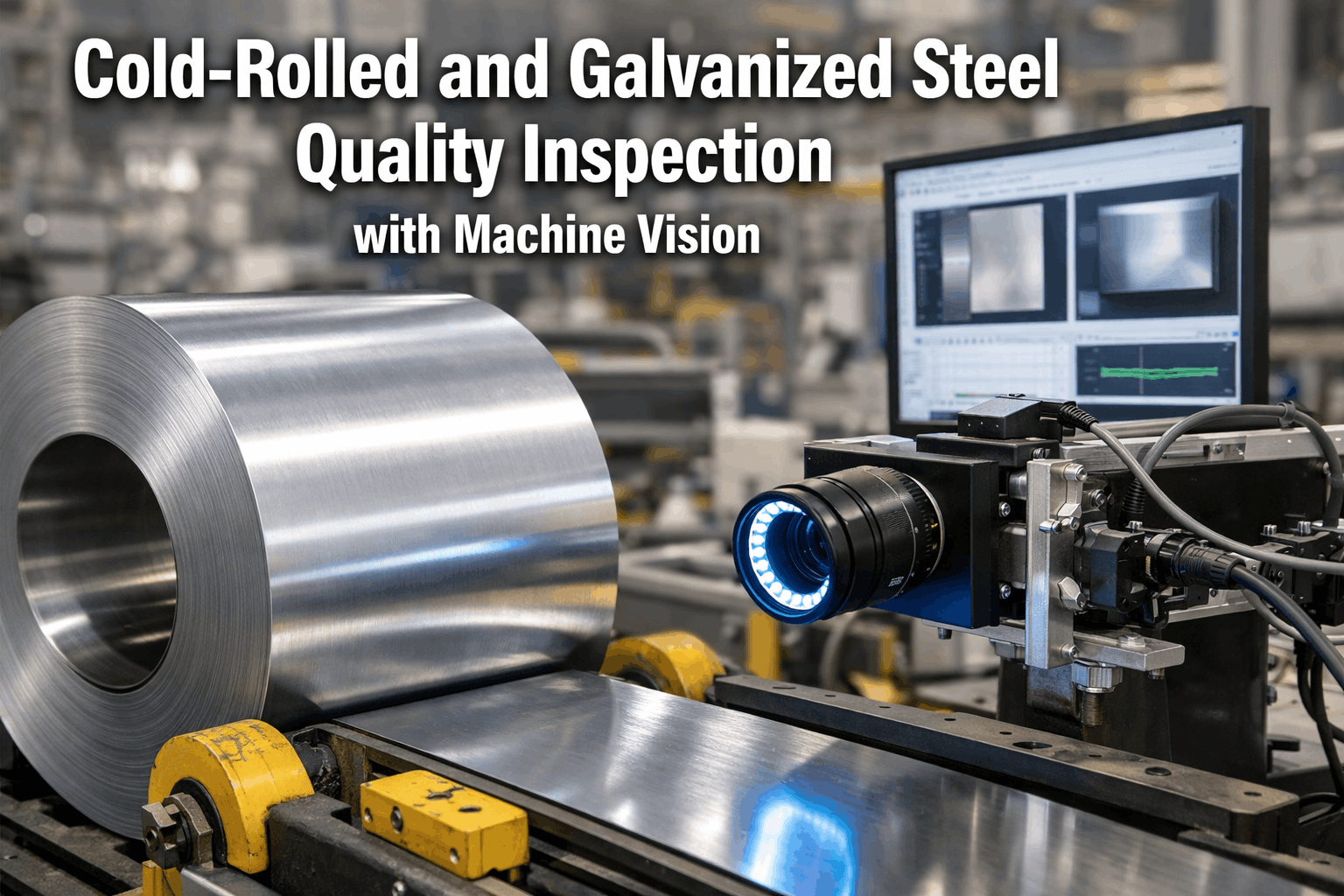
Heavy plate mills processing 1.5–5.5 meter wide steel sheets at thickness ranges of 5–120 mm operate under crushing roll forces exceeding 100 MN, yet most independent plate producers manage roll shop operations through outdated monthly inspection schedules rather than real-time condition monitoring. Unplanned downtime on a heavy plate mill costs $25,000–$75,000 per hour, and 62% of critical failures originate from preventable roll wear, backup roll alignment drift, or cooling system failures that cascade into multi-day rebuilds. Industry data from USA steel plants reveals that poor roll shop maintenance and inadequate cooling bed automation result in 12–18% annual production capacity loss, equivalent to $8–15 million per year for 700,000-tonne-capacity mills. This comprehensive guide covers the complete heavy plate maintenance ecosystem including 4-high mill stand design optimization, MULPIC accelerated cooling system reliability, CVC-plus roll technology maintenance, hot plate leveler alignment tracking, plate shearing line reliability, and integrated digital work order systems that detect roll wear progression and cooling system efficiency drift weeks before operational failure occurs.
Plate Mill Maintenance: Heavy Plate Roll Shop & Cooling Systems
Industrial-grade maintenance strategy for 4-high reversing plate mills, backup roll alignment control, MULPIC accelerated cooling optimization, roll grinding campaigns, hot leveler calibration, and shearing line reliability. Complete CMMS coverage spanning roughing mills, hot plate levelers, cooling beds, and finishing operations with predictive failure detection for rolls, bearings, hydraulic systems, and thermal equipment.
4-High Mill Stand Architecture: Roll Wear, Backup Roll Alignment, and Edger Hydraulics
The 4-high reversing mill stand is the mechanical core of heavy plate production, with two large backup rolls (supporting the 100+ MN rolling force) positioned above and below two smaller work rolls that directly contact the plate. Backup roll deflection and work roll wear are the two primary variables controlling finished plate flatness and thickness profile. When backup rolls migrate (due to pillar wear or hydraulic pressure drift), the top and bottom backup rolls no longer maintain parallel alignment, causing localized rolling force concentration and uneven plate thickness. Modern plate mills now use active passline adjustment hydraulics to auto-correct pillar position every 5–10 rolling passes, maintaining ±0.1 mm work roll parallelism throughout 8-hour shifts. Work roll wear progresses nonlinearly: rolls sustain 50,000–80,000 tonnes of throughput before surface roughness reaches specification limits (typically Ra 1.6–3.2 μm), requiring intermediate regrind. Many mills track only gross roll wear via monthly micrometer measurements, missing 80% of developing wear until catastrophic spalling occurs. Digital CMMS-tracked work order systems now capture finished plate thickness variance automatically during each rolling pass (via laser thickness meters embedded in the mill), enabling real-time SPC trending that detects work roll wear 6–8 weeks before precision loss exceeds tolerance bands, permitting planned regrind scheduling during production downtime windows.
Section 1: MULPIC Accelerated Cooling and Plate Metallurgical Control
MULPIC (Multi-Purpose Interrupted Cooling) is the world-leading accelerated cooling system for heavy plates, enabling controlled cooling rates from 5°C/second (slow, for high-toughness grades) to 120°C/second (fast, for abrasion-resistant steels). This proprietary header design incorporates variable flow actuators and proportional valve banks controlling water spray patterns across the plate width, producing flat-cooled product without residual stress warping—a critical requirement for API pipeline steels, shipbuilding grades, and bridge construction plates requiring millimeter-level flatness and predictable mechanical properties. The system achieves 20:1 flow range (water flow varying from minimum standby levels to maximum quench rates within the same header), enabling a single cooling system to process 8–12 different steel grades per shift without mechanical changeouts. However, MULPIC systems demand intensive maintenance discipline: water pressure transducers must be calibrated monthly (drift >0.5 bar causes cooling rate errors >15°C/second), nozzle arrays require weekly flushing (mineral scale buildup blocks 30–40% of nozzles within 2 weeks if untreated), proportional valve spool movement must be verified daily (stiction >50 milliseconds indicates sludge contamination requiring cartridge replacement), and header plumbing networks must be monitored for leakage (10% flow loss equals uncontrolled cooling zones affecting 15–20% of plate width). Predictive maintenance using embedded pressure sensors and thermal imaging systems now captures MULPIC performance parameters continuously: detecting pressure variance >2 bar (indicating nozzle blockage), measuring thermal imaging non-uniformity across the plate width (signaling cooling zone coverage loss), and monitoring proportional valve response time (electro-pneumatic systems should respond <100 ms; slower response indicates spool wear or sludge). When MULPIC performance drifts, systems automatically schedule preventive cooling system service before plate quality starts failing—preventing customer complaints and out-of-spec shipments that damage brand reputation and create expensive field recalls.
Section 2: CVC-Plus Roll Technology and Grinding Campaign Management
Continuously Variable Crown (CVC-plus) technology combines work roll bending with special grinding to maintain ideal roll profile under varying rolling loads and plate widths. Unlike fixed-profile rolls (which produce thickness variance across plate width), CVC-plus rolls automatically adjust their crown profile (top surface curvature) to compensate for plate width, reduction ratio, and friction changes—producing ±0.2 mm thickness tolerance across the full plate width. This technology is mandatory for API pipeline steels and shipbuilding grades where thickness uniformity directly determines weldability and in-service performance. However, CVC-plus roll maintenance is mechanically complex: the roll assembly includes internal hydraulic actuators (requiring 50–100 bar pressure with <2 bar variance), precision grinding profiles (requiring ±0.05 mm runout tolerance), and bearing preload control (requiring <0.3 mm radial play). Roll grinding campaigns are scheduled every 100,000–150,000 tonnes of throughput, but many mills grind reactively (waiting for thickness tolerance excursions to appear) rather than predictively (scheduling grinds based on wear trajectory analysis). Modern systems use eddy current surface profilometry to measure actual roll profile non-contact every 5,000 tonnes, enabling predictive grinding schedules 3–4 weeks in advance—eliminating the 2–4 day unplanned downtime typical of reactive regrinding when thickness control suddenly fails mid-campaign. Integration of predictive roll wear analytics with external grinding company scheduling systems has reduced plate mill regrind downtime by 35–48% across major USA heavy plate mills.
Section 3: Hot Leveler Alignment and Plate Flatness Quality Control
After rolling and accelerated cooling, heavy plates pass through a hot plate leveler—a hydraulic press with 6–8 opposing bending rollers applying precise pressure sequentially to flatten residual bow and shape warping from uneven cooling. Leveler alignment is critical: if top and bottom roll nips deviate by >0.5 mm from parallelism, plate edges bend upward (causing edge wave defects) or downward (causing center buckle), making the plate unusable for welded structures. Modern hot levelers use HAGC (Hydraulic Automatic Gauge Control) cylinders with integral position transducers to maintain ±0.05 mm nip parallelism throughout a rolling campaign. However, three factors degrade leveler performance: (1) Cylinder rod seal wear increases internal leakage >5% per year, causing pressure drop and slow nip response; (2) Transducer drift (caused by thermal cycling between room temperature during idle periods and 60–80°C operating temperature) introduces 0.2–0.4 mm position error; (3) Roller bearing wear increases runout, causing ripple patterns in leveled plate. Predictive maintenance now tracks leveler HAGC pressure response time (should be <200 ms; drift >250 ms signals seal wear), transducer stability (daily calibration verification detects thermal drift), and roller run-out via dial indicators (monthly checks catch bearing wear before ripple defects appear). When leveler performance drifts, automated CMMS work orders escalate to maintenance teams 2–3 weeks in advance, enabling cylinder seal replacement, transducer recalibration, or bearing service during planned production downtime—preventing the emergency shutdowns that occur when plate starts rejecting due to leveler-induced waviness.
Frequently Asked Questions — Plate Mill Maintenance
Our plate mill was shutting down for unexpected regrinding once every 5–6 weeks, costing us $150,000 per event in lost production. After implementing predictive thickness tracking and regrind scheduling via Oxmaint, we've gone 11 months with zero unplanned regrind stops. We now schedule grinds during planned production windows, cutting regrind costs by 65%.
Stop Losing $75,000+ Per Hour to Unplanned Plate Mill Shutdowns
Implement predictive roll wear tracking, MULPIC cooling system monitoring, and automated regrind scheduling. Free assessment identifies where your plate mill is losing capacity—then schedule preventive maintenance before failures occur.