Your CMMS already contains the data that could predict your next gearbox failure in the steel plant — the problem is that 87% of steel plant maintenance teams never analyze it. Every gearbox inspection your technicians have performed, every oil analysis sample they have submitted, every vibration measurement they have recorded over the past 24 months contains degradation patterns that repeat with statistical regularity across equipment types, operating conditions, and failure modes. The gearbox that failed after 15,000 hours in a Thailand steel mill after a motor upgrade was not a random event — the failure analysis revealed fatigue fracture from excessive contact stress because no one recalculated the service factor after the upgrade [citation:12]. That pattern is sitting in your maintenance data right now, invisible because nobody has built the analysis that surfaces it. Oxmaint's gearbox reliability module turns your maintenance history into a predictive tool — automatically tracking condition indicators, flagging degradation trends, and generating preventive work orders before gearboxes fail. The data is already yours, and the analysis that prevents the next unplanned gearbox failure takes minutes to configure, not months. If your steel plant is still reacting to gearbox failures instead of analyzing the patterns, start a free trial or book a demo to see how Oxmaint surfaces gearbox failure patterns from your existing data.
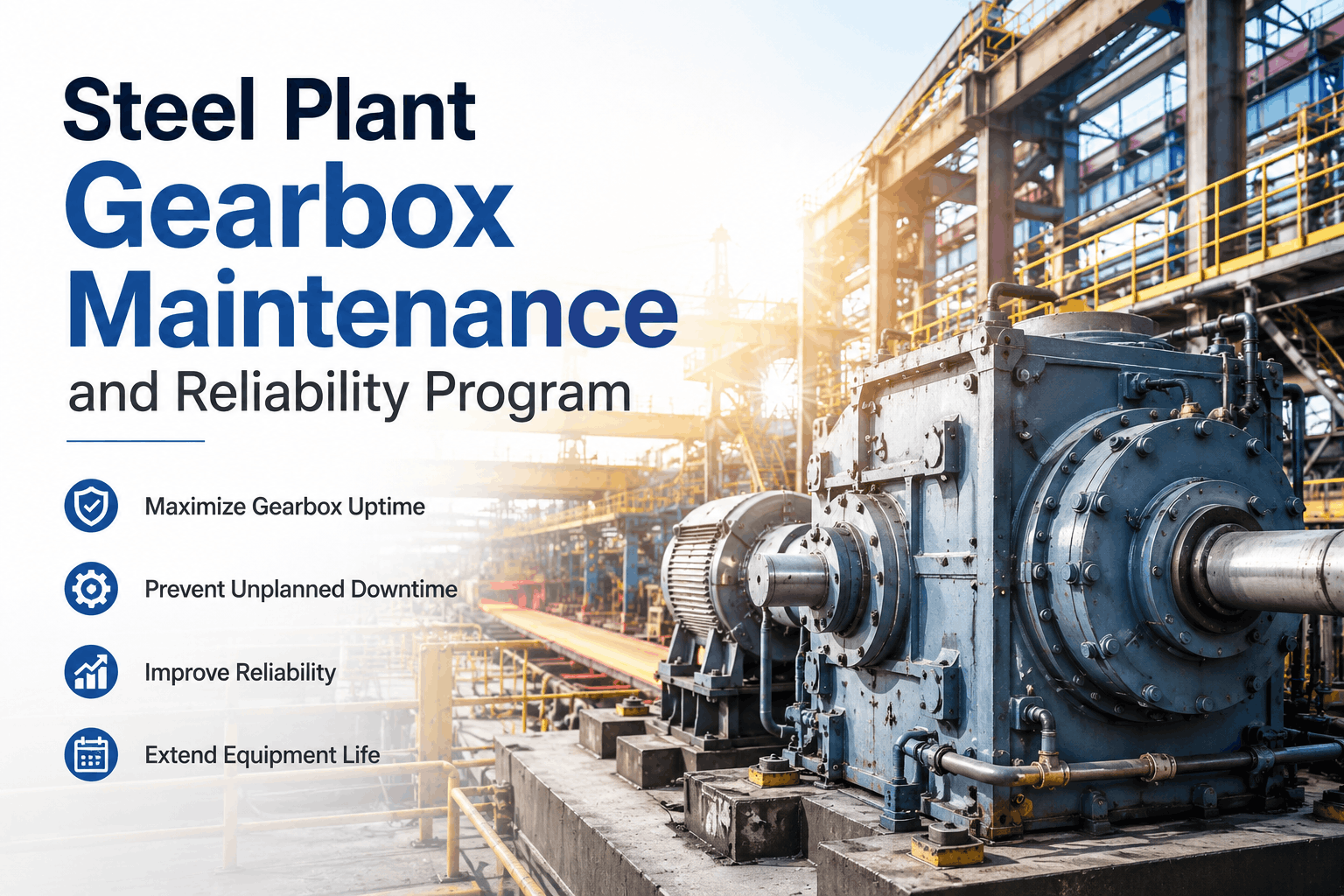
Steel Plant Gearbox Maintenance and Reliability Program
Complete gearbox maintenance and reliability program for steel mills — gearbox inspection, oil analysis, vibration monitoring, bearing condition assessment, and life extension strategies for rolling mill, crane, and conveyor gearboxes.
You Already Have the Gearbox Data — You Just Need the Analysis
Every gearbox inspection recorded in your CMMS is a data point. Every oil analysis sample is a wear indicator. Every vibration measurement is a health signal. Oxmaint does not require new sensors or specialized consultants — it analyzes the gearbox data you have already been collecting and surfaces the degradation patterns that prevent failure. Steel plants with 20+ critical gearboxes can start a free trial or book a demo to see how gearbox reliability analysis works on your plant's actual data.
The Gearbox Reliability Challenge in Steel Mills
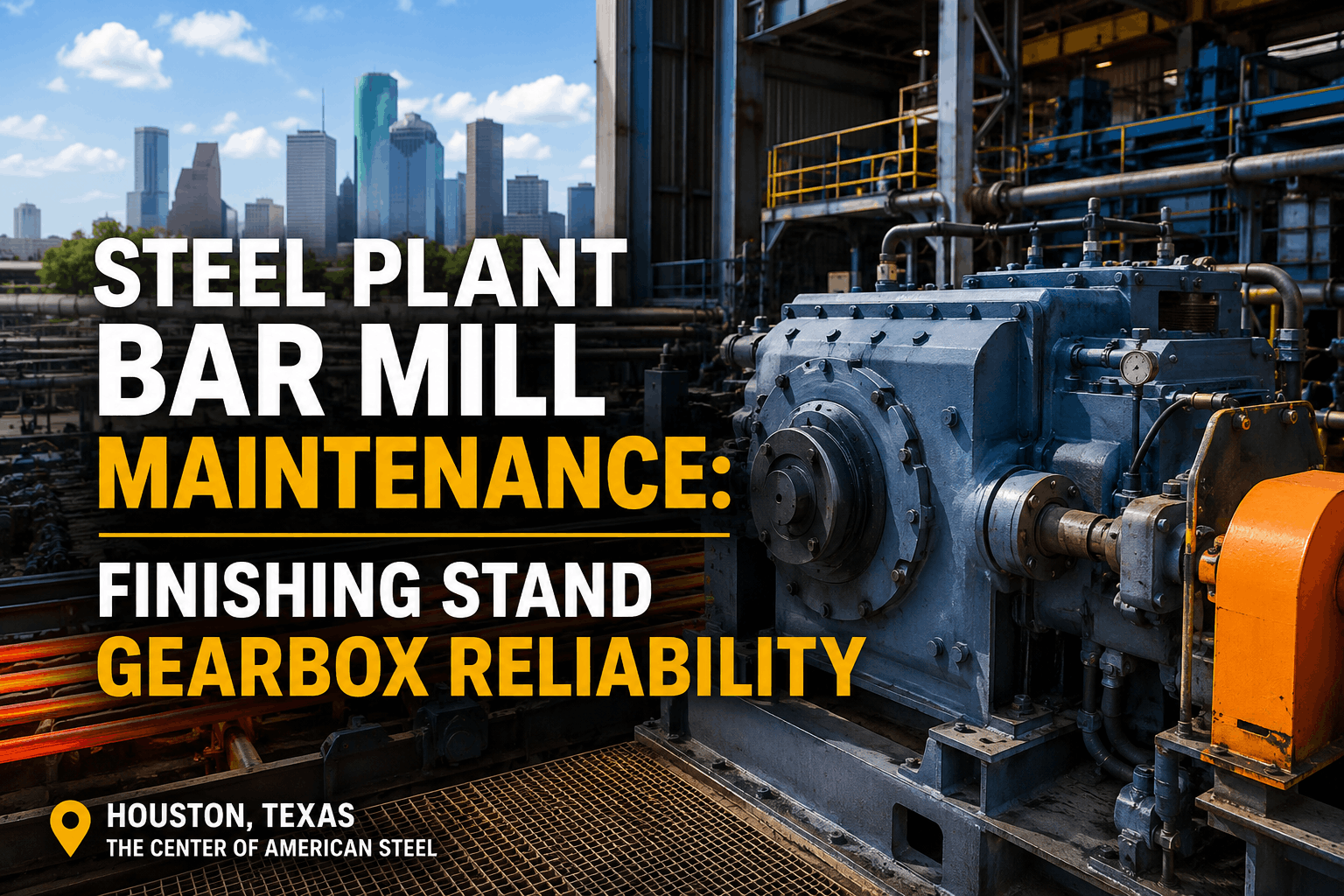
Steel mills create some of the harshest working conditions a gearbox may be expected to tolerate — extreme temperatures, abrasive scale and dust, continuous operation, and shock loads that can spike to four times normal torque combine to challenge every component in a drive system [citation:12]. Ambient temperatures near furnaces and rolling lines typically run 60-80°C, well above the standard industrial baseline. Furnace areas can push surrounding equipment toward 150°C or higher during operations [citation:12].
These conditions create significant reliability challenges. One steel plant implemented predictive maintenance and achieved extended life of critical assets totaling 12.5 years across their facility [citation:1]. In another case, a Chinese steel plant reduced equipment failure incidents by 57.1% and fault time by 18.89% through systematic maintenance improvements [citation:3]. Effective predictive maintenance in large process industries can save 10-15% of maintenance expenditure [citation:2].
Common Gearbox Failure Modes in Steel Plant Applications
Gearboxes in steel plant applications face multiple failure modes driven by the extreme operating environment. A failure analysis of a herringbone gear in a two-high pinion gearbox found that premature failure was due to excessive stress from improper fit between the key and keyway — a machining error that led to catastrophic failure after just 10 hours of operation [citation:10]. The table below summarizes common failure modes and their root causes.
Critical Gearbox Components and Failure Points
Understanding the critical components of steel mill gearboxes and their failure points is essential for developing an effective reliability program. Each component has distinct failure mechanisms and requires specific monitoring and maintenance approaches.
Gears in steel mill gearboxes operate under extreme loads and temperatures. Service class III (2.0 or higher) is the minimum specification for steel mill gearboxes [citation:12]. Peak torque in rolling mills can exceed four times rated motor torque when material enters the rolls. Gear tooth failures typically result from fatigue fracture from excessive contact stress, pitting and spalling on tooth surfaces, and bending fatigue from cyclic loading [citation:12].
Gearbox bearings are critical to reliability. While typically selected for 20+ years of life, performance challenges arise in actual steel mill applications [citation:9]. Spherical roller bearings with enhanced contact surfaces are recommended for shock load applications. In a Chinese steel plant, point inspection teams detected abnormal bearings in the 13th stand gearbox and replaced them during low-production periods using multi-channel precision fault diagnosis instruments [citation:3].
Sealing is critical in steel mill environments where mill scale, metal dust, and airborne debris create contamination that accelerates wear. IP65 or IP66 sealing is the minimum specification for steel mill gearboxes [citation:12]. Desiccant breathers filter incoming air while removing moisture. Labyrinth seals at shafts create tortuous paths that exclude particles better than simple lip seals [citation:12].
How Oxmaint Turns Gearbox Data Into Reliability Improvement
Oxmaint's gearbox reliability module is not a standalone analysis tool bolted onto your maintenance process — it is the CMMS that collects gearbox data, structures it correctly, and surfaces degradation patterns automatically as part of daily steel plant operations. Every gearbox inspection, every oil analysis, every vibration measurement feeds the reliability engine without any additional data entry. Steel plants ready to move from reactive to predictive gearbox maintenance can start a free trial or book a demo to see the reliability workflow on live plant data.
Oxmaint uses Equipment Health Index (EHI) methodology that integrates multiple condition indicators — vibration, temperature, oil analysis, and inspection data — simultaneously to assess gearbox health [citation:2]. Dynamic trending of EHI provides a quick look at maintenance requirements in the near future.
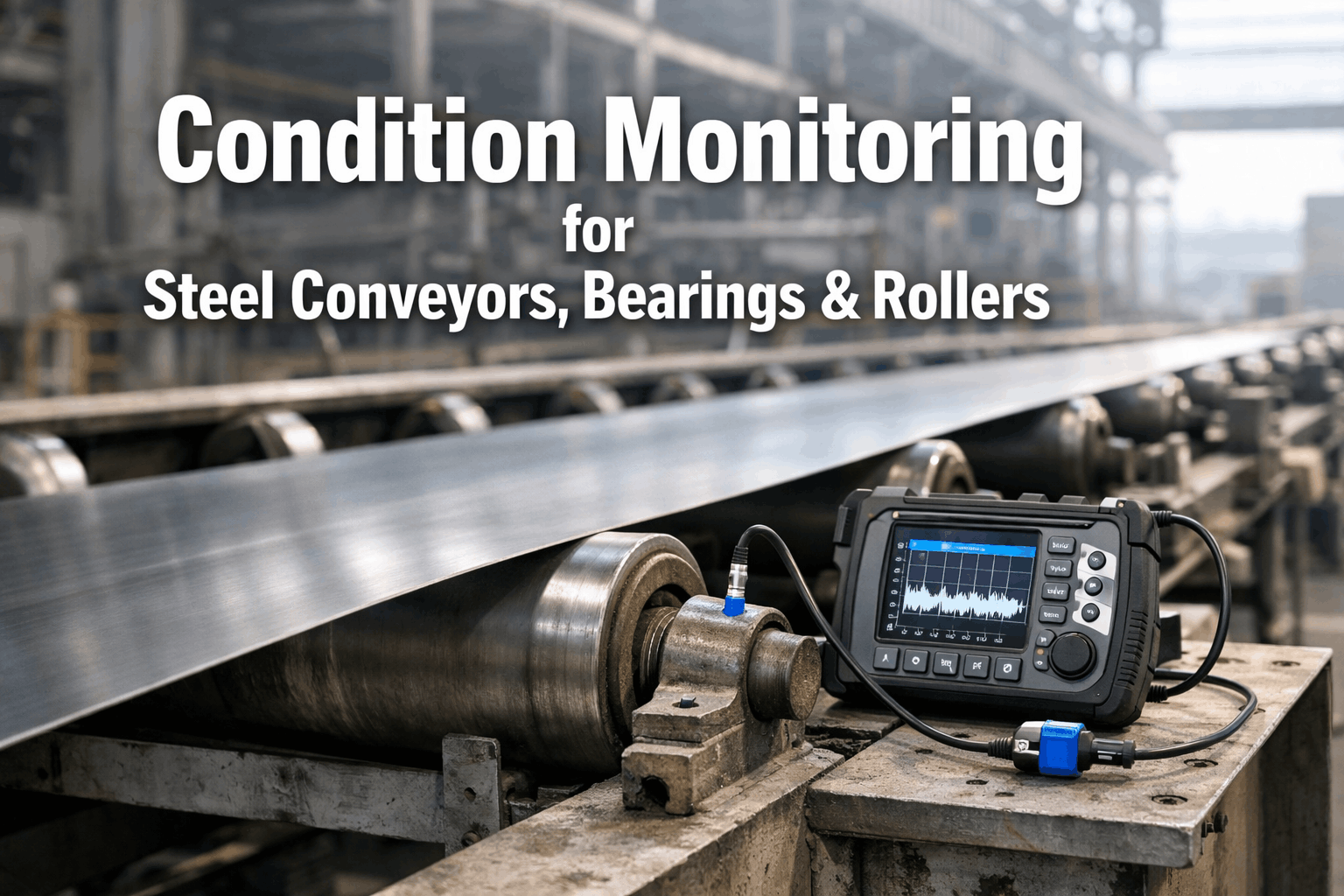
Oxmaint tracks vibration amplitude, gear mesh frequency, and bearing defect frequencies. Automated analysis of vibration data identifies developing faults — imbalance, misalignment, gear wear, and bearing damage — before they cause failure.
Track oil analysis results — viscosity, particle count, water content, and wear metal levels — over time. Oxmaint correlates oil degradation with equipment health and generates alerts when contamination or lubricant breakdown exceeds thresholds.
Monitor gearbox operating temperatures against established baselines. Each 10°C increase above 65°C can halve oil life [citation:12]. Oxmaint tracks temperature trends and generates alerts before overheating causes lubricant degradation or component damage.
Schedule and track gearbox inspections — visual checks, seal condition, coupling alignment, and bolt torque verification. Oxmaint generates inspection work orders based on calendar or condition triggers, ensuring no critical gearbox goes unchecked.
When condition indicators reach threshold levels, Oxmaint automatically generates preventive work orders with detailed condition data and recommended actions. Planned gearbox maintenance during scheduled outages eliminates unplanned downtime and extends equipment life.
Reactive Gearbox Maintenance vs Data-Driven Reliability
Gearbox Specification Best Practices for Steel Mills
Proper gearbox specification prevents the most common failure modes in steel mill applications. The table below summarizes key specification priorities based on industry best practices [citation:12].
| Specification Area | Recommendation | Impact on Reliability |
|---|---|---|
| Service Factor | Service class III (2.0 minimum); verify peak loads in calculation [citation:12] | Prevents fatigue failure from shock loads; extends gear life |
| Sealing | IP65 or IP66 minimum; desiccant breathers; labyrinth seals [citation:12] | Excludes contaminants; 82% of wear is particle-induced [citation:12] |
| Thermal Management | External cooling systems; synthetic PAG oils for high temps [citation:12] | Extends oil life; each 10°C above 65°C halves oil life [citation:12] |
| Bearing Selection | Spherical roller bearings with enhanced contact surfaces for shock loads [citation:9] | Withstands peak loads; extends bearing life in rolling mill applications |
| Lubrication | Synthetic PAG oils; 31x longer intervals than mineral oils [citation:12] | Reduces maintenance frequency; better high-temperature stability |
Four Steps to Start Improving Gearbox Reliability from Your Data
You do not need a reliability consultant or a six-month implementation project. If you have 12+ months of gearbox inspection, oil analysis, and vibration data, you have enough data to identify actionable degradation patterns within your first 30 days on Oxmaint.
Load your existing gearbox data into Oxmaint — inspection records, oil analysis results, vibration measurements, and repair history. Oxmaint maps each data point to its gearbox and creates a comprehensive equipment health baseline. The import process takes hours, not weeks.
Oxmaint automatically calculates Equipment Health Index (EHI) by integrating multiple condition indicators — vibration, temperature, oil analysis, and inspection data [citation:2]. Within the first week, you will see which gearboxes are degrading fastest and which are operating within normal parameters.
Review the gearbox reliability dashboard for your top 10 gearboxes by criticality and degradation rate. Identify which condition indicators are showing the fastest deterioration, which failure modes are recurring, and which gearboxes need immediate attention. Most steel plants identify 4-6 high-risk gearboxes within the first two weeks of analysis.
For each identified degradation pattern, configure Oxmaint to generate predictive work orders when condition thresholds are reached. Set triggers for vibration amplitude, temperature, oil contamination, and EHI deterioration. Attach condition data and trend analysis to each work order. From this point forward, every new data point feeds the reliability engine — making it more accurate with every measurement.
ROI of Gearbox Reliability Improvement
Lubrication and filtration optimization added 3 years of useful life to a critical gearbox in one steel plant, demonstrating the impact of targeted improvements [citation:1]
One steel plant reduced equipment failure incidents by 57.1% through systematic maintenance improvements [citation:3]
Effective predictive maintenance in large process industries can save 10-15% of maintenance expenditure [citation:2]
Worthington Steel's predictive maintenance program extended critical asset life by 12.5 years total across their Delta facility [citation:1]
Frequently Asked Questions
What causes most gearbox failures in steel mills?+
How can I extend gearbox life in steel plant applications?+
What condition monitoring techniques work best for steel mill gearboxes?+
What ROI can I expect from a gearbox reliability program?+
Your Next Gearbox Failure Is Already in Your Data — Find It Before It Shuts Down Your Mill
Every gearbox inspection, oil analysis, and vibration measurement your steel plant has ever recorded contains a piece of the pattern that predicts the next failure. Oxmaint's gearbox reliability module collects condition data correctly, tracks Equipment Health Index automatically, and generates the predictive work orders that keep your rolling mills running. No reliability consultants. No new sensors. Import your data, identify your degradation patterns, and start preventing gearbox failures in your first 30 days.