When a steel plant's predictive maintenance model recommends pulling a caster roll two weeks early, or a vision system flags a slab defect and stops the line, somebody eventually has to answer a hard question: why did the model say that, and can you prove it? Most plants running AI-driven maintenance today cannot answer either question with anything more than a shrug and a dashboard screenshot, because the model's reasoning was never logged, the version that made the call was never recorded, and nobody can reconstruct the decision months later when an insurer, an OEM, or a regulator asks for it. The EU AI Act now treats AI systems used in critical infrastructure maintenance as high-risk, which means documented risk management, technical documentation, and human oversight are audit requirements rather than optional extras, and the penalties for missing them run into the tens of millions. Model governance closes that gap by turning every AI-driven maintenance decision into a recorded, explainable, versioned event instead of an opaque recommendation nobody can defend later — start a free trial to see what a governed decision record looks like inside Oxmaint.
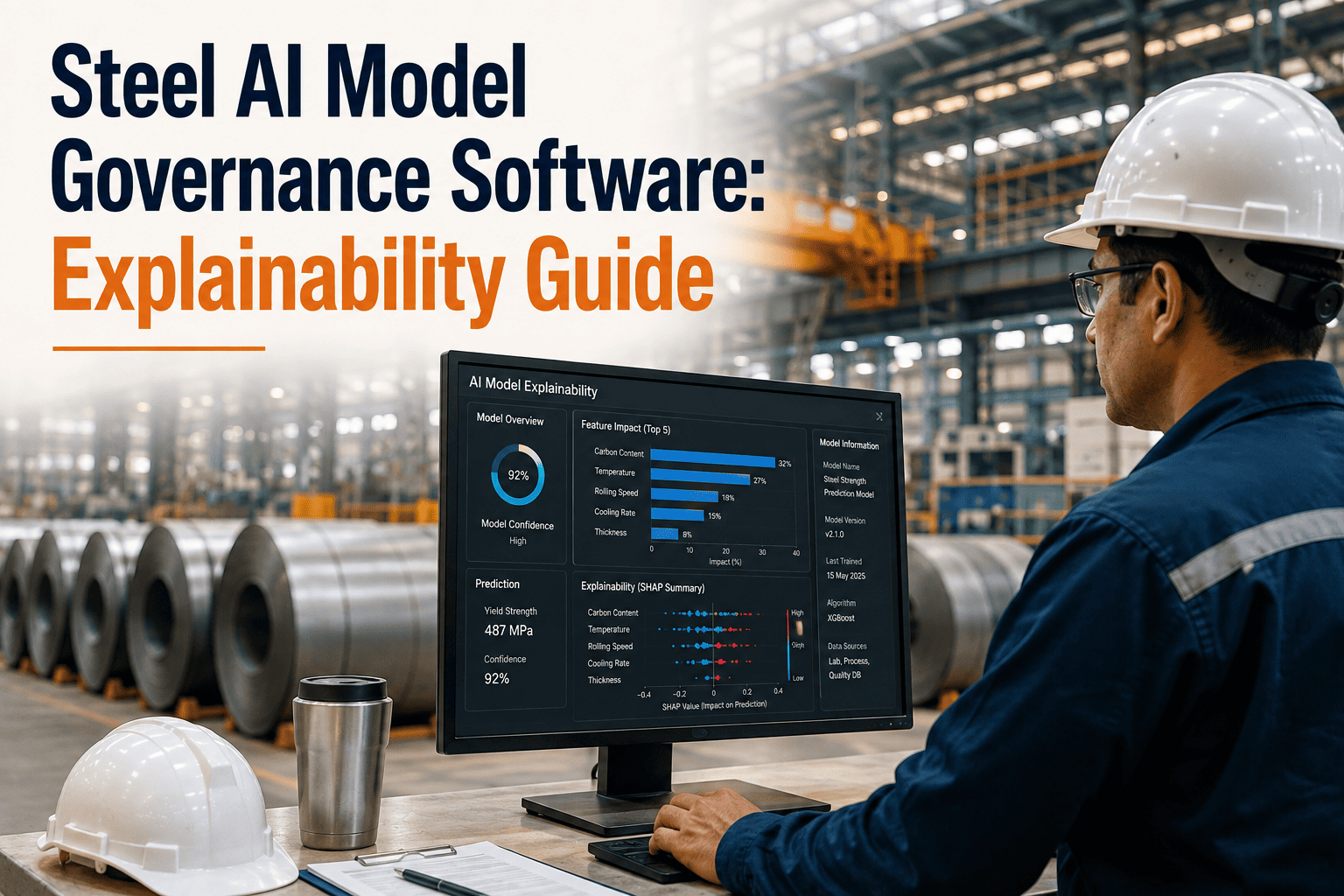
Steel AI Model Governance Software: Explainability, Audit Trail, Version Control
Turn every AI-driven maintenance recommendation into a recorded, explainable, versioned decision your regulator, insurer, and OEM can all sign off on.
Why "The Model Said So" Stopped Being a Good Enough Answer
Steel plants have quietly handed real operational authority to AI over the last few years. Models now flag which rolls to pull early, which slabs to reject, and which conveyor bearings to replace before they seize. Those recommendations save money and prevent failures, but they also carry weight — a deferred inspection based on an AI score, a warranty claim built on a model's failure prediction, a production line stopped on a vision system's defect call. Every one of those actions eventually needs to be defended to someone who was not in the room when the model made the call.
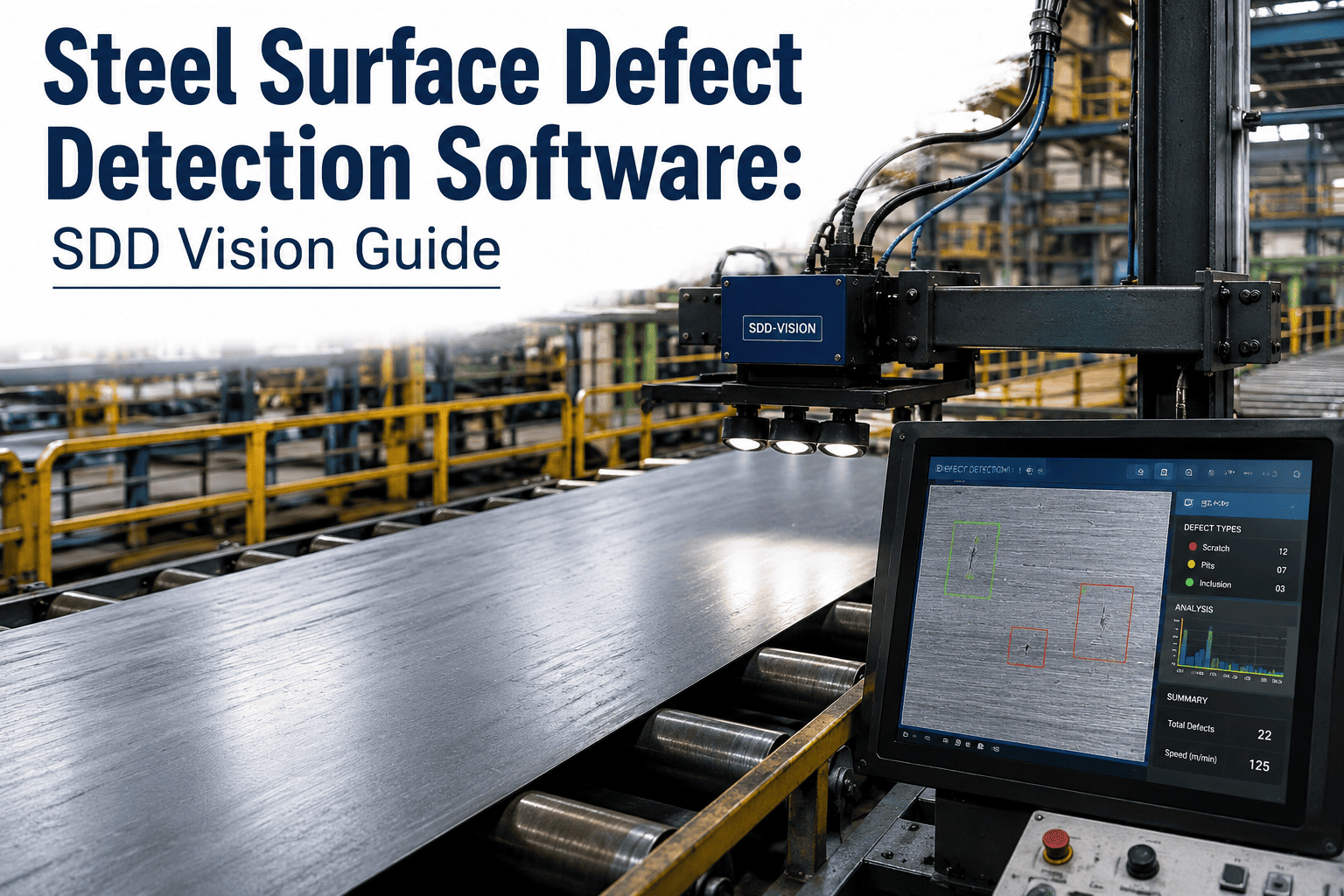
This shift happened faster than most governance processes could keep pace with. A plant might run a caster roll RUL model, a slab defect vision system, and a conveyor bearing failure predictor, each built by a different vendor, each updated on its own schedule, each making dozens of consequential calls a day. Without a shared governance layer sitting across all three, the plant ends up with three separate black boxes instead of one coordinated maintenance intelligence program it can actually stand behind.
The trouble is that most plants built their AI maintenance tools for speed, not accountability. A model scores a bearing as high-risk, a work order gets generated, and the reasoning behind that score exists only inside the model's weights at the moment it ran — never written down, never versioned, never tied to the specific data that produced it. Six months later, when an insurer questions why a maintenance action was deferred or an OEM disputes a warranty claim tied to an AI-driven decision, there is nothing to hand over except a vague description of "the algorithm."
That gap rarely surfaces during normal operation, which is exactly what makes it dangerous. The model keeps running, the work orders keep generating, and everyone assumes the reasoning is available somewhere if it is ever needed. It is only when a claim gets disputed, an incident gets investigated, or an auditor shows up unannounced that the plant discovers the reasoning was never actually captured anywhere retrievable — and by then, the specific input data that produced the decision may already be gone.
Regulators have caught up to this gap faster than most maintenance teams expected. High-risk AI systems — and critical infrastructure maintenance squarely qualifies — now carry documented risk management, technical documentation, and human oversight requirements under the EU AI Act, with penalties reaching seven percent of global turnover for organizations that cannot produce them. ISO 42001 has emerged alongside it as the practical framework auditors expect to see implemented, not just described in a policy document. None of this is about slowing the AI down — it is about making sure every recommendation it makes can survive being questioned later.
The plants feeling this pressure first are not the ones with the most advanced AI — they are the ones whose AI decisions touch money and safety at the same time. A predictive model that defers a bearing replacement is also, implicitly, making an insurance-relevant judgment about acceptable risk. A vision system that clears a slab as defect-free is making a quality call an OEM's warranty terms may hinge on. Governance is what lets a reliability team keep using these tools with confidence, because every one of those judgments now comes with a record proving it was reasonable at the time it was made, not just convenient after the fact, and that record holds up equally well whether it is read by an internal auditor next week or an external regulator two years from now.
The Frameworks and Stakeholders Steel Plant AI Now Answers To
Four distinct parties can now ask a steel plant to justify an AI-driven maintenance decision, and each one wants the documentation formatted a little differently. Knowing which framework is asking the question, before it gets asked, is what separates a five-minute export from a two-week scramble through logs and emails.
| Framework or Stakeholder | Type | Key Requirement | Applies To |
|---|---|---|---|
| EU AI Act | Regulation | Risk management, technical documentation, human oversight, audit trail | High-risk AI in critical infrastructure maintenance |
| ISO/IEC 42001 | Certifiable standard | AI management system spanning 39 controls in nine categories | Any organization developing or using AI systems |
| OEM Warranty Terms | Contractual | Documented basis for AI-driven maintenance deferral or acceleration | Equipment under active OEM service agreements |
| Insurer Risk Requirements | Underwriting condition | Explainable rationale behind AI-recommended maintenance actions | Plants using AI to justify deferred or accelerated work |
| Internal Safety Audit | Corporate governance | Reproducible decision trail for any AI recommendation acted upon | All AI-assisted maintenance decisions plant-wide |
The Three Pillars of AI Model Governance
Every governance requirement above, whether it comes from a regulator or an insurer, reduces to the same three things captured well and captured on time. Miss any one of the three and the other two stop being useful — a version history without reasoning tells you what changed but not why it mattered, and reasoning without a version history cannot be tied back to the model that produced it.
Every recommendation ships with a plain-language reason — which sensor readings, which trend, which threshold triggered it — instead of a bare confidence score nobody can interpret.
Model version, input data, output, and any human override are captured at the moment the decision was made, before operating conditions change and the context is lost.
Every model iteration, retrain, and rollback is logged with the reason for the change and the engineer who approved it, so a past decision maps to the exact model that made it.
What Gets Captured the Moment an AI Model Makes a Call
A governed decision record is built the instant the recommendation is generated, not reconstructed weeks later from memory and log fragments. Six fields cover what every framework in the table above ultimately wants to see, and all six populate automatically without an engineer stopping to write anything down.
The exact model build that produced the recommendation, tied permanently to that decision.
The sensor and telemetry readings the model actually evaluated, frozen at decision time.
Which factors drove the call, written so a plant manager can understand it without a data science background.
How certain the model was, so reviewers can weigh borderline calls differently from clear-cut ones.
Whether the recommendation was approved, overridden, or escalated, and by whom.
The oversight rules in effect at that exact moment, so old decisions are always judged against the policy that applied then.
Give Every AI Maintenance Decision a Defensible Record
Oxmaint logs the reasoning, version, and human review behind every AI-driven maintenance recommendation the moment it happens — so an auditor's question, an insurer's dispute, or an OEM's warranty review never turns into a scramble through old logs and emails.
Ungoverned AI Maintenance vs. a Governed Model Program
The gap between these two states usually is not the quality of the model — it is whether anyone thought to record how it made its decisions. A governed program does not require replacing the model or slowing down how fast it makes recommendations; it just means every one of those recommendations now leaves a trail behind it.
| Metric | Ungoverned AI Maintenance | Governed AI Model Program |
|---|---|---|
| Decision defensibility | No record of why the model made the call | Full reasoning trail captured at decision time |
| Model changes | Silent updates with no version history | Every retrain logged with reason and approver |
| Regulatory readiness | Scrambling to reconstruct records for auditors | Audit export ready in minutes |
| Insurer and OEM claims | Disputes over undocumented AI-driven deferrals | Documented rationale supports claims and warranty terms |
| Human oversight | Unclear who reviewed or overrode a recommendation | Every override logged with reviewer identity and reason |
How Oxmaint Automates AI Model Governance End-to-End
Governance only works if it happens automatically, in the background, without engineers stopping to write it up after the fact. Oxmaint builds the record as the decision happens, then keeps it organized so retrieving any single decision months later takes a search, not an investigation.
Every AI-driven maintenance recommendation logs its plain-language reasoning at the moment it is generated, not reconstructed after the fact.
Every model version deployed across the plant is registered with its training data range, retrain date, and approving engineer.
Generate a complete decision record — inputs, model version, reasoning, human action — formatted for EU AI Act, ISO 42001, insurer, or OEM review.
Every override, approval, or escalation of an AI recommendation is captured with reviewer identity and stated rationale.
Model accuracy and confidence trends are tracked over time, flagging when a model needs retraining before it silently degrades.
The oversight rules in effect at decision time are versioned alongside the model, so a past decision is always evaluated against the policy that actually applied.
What a Governed AI Program Changes for the Reliability Team
The value shows up less in fewer failures and more in fewer conversations that start with "can you explain why the model did that." Reliability engineers spend less time reconstructing history and more time reviewing the recommendations that actually need a second look, because the routine ones already carry a complete, defensible record on their own.
Frequently Asked Questions
Does Oxmaint log AI reasoning automatically, or do engineers have to document it manually?
Automatically — every AI-driven maintenance recommendation captures its reasoning, inputs, and model version the moment it is generated, with no manual write-up required. Start a free trial to see a live decision record.
Can we produce documentation an EU AI Act auditor or ISO 42001 assessor would actually accept?
Yes — the audit export includes model version, training data range, input snapshot, reasoning trail, and human oversight records mapped to the documentation categories both frameworks require.
What happens when we retrain or update a maintenance model?
Every retrain creates a new version entry with the reason for the change and the approving engineer, permanently linked back to every decision the prior version made.
Does this cover models used for insurer or OEM warranty justification, not just internal decisions?
Yes — any AI-driven action tied to warranty terms or insurer risk requirements gets the same documented rationale, so a deferral can be defended months later. Book a demo to see the export mapped to your insurer or OEM's format.
Can we see who overrode an AI recommendation and why?
Every override is logged with the reviewer's identity, the original recommendation, and the stated reason, permanently attached to that decision record.
Stop Defending AI Recommendations From Memory
Oxmaint captures explainability, audit trail, and version control on every AI-driven maintenance decision the moment it happens — so regulators, insurers, and OEMs get a complete, defensible record instead of a guess reconstructed after the fact. Free trial, no credit card required.