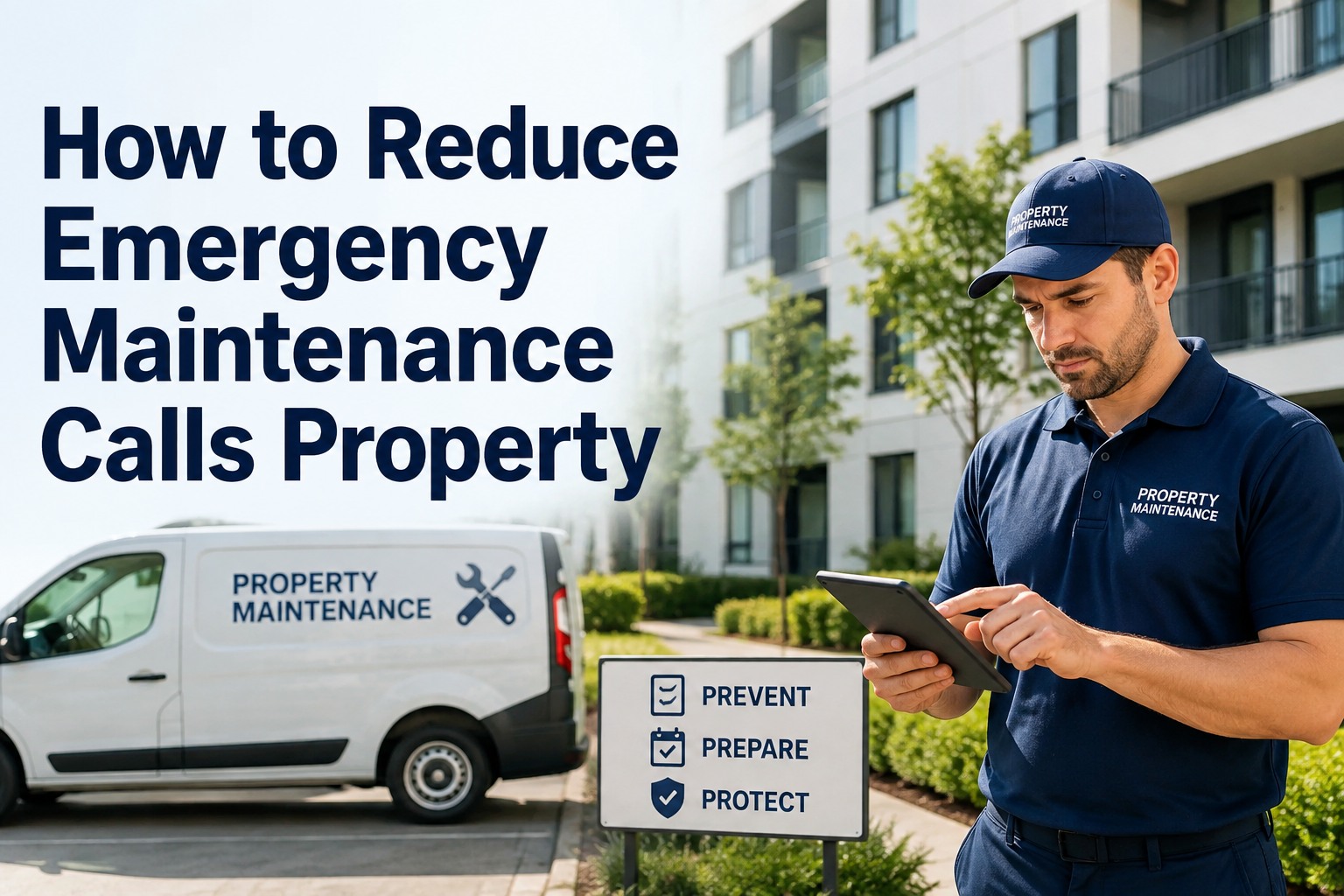
Emergency maintenance calls are the most expensive way to run a property portfolio — after-hours labor premiums, tenant frustration, and repairs that almost always cost more than a scheduled fix would have. The good news: most property emergencies are preventable. This guide shows exactly how to reduce emergency maintenance calls using a preventive maintenance strategy, smarter triage, tenant self-help, seasonal preparation, and a CMMS-driven workflow that moves portfolios from 40% reactive work to under 20% — without hiring more staff. If you want to see this running on your own properties, Start Free Trial and build your first preventive schedule in minutes.
Emergency Maintenance Reduction Guide
What if 8 out of 10 emergency calls never happened?
Industry data shows 60–80% of property maintenance emergencies trace back to a skipped inspection, an aging asset nobody tracked, or a tenant request that sat too long. Here is the playbook to cut after-hours calls, protect your budget, and give your team their evenings back.
The Real Cost
Why emergency maintenance calls cost 3–5x more than planned work
A single after-hours plumbing call can run $250–$600 before parts — the same repair scheduled during business hours often costs $90–$150. Multiply that across a portfolio and reactive maintenance quietly becomes your largest controllable expense.
"We weren't short-staffed — we were short on visibility. Once every asset had a schedule and every request had a triage path, our after-hours calls fell by half in one quarter."
Director of Facilities, 1,200-unit residential portfolio
Step-by-Step Playbook
How to reduce emergency maintenance calls in 6 proven steps
Properties that cut emergency repairs below 20% of total work orders follow the same sequence. Each step compounds the last — skip one and the emergencies creep back.
Audit your last 12 months of emergency calls
Pull every emergency work order and categorize by asset type, cause, and time of day. Most portfolios discover 70% of emergencies come from just 5 asset categories — HVAC, water heaters, plumbing lines, roofing, and electrical panels. That short list becomes your prevention target.
Build preventive schedules for the top 5 failure sources
A quarterly HVAC filter and coil check costs roughly $40 per unit; an emergency compressor replacement runs $1,800–$3,500. Put every high-risk asset on a recurring PM calendar with checklists, so small issues surface during $40 visits instead of 2 a.m. failures.
Triage every request before dispatching anyone
Up to 30% of "emergency" calls aren't emergencies — a tripped breaker, a pilot light, an AC set to heat. A structured triage script (safety risk? active damage? habitability?) routes true emergencies instantly and schedules the rest during business hours at standard rates.
Give tenants self-help tools that deflect calls
A simple resident portal with guided fixes — reset a GFCI, relight a pilot light, unclog a disposal — deflects 10–20% of after-hours calls entirely. Every deflected call saves $150–$400 in dispatch and overtime.
Prepare seasonally, 6–8 weeks ahead
Winter freeze bursts and summer AC failures are the two biggest emergency spikes — and both are calendar-predictable. Schedule pipe insulation, boiler service, and gutter clearing in early fall; AC coil cleaning and refrigerant checks in spring. Seasonal prep alone can cut weather-driven emergencies by 50%.
Track the reactive ratio monthly and close the loop
Measure emergency work orders as a percentage of total work every month. World-class property operations run below 20% reactive. When a category spikes, trace it to a missed PM or an aging asset and fix the root cause — not just the symptom.
Triage Framework
Emergency or not? A triage table that cuts after-hours dispatches by 30%
Clear definitions stop the "everything is urgent" problem. Train staff and tenants on these categories so true emergencies get instant response and everything else gets scheduled — at standard rates.
| Request Type | Classification | Response Target | Typical Cost Impact |
|---|---|---|---|
| Gas smell, major water leak, no heat in freezing weather, sparking outlet | True emergency | Immediate — dispatch now | High, but delay costs far more |
| AC out in extreme heat (vulnerable resident), sewage backup | Urgent | Same day, within 4–8 hours | Moderate — standard rates apply |
| Dripping faucet, one clogged toilet of two, appliance not working | Routine | Next business day, scheduled | Low — 60–70% cheaper than after-hours |
| Tripped breaker, pilot light out, thermostat settings, disposal jam | Self-help deflect | Guided fix via resident portal | Near zero — no dispatch at all |
Worked example: A 450-unit portfolio averaging 90 after-hours calls per month applied this triage table plus tenant self-help. Within 90 days, 27 calls/month were reclassified to business-hours scheduling and 12 were deflected entirely — saving roughly $9,800/month in overtime and emergency vendor premiums.
Seasonal Calendar
The 12-month preventive calendar that stops emergencies before they start
Most property maintenance emergencies cluster around predictable seasonal stress. Front-load these tasks 6–8 weeks before each season and the 2 a.m. calls largely disappear.
Winterization sprint
Service boilers and furnaces, insulate exposed pipes, clear gutters, test sump pumps, weatherstrip entries. Freeze-related bursts are the #1 winter emergency — and nearly 100% preventable.
Cold-weather monitoring
Monthly heating-system checks, vacant-unit temperature alerts, ice-dam inspections after storms. Catch a struggling furnace in November, not during a January cold snap when every vendor is booked.
Cooling season prep
Clean condenser coils, check refrigerant levels, replace filters portfolio-wide, test thermostats. A $40 spring AC service prevents the $2,500 mid-July compressor failure.
Summer load management
Bi-weekly rooftop unit checks during heat waves, irrigation and drainage inspections, roof membrane reviews after storms. Heat stress kills HVAC — monitoring catches it early.
The Software Advantage
How OxMaint helps you cut emergency maintenance calls by 50%+
Spreadsheets and sticky notes can't run a preventive program across a portfolio. OxMaint's AI-powered CMMS automates the entire emergency-reduction playbook — and shows you the reactive ratio dropping month over month.
Automated preventive maintenance schedules
Recurring PMs for every HVAC unit, water heater, and roof — auto-generated, auto-assigned, never forgotten. Properties on OxMaint typically shift from 40% reactive to under 20% within 6–12 months.
Smart work-order triage and routing
Every request is categorized, prioritized, and routed by rule — true emergencies escalate instantly, routine items queue for business hours. Teams cut after-hours dispatches by 25–35% in the first quarter.
Asset history and failure analytics
See which assets generate repeat emergencies, what each failure cost, and when replacement beats repair. OxMaint's analytics turn your emergency audit (Step 1) into a live dashboard instead of a yearly project.
Mobile work orders with real-time status
Technicians get checklists, asset history, and photos on their phones — first-time fix rates climb, repeat visits drop, and nothing waits for someone to "get back to the office." Less delay means fewer small issues becoming emergencies.
See It On Your Portfolio
Watch your emergency call volume drop — starting this quarter
Book a 30-minute demo and we'll map your top emergency sources to a preventive schedule live, on your actual asset list.
People Also Ask
Emergency maintenance reduction: your questions answered
What percentage of maintenance should be emergency vs. planned?
Best-in-class property operations keep emergency and unplanned work under 20% of total work orders, with 80%+ planned and preventive. If you're above 35–40% reactive, you're paying a significant premium — emergency repairs typically cost 3–5x more than the same work scheduled in advance.
What counts as a true maintenance emergency in a rental property?
A true emergency threatens safety, habitability, or active property damage: gas leaks, major water intrusion, no heat in freezing conditions, sewage backups, or electrical hazards. A dripping faucet or a single clogged toilet with a second working bathroom is urgent at most — and should be scheduled at standard rates, not dispatched after hours.
How much can preventive maintenance actually reduce emergency calls?
Documented results show 50–70% reductions in emergency work orders within 6–12 months of implementing a structured PM program. The biggest wins come from HVAC, water heaters, and plumbing — the three categories behind most after-hours calls. A CMMS like OxMaint automates the schedules so nothing slips; book a demo to see the workflow on your assets.
How do I reduce after-hours maintenance calls without upsetting tenants?
Pair clear triage definitions with fast scheduled response. Tenants accept "tomorrow at 9 a.m." when a true emergency would have been handled tonight — and when routine requests get resolved within 24–48 hours reliably. A resident portal with self-help guides deflects another 10–20% of calls entirely, which actually improves satisfaction scores.
Can a CMMS really reduce emergencies without adding maintenance staff?
Yes — that's the core value. A CMMS doesn't add work; it removes the chaos. Automated PM reminders, mobile work orders, and triage rules let the same team complete 20–30% more planned work, which directly displaces emergency volume. Most OxMaint customers go live in days, not months — start a free trial and import your first assets this week.
Ready When You Are
Move from 40% reactive to under 20% — without hiring anyone
OxMaint automates preventive schedules, triage, and asset tracking so emergencies become the exception, not the routine.
Free 14-day trial · No credit card · Set up in minutes