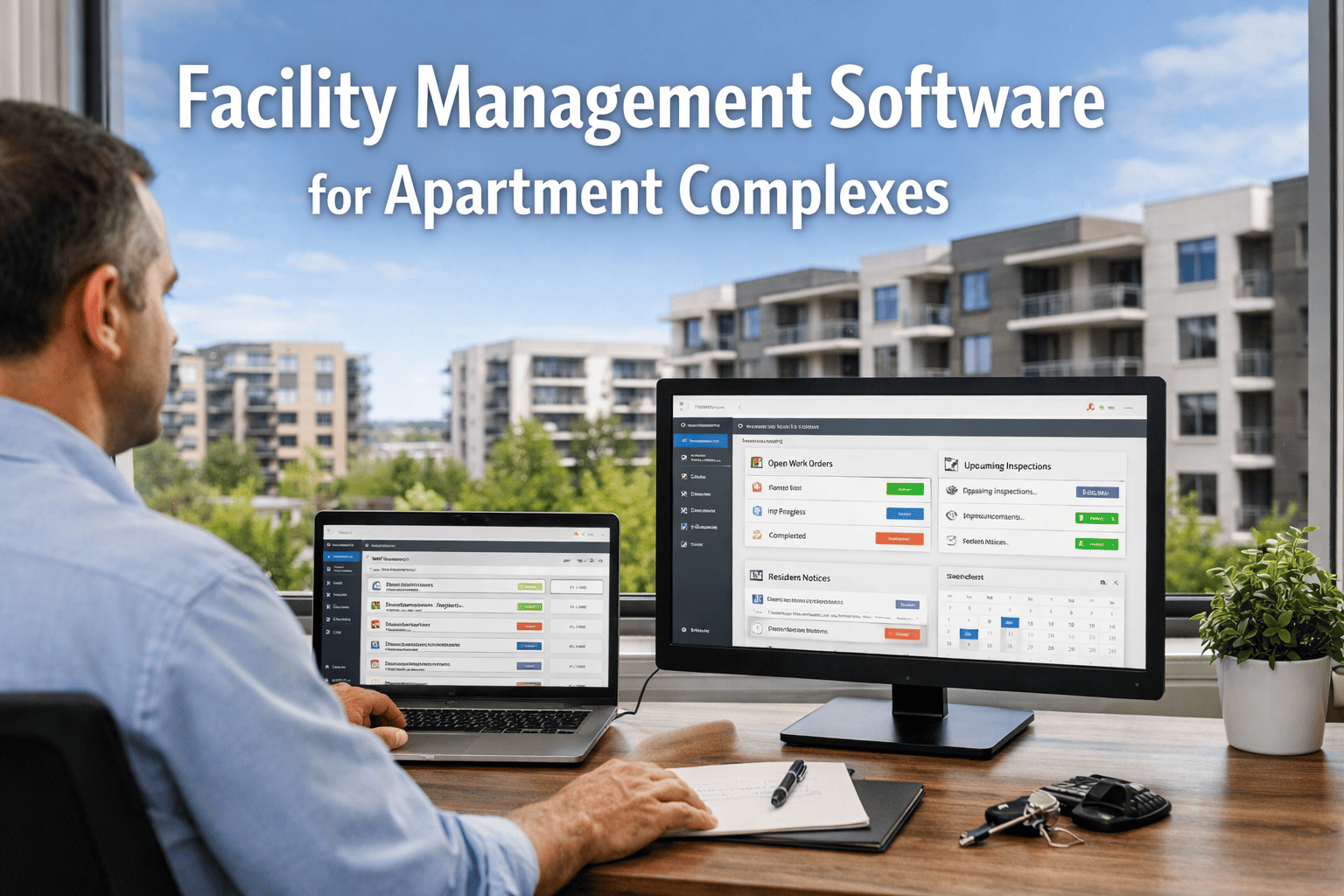
Multifamily maintenance scheduling is the operational backbone of any profitable apartment portfolio — when hundreds of units, shared HVAC systems, and competing resident requests collide, even a single missed preventive task can trigger costly emergency repairs and tenant turnover. The most successful property management groups shift from reactive chaos to structured preventive maintenance by batching work orders, optimizing technician routing, and leveraging a centralized CMMS to track every asset and work request. This guide breaks down the exact multifamily maintenance best practices high-performing teams use to plan, coordinate, and execute maintenance across large residential portfolios. Ready to eliminate spreadsheet sprawl and reactive maintenance? Start Free Trial to see how OxMaint streamlines apartment maintenance scheduling from day one.
MULTIFAMILY MAINTENANCE STRATEGY
Is your 300-unit property running on reactive maintenance — or a proactive plan?
Across a multifamily portfolio, unstructured maintenance scheduling wastes 15–20% of technician time in transit and pushes reactive repair costs 3–9x higher than planned preventive work. The right scheduling framework flips that ratio.
The cost of uncoordinated maintenance
A typical 200-unit apartment community processes 8–12 work orders per day. Without route optimization and preventive batching, technicians lose 90+ minutes daily to travel time between buildings — the equivalent of one full salary.
HIGHER COST FOR REACTIVE VS. PLANNED MAINTENANCE
PORTFOLIO MAINTENANCE SCHEDULING
Multifamily maintenance scheduling: shared systems vs. unit-level PM
A 250-unit apartment complex contains over 1,500 maintainable assets — but they don't all share the same maintenance logic. Splitting your multifamily maintenance plan into shared-system and unit-level tracks is the single biggest lever for cutting emergency calls.
Shared-System Preventive Maintenance
Centralized building assets — rooftop units, boilers, hallway lighting, fire pumps, and elevators — serve every resident simultaneously. A single boiler failure during a winter cold snap can displace 100+ units and generate $15K+ in emergency repair and hotel costs.
- Schedule quarterly boiler/HVU inspections and semi-annual cooling-tower cleanings
- Mandate monthly fire-life-safety and sprinkler tests per NFPA 25
- Batch corridor and common-area lighting checks into a single weekly route
Unit-Level Preventive Maintenance
In-apartment assets — garbage disposals, HVAC filters, water heaters, and washer/dryer hookups — fail individually but follow predictable degradation curves. Unit-level PM is scheduled on turnover cycles and annual intervals, tied to lease expirations.
- Replace HVAC filters every 90 days; inspect water heaters annually
- Run turnover maintenance 5–7 days before lease expiration to prevent gap-days
- Batch unit-level work into building-sized daily routes to minimize travel
STAFFING & COORDINATION
Maintenance staffing ratios for multifamily properties
Industry benchmarks suggest one maintenance technician for every 120–150 units in Class A/B multifamily housing — but raw headcount doesn't guarantee coverage. Workload distribution and skill-mix matter more than total bodies.
1 Lead Tech + 1 Porter
A single skilled technician handles HVAC, plumbing, and electrical work orders, while a porter manages grounds, trash, and cosmetic turn-over prep. A part-time HVAC contractor covers refrigerant and complex system repairs.
2–3 Techs + 1 Maintenance Supervisor
A dedicated supervisor schedules work, manages vendor relationships, and runs preventive maintenance compliance. Technicians are generalists, but one should hold EPA 608 certification for refrigerant work to avoid contractor delays.
4+ Techs with Specialized Trades
Larger communities need an in-house HVAC specialist, a punch-out technician for turnovers, and a dedicated groundskeeper. At this scale, a CMMS is mandatory — manual work-order tracking creates a 20–30% compliance gap.
WORKLOAD BALANCING FORMULA
Weekly Work Order Capacity = (Tech Count × 40 hrs) − (Emergency Call-Out Buffer + Admin Time)
Reserve 20–25% of weekly capacity for emergency work orders and unexpected make-ready tasks. If your team runs above 80% planned capacity, reactive backlog will accumulate within 2 weeks.
MAINTENANCE ROUTING
How to optimize maintenance routing across apartment complexes
Inefficient maintenance routing multifamily operations is the silent margin-killer. A technician walking or driving between scattered units loses 10–15 minutes per work order — compounding to 2+ hours of lost productivity across a single day.
Lost travel time per un-routed work order
Daily technician time wasted without batching
Productivity gain with geographic route batching
Annual savings per tech after route optimization
A 320-unit community in Texas eliminated 11 hours of weekly transit time simply by batching work orders by building and floor — freeing the equivalent of $22,000 in annual labor capacity without adding headcount.
RESIDENT-FACING SCHEDULING
Resident-facing maintenance scheduling that reduces no-access calls
Up to 30% of apartment maintenance work orders are delayed because the technician arrives and the resident isn't home. Resident-facing scheduling closes that gap — and directly improves resident satisfaction scores.
| Scheduling Method | No-Access Rate | Resident Satisfaction | Best For |
|---|---|---|---|
| Same-day verbal confirmation | 22–30% | Low (6.2 / 10) | Emergency work only |
| SMS appointment window | 8–12% | Medium (7.8 / 10) | Standard work orders |
| Self-service resident portal | 3–5% | High (9.1 / 10) | Portfolio-wide PM & turn-over |
| Automated 2-hour reminder + portal | 1–2% | Excellent (9.5 / 10) | Class A & BTR communities |
Properties using a self-service portal with automated reminders see a 60–70% drop in no-access incidents, which translates to 4–6 additional completed work orders per technician per week — the equivalent of regaining half a day of productive labor.
READY TO CENTRALIZE YOUR MAINTENANCE?
See how OxMaint coordinates maintenance across hundreds of units
Book a 30-minute walkthrough — we'll map your portfolio's assets, PM schedules, and routing logic live in the platform.
HOW OXMAINT HELPS
How OxMaint solves multifamily maintenance coordination
OxMaint is built for maintenance & reliability teams managing dense residential portfolios. The platform replaces paper work orders, spreadsheet PM calendars, and disconnected vendor emails with a single AI-powered CMMS — purpose-built to cut reactive downtime and prove maintenance ROI to ownership.
Automated Preventive Maintenance Calendar
Auto-generate and assign recurring PM tasks — HVAC filter changes, boiler inspections, fire-safety tests — across every unit and shared system. OxMaint eliminates spreadsheet tracking and cuts PM compliance gaps by up to 80%.
Smart Work-Order Routing & Batching
OxMaint groups work orders by building, floor, and skill requirement — reducing technician transit time by 30–40% and freeing 8–10 hours of weekly capacity per team without adding headcount.
Resident Self-Service Portal
Residents submit requests, upload photos, and book appointment windows directly — dropping no-access incidents by 60–70% and lifting resident satisfaction scores above 9/10.
Maintenance Analytics & Cost Tracking
Track cost-per-unit, reactive-vs-preventive ratios, and asset failure trends in real time. OxMaint gives property managers the data to justify budgets and shift 60%+ of maintenance from reactive to planned.
FREQUENTLY ASKED QUESTIONS
Multifamily maintenance scheduling FAQs
What is the best staffing ratio for multifamily property maintenance?
The industry benchmark is one maintenance technician per 120–150 units for Class A/B apartment communities. However, the ideal ratio depends on asset age, amenity complexity, and turnover volume. Properties with older HVAC systems or heavy amenities (pools, fitness centers) may need one tech per 100 units. Using a CMMS like OxMaint can extend effective coverage by 25–35% through route optimization and automated scheduling. Book a Demo to see your portfolio's ideal staffing model.
How often should preventive maintenance be scheduled in an apartment complex?
Shared building systems require quarterly or semi-annual inspections — boilers, cooling towers, and fire pumps follow strict seasonal schedules. Unit-level preventive maintenance (HVAC filters, water heater checks, garbage disposal cleaning) should run every 90 days, ideally aligned with lease anniversaries. OxMaint automates these recurring schedules so no task falls through the cracks.
How do I reduce no-access work orders in multifamily maintenance?
Implement a resident-facing scheduling portal where tenants select a 2-hour appointment window, paired with automated SMS reminders 24 hours and 1 hour before arrival. This combination drops no-access rates from 25% to under 5%, recovering 4–6 lost work orders per technician each week.
What is the difference between shared-system and unit-level PM in multifamily properties?
Shared-system PM covers centralized assets that serve all residents — rooftop HVAC, boilers, elevators, fire pumps, and common-area lighting. Unit-level PM covers in-apartment assets like individual furnaces, water heaters, and garbage disposals. Splitting your maintenance plan into these two tracks prevents systemic building failures while keeping individual unit upkeep on schedule.
Can a CMMS help manage maintenance across a multifamily portfolio?
Yes — a CMMS is the single most impactful tool for multifamily maintenance coordination. It centralizes work orders, automates preventive schedules, tracks asset history per unit, optimizes technician routing, and provides cost-per-unit analytics. OxMaint's AI-powered platform reduces reactive maintenance by 30–50% and eliminates paper-based work order tracking entirely. Start Free Trial to migrate your portfolio in days, not months.
START YOUR MAINTENANCE TRANSFORMATION
Stop reacting. Start scheduling maintenance that protects your portfolio.
Join multifamily operators using OxMaint to cut reactive repairs, streamline turn-over, and prove maintenance ROI to ownership.
Free 14-day trial · No credit card


.png)