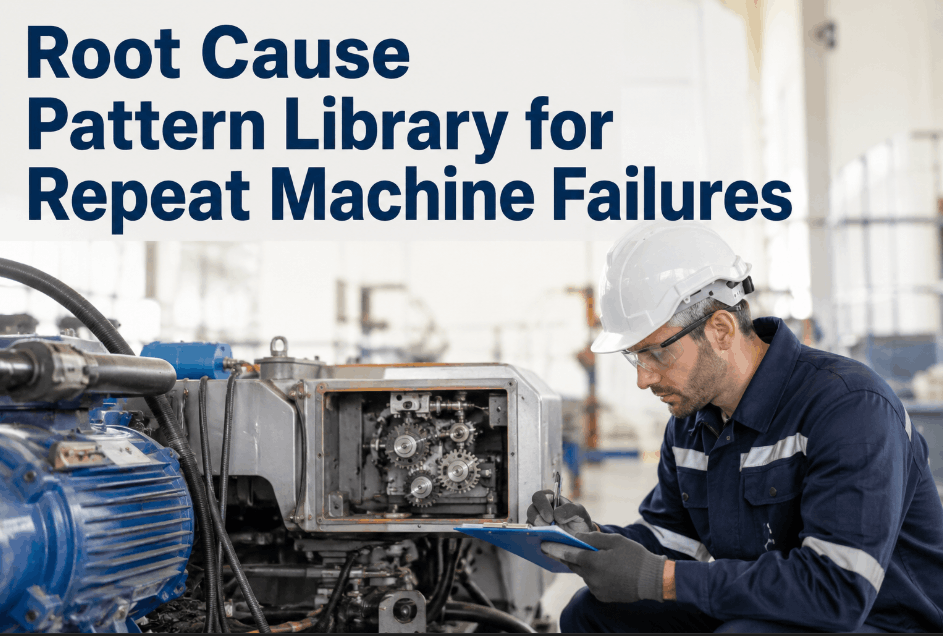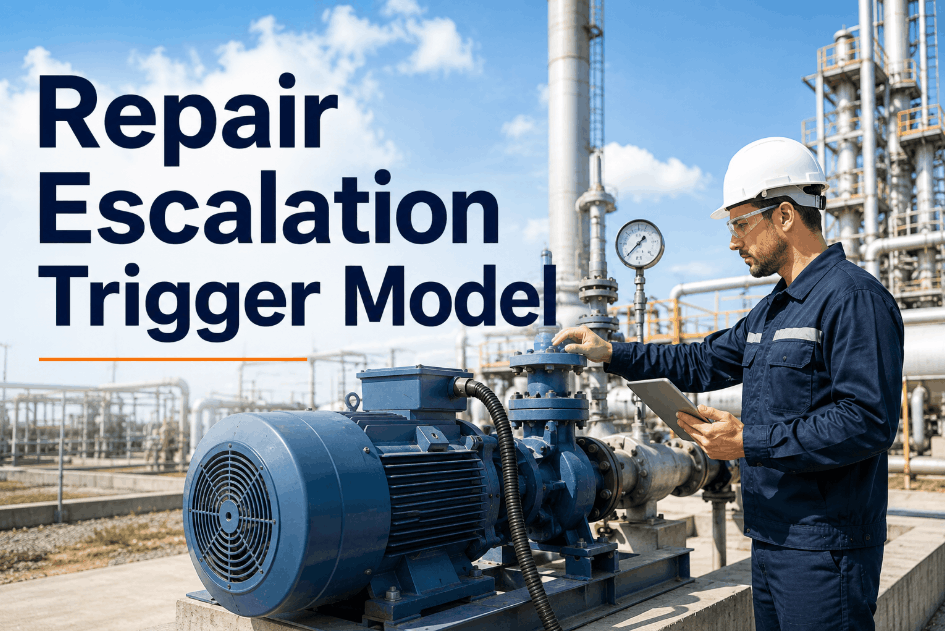
Recurring equipment failures drain maintenance budgets silently — the same fault logged three times in a month triggers no structural response until production finally stops. Without defined repair escalation triggers, planners treat every repeat breakdown as a new work order rather than a signal demanding structured investigation. Sign Up Free to see how OxMaint gives maintenance teams the work order history, asset fault records, and escalation workflows needed to move chronic issues out of the reactive queue and into root cause investigation before they compound across the backlog.
Escalate Repeat Failures Before They Drain the Backlog
OxMaint connects asset fault history to structured escalation workflows — routing recurring repair issues into investigation queues automatically so planners act on patterns, not just symptoms.
Why Repair Escalation Triggers Are a Maintenance Control Priority
Repeat breakdowns are rarely random — they share asset identifiers, failure codes, and repair histories that CMMS records already contain. The problem is that most maintenance teams lack defined escalation rules to interpret those signals. Facilities that Book a Demo with OxMaint see how work order frequency, failure mode tracking, and asset condition records combine to trigger structured investigation before the third or fourth repeat breakdown compounds into a production event. Escalation is not a people problem — it is a process and system problem that structured maintenance software solves.
OxMaint tracks work order history per asset, flagging when the same failure mode recurs within a defined interval — creating the signal that triggers escalation before manual review catches it.
Structured fault codes attached to work orders allow OxMaint to route high-recurrence failure types to designated investigation queues rather than standard repair workflows.
Asset criticality ratings in OxMaint weight escalation thresholds — a critical production asset escalates on the second recurrence where a non-critical asset may allow three before triggering investigation.
Escalated work orders in OxMaint launch structured investigation templates — prompting failure mode analysis, interim containment records, and corrective action tracking in a single asset history.
Escalated items surface in OxMaint's priority queue with asset context and failure history attached — giving planners the information to schedule investigation work against available labor and parts.
Investigation work orders in OxMaint capture corrective actions, parts replaced, and post-repair failure intervals — building the outcome record that validates whether escalation resolved the root issue.
Key Repair Escalation Trigger Criteria for Industrial Maintenance Teams
The most direct escalation signal is how many times the same failure mode appears on the same asset within a rolling time window. Two identical fault codes within 30 days on the same asset ID should escalate automatically — waiting for a third event is waiting for confirmed production impact. OxMaint's work order history tracks failure recurrence per asset and can flag repeat occurrences against configurable thresholds. Facilities that Sign Up Free can configure recurrence windows by asset class and criticality tier from day one.
When cumulative repair costs on an asset exceed a defined threshold within a quarter, the issue has moved beyond maintenance and into asset lifecycle territory. Cost-based escalation triggers shift the conversation from repair authorization to replacement or overhaul planning. OxMaint tracks labor, parts, and contractor costs per work order against asset records — making cumulative cost visibility available without manual spreadsheet aggregation. Teams that Book a Demo can see how cost history integrates with asset condition data in a single record.
A declining MTBF trend on a specific asset is the earliest quantitative signal that a failure pattern is accelerating. When MTBF drops below 60% of the baseline established during the asset's first year of operation, escalation to a structured reliability review is warranted. OxMaint calculates failure intervals from work order timestamps — making MTBF trend detection possible without manual data extraction or external analysis tools.
Any fault that results in a line stop, safety near-miss, or quality hold should escalate immediately — regardless of recurrence count. Single-event escalation thresholds for high-consequence failures prevent the delay that occurs when teams treat first-time failures as normal until the pattern is obvious. OxMaint work orders support production impact flags and safety event associations, capturing the consequence record that justifies immediate escalation on the first occurrence. Facilities can Sign Up Free and configure impact-based escalation criteria by asset class immediately.
When the same spare part is consumed on the same asset more than twice in a quarter, it is a proxy signal for a recurring mechanical root cause that repair alone is not resolving. Parts consumption escalation triggers connect inventory data to maintenance investigation — identifying chronic failure patterns that are visible in the storeroom before they are formally recognized in the work order system. OxMaint tracks parts consumption against asset records, enabling parts-driven escalation rules alongside fault-code-based triggers.
Emergency contractor calls on the same asset more than once per quarter represent both an escalating cost signal and a reliability failure — and they are often invisible in standard maintenance reporting because contractor spend is tracked separately from internal labor. OxMaint consolidates contractor and internal work order records per asset, making emergency spend frequency visible alongside internal failure history so escalation decisions include the full cost picture. Teams that Book a Demo can see how contractor records integrate with asset maintenance history in OxMaint.
Repair Escalation Trigger Reference: Industrial Maintenance Teams
| Trigger Type | Escalation Signal | Threshold | OxMaint Record | Investigation Action |
|---|---|---|---|---|
| Recurrence Frequency | Same fault repeated | 2× in 30 days | Work order failure history | Root cause analysis queue |
| Repair Cost | Cumulative spend | Exceeds % of ARV | Asset cost record | Overhaul / replacement review |
| MTBF Decline | Shortening intervals | Below 60% of baseline | Failure interval log | Reliability engineering review |
| Production Impact | Line stop or quality hold | First occurrence | Impact flag on work order | Immediate structured investigation |
| Parts Consumption | Same part reordered | 3× per quarter | Parts usage per asset | Mechanical root cause review |
How OxMaint Supports Repair Escalation and Structured Investigation
Escalation only works when the underlying maintenance data is structured and accessible. OxMaint connects asset fault records, work order history, parts consumption, and condition inspection findings in a single asset timeline — giving planners and reliability engineers the evidence base to make escalation decisions on signal rather than gut feel. When OxMaint detects a recurrence pattern, the relevant work order history, failure codes, and repair costs are already linked to the asset record, removing the manual aggregation step that delays most escalation responses. Facilities can Sign Up Free and begin building the structured maintenance record that makes escalation decisions defensible and fast.
Implementing a Repair Escalation Trigger Model: Steps for Maintenance Teams
Classify Assets by Criticality
Register each asset in OxMaint with a criticality tier — production-critical, utility, or non-critical — to define which escalation thresholds apply and how quickly investigation must begin.
Standardize Fault Codes on Work Orders
Require technicians to select from a defined fault code list when closing work orders in OxMaint — creating the structured failure data that recurrence tracking and escalation rules depend on.
Define Escalation Thresholds by Trigger Type
Set recurrence windows, cost accumulation limits, and MTBF decline thresholds in OxMaint for each asset criticality tier — creating the rule set that determines when escalation fires automatically.
Create Investigation Work Order Templates
Build structured investigation checklists in OxMaint covering failure mode analysis, containment, root cause identification, and corrective action steps — ensuring escalated issues follow a consistent review process.
Review Escalation Queue Weekly
Use OxMaint's escalation reporting view to review open investigation work orders weekly — tracking which escalated assets have active corrective actions and which have returned to repeat failure after closure.
Measure Escalation Outcomes Over Time
Track post-escalation MTBF improvement and cost reduction in OxMaint — validating whether structured investigation is resolving root causes or cycling the same assets back into the escalation queue. Book a Demo to see the reporting workflow.
Frequently Asked Questions
What is a repair escalation trigger in maintenance management?
A repair escalation trigger is a defined rule that moves a recurring or high-impact equipment failure from routine repair into structured investigation — based on recurrence frequency, cost, production impact, or reliability decline signals.
How does OxMaint support fault escalation workflows?
OxMaint tracks work order failure history, fault codes, and asset cost records per asset — giving planners the structured data to identify escalation signals and launch investigation work orders with full failure context attached.
How many repeat failures before escalating to root cause investigation?
For production-critical assets, two identical fault occurrences within 30 days should trigger escalation. For non-critical assets, three occurrences within a quarter is a reasonable threshold — adjusted by asset criticality classification.
What data is needed to run a structured escalation model?
Standardized fault codes on closed work orders, asset criticality classifications, and cumulative cost records are the minimum data inputs — all of which OxMaint captures as part of standard work order and asset management workflows.
Can OxMaint track whether escalated repairs actually resolved the root cause?
Yes. OxMaint records corrective actions on investigation work orders and tracks subsequent failure intervals — making post-escalation MTBF improvement visible in the asset history to validate whether root cause resolution held.
Build the Escalation System Your Maintenance Team Is Missing
OxMaint gives industrial maintenance teams the work order history, fault tracking, and investigation workflows to move chronic failures into structured resolution — before they drain the backlog and the budget.