Beverage manufacturing maintenance demands a rare balance: high-speed filling, capping and packaging lines must run at 85–95% OEE while meeting rigorous 3-A sanitary standards, FDA and SQF audit requirements. A purpose-built beverage plant CMMS centralizes preventive maintenance for fillers, CIP systems, refrigeration units and keg lines—reducing unplanned downtime, extending asset life and keeping sanitation audits audit-ready. This guide covers everything from filler-capper PM and CIP maintenance to carbonation equipment reliability and changeover optimization. Ready to modernize your maintenance program? Start Free Trial and see how OxMaint transforms reactive plants into proactive reliability leaders.
Beverage Manufacturing Maintenance Guide
Is one filler breakdown costing your plant $18K per hour in lost production?
Most beverage plants lose 400–800 production hours annually to unplanned downtime on filling lines, CIP systems and refrigeration loops. A CMMS built for beverage manufacturing shifts maintenance from reactive firefighting to predictive precision—protecting both OEE targets and audit compliance on the same high-speed line.
Critical Asset Strategies
Filling line maintenance, CIP system care & carbonation equipment PM
A beverage plant's reliability hinges on five asset categories. Each requires PM schedules calibrated to production volume, sanitation cycles and regulatory standards—not generic manufacturer intervals.
Filling & Capping Lines
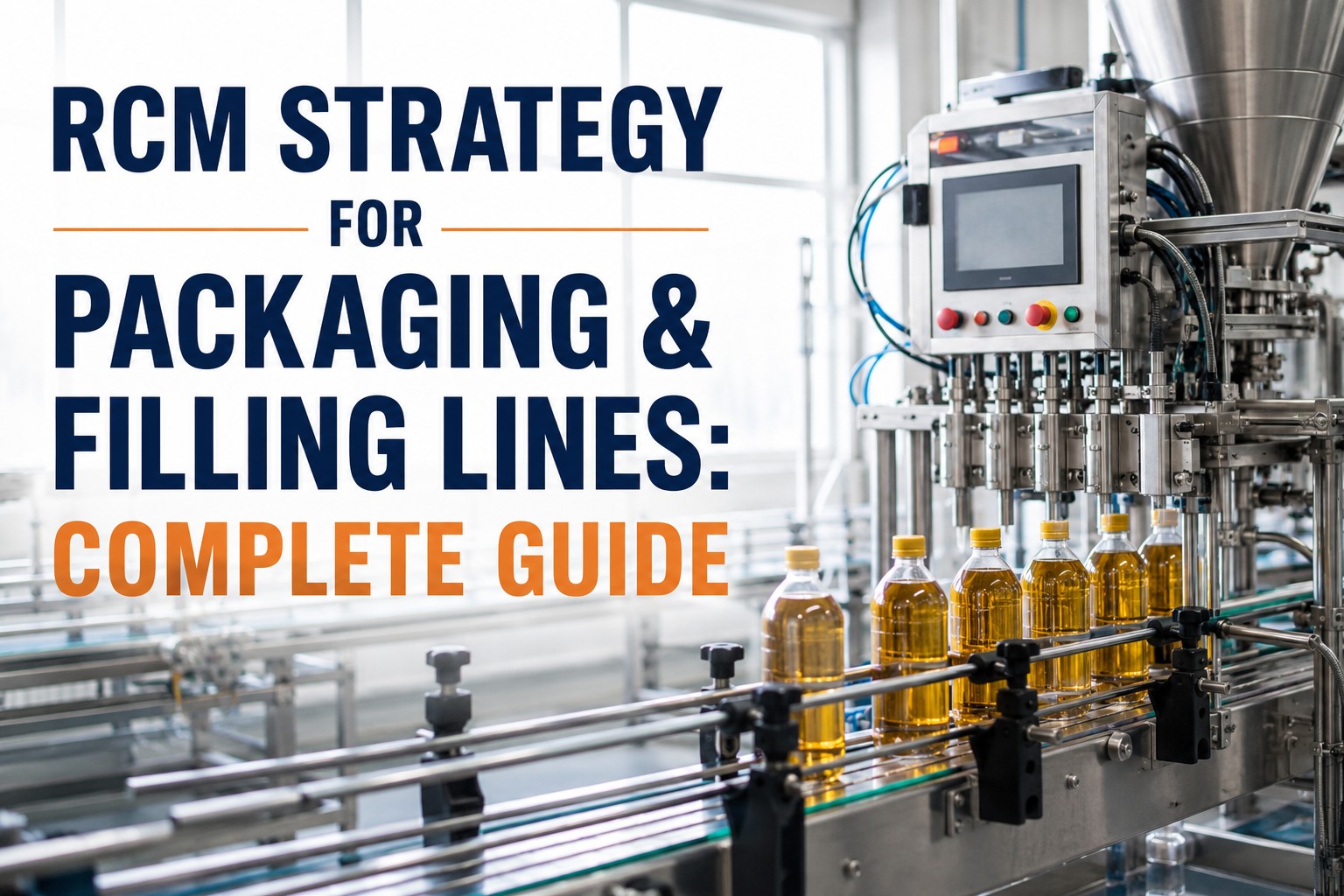
Rotary fillers running 30,000–90,000 bottles/hour demand weekly valve inspections, monthly seal replacements and quarterly flow-meter calibration. Without structured beverage plant PM, micro-leaks and misaligned capping heads cause 15–25% of filler stoppages.
CIP Systems
Clean-in-place loops cycle caustic, acid and sanitizer through piping 3–5 times daily. CIP maintenance for beverage plants means tracking spray-ball integrity, heat exchanger fouling and conductivity probe calibration—failures here trigger sanitation audit failures and biofilm risks.
Carbonation Equipment
CO2 injectors, pressure vessels and flash-pasteurizers operate under 4–6 bar. Carbonation equipment maintenance requires quarterly PRV testing, sensor calibration and carb-stone cleaning. Drift in pressure control alone can scrap an entire batch worth $25K–$80K.
Keg & Packaging Lines
Keg wash-fill-seal lines and case packers lose 8–12 hours weekly to changeover variability. Keg line maintenance focuses on pneumatic actuator wear, rinser nozzle alignment and conveyor tracking—issues that spreadsheet-based tracking misses until downtime spikes.
Reliability Math
What beverage plant downtime actually costs (and how CMMS cuts it)
Reliability teams need to quantify downtime in dollars to justify CMMS investment. Here is the formula beverage plant managers use to build the business case.
A mid-size bottling plant running one 600-BPM filler line
Deploying a beverage manufacturing CMMS typically recovers 30–50% of that cost in year one—meaning $76K–$127K returned to the plant, against a software investment of $6K–$15K annually. Payback averages 3.5 months.
Before & After
Spreadsheet maintenance vs. beverage plant CMMS
Most beverage plants still manage PM schedules on Excel or paper work orders—losing visibility, missing compliance windows and absorbing preventable downtime. Here is what changes when a CMMS purpose-built for beverage manufacturing takes over.
| Maintenance Capability | Spreadsheets & Paper | OxMaint CMMS |
|---|---|---|
| PM scheduling for fillers & CIP | Manual calendar reminders, 25–40% PM compliance | Auto-triggered by runtime meters, 95%+ PM compliance |
| Work order tracking | Clipboards, lost tickets, no closure data | Digital work orders with photo evidence & e-signatures |
| Spare parts inventory | Stockouts causing 4–8 hr delays per week | Auto-reorder points tied to PM consumption |
| Audit readiness (SQF, FDA, 3-A) | Days of report assembly, gaps in records | One-click compliance reports, complete audit trail |
| Downtime analytics | Month-end estimates, no root-cause data | Real-time OEE dashboards with MTBF/MTTR by asset |
| Predictive maintenance | Not feasible on spreadsheets | AI failure prediction from vibration & temperature sensors |
90-Day Implementation
How to deploy a beverage plant CMMS in 3 phases
Switching from reactive to proactive maintenance does not require a multi-year project. Beverage plants go live on OxMaint in 30–90 days depending on asset count and integration depth.
Asset Hierarchy & Data Import
Upload 200–2,000 assets into OxMaint—fillers, cappers, CIP loops, refrigeration compressors, conveyors—structured by line, zone and criticality rating. Import existing PM schedules, spare parts lists and vendor manuals.
PM Automation & Work Order Mobilization
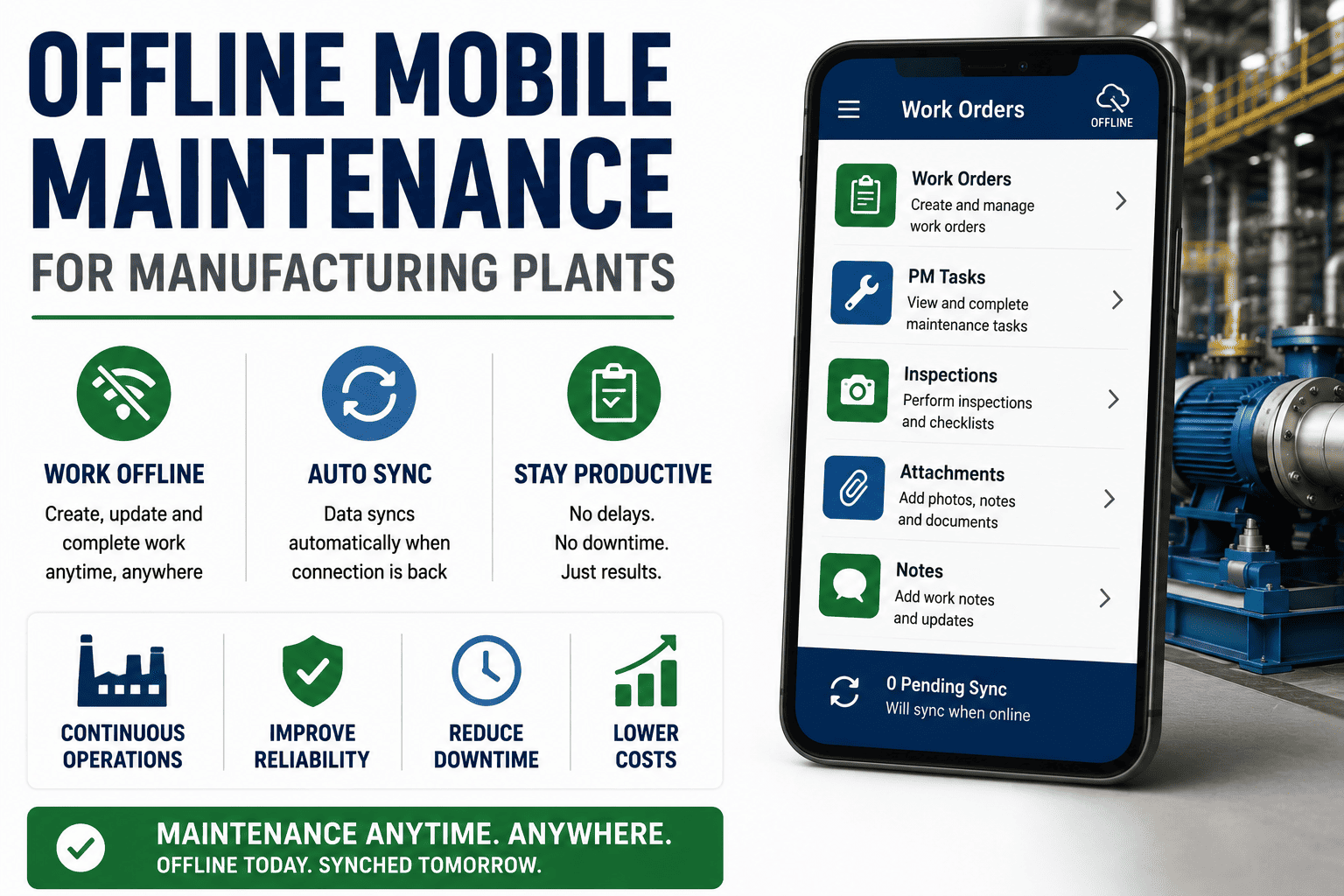
Convert manual PM checklists into meter-based and time-based auto-triggers. Equip technicians with the OxMaint mobile app so work orders, photos and completion signatures flow from the plant floor in real time—eliminating paper.
Analytics, Predictive & Audit Reporting
Activate OEE dashboards, MTBF/MTTR trending and AI-driven failure predictions on critical assets. Generate one-click compliance reports for SQF, FDA and internal audits—turning maintenance data from a cost center into a strategic advantage.
OxMaint in Action
How OxMaint solves beverage manufacturing maintenance
OxMaint is an AI-powered CMMS and EAM platform built for the realities of high-speed beverage production—where hygiene, uptime and compliance compete for the same minute. Here is how specific capabilities map to your plant's biggest pain points.
AI-Powered Predictive Maintenance
Vibration, temperature and pressure sensor data feed OxMaint's AI engine to predict filler bearing failures and CIP heat-exchanger fouling 7–21 days before breakdown—shifting maintenance from reactive to predictive.
Meter-Based PM Automation
Trigger preventive maintenance automatically by operating hours, CIP cycles, production volume or calendar days—ensuring filler valve inspections and carbonation PRV tests happen exactly when needed, never late.
One-Click Compliance Reporting
Every work order, PM completion, spare part replacement and safety check is timestamped and attributable. Generate SQF, FDA and 3-A audit reports in seconds—no more scrambling through paper records before an auditor arrives.
Smart Spare Parts Inventory
Auto-reorder points tied to PM consumption keep critical seals, gaskets and bearings in stock without over-buying. Technicians see real-time parts availability on every work order—no more 4-hour delays waiting for a $12 O-ring.
Real Results
What beverage maintenance teams achieve with OxMaint
"We were running three filling lines on clipboards and losing 500 hours a year to unplanned stoppages. Within 90 days of deploying OxMaint, our PM compliance hit 93%, audit prep went from a three-day fire drill to a 15-minute report, and we cut unplanned downtime by 38%. The AI predictions on our #2 filler caught a bearing failure two weeks before it would have shut us down for a full day."
See OxMaint on your filling lines—book a 30-minute demo
Walk through a live beverage plant CMMS setup: asset hierarchy, PM triggers, mobile work orders, predictive analytics and one-click audit reports. See exactly how OxMaint fits your lines, your team and your compliance requirements.
Frequently Asked Questions
Beverage plant CMMS & maintenance: top questions answered
What is a beverage plant CMMS and why is it different from generic maintenance software?
A beverage plant CMMS is a computerized maintenance management system configured for the specific assets, sanitation cycles and compliance standards of beverage manufacturing—fillers, CIP systems, carbonation equipment, refrigeration and keg lines. Unlike generic CMMS platforms, it supports meter-based PM triggers tied to CIP cycles and production volume, integrates with sanitation and quality workflows, and generates audit-ready reports for SQF, FDA and 3-A standards. Book a Demo to see the beverage-specific configuration in action.
How often should preventive maintenance be performed on filling lines?
Filling line PM frequency depends on production volume and filler type, but industry benchmarks call for valve and seal inspections every 168 operating hours, flow-meter calibration monthly, and full preventive overhauls quarterly. High-speed rotary fillers running 60,000+ bottles/hour may require daily quick-checks on critical wear components. A CMMS like OxMaint automates these intervals based on actual runtime meters, ensuring PMs happen on time every time.
How does a CMMS improve CIP system maintenance and sanitation compliance?
A CMMS tracks every CIP component—spray balls, heat exchangers, conductivity probes, valves and pumps—by cycle count rather than just calendar time. It automatically generates PM work orders when a CIP loop hits a threshold (e.g., 500 cycles), logs every maintenance action with timestamps and technician signatures, and produces compliance reports showing auditors that sanitation-critical equipment was maintained on schedule. This eliminates the record-keeping gaps that cause audit failures.
How long does it take to implement a CMMS in a beverage manufacturing plant?
Most beverage plants go live on OxMaint in 30–90 days. Month one covers asset hierarchy import and PM schedule migration. Month two activates automated PM triggers and mobile work orders. Month three turns on analytics, predictive maintenance and compliance reporting. Plants with 200–500 assets typically complete full deployment in 45 days; larger multi-site operations may take 60–90 days. Data import is supported by OxMaint's onboarding team at no extra cost. Start Free Trial to begin importing your assets today.
What ROI can a beverage plant expect from implementing a CMMS?
Beverage manufacturing plants typically see 30–50% reductions in unplanned downtime within the first 12 months, translating to $75K–$250K+ in recovered production capacity for a mid-size operation. Additional savings come from 70% fewer parts stockouts, 80% reduction in audit preparation time, and 15–25% lower spare parts inventory carrying costs. Average payback period is 3.5 months, with most plants reporting positive ROI within the first quarter of full deployment.
Stop losing production hours to reactive maintenance
Join the beverage manufacturing plants that cut unplanned downtime by 42%, hit 95% PM compliance and turn audit prep into a 15-minute task. OxMaint makes it happen in 90 days—see it on your assets first.
Free 14-day trial · No credit card