VAV boxes are among the most failure-prone and most overlooked components in commercial HVAC systems. A stuck damper, failed actuator, or miscalibrated airflow sensor in a single zone generates occupant complaints, energy waste, and thermal comfort failures across an entire floor — often for weeks before anyone investigates the cause. OxMaint's preventive maintenance platform turns this checklist into structured inspection tasks with digital completion records, fault escalation, and compliance documentation built in. Book a demo to see VAV inspection workflows configured for your building.
VAV Box Maintenance & Fault Detection Checklist
A complete inspection reference for dampers, actuators, airflow sensors, reheat coils, and controls — with OxMaint task configuration notes for each check.
Of HVAC energy waste in commercial buildings is attributed to VAV control failures — stuck dampers, actuator faults, and sensor drift
Source of thermal comfort complaints in multi-zone commercial buildings is undetected VAV box and zone control failure
Typical time between a VAV fault occurring and a facility team investigating — because degraded comfort is reported by occupants, not by sensors
VAV Box Maintenance Checklist — All Components
Command damper to 0% and 100% position via BAS. Verify blade travels full range without binding. Note maximum and minimum position achieved. Flag any resistance or mechanical stop before full travel.
Frequency: Quarterly | OxMaint: Pass/Fail per unit IDInspect blade edges and seals for deformation, corrosion, or seal strip degradation. Worn seals cause leakage at minimum position — contributing to overcooling and energy waste in heating season.
Frequency: Annual | OxMaint: Photo-capture per unitCheck shaft for corrosion or wear that causes position error. Binding shaft bearings are the primary cause of actuator overload failure. Lubricate per manufacturer specification if applicable.
Frequency: Annual | OxMaint: Condition log per unitCompare BAS-reported damper position against actual physical position at 25%, 50%, and 75% commands. Position error exceeding 5% indicates feedback sensor drift or actuator gear wear requiring recalibration or replacement.
Frequency: Semi-annual | OxMaint: Measurement log with deviation valueManual override check — actuator should disengage cleanly and damper should move freely under manual force. Difficulty overriding indicates gear binding that will progress to actuator motor burnout.
Frequency: Annual | OxMaint: Pass/Fail escalation triggerDisconnect power and confirm actuator returns to the correct fail-safe position — fully open or fully closed depending on VAV type and zone function. Incorrect fail-safe position is a safety and comfort failure.
Frequency: Annual | OxMaint: Safety-critical — mandatory closure requiredInspect pitot tube inlets for dust accumulation or biological growth blocking pressure ports. Blocked ports cause the BAS to read lower-than-actual airflow, driving the damper further open and overcooling occupied zones.
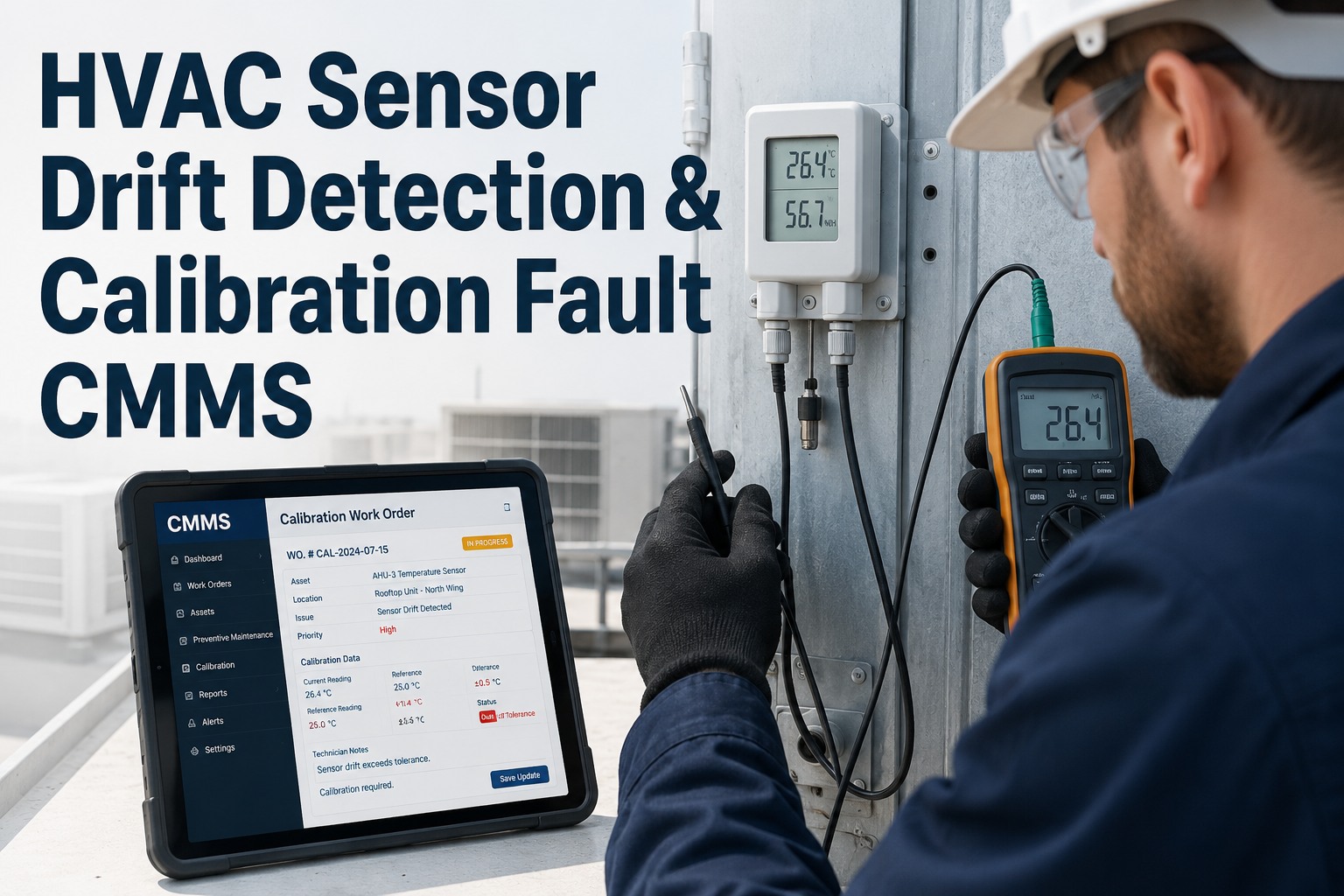
Frequency: Annual | OxMaint: Pre/post cleaning flow reading logVerify BAS-reported airflow against a hand-held anemometer or balometer reading at the same damper position. Calibration drift exceeding 10% of design flow requires re-zeroing the differential pressure transducer or probe replacement.
Frequency: Annual or post-filter change | OxMaint: Deviation % recorded per unitCommand valve to open and closed via BAS. Confirm valve response — a non-responding valve causes simultaneous cooling and heating (simultaneous operation), which is the highest energy waste fault in VAV systems.
Frequency: Semi-annual | OxMaint: Open/Close response logged per valveInspect coil fins for fouling or physical damage. Inspect inlet and outlet connections for corrosion or minor leaks. Blocked coils reduce reheat capacity and cause insufficient discharge temperature in perimeter zones during heating season.
Frequency: Annual | OxMaint: Visual condition log with photoCompare room thermostat reading against a calibrated reference thermometer at sensor height. Offset exceeding 1°C causes persistent zone over- or under-heating that generates occupant complaints and BAS hunting behavior.
Frequency: Annual | OxMaint: Delta-T value recorded; flag if over 1°CVerify BAS communication status — no offline or unresponsive VAV controllers. A controller reporting stale data is providing false assurance that the zone is functioning correctly when it may have failed over.
Frequency: Monthly BAS sweep | OxMaint: Offline controller count per floorVerify zone transitions correctly between occupied heating, occupied cooling, and unoccupied setback modes on schedule. Incorrect mode transitions waste significant energy and cause after-hours comfort failures for late occupants.
Frequency: Annual | OxMaint: 3-mode response test per zone controllerVAV Fault Detection Reference
| Fault | Symptom | Likely Cause | Priority |
|---|---|---|---|
| Damper not tracking | Zone over/undercooling, BAS position error | Actuator gear wear, shaft binding, or feedback sensor drift | High |
| Airflow below minimum | Stuffiness, CO2 rising in zone | Blocked pitot tube, sensor drift, damper stuck closed | High |
| Simultaneous heating/cooling | High energy consumption, temperature instability | Stuck reheat valve or failed actuator — valve not closing | Critical |
| Zone temperature offset | Persistent occupant comfort complaints | Thermostat calibration drift or sensor placement issue | Moderate |
| Controller offline | Zone running on last command — no response to schedule | Communication cable fault, controller power loss, firmware issue | High |
| Fail-safe position wrong | Zone fails open or fails closed unexpectedly | Actuator spring failure or incorrect fail-safe wiring | Critical |
Use This Checklist in OxMaint
Every item in this checklist is configurable as a scheduled PM task in OxMaint — with digital completion records, photo capture, fault escalation, and compliance documentation built in for your VAV fleet.
"The highest-leverage opportunity in commercial building energy performance is not new equipment — it is fixing the VAV boxes that are already installed but running with stuck dampers, failed actuators, and simultaneous heating and cooling. A building with 200 VAV boxes and no structured inspection programme is burning 20–30% more HVAC energy than the same building with a quarterly inspection routine. The fault is invisible on any dashboard until someone physically checks the actuator or reads the flow sensor against a reference measurement."