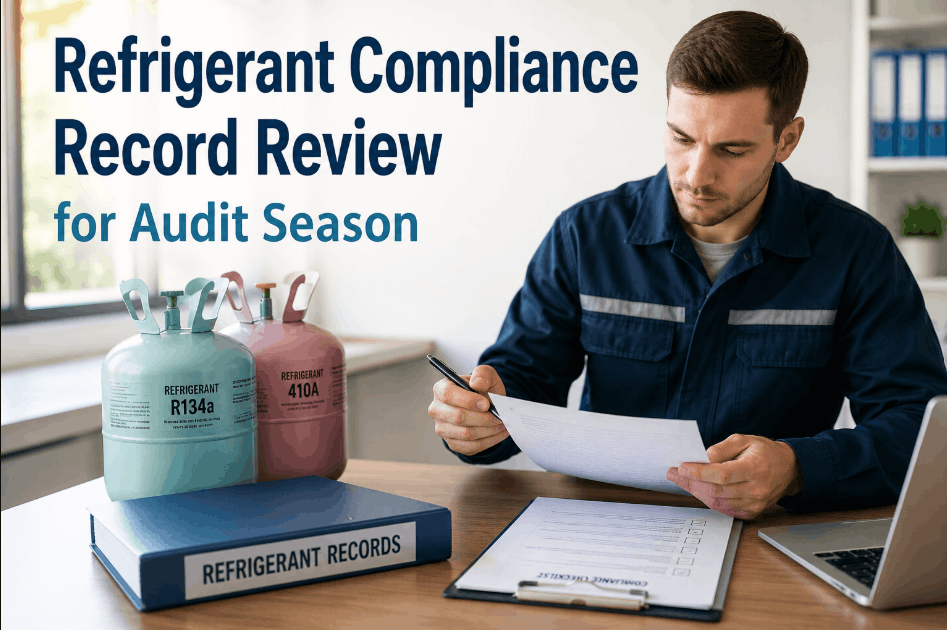
Refrigerant compliance in healthcare facilities is one of the most documentation-intensive regulatory obligations facility teams carry — and one of the most frequently mismanaged. A multi-site hospital system discovered that its engineering team was maintaining refrigerant records across disconnected paper logs, service binders, and informal technician notes, with no unified view of leak rates, charge histories, or audit-ready documentation per asset. When regulators asked for refrigerant tracking reports, the team scrambled to reconstruct records manually — a process that consumed weeks of engineering time and still produced incomplete submissions. If your hospital engineering team is managing refrigerant compliance without structured charge logging, leak documentation, and audit-ready asset histories, Sign Up Free to see how Oxmaint structures refrigerant compliance management for healthcare facilities — or Book a Demo with a healthcare facilities compliance specialist.
Refrigerant Tracking · Leak Logs · Compliance Records · Audit Visibility
Stop Reconstructing Refrigerant Records Before Every Audit and Start Maintaining Compliance Documentation as a Byproduct of Normal Service Activity
Asset-level refrigerant charge logs, leak detection records, service documentation, compliance reporting workflows, and audit-ready maintenance history — Oxmaint helps hospital engineering teams maintain regulatory compliance without manual record reconstruction.
Facility Profile
The Operation: Multi-Site Hospital System With Fragmented Refrigerant Records and No Audit-Ready Compliance Documentation
Facility Overview
IndustryHealthcare — multi-site hospital system with central plant chillers, rooftop units, and split systems
Scope4 hospital campuses, 87 refrigerant-containing assets, mixed refrigerant types including regulated high-GWP blends
Team9 engineering technicians, 3 building system engineers, 1 facilities compliance coordinator
Prior SystemPaper service binders per building, disconnected technician logs, no unified refrigerant charge or leak tracking per asset
Oxmaint FeaturesAsset-Level Refrigerant Tracking · Charge Log Records · Leak Detection Documentation · Compliance Reporting Workflows · Work Order Management · Inspection Checklists · Service History · Technician Assignment
Baseline Compliance Gaps
0%
Of refrigerant-containing assets had complete, audit-ready charge and leak histories in a searchable format before Oxmaint deployment
3.4wk
Average time required to manually reconstruct refrigerant records in response to a compliance audit request — pulling staff from active maintenance responsibilities
26%
Of assets with documented leak events where root cause was never formally recorded and follow-up verification was not logged per regulatory requirement
Root Cause Analysis
Why Refrigerant Compliance Remained a Manual Burden — Despite Active Engineering Team Attention
A documentation review across all four hospital campuses identified four structural gaps that converted normal refrigerant service activity into compliance liability. The engineering team performed the work competently — the failure was in how that work was captured, structured, and made retrievable. Sign Up Free to bring structured refrigerant compliance tracking to your hospital engineering team — or Book a Demo to see how Oxmaint manages regulatory documentation across multi-site healthcare facilities.
43%
Refrigerant Charges Logged by Date in Service Binders — Not Linked to Specific Asset Records
Technicians recorded charge additions in building-level binders organized by service date, not by equipment unit. Reconstructing a complete charge history for a specific chiller or rooftop unit required manually searching through every entry across months of records — an unsustainable process at audit time.
29%
Leak Events Documented Informally — No Structured Root Cause or Repair Verification Record
When leaks were detected and repaired, technicians noted the event in service logs but did not follow a standardized format capturing leak rate, refrigerant type, root cause, repair method, and post-repair verification. Regulatory requirements for leak rate calculation and follow-up timelines were not systematically tracked.
19%
No Unified View Across Sites — Compliance Coordinator Had No Real-Time Asset Status
Each campus maintained its own physical records with no shared system. The compliance coordinator had no way to identify which assets were approaching regulatory leak rate thresholds, which units had open leak events pending verification, or which buildings carried the highest refrigerant compliance risk at any given time.
9%
Service Contractor Records Not Integrated — Third-Party Work Created Gaps in Asset History
Refrigerant service performed by contracted vendors was submitted on paper invoices that were filed separately from internal maintenance records. There was no structured workflow to capture contractor charge and leak data into the asset history, creating compliance gaps whenever external vendors serviced regulated equipment.
The Solution
How Oxmaint Helped the Hospital System Clean Up Records, Align Leak Logs, and Give the Engineering Team Real Audit Visibility
The hospital system deployed Oxmaint to replace disconnected paper records with a unified, asset-level refrigerant compliance management system. Each refrigerant-containing asset across all four campuses was configured in Oxmaint with equipment type, refrigerant type, charge capacity, and regulatory threshold data. Technicians began logging every charge addition, leak event, root cause, and repair verification directly to the relevant asset record using structured inspection checklists. The compliance coordinator gained a real-time cross-site view of asset status, open leak events, and approaching regulatory thresholds. Service contractor records were entered into Oxmaint work orders to close the third-party documentation gap. Book a Demo to see how refrigerant compliance tracking works across multi-site hospital portfolios.
01
Asset-Level Refrigerant Records With Complete Charge and Leak History Per Unit
Every refrigerant-containing asset was structured as a separate record in Oxmaint with refrigerant type, regulatory classification, and charge capacity logged. All service activity was tied directly to the asset — creating a complete, searchable charge and leak history per unit that eliminated the need to reconstruct records manually at audit time.
02
Structured Leak Event Documentation With Root Cause, Repair Method, and Verification Logging
Leak detection events were captured in Oxmaint using standardized checklists requiring technicians to document leak rate, refrigerant quantity released, root cause, repair action, and post-repair verification date. This created a regulation-aligned record format that satisfied audit requirements without additional documentation steps after the fact.
03
Cross-Site Compliance Dashboard for Real-Time Asset Status and Threshold Visibility
The compliance coordinator gained a unified view in Oxmaint showing all refrigerant assets across all four campuses — including open leak events, cumulative annual charge totals, assets approaching regulatory leak rate thresholds, and pending verification deadlines. For the first time, compliance risk was visible in real time rather than discovered at audit preparation.
04
Contractor Work Integration Into Asset History to Close Third-Party Documentation Gaps
A workflow was established in Oxmaint to enter refrigerant service records from contracted vendors into the relevant asset work order at the time of invoice receipt. Contractor charge and leak data was now captured in the same structured format as internal technician records — creating a complete asset history regardless of who performed the service.
Results at 90 Days
Refrigerant Compliance, Record Quality, and Audit Readiness Metrics Three Months After Deployment
100%
Of regulated refrigerant assets now tracked with complete charge and leak history in Oxmaint — up from zero structured records
-91%
Reduction in audit preparation time — records previously requiring 3+ weeks to reconstruct now available immediately in Oxmaint
0
Open leak events without documented root cause or repair verification after Oxmaint deployment — down from 26% of assets
4×
Faster identification of assets approaching regulatory leak rate thresholds — enabled proactive intervention before threshold breach
87%
Of contractor service records now integrated into asset history within 5 business days of service completion
2.8×
ROI on Oxmaint platform cost within 90 days from recovered engineering time and reduced regulatory risk exposure
| Metric |
Before Oxmaint |
90 Days After |
Change |
| Assets with audit-ready charge history |
0% — paper binders, no per-asset data |
100% tracked in Oxmaint |
+100% |
| Audit preparation time |
3.4 weeks manual reconstruction |
91% reduction — immediate retrieval |
-91% |
| Leak events with documented root cause |
74% — 26% undocumented |
100% structured documentation |
+26% |
| Threshold visibility for compliance team |
None — no real-time view across sites |
Real-time dashboard, all 4 campuses |
Achieved |
| Contractor records integrated |
Filed separately, no asset linkage |
87% integrated within 5 business days |
+87% |
| Compliance coordinator asset visibility |
Reactive — discovered at audit |
Proactive — real-time risk tracking |
Proactive |
Key Business Impact
What Structured Refrigerant Compliance Tracking Means for Hospital Facility Operations
"Hospital engineering teams are performing the right refrigerant service work — the failure is almost always in how that work gets captured. When a technician adds refrigerant to a chiller and writes it in a binder by date rather than by unit, that record is effectively invisible at audit time. The same event logged against the asset in a structured system becomes compliance documentation automatically. Oxmaint closes that gap without changing the technician's workflow in any meaningful way — it just gives the record a permanent home that the compliance team can actually use. For healthcare facilities managing regulated refrigerants under EPA and state rules, that difference is the gap between a clean audit and a citation."
Sandra Okafor, Healthcare Facilities Compliance and Refrigerant Management Specialist
21 years healthcare facility operations · Former director of facilities compliance, large regional hospital system · Specialist in refrigerant regulatory tracking, EPA Section 608 compliance, and engineering documentation systems for multi-site healthcare environments
Compliance Records · Leak Logs · Audit Readiness · Asset Documentation
Replace Manual Refrigerant Record Reconstruction With Structured Asset-Level Compliance Documentation Before the Next Audit Arrives
Asset-level charge logs, leak event documentation, repair verification records, cross-site compliance dashboards, and contractor record integration — Oxmaint gives hospital engineering teams audit-ready refrigerant compliance as a byproduct of structured service activity.
FAQs
Frequently Asked Questions
How does Oxmaint support refrigerant compliance documentation in hospital facilities?
Each refrigerant-containing asset is tracked individually in Oxmaint. Technicians log charge additions, leak events, root causes, and repair verifications using structured checklists tied to the asset record — creating audit-ready documentation as part of normal service activity.
Can Oxmaint track refrigerant records across multiple hospital campuses in a single view?
Yes. Oxmaint supports multi-site asset management, allowing the compliance coordinator to view charge histories, open leak events, and threshold status across all campuses from a single dashboard with location-based filtering.
How does Oxmaint handle refrigerant service performed by external contractors?
Contractor service data is entered into Oxmaint work orders linked to the relevant asset at the time of invoice receipt, ensuring third-party refrigerant charges and leak events appear in the same structured asset history as internal technician records.
Does Oxmaint alert the compliance team when assets are approaching regulatory leak rate thresholds?
Yes. Oxmaint tracks cumulative charge totals and leak event data per asset, giving the compliance coordinator real-time visibility into which units are approaching EPA or state regulatory thresholds before a violation occurs.
How quickly can refrigerant asset tracking be configured in Oxmaint for a multi-site hospital?
Asset setup and checklist configuration typically complete within the first week. Most hospital teams are capturing structured refrigerant records and generating audit-ready reports within the first two to four weeks of deployment.
Every Service Record Is a Compliance Document
Give Your Hospital Engineering Team the Refrigerant Tracking Structure It Needs to Walk Into Any Audit Without Preparation Scrambles
Oxmaint brings asset-level charge logging, leak event documentation, repair verification tracking, and cross-site compliance dashboards to hospital facilities teams — with no additional headcount required.