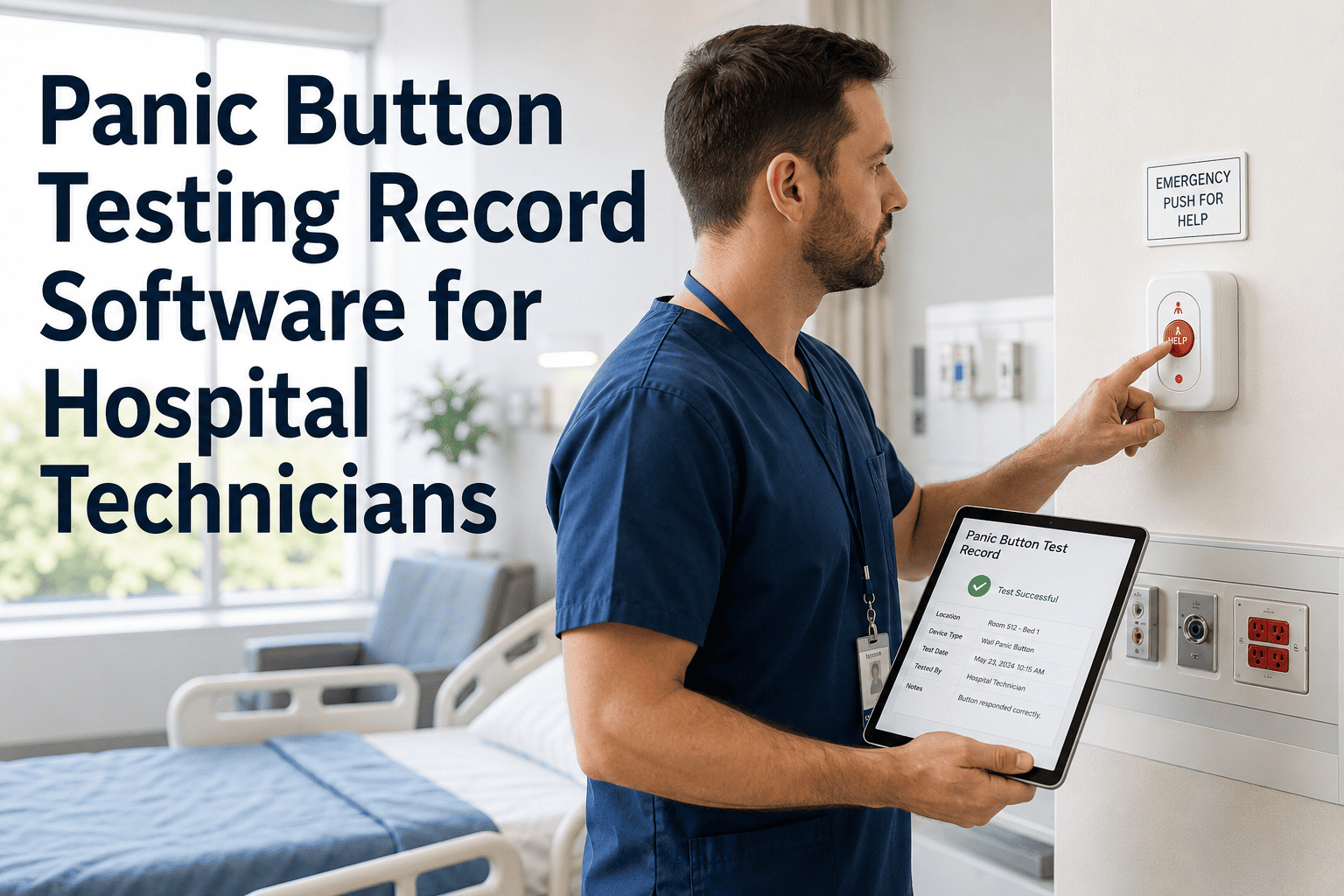
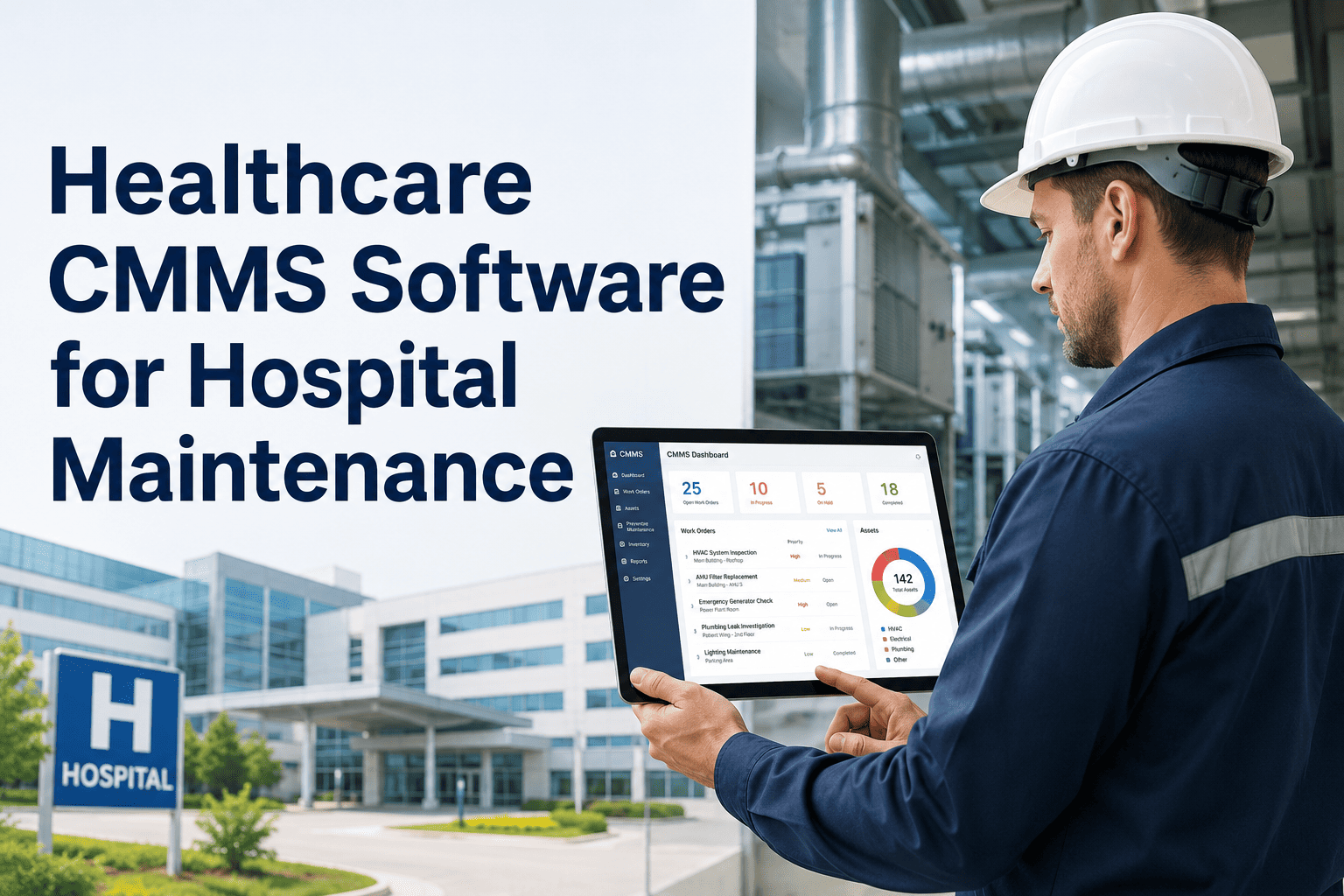
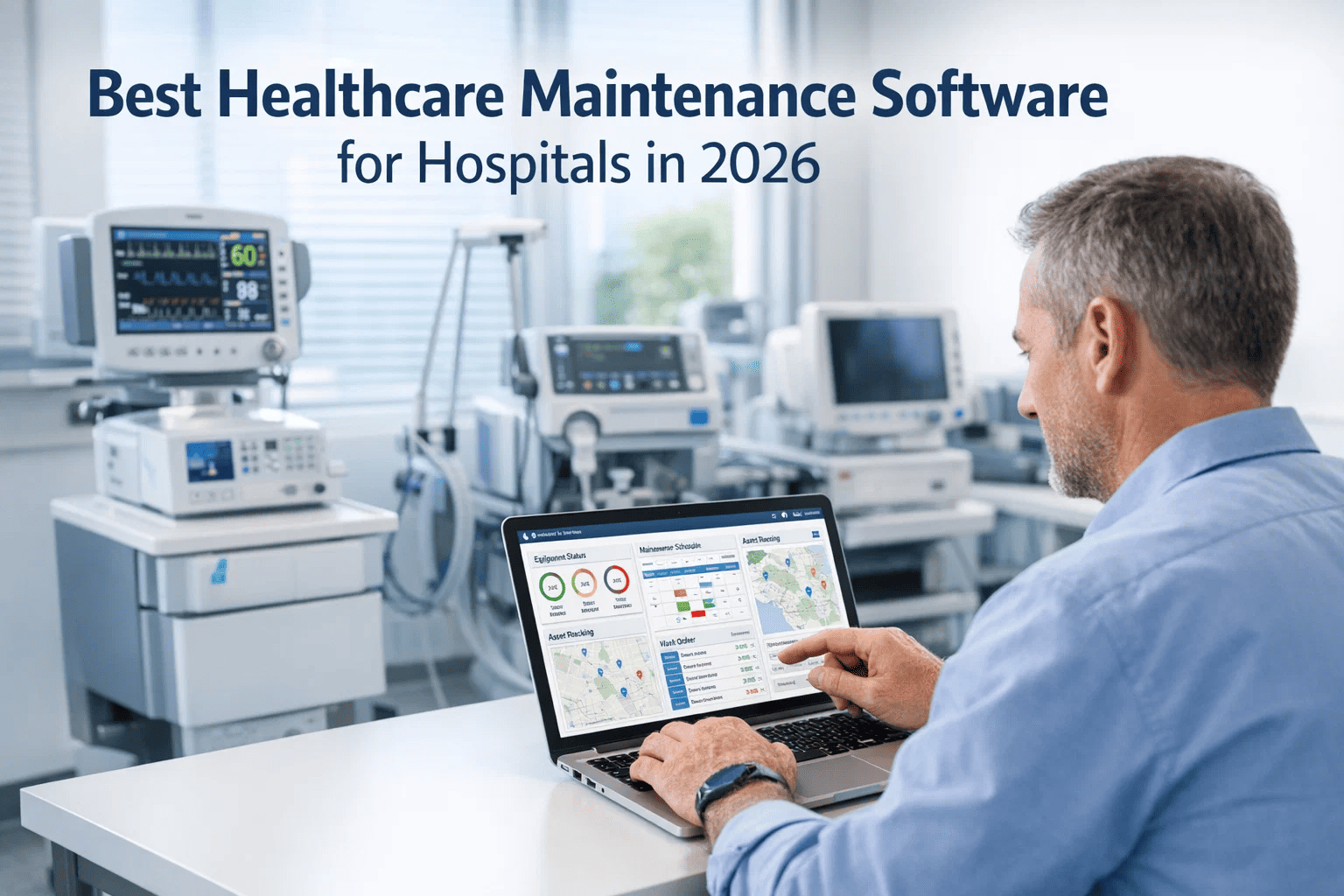
A nurse on a night shift presses a panic button bolted to the wall of a med-surg unit. If that button hasn't been tested since it was installed, nobody can say with confidence whether the signal reaches security, whether the location resolves to the right room, or whether anyone responds at all. That uncertainty is no longer just a safety gap — in states like New York, Illinois, and California, it is a direct compliance exposure, since hospital staff are now legally entitled to working emergency notification systems. Press Ganey data puts the scale of the underlying problem in focus: more than two nursing staff are assaulted every hour in U.S. hospitals, and the American Nurses Association estimates that as many as 80 percent of incidents go unreported. A panic button testing record system exists to close the gap between "the button is installed" and "the button actually works," and that is what this page walks through.
HOSPITAL SAFETY · PANIC BUTTON TESTING RECORDS
Installed Is Not the Same as Working. Prove the Difference.
Six or more states now require healthcare facilities to provide staff with functioning panic button systems. A testing record system gives your hospital the documented proof that every device works, every time it's checked.
WHY THIS IS A LEGAL REQUIREMENT NOW, NOT JUST A SAFETY PRACTICE
States Requiring Functioning Panic Button Systems
New York's law requires healthcare employers to provide an appropriate means of emergency notification, including panic buttons, for at-risk staff. California's SB 1299 made workplace violence prevention plans mandatory for hospitals, with panic systems as the standard compliance method. Illinois HB 2396 requires hospitals to provide an effective means for staff to summon assistance. The requirement, across every state version, is the same: the system must actually work when triggered — which means it must actually be tested.
New York
Requires emergency notification access for at-risk staff
California
SB 1299 mandates workplace violence prevention plans
Illinois
HB 2396 requires an effective means to summon help
Colorado
SB-166 makes panic alarms compulsory in hospitals
New Jersey
Duress alarms required to protect healthcare workers
Washington
Workplace violence prevention mandate in effect
2+
Nursing staff assaulted per hour across U.S. hospitals
5x
Higher injury rate for healthcare workers vs. other industries
80%
Of workplace violence incidents involving nurses go unreported
WHAT A COMPLETE TEST RECORD ACTUALLY VERIFIES
Five Checks That Belong in Every Test Cycle
1
Room-Level Location Accuracy
Floor-level approximation is not sufficient. The signal must resolve to the exact room or zone where the device was triggered.
2
Sub-Five-Second Alert Delivery
The interval between a button press and the alert reaching a responder needs to be measured, not assumed.
3
Mobile and Desktop Distribution
Alerts need to reach security on both fixed consoles and mobile devices, since responders are rarely seated at one screen.
4
Responder Acknowledgment Tracking
A record showing who acknowledged the alert, and when, closes the loop between trigger and response.
5
Incident Documentation
Every test and every real activation needs a timestamped record that compliance reporting can reference directly.
OXMAINT · PANIC BUTTON TESTING WORKFLOWS
Turn Panic Button Testing Into a Scheduled, Documented Routine
Assign recurring test tasks, capture pass/fail evidence per device, and generate the audit trail your safety committee and state regulators expect to see.
WHAT HAPPENS WHEN A TEST FAILS
Escalation Has to Be Built In, Not Improvised
01
Technician runs the scheduled test and logs a failed location accuracy or delivery check
02
A corrective work order generates automatically, assigned and prioritized without waiting on manual follow-up
03
Security and facilities leadership get notified that a device is degraded until the fix is confirmed
04
Device is re-tested and the full failure-to-resolution timeline is stored permanently in the asset record
“
Orchestration means the safety platform integrates into the hospital's operating layer rather than sitting as a standalone system — duress events trigger coordinated workflows, and incident data feeds compliance reporting automatically.
— Healthcare Safety Technology Guidance, 2026
FREQUENTLY ASKED
Panic Button Testing Records, Explained
How often should panic buttons be tested?
Most hospital safety programs schedule tests monthly at minimum, with some high-risk units testing weekly. A recurring schedule with automated reminders keeps testing from slipping during busy periods.
Sign up free to build a recurring schedule.
What counts as acceptable documentation for a test?
A timestamped record showing which device was tested, by whom, the location accuracy result, the delivery time, and whether the alert reached both mobile and desktop responders.
Does failed testing create legal exposure?
An untested or unverified system creates exposure under state laws requiring functioning emergency notification, and complicates liability if an incident occurs and the device underperformed.
Can testing records be pulled for a state inspection on short notice?
Yes, when records are stored digitally and tied to the specific device and location, a full testing history can be exported in minutes rather than searched for across paper logs.
Book a demo to see a sample export.
Does this apply to wearable panic buttons as well as fixed units?
Yes. Both fixed wall-mounted devices and wearable or GPS-enabled units need the same testing cadence and documentation, since state requirements typically cover the system as a whole.
OXMAINT · HOSPITAL SAFETY COMPLIANCE
Don't Find Out a Panic Button Failed During an Emergency
Build a documented, recurring testing routine for every panic button and duress alarm in your facility — with automatic escalation the moment a device fails a check.