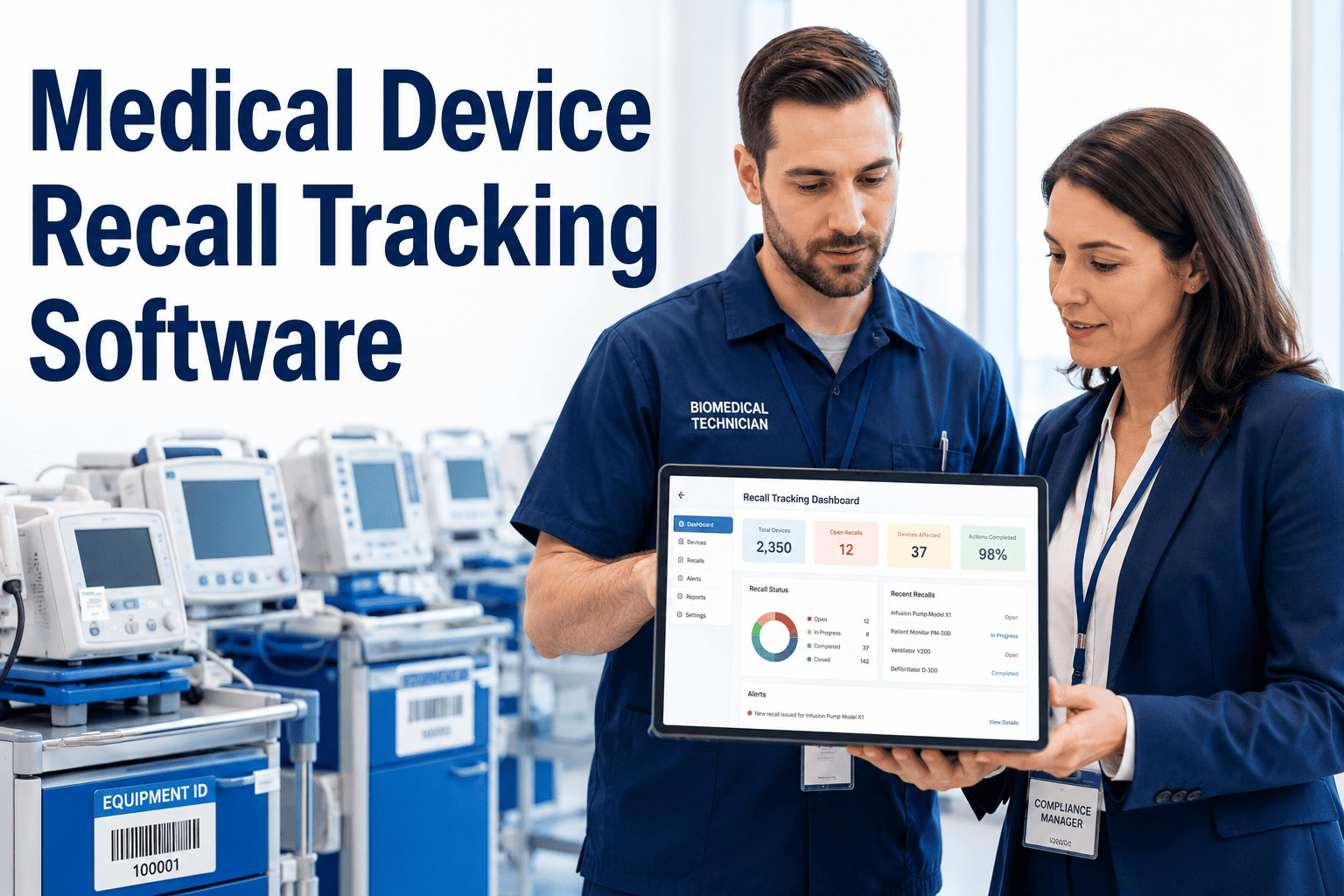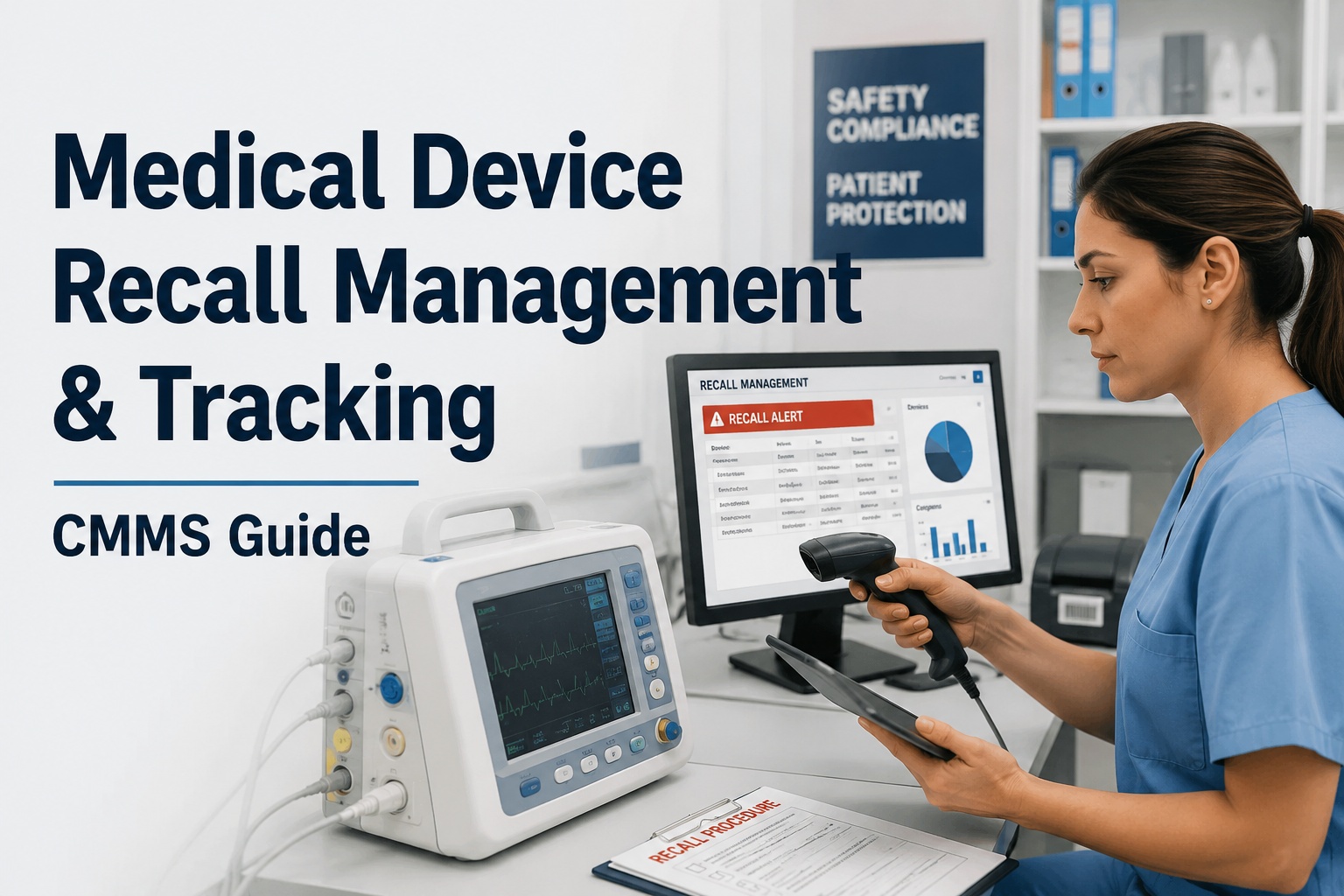
Medical device recall management is the structured process of identifying, isolating, and remediating medical equipment subject to an FDA or manufacturer recall, and a dedicated CMMS is the fastest way to execute it across a healthcare inventory. When a recall notice arrives, biomed and clinical engineering teams must match affected serial numbers to active devices in the field, pull them from service, and document the corrective action before the next regulatory survey. This guide breaks down how a recall tracking CMMS in healthcare streamlines FDA recall notification intake, automates device-level matching, and creates a defensible audit trail. See how OxMaint transforms your recall response by taking the next step and deciding to Start Free Trial today.
Can your team locate every recalled medical device before the next survey?
Manual spreadsheets and paper logs fail when patient safety is on the line. Medical device recall management requires instant serial-number matching, immediate work order generation, and bulletproof documentation. OxMaint automates the entire recall workflow from FDA notification to verified remediation.
Why medical device recall tracking demands a dedicated CMMS
The FDA classifies over 1,000 medical device recalls annually, and Class I recalls—those with a reasonable probability of causing serious adverse health consequences or death—require immediate action.
Relying on manual inventory logs or disconnected spreadsheets for medical equipment recall tracking is a high-risk gamble. When a manufacturer issues a recall notice, biomed teams must cross-reference PDF lists of affected serial numbers against thousands of assets across multiple facilities. A missed device isn't just a compliance failure; it is a direct threat to patient safety. A healthcare recall tracking CMMS eliminates this risk by maintaining a real-time, centralized asset registry. When a recall hits, the system instantly queries the database, flags the exact devices in your inventory, and auto-generates corrective work orders—shrinking a multi-day manual search into minutes.
How to build a CMMS recall management workflow for 2026
A defensible recall response CMMS workflow follows five distinct phases, moving from intake to final closure with zero documentation gaps.
FDA & Manufacturer Recall Intake
Import manufacturer recall notices, FDA enforcement reports, or ECRI alerts directly into the CMMS. OxMaint parses the notice and logs the affected model numbers, lot numbers, and serial ranges against your active asset registry.
Device-Level Identification & Isolation
The CMMS recall tracking engine scans your inventory and instantly flags matching medical devices. Technicians receive automated alerts to physically locate, tag, and pull the affected equipment from active clinical service.
Corrective Work Order Generation
Automatically generate priority work orders for each recalled device. OxMaint assigns the remediation task—whether it is a software patch, part replacement, or permanent removal—to the correct technician with full context attached.
Remediation & Verification
Technicians execute the fix and close the work order via the OxMaint mobile app. The system requires photo verification and digital signatures to confirm the device is safe or properly quarantined before returning to service.
Audit-Ready Documentation Closure
The CMMS compiles the entire recall history into a single defensible record. Generate a report showing intake time, affected serial numbers, isolation timestamps, and remediation proof to satisfy Joint Commission or FDA audits instantly.
Stop searching spreadsheets when a recall drops.
See how OxMaint maps every FDA recall to your exact medical device inventory in seconds, not days.
CMMS device recall tracking vs. manual spreadsheet response
A side-by-side comparison of how a medical recall CMMS guide approach outperforms traditional manual tracking during a Class I recall event.
| Recall Capability | Manual Spreadsheets | OxMaint CMMS |
|---|---|---|
| Device Lookup Speed | Hours to days of cross-referencing | Instant serial number matching in seconds |
| Technician Dispatch | Manual phone calls, emails, and paper slips | Automated work order generation and mobile push |
| Audit Trail | Scattered PDFs, inconsistent logs | Tamper-proof, time-stamped digital record |
| Patient Risk Exposure | High risk of missing active devices | 100% inventory confidence, immediate isolation |
| Multi-Facility Visibility | Silos, delayed data aggregation | Centralized dashboard across all sites |
A 1,200-asset hospital network and an infusion pump recall
Consider a regional hospital network managing 1,200 infusion pumps across three campuses. When the manufacturer issues a Class I recall for a specific pump lot due to a software dosing error, the biomed team must act fast. Using legacy spreadsheets, identifying the 40 affected pumps takes 14 hours of manual cross-checking, during which patient care is at risk. Using OxMaint CMMS recall tracking, the team imports the recall notice, and the system instantly flags the 14 active pumps by serial number, auto-generates 14 high-priority removal work orders, and texts the on-duty technicians. Total time to isolate all affected devices: 22 minutes.
How OxMaint solves medical device recall management
OxMaint maps AI-powered asset tracking and automated work order management directly to your recall response bottlenecks, turning regulatory panic into a controlled, measurable process.
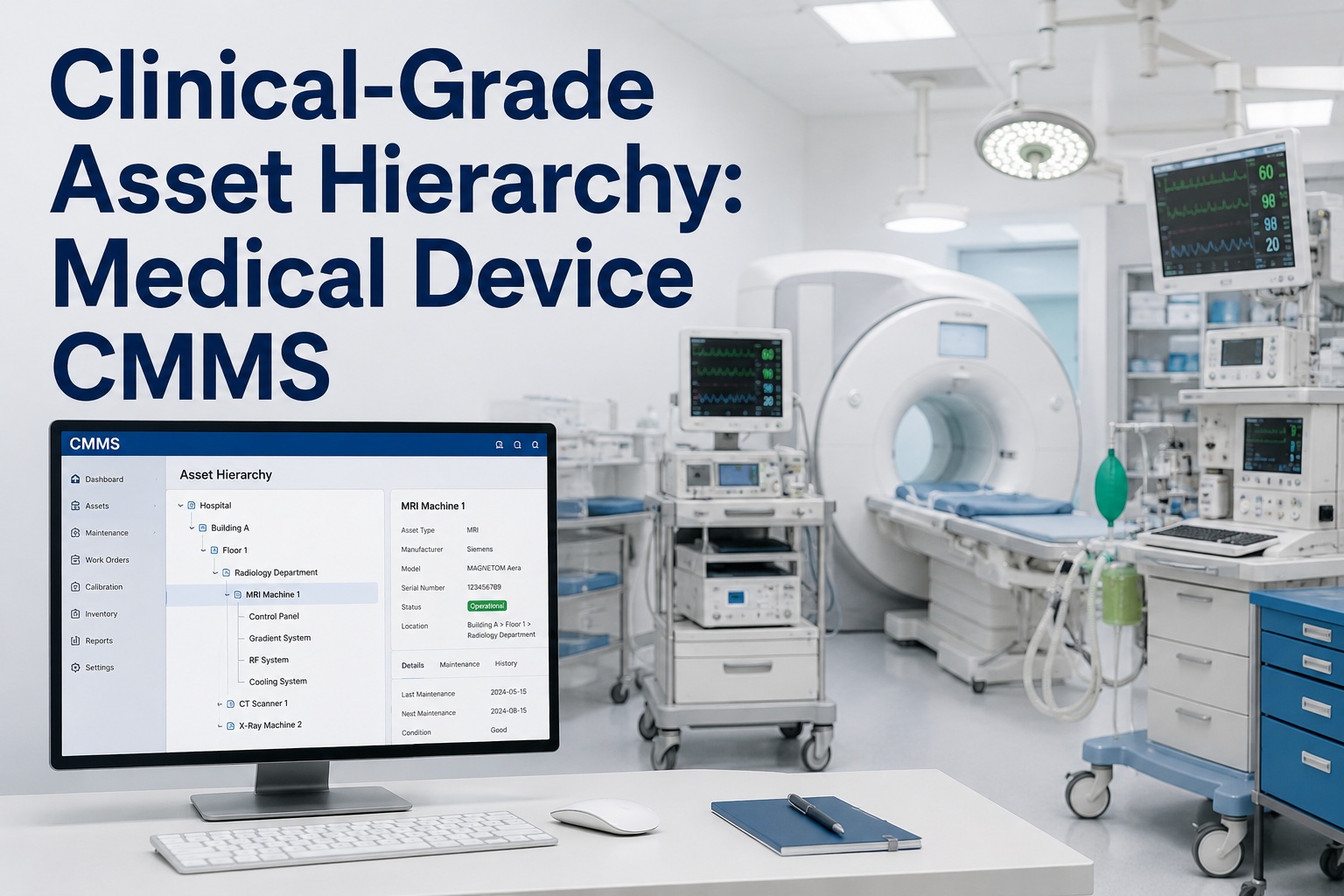
Serial-Level Asset Registry
OxMaint maintains a live, centralized EAM database of every medical device by make, model, lot, and serial number. FDA recall tracking matches instantly, cutting device identification time by up to 90%.
Automated Recall Work Orders
When a recall is triggered, OxMaint auto-generates and routes priority work orders to the right technicians. Eliminate paper trails and reduce recall dispatch time from hours to seconds.
Defensible Audit Histories
Every action is time-stamped and logged with digital signatures. Generate a complete, Joint Commission-ready recall compliance report in one click, proving zero missed devices.
Predictive Maintenance Analytics
Beyond recalls, OxMaint AI analyzes asset performance and maintenance history to predict future equipment failures, helping you proactively replace high-risk devices before they fail or are recalled.
Medical device recall management & CMMS tracking FAQ
How does a CMMS handle FDA recall tracking for medical devices?
A CMMS handles FDA recall tracking by maintaining a live registry of all medical equipment by serial number and manufacturer. When a recall notice is issued, administrators input the affected model or serial range into the CMMS, which instantly scans the inventory, identifies matching devices, and generates removal or remediation work orders for technicians to execute and document.
What is the difference between a Class I and Class II medical device recall?
A Class I recall involves a reasonable probability that using the device will cause serious adverse health consequences or death, requiring immediate action. A Class II recall means the device may cause temporary or medically reversible adverse health consequences. Both require strict tracking and documentation, but Class I recalls demand the fastest CMMS-driven isolation and response.
Can OxMaint identify recalled devices by serial number across multiple hospitals?
Yes. OxMaint provides a centralized Enterprise Asset Management (EAM) dashboard that tracks medical devices by serial number across all facilities in your network. You can run a single recall query and instantly see exactly which campus, building, and department holds the affected equipment. To see this multi-site capability in action, Book a Demo.
How long should healthcare organizations keep medical device recall records?
Healthcare organizations should generally keep medical device recall records for the life of the device plus a minimum of 2 to 5 years, depending on FDA guidelines and Joint Commission standards. A CMMS stores these records permanently in a secure, searchable cloud database, ensuring they are always audit-ready.
Is a CMMS required for Joint Commission compliance in healthcare?
While the Joint Commission does not explicitly mandate a CMMS, it does require strict, documented equipment management plans, risk assessments, and recall responses. A healthcare recall tracking CMMS is the most reliable way to meet these EC.02.04.01 standards, providing instant proof that recalled medical devices were identified, removed, and remediated.
Secure your medical device inventory today.
Deploy OxMaint to automate your recall response, track every asset by serial number, and achieve 100% audit readiness across your healthcare network.
Free 14-day trial · No credit card