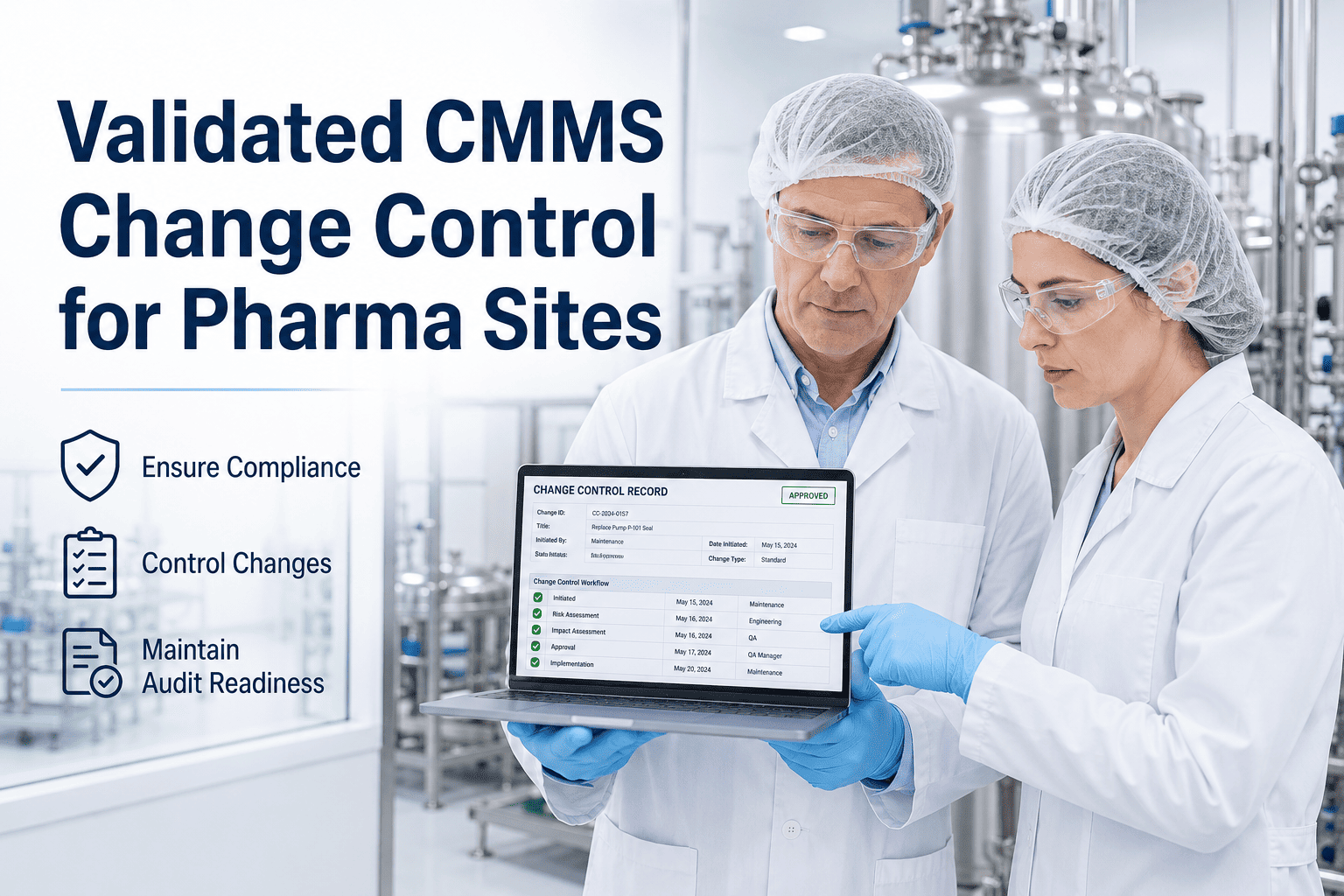
A batch can pass every quality test and still sit in QA limbo for days, because the equipment record that proves it was made correctly lives in a paper logbook, a separate MES, and someone's memory of a maintenance call from three weeks ago. Equipment-linked batch readiness tracking connects calibration certificates, PM history, and deviation records to the specific batch they affect, so a QA reviewer can verify equipment readiness in minutes instead of reconstructing it from four different systems. Under 21 CFR 211.192, the quality unit must review and approve every batch production record before release — and equipment documentation gaps are one of the most common reasons that review stalls. Here is how downtime actually delays release and how a connected CMMS closes the gap.
The Batch Was Fine. The Equipment Record Wasn't Ready.
A growing share of batch release delays trace back not to a quality failure, but to scattered, hard-to-verify equipment maintenance and calibration documentation across disconnected systems.
The Path From Equipment Gap to Release Delay
Each step adds days, and most of them are preventable with a connected record.
Equipment Event Occurs
A press, filling pump, or coating pan has an unplanned stop, a calibration lapse, or a deviation during the run.
Record Lives Elsewhere
The maintenance log sits in a separate paper system, MES, or logbook that the QA reviewer has to track down manually.
Query Raised
Each missing signature, unclear timestamp, or unverified calibration certificate raises a query that pauses the review.
Release Held
The batch sits in inventory, tying up working capital and delaying shipment until every query closes.
See Equipment-Linked Batch Records on a Live Demo
Walk through how OxMaint ties calibration certificates, PM history, and deviation records directly to the batch they affect, ready for QA review the moment production ends.
What a QA Reviewer Actually Has to Pull Together
Before a single unit ships, all of the following has to be located, verified, and cross-checked.
| Record Type | Where It Usually Lives | Risk If Disconnected |
|---|---|---|
| Equipment calibration certificates | Separate calibration system or binder | Manual lookup delays review by hours |
| PM and maintenance logs | CMMS, paper logbook, or spreadsheet | Missing signatures trigger formal queries |
| Deviation investigation records | QMS, separate from MES | Open deviations block release entirely |
| In-process equipment readings | Press control system or LIMS | No retroactive link to quality results |
The problem usually isn't that the data doesn't exist — it's that the data doesn't know how to find itself. When equipment readiness data lives across a MES, a calibration system, and a paper logbook that all speak their own language, batch record review becomes an act of manual archaeology, and every gap in that record raises a query that adds time before release.
Frequently Asked Questions
Give QA an Equipment Record That's Ready Before They Ask
Link every calibration, PM, and deviation record to the batch it touches, so release reviews stop waiting on equipment paperwork.