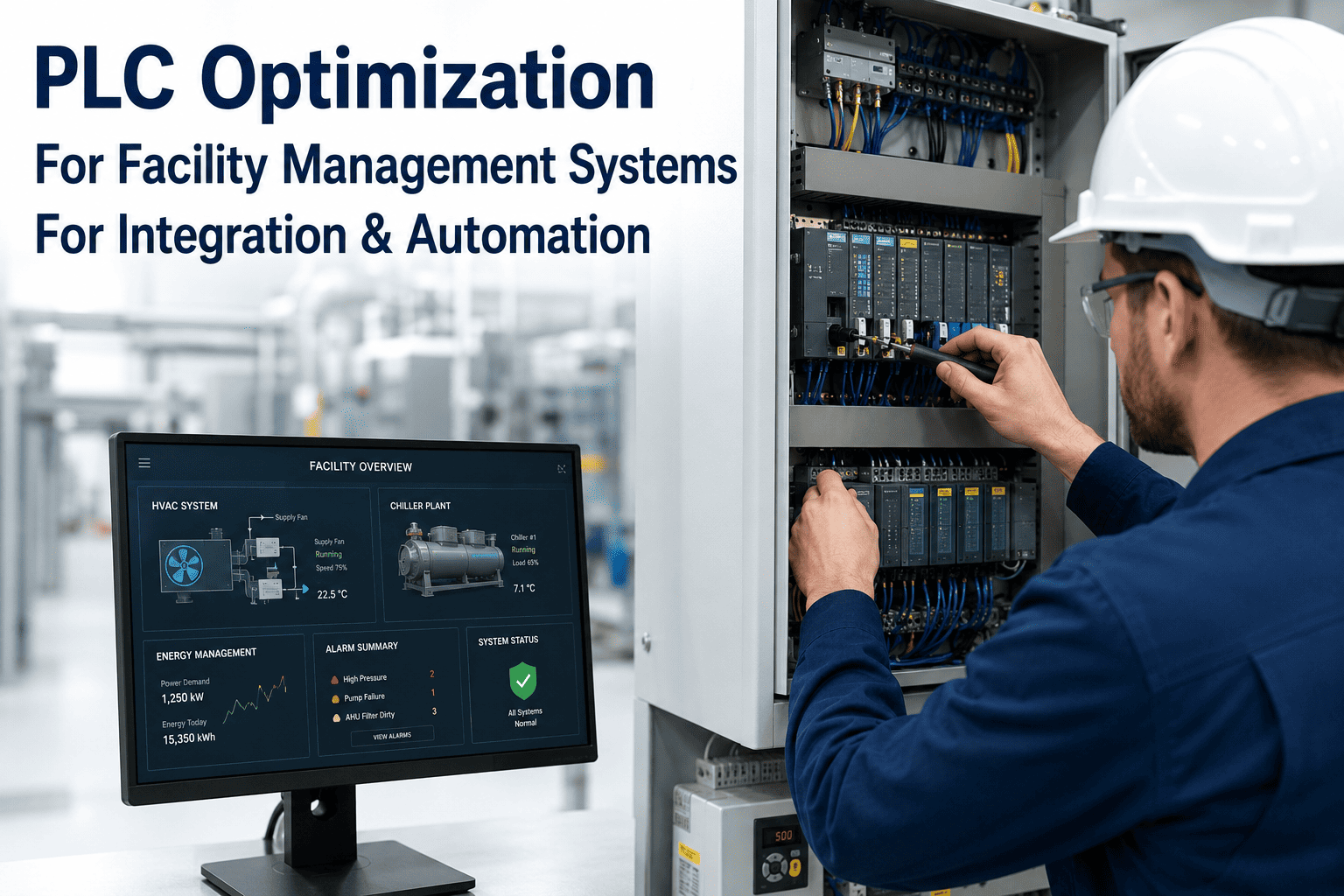
FM system integration is the process of connecting disparate facility management software tools—like CMMS, BMS, IoT sensors, and ERP systems—into a unified, data-sharing ecosystem using a deliberate facility API strategy. When point-to-point connections break every time a vendor updates a protocol, maintenance and reliability teams lose hours chasing data silos instead of preventing downtime. A modern FM integration API approach replaces brittle custom code with managed endpoints, webhooks, and event-driven data flows that adapt as your tech stack grows. OxMaint is built on an open API architecture that natively connects your maintenance operations to the broader facility stack, ensuring work orders, asset histories, and sensor alerts flow automatically. Explore how a connected FM architecture eliminates integration rework, or start your Start Free Trial to experience seamless data sync today.
FACILITY API STRATEGY
Stop Rebuilding Broken Point-to-Point Integrations
Every time a vendor updates an API or changes a data schema, your point-to-point connections fail—trapping critical maintenance data in silos. An API-first facility integration architecture ensures your FM tech stack stays connected, resilient, and scalable without constant developer rework.
FACILITY INTEGRATION ARCHITECTURE
Why Point-to-Point FM System Integration Fails at Scale
Connecting your BMS directly to your CMMS, then hardcoding a link to your ERP, creates a brittle "spaghetti" architecture. A 2023 Gartner study found that enterprises manage an average of 14 different facility software tools. Relying on point-to-point FM data integration means a single vendor API update can sever critical data flows, leaving maintenance teams blind to asset conditions and work order statuses.
Point-to-Point Spaghetti
- Custom middleware breaks when vendors update API versions
- Updating 5 systems requires maintaining up to 20 unique data connectors
- Maintenance teams wait days for IT to fix broken data syncs
- No central logging, making data gaps impossible to trace
API-First Connected FM Stack
- Standardized REST and webhook endpoints absorb version changes automatically
- A central integration hub routes data to all systems from one source of truth
- Maintenance data syncs in real-time with zero IT intervention required
- Full audit trails and event logging for every data payload transmitted
Consider a 180-asset manufacturing plant spending $42,000 annually on IT consultants to maintain custom BMS-to-CMMS data bridges. When the BMS provider updated their authentication protocol, the bridge failed for 9 days. During that window, 14 critical temperature alerts never generated work orders, resulting in a $28,000 HVAC motor failure. An API-driven facility system integration strategy eliminates this exposure by decoupling dependencies and using standardized data payloads that survive vendor updates.
FM TECH INTEGRION LAYERS
The 4 Layers of a Successful Facility Integration Architecture
Building an FM connected stack requires more than just plugging in APIs. Enterprise-scale facility management integration relies on a four-layer architecture that standardizes how data is ingested, transformed, distributed, and consumed across the organization.
Ingestion & Connectivity
Secure REST APIs, MQTT brokers, and webhooks pull telemetry from IoT sensors, BMS platforms, and mobile devices. Standardized authentication (OAuth 2.0) ensures every device and application connects safely without exposing internal networks.
Data Normalization & Mapping
Raw data from different systems uses different naming conventions and units. This layer transforms incoming data into a common schema—mapping a BMS "AHU-1 Fault" to a CMMS asset ID and generating a standardized work order payload.
Workflow & Event Routing
Business logic evaluates normalized data to trigger actions. If a vibration sensor exceeds ISO 10816 thresholds, the integration engine automatically generates a predictive maintenance work order and routes it to the correct technician.
Analytics & Exposure
Clean, integrated data feeds into dashboards, OEE calculations, and compliance reports. Open APIs expose this unified data to BI tools, ensuring stakeholders see a single source of truth across the entire FM platform integration.
FM API INTEGRATION CAPABILITIES
How OxMaint Powers Your Facility API Connectivity
OxMaint functions as the central nervous system of your FM tech integration. Rather than forcing you into a closed ecosystem, our AI-powered CMMS and EAM platform is built API-first, ensuring your work orders, asset tracking, and maintenance analytics seamlessly connect with your existing building management and enterprise systems.
Open REST & Webhook Architecture
Bi-directional APIs push and pull data between OxMaint and your BMS, ERP, or procurement software. Automatically generate work orders from building alerts and sync completed maintenance back to your enterprise resource planner.
Outcome: Eliminate manual data entry and cut work order creation lag by 90%.
Automated Asset Data Sync
Map asset hierarchies across platforms. When a new pump is commissioned in your ERP, OxMaint automatically provisions the asset record, attaches OEM manuals, and queues the preventive maintenance schedule.
Outcome: Maintain 100% asset visibility without duplicate record management.
Predictive IoT Ingestion
Connect vibration, temperature, and pressure sensors directly to OxMaint. Our AI engine analyzes the telemetry streams against historical baselines to predict failures before they trigger a catastrophic shutdown.
Outcome: Reduce unplanned downtime by 30–50% and extend asset life.
Real-Time Inventory Linking
Integrate spare-parts inventory with procurement systems. When a technician consumes a critical spare part, OxMaint updates the ERP, checks reorder thresholds, and auto-generates a purchase requisition.
Outcome: Prevent stockouts and reduce emergency procurement spend by 25%.
FM SYSTEMS INTEGRATION STRATEGY
Building a Facility Integration API: Step-by-Step Timeline
Transitioning from fragmented tools to an FM connected stack requires a phased approach. Rushing API integration often leads to data mapping errors and security gaps. Follow this proven 4-month timeline to deploy a resilient facility system integration strategy.
API Audit & Data Mapping
Catalog every system in your FM stack (BMS, CMMS, ERP, IoT). Document available APIs, authentication methods, and data schemas. Map critical data fields—like asset IDs, location codes, and work order statuses—across all platforms to identify inconsistencies before writing integration logic.
Hub Deployment & Authentication
Deploy your central integration platform (or configure OxMaint as the hub). Establish OAuth 2.0 authentication and secure webhook endpoints. Begin ingesting read-only data from your BMS and ERP to validate data payloads without impacting live operations.
Bi-Directional Sync & Workflows
Activate bi-directional data flows. Configure event triggers so that a BMS alarm automatically creates an OxMaint work order, and a completed work order updates the ERP asset record. Run parallel testing to ensure zero data loss during transmission.
Analytics Activation & Optimization
Route the unified data stream into maintenance analytics dashboards. Monitor API performance, latency, and error rates. Optimize payload sizes and refine predictive maintenance triggers based on the first 30 days of continuous data flow.
FM DATA INTEGRATION ROI
The Cost of Disconnected Facility Software
When facility systems don't communicate, maintenance teams absorb the hidden costs. Manual data entry, missed preventive maintenance triggers, and blind spots in asset health drain budgets and accelerate equipment failure.
| Integration Scenario | Manual / Disconnected Cost | API-Integrated Cost | Annual Savings |
|---|---|---|---|
| Work Order Data Entry (Technician Hours) | $24,000/yr (2 hrs/day at $60/hr) | $2,400/yr (API auto-generation) | $21,600 |
| Missed PMs from BMS Alert Failures | $38,000/yr (reactive repairs & downtime) | $4,500/yr (scheduled maintenance) | $33,500 |
| Emergency Procurement (Stockouts) | $15,000/yr (rush shipping premiums) | $3,000/yr (auto-reorder triggers) | $12,000 |
| IT Maintenance of Custom Integrations | $42,000/yr (consultant fees) | $0/yr (managed API platform) | $42,000 |
| Total Estimated Annual Impact | $119,000 | $9,900 | $109,100 |
CONNECT YOUR FM STACK
See How OxMaint Integrates With Your Existing Systems
Stop fighting broken data silos. Book a 30-minute demo and see how OxMaint's API-first platform connects your BMS, ERP, and IoT sensors into a single, automated maintenance engine.
FM INTEGRATION ARCHITECTURE FAQ
Facility API Strategy & Integration Questions
What is the difference between FM system integration and a facility API strategy?
FM system integration is the broad goal of connecting your facility management software so data flows between tools. A facility API strategy is the specific technical framework—using REST endpoints, webhooks, and standardized data payloads—to achieve that integration reliably. The strategy ensures connections survive software updates and scale as you add new IoT devices or enterprise systems.
How long does it take to implement an FM integration API?
A typical enterprise facility system integration strategy takes 3 to 4 months. The first month is spent auditing APIs and mapping data fields, followed by hub deployment, bi-directional sync configuration, and analytics optimization. Platforms like OxMaint accelerate this timeline by providing pre-built API connectors and standardized data models out of the box.
Can OxMaint integrate with our existing BMS and ERP software?
Yes. OxMaint is built on an open API architecture designed for seamless facility software integration. Our platform supports REST APIs and webhooks to connect with major Building Management Systems, ERPs, and procurement tools. To discuss your specific tech stack, Book a Demo with our integration team.
How does API integration improve maintenance ROI?
By automating data flows between your BMS, CMMS, and ERP, API integration eliminates manual data entry, prevents missed preventive maintenance triggers, and reduces IT maintenance costs for custom code. Facilities typically see a 30–50% reduction in unplanned downtime and save over $100,000 annually in combined labor, procurement, and repair costs.
What happens if a vendor updates their API version?
An API-first facility integration architecture is designed to absorb vendor updates without breaking data flows. By using a central integration hub with standardized data normalization, version changes in the source system are isolated. The hub translates the new payload format before pushing it to downstream systems, ensuring your maintenance operations continue without interruption.
START YOUR INTEGRATION JOURNEY
Transform Fragmented Tools Into a Connected FM Operating Platform
Join the maintenance teams using OxMaint to eliminate data silos, automate work order generation, and predict failures before they happen. Your connected facility stack starts here.
Free 14-day trial · No credit card required