FM reactive work management is the discipline of controlling unplanned maintenance demand through prioritized response, clear SLA thresholds, and automated escalation workflows. In facility management, reactive work will never disappear entirely—equipment fails, tenants report issues, and weather causes unexpected damage—but it can absolutely be contained. The difference between a responsive FM team and one drowning in firefighting is consistency: facility reactive maintenance SLA frameworks that define response times by priority, measure them automatically, and escalate breaches before they happen. This guide breaks down how to design, mobilize, and enforce reactive work response time SLAs using a modern CMMS like Start Free Trial of OxMaint, so your team stops firefighting and starts performing.
Is your reactive workload consuming the team?
When reactive work response time SLAs are undefined or unmeasured, emergency calls dominate the day, planned maintenance gets deferred, and asset reliability collapses. OxMaint brings structure to the chaos—prioritizing, tracking, and auto-escalating every reactive call to keep response times inside SLA.
How to design facility reactive maintenance SLAs that actually work
An FM response time SLA is only useful if it reflects operational reality. Industry benchmark data from IFMA and RICS shows that teams using priority-tiered SLA frameworks achieve 40–60% better response-time compliance than those using a single flat target. The key is segmenting reactive demand by urgency and impact, then assigning each tier a clock that starts the moment a request is logged.
| Priority | Typical Scenario | Response Target | Resolution Target | Escalation Trigger |
|---|---|---|---|---|
| P1 — Critical | Life-safety, total outage, flooding, fire system down | 15 min | 2 hours | Auto-escalate at 10 min if unacknowledged |
| P2 — High | HVAC failure in occupied zone, elevator trapped passenger | 30 min | 4 hours | Escalate at 20 min to shift supervisor |
| P3 — Medium | Lighting out in common area, minor leak, door closer failed | 2 hours | 1 business day | Escalate at 1.5 hours if unassigned |
| P4 — Low | Cosmetic damage, routine repair request, supply restock | 1 business day | 5 business days | Weekly review of aging queue |
A 280-bed hospital facility replaced its single 4-hour reactive response target with a four-tier SLA matrix and cut average priority-1 response from 52 minutes to 18 minutes within 90 days—while reducing overtime spend by $3,800/month.
FM response time SLA: what to measure and when to escalate
You cannot manage what you do not measure. The facility reactive work SLA clock must start at request intake—not at technician dispatch—and it must track three distinct phases: acknowledgment, on-site arrival, and resolution. Without automated timestamp capture at each stage, SLA reporting becomes guesswork and compliance audits fail.
The escalation workflow that prevents SLA breaches
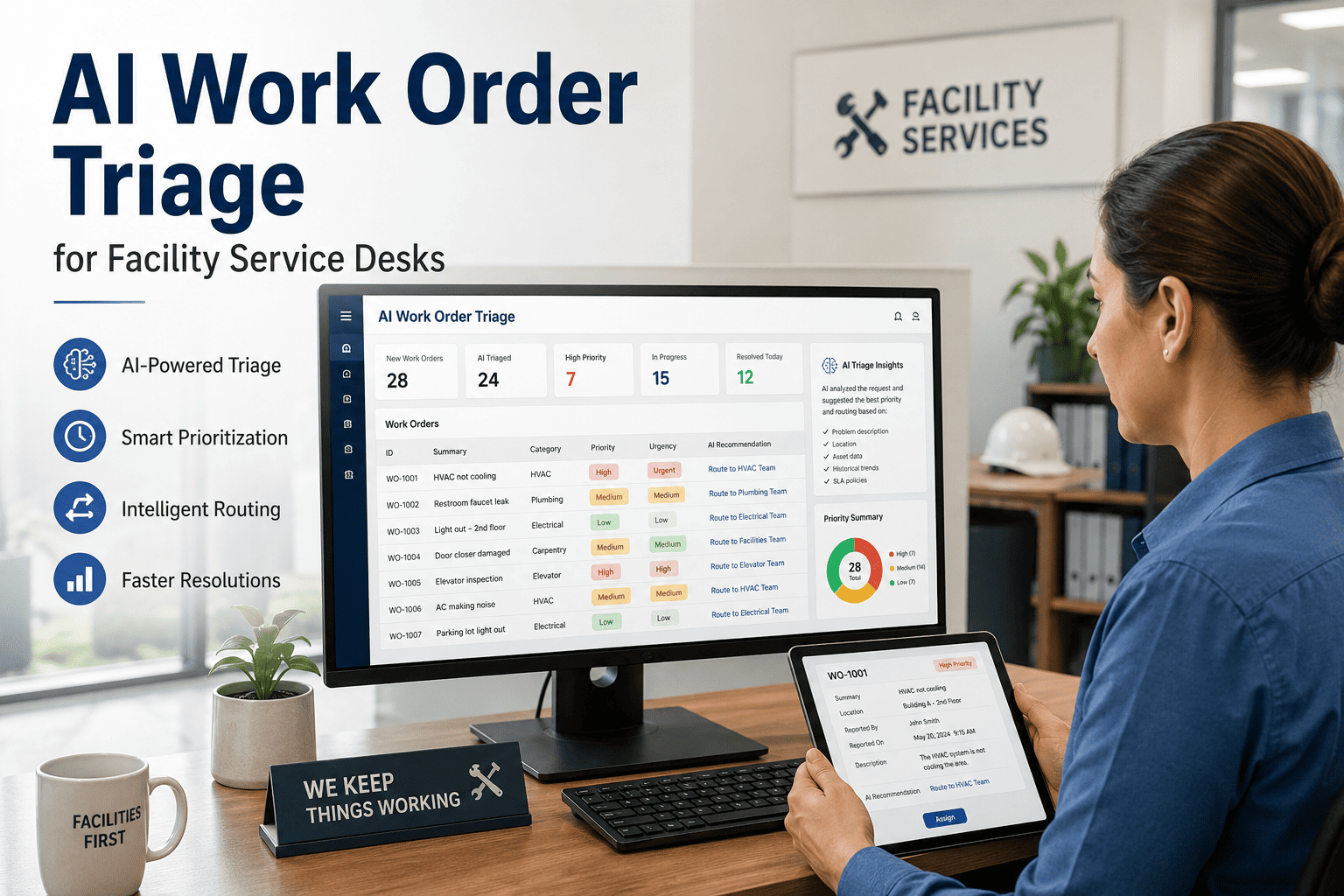
Reactive request enters OxMaint via tenant portal, email, phone, or IoT sensor alert. AI suggests a priority tier based on asset criticality, location, and request category.
System assigns based on skill matrix, proximity, and live workload. Technician receives push notification with asset history, safety procedures, and required parts.
At 75% of SLA window, OxMaint sends a warning to the assigned technician. At 90%, it notifies the shift supervisor. At 100%, the breach auto-escalates to the FM manager with full context.
Technician closes the work order with photos, parts consumed, and root-cause code. Recurring failures on the same asset trigger a predictive maintenance review automatically.
Shrinking the reactive FM workload: operational discipline that sticks
The most effective way to manage reactive work response time is to reduce the volume of reactive demand in the first place. Teams whose reactive workload exceeds 35% of total maintenance hours are operating in a failure-driven model—every deferred PM becomes a future emergency. The target ratio is 70% planned to 30% reactive, which ISO 55000-aligned organizations consistently achieve.
Triage at intake, not on-site
Train requestors with guided submission forms that capture asset ID, location, and severity. OxMaint's AI auto-routes and prioritizes so the right technician arrives with the right parts the first time—eliminating 20–30% of repeat visits.
Convert recurring reactive into PM
When the same asset generates three reactive tickets in 90 days, OxMaint flags it for a preventive maintenance review. This single workflow typically converts 12–15% of chronic reactive demand into scheduled work.
Stock critical spares by failure mode
Reactive response time is often gated by parts availability, not labor. OxMaint links spare-parts min/max levels to asset criticality and failure history, ensuring P1-critical spares are always in stock without over-inventorying.
How OxMaint keeps facility reactive service inside SLA
OxMaint was built for maintenance and reliability teams who need to move from reactive firefighting to controlled, measurable response. The platform combines AI-powered work-order automation, real-time SLA tracking, predictive maintenance, and spare-parts inventory into a single system—so every reactive call is logged, prioritized, dispatched, escalated, and resolved within target.
Real-time SLA clock & auto-escalation
Every reactive work order carries a live countdown visible to technicians, supervisors, and managers. Automated escalation triggers fire at 75%, 90%, and 100% of the SLA window—eliminating manual monitoring and cutting breach rates by up to 60%.
AI-powered triage & dispatch
OxMaint's AI engine analyzes asset criticality, technician skill matrix, proximity, and live workload to auto-assign the right person in seconds—reducing mean response time by 30–50% compared to manual dispatch.
Predictive failure prevention
By analyzing work-order history, sensor data, and asset failure patterns, OxMaint predicts which assets are heading toward reactive failure and auto-generates preventive work orders—reducing unplanned downtime 30–50%.
SLA dashboards & audit reporting
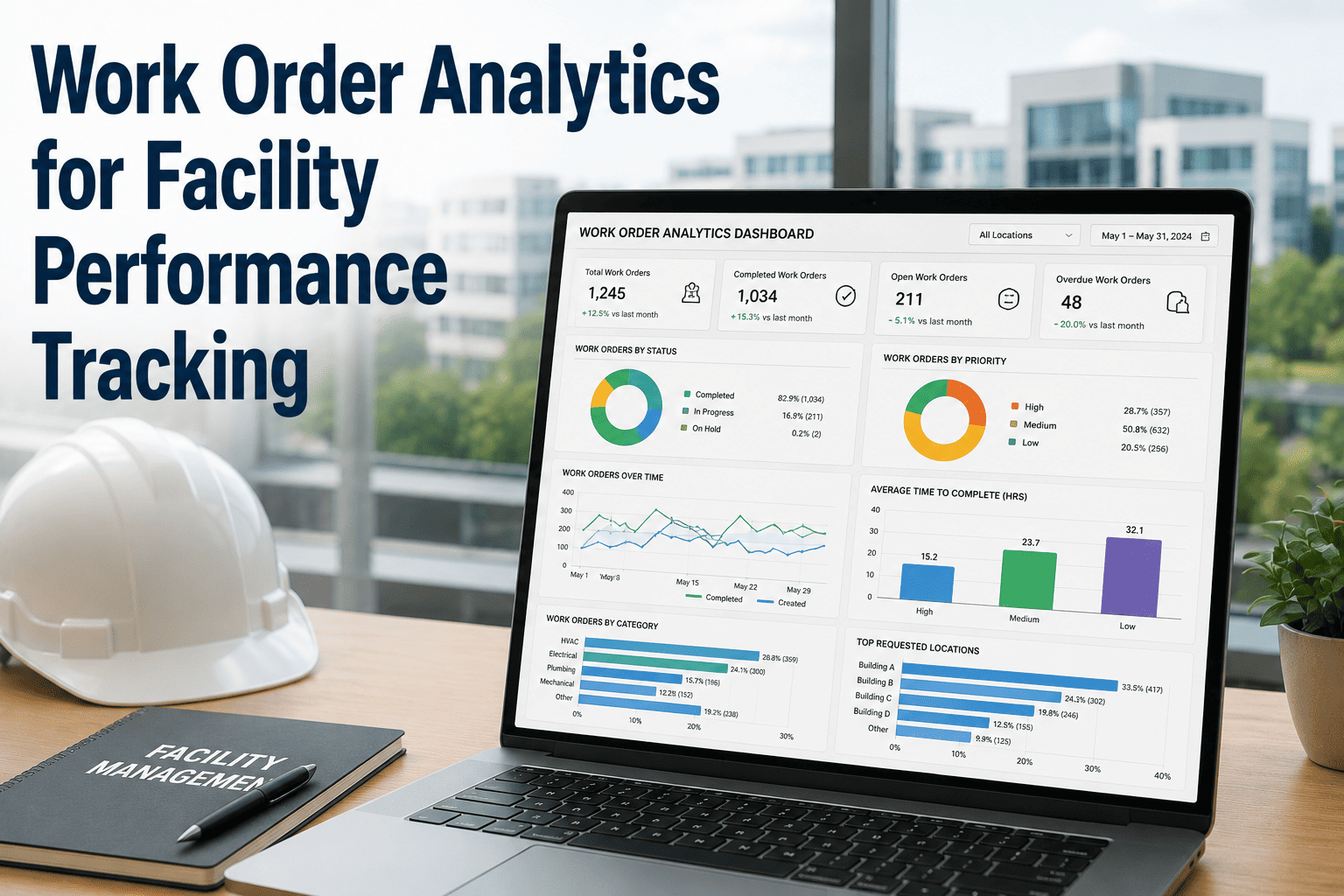
Live dashboards show SLA compliance by priority, site, technician, and asset class. One-click audit reports prove compliance to clients, regulators, and internal stakeholders—turning SLA data into a competitive advantage.
"We went from missing SLA targets on 40% of priority-1 calls to hitting 95% compliance in the first quarter. OxMaint's auto-escalation alone changed how our team operates—we're proactive now, not reactive."
See OxMaint on your assets — book a 30-min demo
Watch how AI-powered triage, live SLA clocks, and auto-escalation transform your reactive maintenance response from day one.
FM reactive work management & SLA FAQs
What is a facility reactive maintenance SLA?
A facility reactive maintenance SLA is a formal commitment defining the maximum allowable response and resolution time for unplanned maintenance requests, segmented by priority. For example, a P1 life-safety issue may require a 15-minute response and 2-hour resolution, while a P4 cosmetic issue allows 1 business day. SLAs are typically contractually binding in outsourced FM agreements and operationally critical in in-house teams.
How is FM reactive work response time measured?
Response time is measured from the moment a request is logged in the system to the moment a technician acknowledges and begins work. A more comprehensive metric—mean time to respond (MTTR)—also tracks on-site arrival and full resolution. OxMaint captures all three timestamps automatically, eliminating manual logging errors and providing audit-grade SLA reporting. Start Free Trial to see automated SLA tracking in action.
What is a good reactive-to-planned maintenance ratio?
World-class facility maintenance organizations target a 70% planned to 30% reactive ratio, aligned with ISO 55000 asset management principles. When reactive work exceeds 35% of total maintenance hours, costs rise non-linearly because emergency repairs cost roughly 3.5x more than the same task performed preventively, and planned maintenance gets deferred—creating a downward spiral of increasing failures.
How do you reduce reactive maintenance workload in FM?
The most effective strategy is implementing a CMMS that auto-converts recurring failures into preventive maintenance schedules. When the same asset generates three reactive tickets in 90 days, OxMaint flags it for PM review—typically converting 12–15% of chronic reactive demand into scheduled work. Pair this with IoT sensor integration for predictive maintenance and guided intake forms for better triage to achieve sustained reduction.
How does OxMaint automate SLA escalation?
OxMaint attaches a live SLA countdown clock to every reactive work order based on its priority tier. At 75% of the SLA window, the system warns the assigned technician; at 90%, it notifies the shift supervisor; at 100%, the breach auto-escalates to the FM manager with full context—asset history, request details, and time elapsed. This eliminates manual monitoring and typically cuts SLA breach rates by 50–60%. Book a Demo to see the escalation workflow live.
Stop firefighting. Start performing.
Join the FM teams who cut response times by 50%, hit 92%+ SLA compliance, and shifted their workload from reactive chaos to planned control with OxMaint.
Free 14-day trial · No credit card