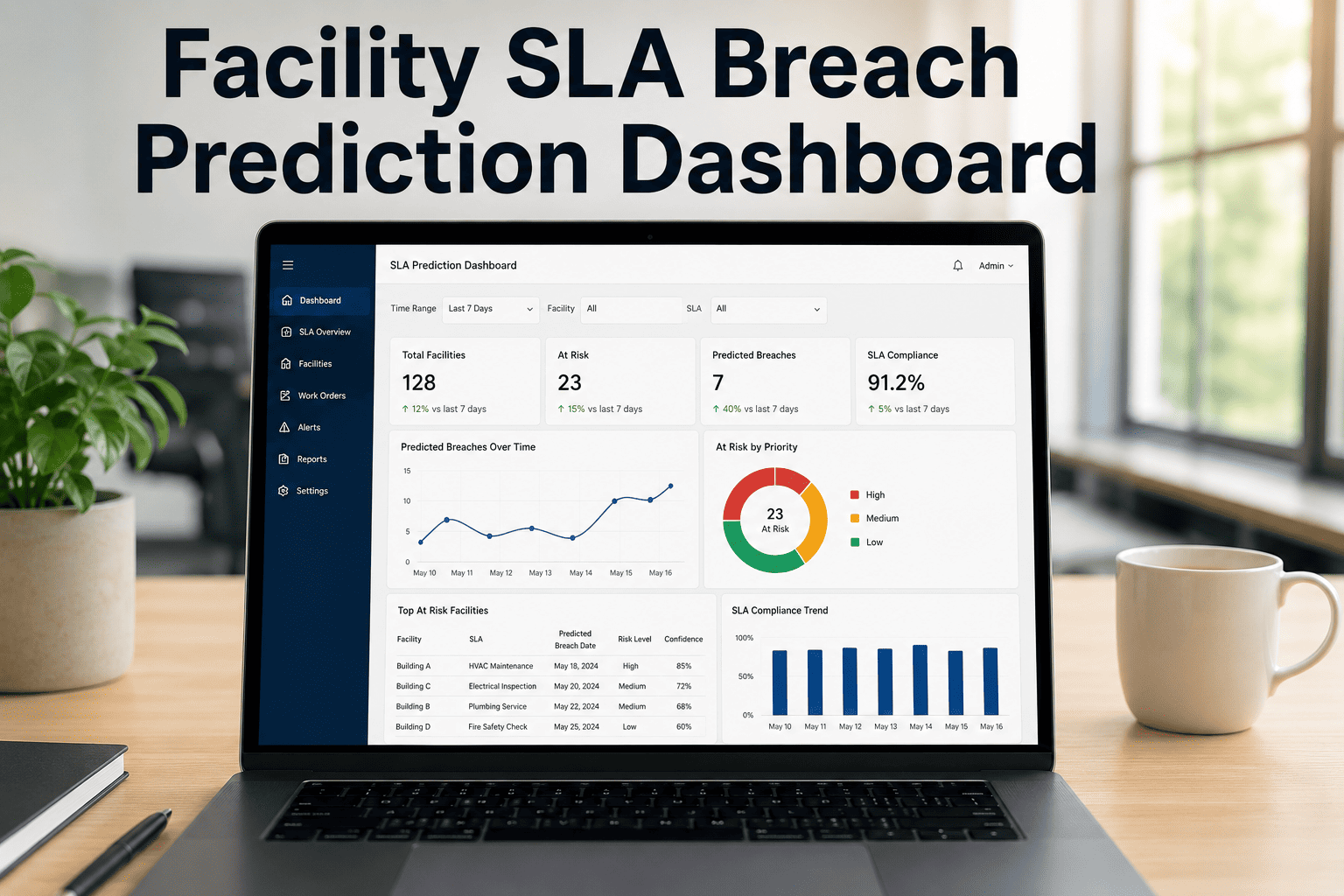
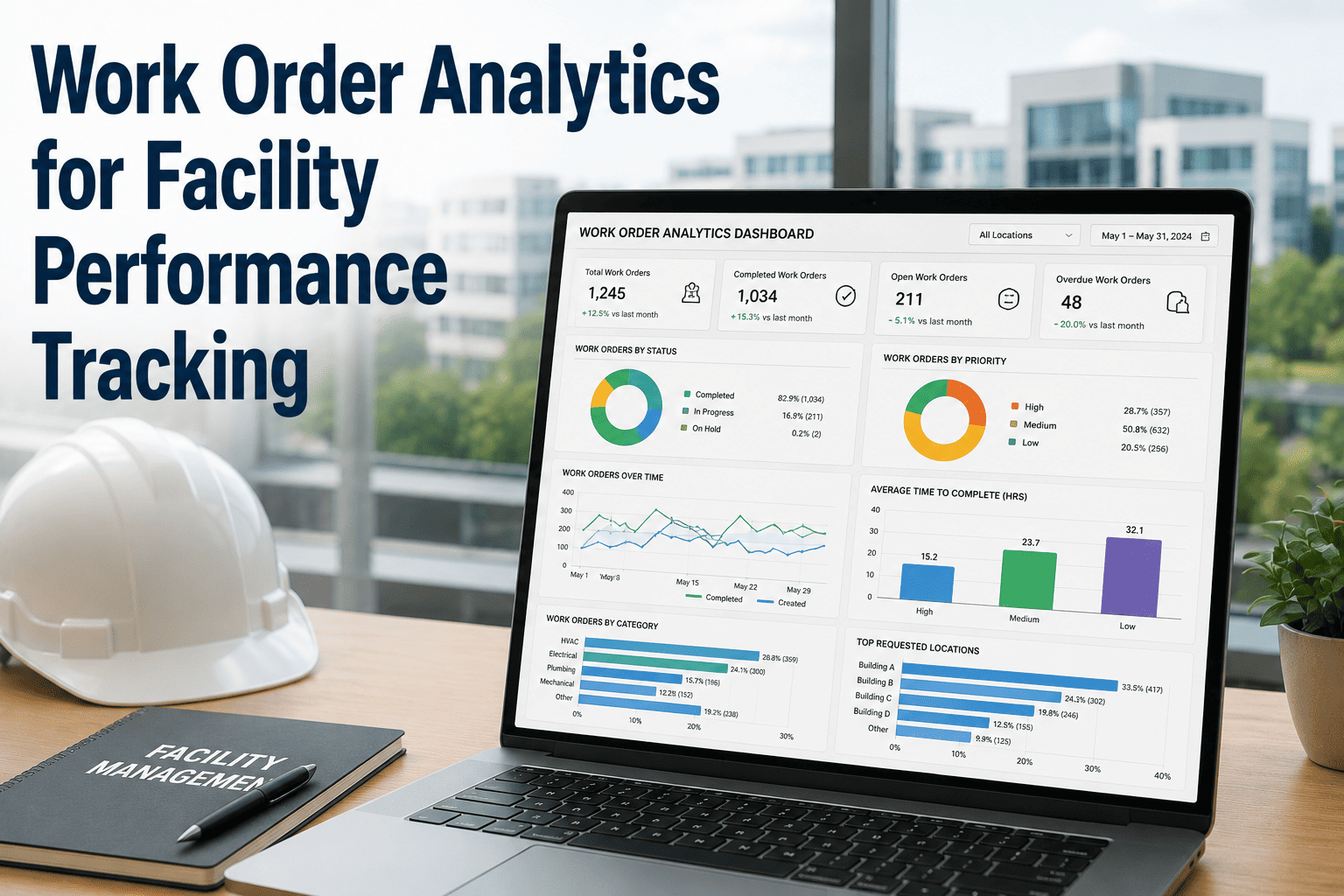
Most facility teams find out an SLA was breached the same way the tenant did — after the deadline passed. Studies on service tickets show that a large share of breaches show visible warning signs within the first couple of hours, but nobody is watching the clock until it's too late to act. A prediction dashboard flips that timing: instead of reporting breaches after they happen, it scores every open work order against technician capacity, parts availability, and asset criticality, and flags the ones drifting toward a miss while there's still time to reroute. Book a 30-minute walkthrough to see breach risk scoring on your own work order data, or start a free trial today.
Analytics & Reporting · Work Order Automation · OxMaint
Stop Discovering SLA Breaches After They've Already Happened
OxMaint's prediction engine watches technician load, parts delays, and asset criticality on every open work order — and tells you which ones are about to breach while there's still time to act.
The Pattern Behind Every Missed SLA
Breaches rarely come out of nowhere. They follow the same handful of warning signs, repeated across nearly every facility team that relies on spreadsheets instead of live tracking.
01
Invisible Clock Time
By the time a ticket is read, classified, and assigned, a meaningful chunk of the SLA window is already gone — and nobody tracked it.
02
Overloaded Technicians
Work gets assigned based on who's available right now, not who can realistically finish within the deadline once travel and backlog are factored in.
03
Parts Delays Hidden Until Too Late
A work order stalls waiting on a part that was never flagged as a risk until the technician was already standing at the asset.
04
No Escalation Trigger
Without an alert at 70–80% of the SLA window consumed, supervisors only learn about a problem from an angry phone call.
What Breach Risk Scoring Looks Like in Practice
Every open work order gets a live risk score built from four factors, refreshed continuously as conditions change.
WO-4471 · Chiller Leak — Bldg C
91% breach risk
WO-4488 · Elevator Noise — Lobby
68% breach risk
WO-4502 · HVAC Discomfort — Fl 3
41% breach risk
WO-4519 · Light Fixture — Corridor
14% breach risk
Technician Capacity
Parts Lead Time
Asset Criticality
Request Volume Trend
See Your Own Breach Risk in One Walkthrough
OxMaint scores every open work order the moment it's created — no setup project, no manual configuration of scoring rules.
The Four Inputs Behind Every Risk Score
Manual Tracking vs Predictive Risk Scoring
The difference between finding out about a breach and preventing one.
| Capability |
Spreadsheet Tracking |
OxMaint Prediction Engine |
| When risk is visible |
After the deadline passes |
Hours before the deadline |
| Technician load factored in |
Manual guesswork |
Live capacity calculation |
| Parts delay awareness |
Discovered on-site |
Flagged before dispatch |
| Escalation trigger |
Tenant complaint |
Automatic at risk threshold |
| Evidence for SLA disputes |
Reconstructed manually |
Timestamped automatically |
Expert Review
Facility teams almost never miss SLAs because technicians are slow. They miss them at the handoffs — intake, classification, dispatch, and parts. A prediction model that watches those handoffs in real time catches the breach while there's still a window to reroute the work, instead of explaining it after the fact.
Facility Operations Analytics Consultant, Multi-Site Maintenance Programs
Frequently Asked Questions
How early does OxMaint flag a work order at risk of breaching?
Risk scores update continuously from the moment a work order opens, with escalation alerts typically firing well before the SLA deadline, giving supervisors time to reassign or expedite.
Book a demo to see the exact thresholds.
Do we need to manually configure the scoring rules?
No. The prediction engine uses your existing work order, technician, and parts data out of the box. Thresholds can be tuned later, but there is no lengthy setup project required to start scoring risk.
Can this help us prove SLA performance to clients or auditors?
Yes. Every response and resolution event is timestamped automatically, giving you defensible evidence for SLA reporting instead of reconstructing timelines after a dispute.
Start a free trial to see your audit trail.
Does this work across multiple buildings or sites?
Yes. The dashboard aggregates breach risk across your full portfolio while still letting supervisors drill into a single site, technician, or asset category when needed.
Catch the Breach Before the Tenant Calls Twice
Move your team from explaining missed deadlines to preventing them. See your own work order backlog scored for breach risk in a single walkthrough.