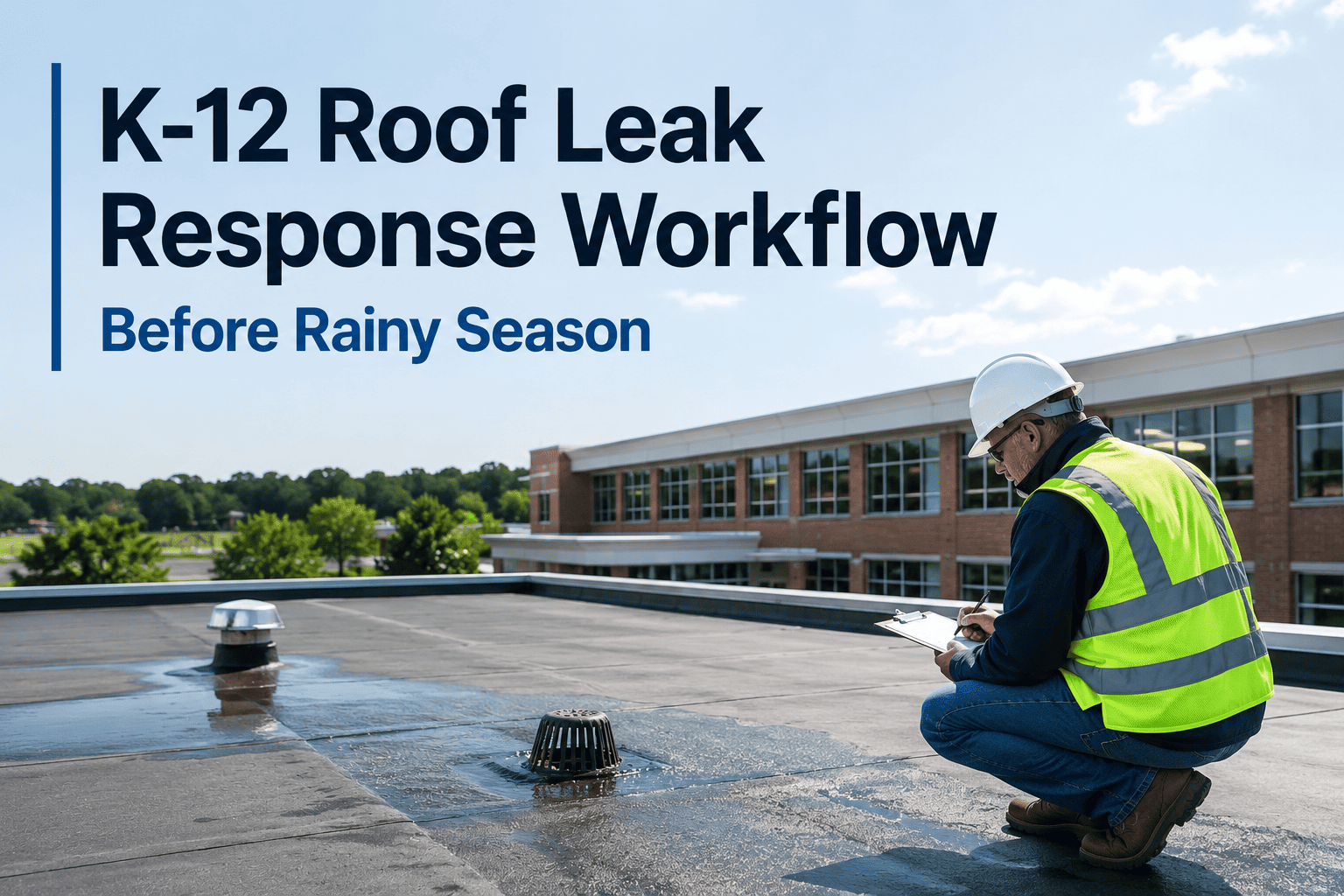
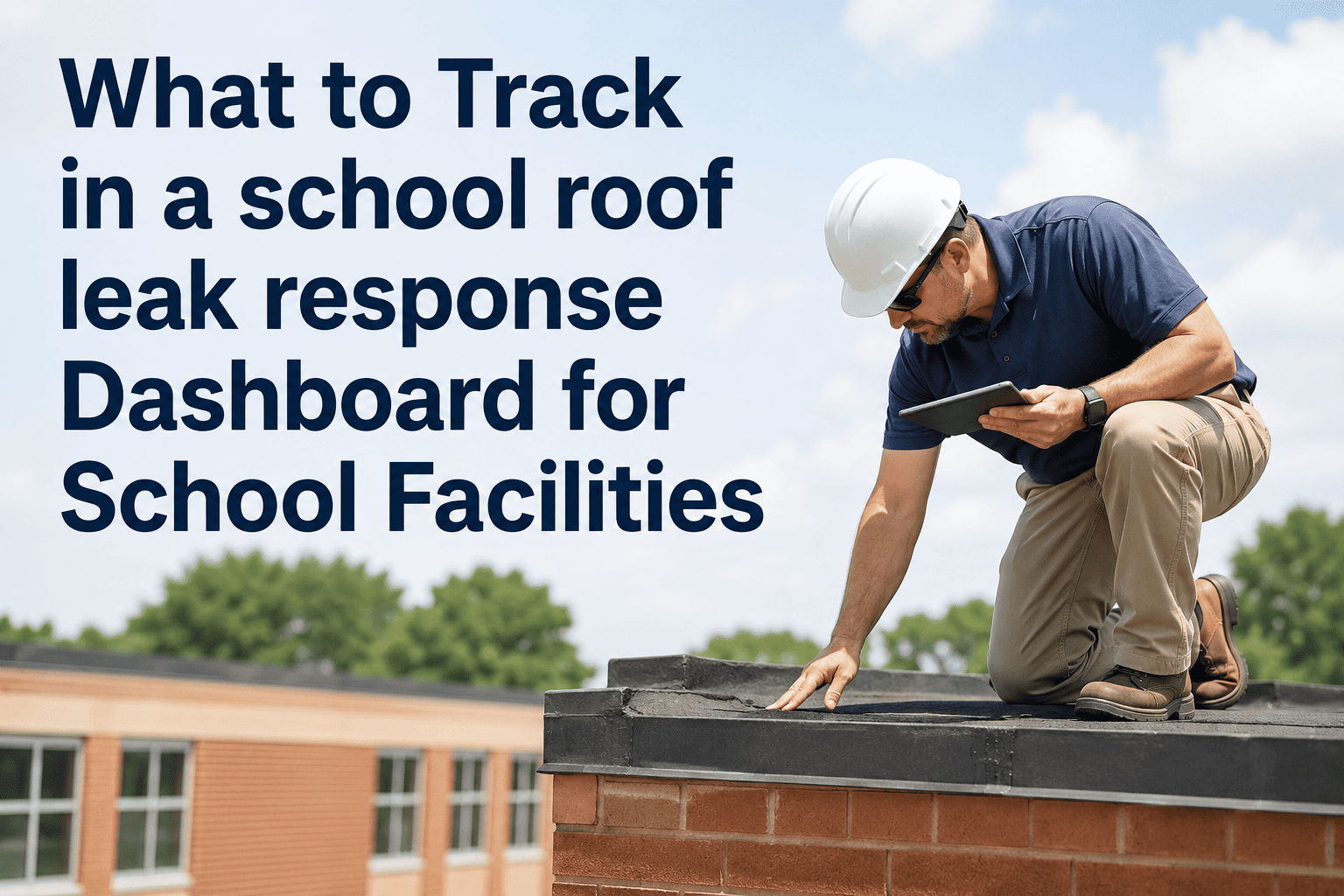
A single roof leak found in October instead of August does not stay a single leak for long. Water tracks sideways under membrane, drops through insulation, and shows up on a classroom ceiling weeks after it actually started — usually right as the first heavy rain of the season hits. Districts that wait for a teacher to call in a stained ceiling tile are already behind, because the moisture has been moving for days before anyone notices. A documented response workflow run before the rain starts changes that timeline entirely: every roof section gets inspected on a schedule, every defect gets logged with a photo, and every repair gets prioritized before the first storm rather than during it. Districts running OxMaint roof workflows report fewer emergency callouts during peak storm months and significantly lower classroom closure time. See how a pre-season roof workflow is built by visiting starting a free trial or by booking a 30-minute walkthrough.
K-12 Facilities / Pre-Storm Readiness
Get Ahead of Roof Leaks Before the First Storm Hits
A roof leak caught at the inspection stage costs hundreds of dollars to patch. The same leak, left undetected through one rainy season, costs tens of thousands in ceiling, insulation, and classroom remediation — plus the lost instructional days while the room is closed.
10x
Higher repair cost once a leak reaches the ceiling vs. caught at inspection
6 wks
Average classroom closure time after a major water intrusion event
3 yrs
How long an undetected membrane blister typically takes to become a visible leak
What Happens When a Leak Goes Undetected
Roof failures rarely happen all at once. They develop in stages, and each stage has a very different price tag attached to it. Understanding the timeline is the entire argument for inspecting before the season starts rather than reacting after it does.
1
Membrane Blister Forms
A small blister or seam separation develops, invisible from the ground and easy to miss without a scheduled walk. Repair cost at this stage: under $800.
2
Moisture Enters Insulation
Water begins migrating through insulation layers and ceiling board, weeks before any visible sign appears inside the building.
3
Ceiling Stain Appears
A damp patch finally shows up on a classroom ceiling — by now the moisture has typically been present for weeks or months.
4
Full Remediation Required
Mould treatment, carpet replacement, repainting, and air quality testing follow, alongside weeks of classroom closure during the busiest part of the term.
Build a Roof Response Workflow Before the Rain Starts
A pre-rainy-season workflow has four parts, and skipping any one of them is usually where the failures start. Each step below feeds directly into the next so nothing is left to memory.
01
Register Every Roof Section as an Asset
Name, area, membrane type, installation year, design life, and last inspection date for every roof section across every building — not a single combined "roof" record for the whole campus.
02
Run a Baseline Visual Inspection
Photograph every section against the common failure points: membrane seams, flashing, drains, penetrations, and ponding areas. Log condition scores against each one.
03
Flag and Prioritize Defects
Any defect found gets a priority level. Items that must be fixed before the next rain event get scheduled immediately, ahead of routine seasonal work.
04
Schedule the Post-Storm Recheck
Drains, flashing, and patched areas get rechecked within 24 hours of the first major storm of the season, since wind and debris can undo a repair fast.
Inspection Checklist by Roof Component
Every roof section breaks down into the same set of components, and each one fails in a different way. A workflow that checks all of them on a fixed schedule catches problems while they are still cheap to fix.
| Component | What Fails | Check Frequency | Priority If Found |
|---|
| Membrane Surface | Blisters, seam separation, surface erosion | Quarterly | High |
| Flashing | Corrosion, pinhole openings, cracked sealant | Annual + after storm | High |
| Roof Drains | Debris blockage, standing water | Within 24 hrs after storm | Urgent |
| Penetrations | Vent pipe seal failure, gasket wear | Quarterly | Medium |
| Insulation Layer | Wet insulation under membrane | Annual infrared scan | High |
| Gutters | Leaf and debris buildup | Spring / Fall | Medium |
Repair or Replace: Knowing Which Call to Make
Not every defect needs a new roof, and not every patch is the right answer either. A documented repair history makes this decision data-driven instead of a guess made under pressure during a storm.
Repair When
Defects are localized, the membrane is sound elsewhere, and the roof section has more than seven to eight years of useful life remaining.
Replace When
Condition score is poor, defects cover more than 15-20% of the membrane area, or cumulative repairs over five years exceed half the replacement cost.
Why Documentation Matters as Much as the Repair Itself
A repaired leak with no paper trail behind it is a weaker position for a district in three different situations: an insurance claim, a warranty dispute, and next year's budget conversation. The fix below builds documentation into the same workflow as the repair, so nothing has to be reconstructed later from memory.
A
Time-Stamped Photos at Every Stage
Defect found, defect repaired, and post-repair condition — three photos minimum per finding, attached directly to the roof section asset rather than a separate folder.
B
Insurance-Ready Claim Files
Insurers and warranty providers consistently ask for dated evidence and a maintenance history showing the roof was cared for, not neglected, before the damage occurred.
C
A Defensible Maintenance Record
Claims involving wear-and-tear exclusions are far easier to contest when a district can show a consistent inspection schedule rather than a single after-the-fact report.
D
Capital Planning Evidence
A multi-year repair history per roof section is the exact data a board needs to approve replacement budgets before a section fails outright.
Seasonal Roof Tasks Districts Often Miss
Beyond the core inspection cycle, a handful of seasonal tasks get skipped because they fall outside the standard checklist. Each one below is a common gap that a pre-season workflow should close.
| Season | Often-Missed Task | Why It Gets Skipped | Cost of Skipping |
|---|
| Late Summer | Clearing debris from low-slope ponding areas | Building is otherwise quiet before term starts | Standing water accelerates membrane wear |
| Early Fall | Re-sealing rooftop unit curbs after HVAC service | HVAC contractor isn't responsible for roofing seal | New leak path opens right where a unit was serviced |
| Mid-Winter | Checking for ice damming at parapet walls | Access is harder and inspections get deferred | Backed-up melt water forces its way under membrane |
| Early Spring | Reviewing the prior winter's repair list for recurrence | Team moves straight into summer turnover planning | The same defect reopens without anyone tracking it |
Stop Finding Out About Leaks From a Stained Ceiling
OxMaint turns every roof section into a tracked asset with inspection schedules, condition scores, and complete repair history — so the next defect gets caught at the inspection stage, not the remediation stage.
Frequently Asked Questions
How far in advance should roof inspections start before rainy season?
Most districts run their pre-season inspection six to eight weeks before the historical start of heavy rain in their region, leaving enough time to schedule and complete priority repairs.
Book a demo to set up a pre-season inspection schedule for your district.
What should be logged during a roof inspection?
Each finding should include a photo, a description of the defect, the roof section it belongs to, and a priority level. This creates a repair history that supports the repair-versus-replace decision later.
Why do small roof leaks turn into expensive remediation projects?
Water migrates sideways under the membrane and through insulation before it becomes visible inside the building, so by the time a stain appears, the damage has usually been spreading for weeks.
Does every roof defect need to wait for the annual inspection?
No. Any defect found through a quarterly walk, a post-storm check, or a staff report should be logged and prioritized immediately rather than held until the next scheduled cycle.
How does OxMaint help track roof condition across multiple buildings?
Every roof section is registered as an individual asset with its own inspection schedule, condition score, and repair history, so districts can see roof health across an entire campus at once.
Start a free trial to set this up for your buildings.
Build Your Pre-Rainy-Season Roof Workflow Now
Every roof section tracked, every defect logged with a photo, every repair prioritized before the storm arrives — not after the ceiling stains. See it running on your own building list in a short walkthrough.