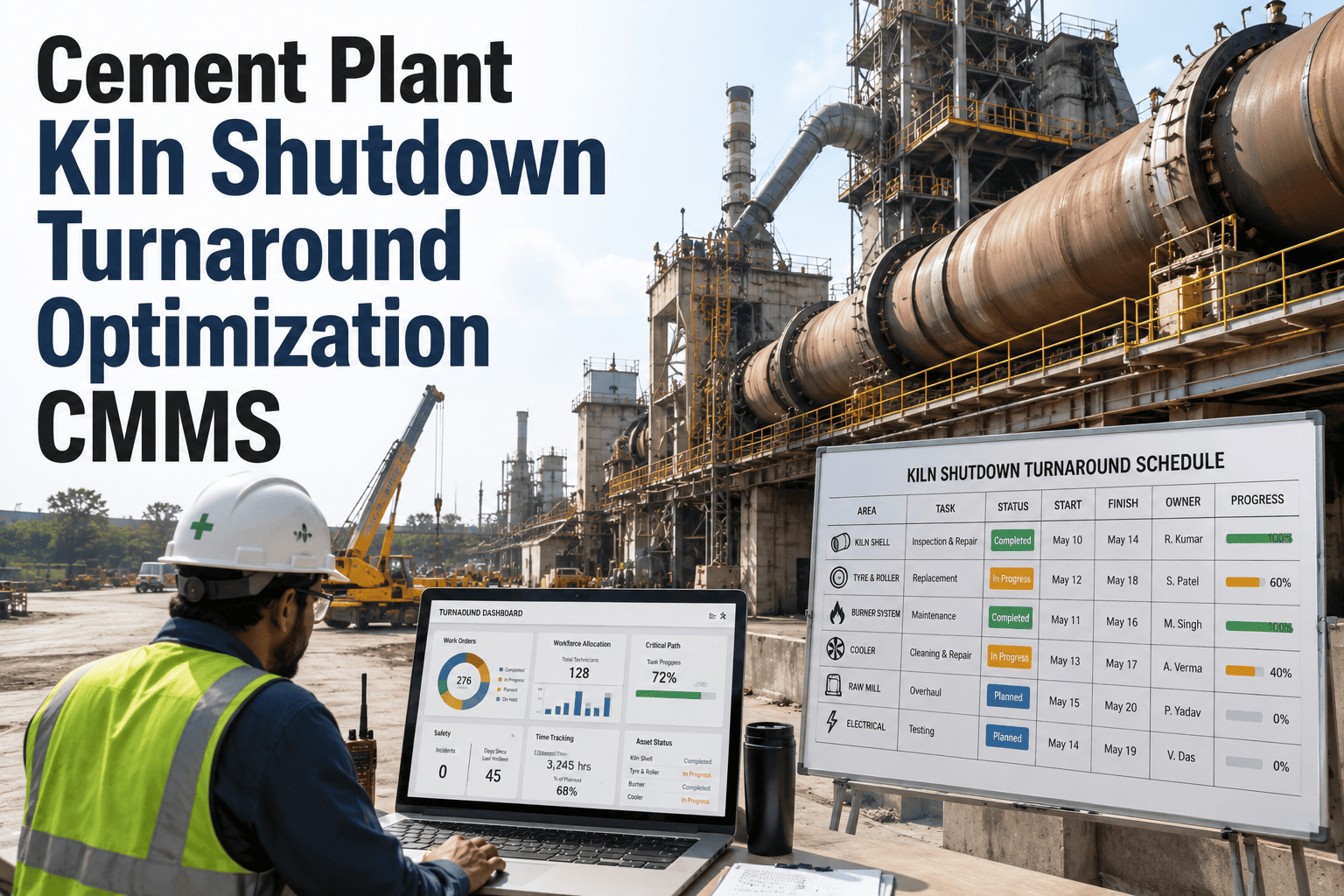
Cement plants across Saudi Arabia, the UAE, Oman and Qatar run kilns in ambient temperatures that regularly cross 48°C, putting refractory life, bearing lubrication and electrical cabinets under stress most maintenance software was never built to track. Add long lead times on imported spares and tight shutdown windows before peak construction season, and a generic CMMS quickly falls apart. OxMaint was built for exactly this kind of plant environment. See how it fits your plant — start a free trial.
Middle East Cement Operations · Maintenance Software
Built for Cement Plants Running in Desert Heat, Not Mild Climates
Refractory wear accelerates, lubricants break down faster, and imported spares can sit in customs for weeks. OxMaint gives Middle East cement plants the asset tracking, shutdown planning and spares visibility that desert conditions demand.
48°C+
Ambient kiln-area temperatures across GCC summer months
6–10 wks
Typical import lead time for critical kiln and mill spares
21–35 days
Average annual shutdown window before construction season
Regional Reality
Why Climate Changes the Maintenance Math
A bearing rated for standard duty in a temperate plant behaves differently once ambient temperature, dust loading and humidity swings are factored in. Middle East cement operations need maintenance intervals, lubrication schedules and inspection frequency calibrated to local conditions — not a global default.
Refractory & Kiln Shell
Higher ambient heat reduces thermal cycling margin, shortening effective refractory life and increasing the risk of hot spots going undetected between scheduled inspections.
Bearing & Lubrication Systems
Grease and oil viscosity drift faster in sustained high heat, meaning fixed-interval lubrication schedules quietly fall out of sync with actual equipment condition.
Dust & Sand Ingress
Fine desert sand infiltrates electrical cabinets, bearing seals and instrumentation faster than standard industrial dust, demanding tighter inspection cycles on seals and filters.
Cooling Water & Utilities
Higher intake water temperatures reduce cooling tower efficiency, pushing process temperatures up further and compounding stress on downstream rotating equipment.
Shutdown Planning
A Shutdown Window That Cannot Slip
Most GCC cement plants schedule annual shutdowns ahead of peak construction demand, and every extra day costs lost production at a time the market needs cement most. OxMaint's shutdown planning module compresses the preparation timeline so the window itself stays short.
12 Weeks Out
Scope & Spares Lock
OxMaint generates the full parts list from PM templates and checks stock across every storeroom, flagging shortfalls early enough to clear import lead times.
6 Weeks Out
Contractor & Permit Coordination
Work orders are pre-built with permit requirements, contractor assignments and sequencing dependencies attached, so nothing waits on paperwork once the kiln stops.
Shutdown Week
Live Execution Tracking
Technicians close work orders from mobile devices on the kiln deck, giving the shutdown manager a real-time view of progress against the critical path.
Post-Shutdown
Restart Verification & Reporting
Every replaced part, inspection sign-off and deviation is logged automatically, producing a complete shutdown report without manual data assembly.
Spares & Inventory
When Import Lead Time Is the Real Risk
A failed kiln tyre roller or mill liner bolt is rarely the real problem — the real problem is discovering the replacement is six weeks away by sea freight. OxMaint's predictive reorder logic is tuned to lead time, not just consumption history.
Critical Insurance Spares
Protected Stock — Never Auto-Released
Long Lead-Time Imports
Reorder Triggered Against Supplier Lead Time
Locally Sourced Consumables
Lean Min/Max Levels
Cross-Plant Transfer Stock
Visible Across Every Site in Real Time
Before OxMaint, our biggest shutdown delay was always the same story — a spare part still on a ship. Now the shortfall shows up on the planning dashboard twelve weeks before the kiln even stops. We finished last year's shutdown four days early.
Plant Maintenance Manager · 6,000 TPD Cement Plant, GCC Region
OxMaint Platform
Maintenance Software Calibrated to Regional Conditions
Condition-Adjusted PM Intervals
PM schedules can be tuned for ambient heat and dust loading rather than relying on default OEM intervals built for moderate climates.
Mobile Work Orders in Harsh Areas
Technicians log work directly from the kiln deck or mill floor on rugged mobile devices, with no dependency on a fixed terminal.
Lead-Time-Aware Reordering
Reorder points factor in actual supplier lead time for imported spares, not just historical consumption rate.
Multi-Plant Storeroom Visibility
Groups operating several plants across the region can see stock at every site and transfer parts instead of placing emergency orders.
Shutdown Critical Path Tracking
Shutdown work orders are sequenced against dependencies, giving real-time visibility into whether the schedule is on track.
ERP & SAP Integration
Cost postings, purchase orders and asset master data stay synced with existing SAP or ERP systems through standard APIs.
Frequently Asked Questions
Middle East Cement Plants — Common Questions
Can OxMaint adjust maintenance intervals for high ambient temperature?
Yes. PM templates in OxMaint can be configured around condition thresholds and adjusted frequency rather than a single fixed interval pulled from OEM documentation written for temperate climates. Many GCC plants shorten lubrication and seal inspection cycles on kiln-area equipment specifically because of sustained heat exposure, and OxMaint lets you build that logic directly into the schedule.
Book a demo to map your PM intervals.
How does OxMaint help with long import lead times on spares?
OxMaint's reorder logic can be set against actual supplier lead time rather than a generic reorder point, so a part with a six-week shipping window triggers a purchase request well before stock runs out. Critical insurance spares can also be flagged as protected stock that is never auto-released for routine work, keeping them available for genuine emergencies.
Start a free trial and import your spares list.
Does OxMaint support multi-plant cement groups operating across several GCC countries?
Yes. OxMaint provides a portfolio-level view of inventory, work orders and asset health across every plant in a group, regardless of country. Maintenance teams can request internal transfers between sister plants when stock exists nearby, which is often faster and cheaper than placing a new international order.
Can OxMaint integrate with the SAP system already running at our plant?
OxMaint connects to existing SAP and ERP environments through standard APIs, keeping purchase orders, cost postings and asset master data synchronized without disrupting finance or procurement workflows. Maintenance teams continue executing work orders and inspections inside OxMaint while the financial system of record stays untouched.
Discuss your SAP setup with our team.
How quickly can a cement plant in the Middle East go live with OxMaint?
Most single-plant deployments are live within two to six weeks, including importing the asset register, building PM templates and training the first group of technicians. There is no lengthy infrastructure project, which matters for plants that need shutdown planning improvements in place before the next scheduled window rather than next year.
Free Trial · No Credit Card · Arabic & English Support
Stop Losing Shutdown Days to Spares You Didn't Know You Needed
OxMaint flags parts shortfalls months before your shutdown window, not days. See how your plant's asset list, storerooms and PM schedule would look inside the platform.