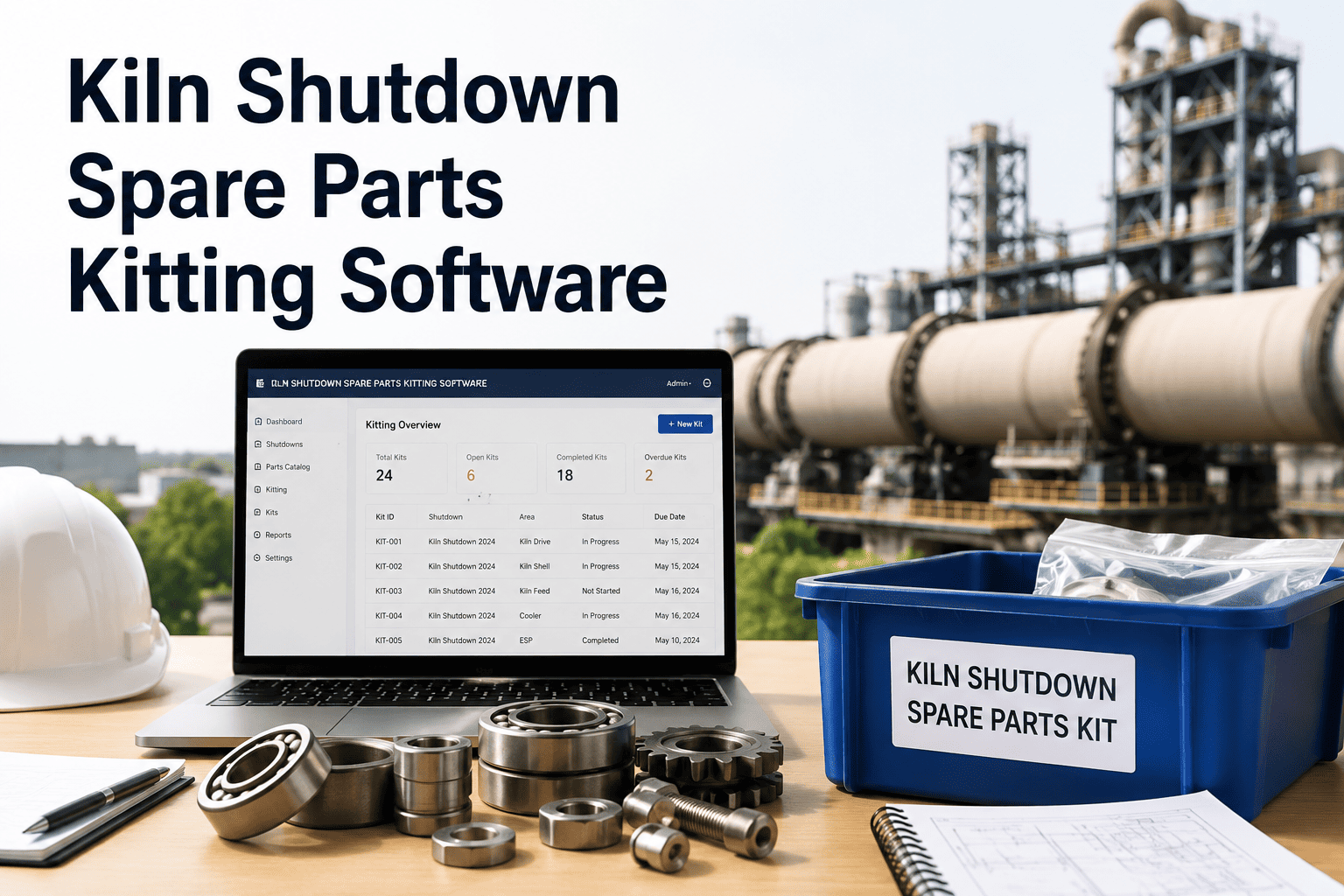
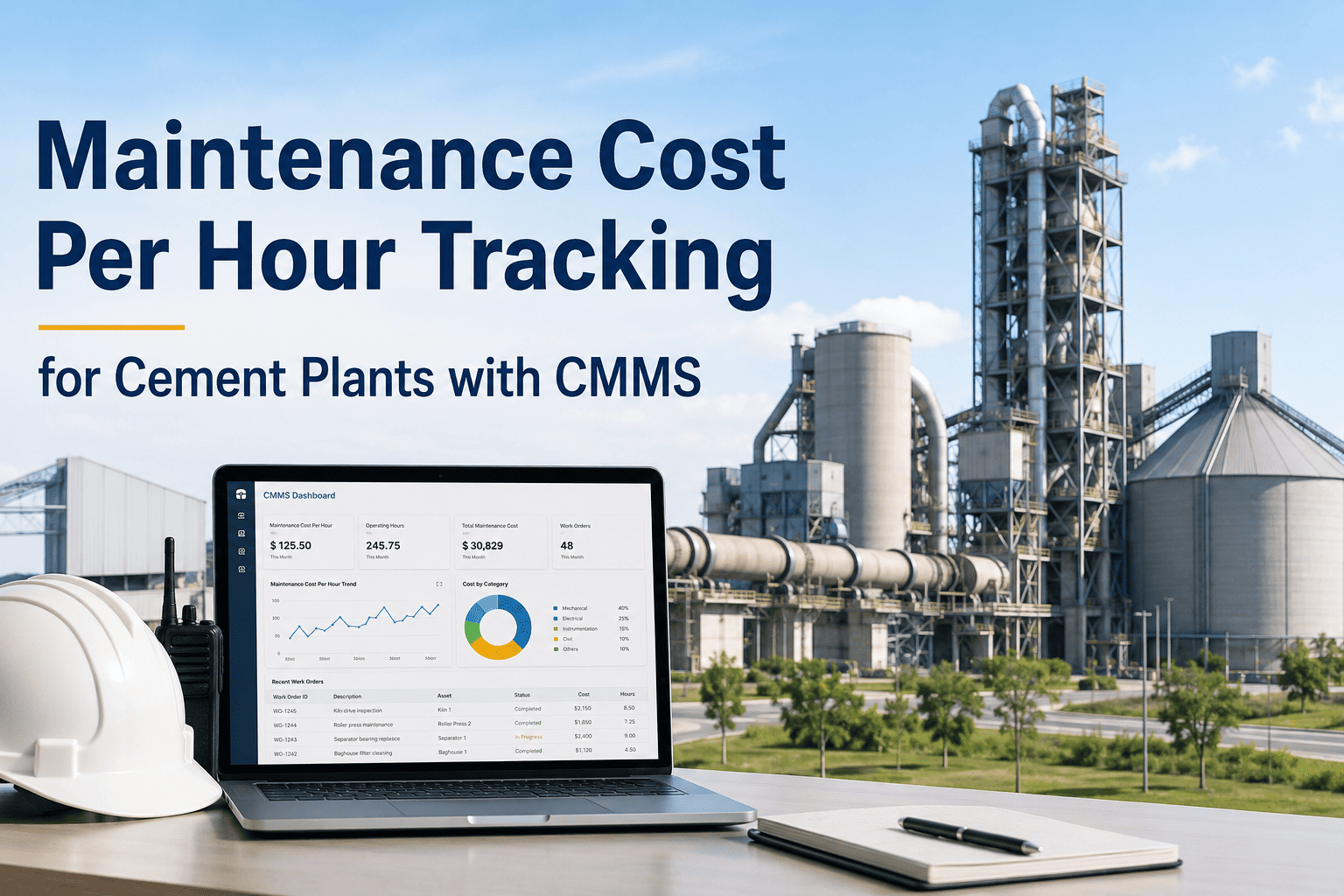
India is the world's second-largest cement producer, with over 200 integrated plants and 80+ grinding units running complex kiln lines, raw mills, and logistics chains under relentless production pressure — yet most Indian cement plants still manage maintenance through SAP notifications printed to paper, WhatsApp groups for breakdown coordination, and Excel trackers for spare parts. OxMaint's CMMS for Indian cement plants digitizes maintenance operations at the level that Indian plant realities demand — offline-capable mobile apps for remote locations with poor connectivity, vernacular-ready interfaces for multi-language maintenance teams, kiln stop analysis that links downtime to specific maintenance failures, and spare parts management that reduces the Rs. 2–8 crore inventory overstocking that plagues most cement plant stores. Book a demo to see how leading Indian cement producers are using OxMaint to reduce kiln availability loss, digitize inspection rounds, and build the maintenance visibility that plant heads and corporate technical teams have been requesting for years.
India's Cement Industry · 340+ MT Annual Capacity · OxMaint CMMS
Reduce Kiln Stops. Manage Spares Smarter. Digitize Every Inspection Round.
OxMaint is built for Indian cement plant realities — offline mobile, multi-language teams, kiln downtime tracking, and spare parts control that actually reduces inventory costs.
The 5 Maintenance Problems Indian Cement Plants Tell Us About
01
Kiln Availability Loss
Unplanned kiln stops costing Rs. 8–25 lakhs per hour drive most cement plant maintenance budgets. Root cause tracing is impossible without digital work order history linked to each stop event.
OxMaint links every kiln stop to the maintenance failure that caused it — enabling root cause analysis and recurring fault elimination.
02
Spare Parts Overstocking
Most Indian cement plants carry Rs. 2–8 crore in slow-moving or obsolete spares due to poor consumption tracking — inventory that ties up working capital with no return.
OxMaint tracks spare consumption per work order — giving stores managers the usage data to optimize reorder points and identify obsolete stock.
03
Paper Inspection Rounds
Daily equipment rounds logged on paper — temperature readings, oil levels, vibration checks — are illegible, incomplete, and inaccessible for trend analysis or audit review.
OxMaint replaces paper rounds with mobile checklists — readings captured on phone, instantly searchable, and automatically flagged when out of range.
04
No Maintenance Visibility
Plant heads and corporate technical teams cannot see real-time maintenance status across plants — breakdown frequency, PM compliance, and team performance are invisible without report collation.
OxMaint dashboards give plant heads and corporate teams live maintenance visibility — KPIs, open work orders, and compliance status across all plants simultaneously.
05
Breakdown-Only Culture
PM schedules exist on paper but are rarely executed on time — maintenance teams spend most hours on breakdowns, leaving preventive work undone until the next failure.
OxMaint tracks PM compliance rates per asset and team — giving supervisors the data to shift from reactive to scheduled maintenance progressively.
Indian Cement Plant Asset Coverage in OxMaint
| Cement Plant Asset | OxMaint Tracks | Typical Improvement |
| Rotary Kiln |
Shell temperature, tire migration, thrust roller load, burner tip condition, refractory zone mapping |
15–25% reduction in unplanned kiln stops within 6 months |
| Raw Mill (Ball / VRM) |
Bearing temperature and vibration, separator speed, mill differential pressure, liner wear tracking |
Mill availability improvement of 8–12% through predictive PM |
| Cement Mill |
Grinding media consumption, bearing health, separator performance, product fineness history |
Grinding media cost reduction through optimized replacement cycles |
| Preheater Tower |
Cyclone blockage inspection records, gas temperature profiles, string balance maintenance |
Blockage incident reduction through scheduled inspection compliance |
| Coal Mill |
Inerting system maintenance, fire detection equipment checks, bearing and gear condition |
Safety incident risk reduction through compliant inspection records |
| Packing Plant |
Packer machine PM, truck loading conveyor inspections, weigher calibration records |
Dispatch delay reduction through proactive packing line maintenance |
23%
average kiln availability improvement in Indian cement plants using OxMaint predictive maintenance within 12 months
Rs.1.4 Cr
average spare parts inventory reduction achieved by Indian cement plants in first year using OxMaint consumption tracking
3 wks
average OxMaint deployment time for a single Indian cement plant — including mobile rollout and asset register import
Expert Review — Indian Cement Maintenance Operations
Indian cement plants face a paradox — they operate some of the world's most advanced kiln technology but manage maintenance with some of the least digitized systems. The result is that plants lose 3 to 7 percent of annual kiln availability to preventable failures, while carrying Rs. 3 to 6 crore in spares inventory they cannot account for. The shift to mobile-first CMMS in Indian cement is accelerating because plant heads can see the ROI directly — fewer kiln stops, lower spare consumption, and maintenance teams that are accountable for PM completion in a way that paper-based systems never enabled.
Technical Director, Major Indian Cement Group with 12 Integrated Plants
Built for Indian Cement. Ready for Your Plant This Month.
OxMaint gives Indian cement maintenance teams mobile work orders, kiln stop analysis, spare parts tracking, and PM compliance dashboards — deployed in 3 weeks, no IT team required. Book a demo and see it running on your plant's asset structure.
Frequently Asked Questions
Does OxMaint work in Indian cement plant locations with poor internet connectivity?
Yes.
OxMaint's mobile app is built for offline-first operation — technicians can receive work orders, complete inspection checklists, capture photos and readings, and update job status without internet connectivity. All offline data syncs automatically when connectivity is restored. This design ensures OxMaint works reliably in remote plant locations, kiln interiors, underground cable tunnels, and quarry areas where 4G or Wi-Fi coverage is inconsistent or absent — which is the reality for most Indian cement plant sites.
Book a demo to see the offline workflow in action.
Can OxMaint integrate with SAP PM used by large Indian cement companies?
OxMaint integrates with SAP Plant Maintenance and SAP S/4HANA PM via bidirectional API — work order synchronization, equipment master data import, and parts consumption reporting flow between SAP and OxMaint automatically. Indian cement groups using SAP ECC 6.0 or S/4HANA at corporate level can run OxMaint as the plant-floor execution layer — where maintenance teams use OxMaint's mobile app for work order execution while SAP remains the system of record for planning and finance. This approach avoids the usability challenges that prevent SAP from being adopted at the technician level in most Indian plants.
How does OxMaint help Indian cement plants reduce spare parts inventory costs?
OxMaint's spare parts module tracks consumption per work order — every part issued from stores is linked to the job it was used on, the asset it was fitted to, and the technician who used it. Over time, this builds actual consumption history per asset and part number — replacing the over-ordering driven by uncertainty with data-driven reorder points. Stores managers use OxMaint's parts reports to identify slow-moving items for write-down decisions, calculate minimum stock levels based on real usage frequency, and reduce emergency procurement premiums by anticipating demand from PM schedules.
Book a demo to see how Indian cement plants configure spare parts management in OxMaint.
India's Cement Plants Are Digitizing Maintenance. Your Plant Should Be Next.
OxMaint gives Indian cement maintenance teams the mobile-first CMMS built for their reality — offline capability, kiln downtime analysis, spare parts tracking, and PM compliance visibility across every plant.