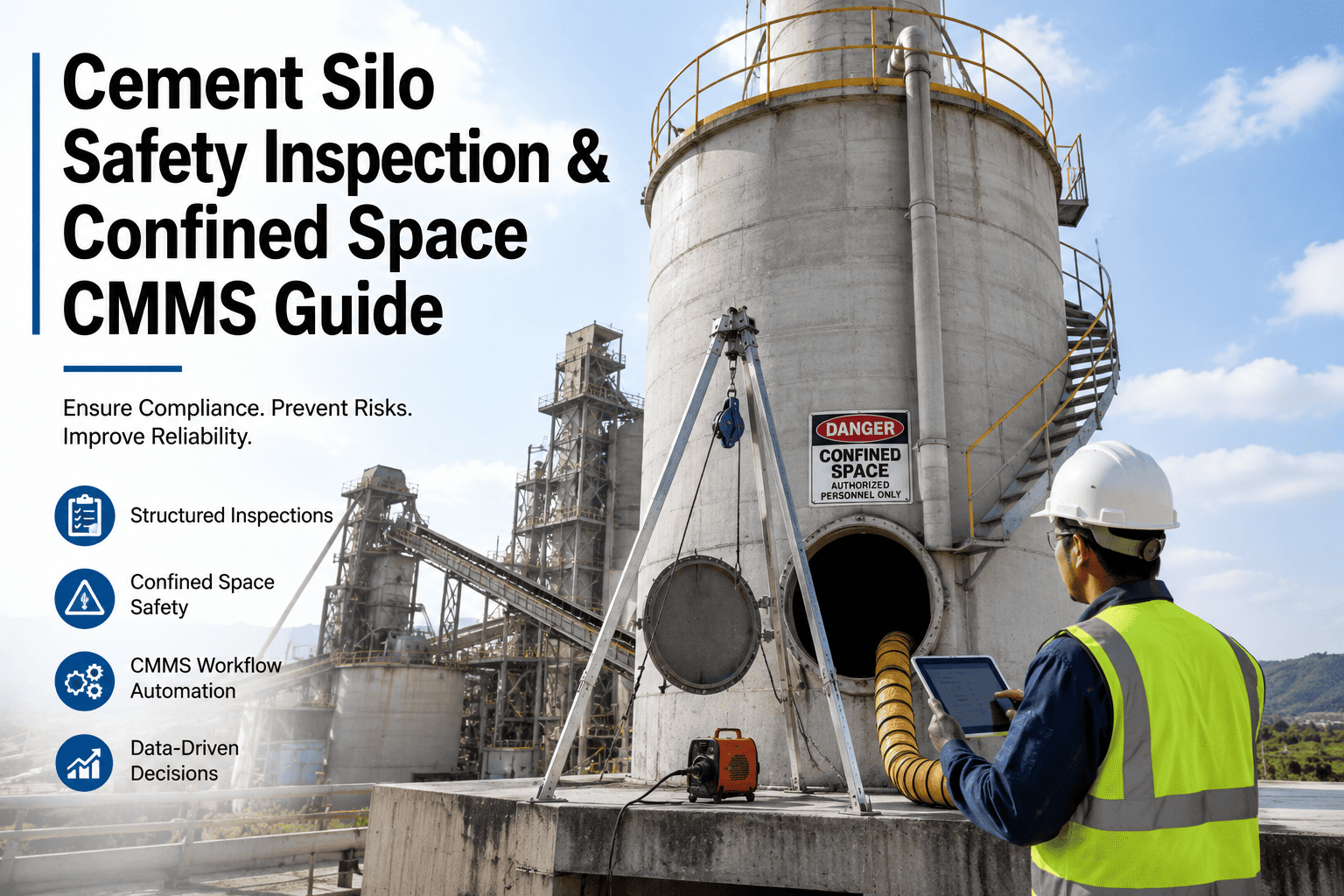
Cement plants stretch across quarries, crushers, kilns, mills, and packing lines, and every one of these areas carries its own mix of dust, rotating equipment, and confined spaces that a single quarterly walkthrough simply cannot catch in time. Fatalities in this industry still trace back overwhelmingly to three preventable patterns — mobile equipment collisions, falls from height, and workers caught in moving machinery — which means the gap between a scheduled paper audit and the shift where a hazard actually appears is where most incidents happen. A zone-by-zone inspection program closes that gap by breaking the plant into defined checkpoints, assigning the right checklist and PPE requirement to each one, and capturing photo evidence the moment a supervisor or operator walks the floor. This guide walks through the hazard pattern in every major cement plant zone, how housekeeping, fire safety, and LOTO signage checks fit into a daily inspection cadence, and what a defensible digital record looks like when an OSHA or MSHA inspector shows up unannounced. Plants ready to move off paper checklists can set up their first zone inspection today at app.oxmaint.ai.
79%
Of cement industry fatalities trace back to three causes: mobile equipment collisions, falls from height, and being caught in moving machinery
19%
Of confined space fatalities in cement plants happen during silo entry for cleaning and debridging work
25-40%
Typical drop in recordable injuries once a plant runs structured, software-backed inspection rounds
Zone-by-Zone Hazard Map: What Every Inspection Route Must Cover
No two zones in a cement plant carry the same risk profile, so a single generic checklist run once a quarter will always miss something. A zone-by-zone route assigns a specific checklist, PPE requirement, and inspection frequency to each area based on the hazards that actually live there — dust and traffic in the yard, heat and rotation at the kiln, explosion risk at the mill. Below is the hazard pattern an inspection program needs to account for at each stop on the route.
Quarry and Raw Material Yard
Haul trucks, front-end loaders, and plant vehicles account for a large share of MSHA-reportable injuries in this sector, and traffic and mobile plant remain the single biggest cause of cement industry fatalities. Inspection routes here check backup alarms, brake service intervals, stockpile housekeeping, and hi-vis PPE compliance for anyone on foot near haul roads.
Crusher House
Crushing jaws and impact hammers generate high noise levels, heavy dust, and guarding gaps that develop as panels are removed for maintenance and never fully reinstalled. Inspectors verify machine guarding is intact, LOTO tags are correctly applied before any clearing of blockages, and hearing protection is worn inside the posted noise zone.
Raw Mill and Preheater Tower
Preheater cyclones combine height exposure of 60 to 120 meters with CO gas accumulation and material fall risk from buildup on cyclone walls. Confined space entry here requires atmospheric testing, rescue standby confirmation, and a permit that a digital system can enforce before access is even granted.
Kiln and Clinker Cooler
Residual clinker heat can exceed 100 degrees Celsius for hours after shutdown, and accidental kiln rotation while a worker is inside is immediately fatal. This zone demands the strictest LOTO discipline on the entire site, along with heat-resistant PPE checks and verification that rotation-prevention blocks are physically in place before entry.
Cement Mill and Grinding Circuit
Fine cement dust suspended in the right concentration is a documented explosion hazard, and housekeeping failures here are what turn a routine cleaning task into an engulfment or deflagration event. Inspection checkpoints track dust layer thickness against an action level, ignition source control, and fire watch coverage during hot work.
Packing Plant and Bagging Line
Continuous conveyors, rotary packers, and paper bag dust combine repetitive-motion and pinch-point hazards with a secondary fire load from packaging material. Checklists confirm nip guards are seated, fire extinguishers are charged and accessible, and pedestrian walkways are kept clear of stacked pallets.
Housekeeping and Fire Safety Checkpoints That Get Missed
Most catastrophic events in a cement plant trace back to a small housekeeping or fire-prevention gap that sat unnoticed for weeks. These are the checkpoints that a rushed quarterly walkthrough tends to skip, and the ones a zone checklist should force every single round.
Dust Layer Thickness
Accumulated dust on beams, cable trays, and equipment surfaces above the action level of roughly 3.2 millimeters is treated as an active explosion hazard, not a cosmetic issue, and should trigger an immediate cleaning work order.
Fire Extinguisher Currency
Pressure gauge position, inspection tag date, and unobstructed access are checked together, because a charged extinguisher blocked by stacked material is functionally the same as no extinguisher at all.
Ignition Source Control
Hot work permits, spark-producing tools, and electrical panel condition are verified against the dust classification of the zone before any cutting, grinding, or welding is authorized.
Housekeeping of Walkways and Egress
Blocked stairwells, cluttered platforms, and material stored in front of emergency exits are among the most common findings, and among the fastest to correct once flagged with a photo and an owner.
Zone Inspection Software
Turn Every Zone Walk Into an Audit-Ready Record
Build a checklist for every zone once, then let OxMaint route the right form, the right PPE reminder, and the right escalation path to whoever is standing in that area during their shift. Every completed round is timestamped, geo-tagged, and stored where an auditor can find it in seconds.
Common Inspection Mistakes That Trigger Citations
Most citation-worthy gaps are not the result of a hidden hazard nobody knew about. They come from a handful of process mistakes that repeat across shifts and audits until an inspector finally catches one on the wrong day.
Treating LOTO Signage as a One-Time Install
Signage gets mounted correctly during commissioning, then a panel is swapped or an isolation point moves during maintenance and nobody updates the tag. The next audit finds signage that no longer matches the actual isolation procedure.
Confined Space Entries Without Logged Atmospheric Tests
The gas test happens, but the reading never makes it into a record. Without a logged O2 and LEL value tied to the entry, there is no defensible proof the test occurred before someone went into the preheater or silo.
PPE Compliance Checked Verbally, Not Documented
A supervisor confirms hearing protection or hi-vis compliance by eye and moves on. When an inspector asks for proof weeks later, there is nothing to show beyond a verbal recollection.
No Deadline on Corrective Actions
A hazard gets logged during a walk but no one owns a closing date. It sits open, resurfaces at the next inspection, and turns a single finding into a pattern that reads as neglect rather than an oversight.
Auditing the Whole Plant on One Fixed Date
A single annual walkthrough date leaves every zone outside that day's scope unchecked for months, which is exactly the window where housekeeping slips and a hazard has time to develop into an incident.
Signs Your Current Inspection Process Has a Blind Spot
Most plants do not realize their inspection program has a gap until an audit or a near-miss exposes it. These early warning signs usually show up long before that happens, and each one is worth checking against your own process today.
Findings Repeat Across Audits
The same housekeeping or signage issue shows up quarter after quarter, which usually means the corrective action was logged but never actually verified as closed.
No One Can Produce Last Month's Records Quickly
If pulling a specific zone's inspection history takes more than a few minutes of searching, the current system will struggle badly under real audit pressure.
Inspections Run on a Fixed Calendar, Not by Risk
High-risk zones like the kiln and preheater deserve more frequent checks than a storage yard, yet many plants still inspect every area on the same quarterly schedule.
Corrective Actions Have No Owner or Deadline
A hazard gets written down during a walk but is never assigned to a specific person with a due date, so it quietly slips off the next shift's radar entirely.
From Paper Rounds to Digital Proof: How the Inspection Workflow Runs
Replacing a clipboard with a phone only helps if the workflow behind it actually matches how a plant runs three shifts, seven days a week. A working zone inspection program has three connected layers that build on each other instead of duplicating effort.
Daily Shift Zone Walk
15 to 20 minutes per zone, every shift change
A designated operator or supervisor walks the assigned zone with a phone-based checklist covering housekeeping, visible hazards, PPE compliance, and any obvious equipment condition change. Photos attach directly to flagged items and a work order generates automatically for anything marked unsafe.
Weekly Deep Inspection
Supervisor-led, one full pass per zone
This round goes deeper than the daily walk: LOTO signage is checked against the isolation register, fire extinguisher tags and pressure gauges are verified, confined space permits are reconciled against actual entries logged that week, and open items from the daily walk are reviewed for closure.
Monthly Compliance Review
Safety manager and plant leadership
Trend dashboards surface which zones generate repeat findings, which corrective actions are aging past their due date, and what the current TRIR and DART trend looks like. This is also when an exportable OSHA or MSHA-ready packet gets assembled ahead of a scheduled or surprise inspection.
Paper Checklist vs Digital Zone Inspection: Side-by-Side
| Aspect | Paper Checklist | Digital Zone Inspection |
| Time to complete a zone round |
10 to 25 minutes plus manual filing |
Under 10 minutes, filed automatically |
| Photo evidence of a hazard |
Rarely attached, often lost |
Attached instantly, linked to the finding |
| LOTO signage verification |
Dependent on inspector memory |
Checklist-forced, cannot be skipped |
| Audit trail for inspectors |
Binder search, hours of prep |
Exportable packet in minutes |
| Escalation of open hazards |
Verbal handoff, easy to lose |
Auto-assigned work order with due date |
| Visibility across shifts |
Limited to whoever reads the log |
Live dashboard for every shift and zone |
Rollout Timeline: Getting Zone Inspections Live in Under a Month
Moving off paper does not require a multi-month IT project. Most plants follow the same four-step sequence to get their first set of zones fully digital and running across real shifts.
Week 1
Map the plant into zones, assign a criticality level to each one, and build the checklist template for the five or six highest-risk areas such as the kiln, crusher house, and preheater tower.
Week 2
Load PPE requirements, LOTO signage references, and confined space permit rules into each zone checklist, then run a supervised walk with shift leads to confirm the questions match real conditions.
Week 3
Go live on daily shift walks across all mapped zones, with corrective actions auto-assigned to the responsible supervisor and a due date attached to every open finding.
Week 4 and Beyond
Add the remaining zones, layer in weekly deep inspections and the monthly compliance review, and start exporting trend reports ahead of the next scheduled OSHA or MSHA visit.
Mapping Zone Checks to the Standards Inspectors Actually Cite
Every zone on the route ties back to a specific regulatory checkpoint. Knowing which standard applies to which area makes it far easier to build a checklist that survives a real audit instead of a generic one that misses what the inspector is actually looking for.
| Zone | Primary Standard | What Gets Checked |
| Quarry and Haul Road |
MSHA 56.14100 |
Pre-shift vehicle inspection and brake service log |
| Crusher House |
OSHA 1910.147 |
Lockout/tagout procedure documentation and signage |
| Preheater and Kiln |
OSHA 1910.146 |
Permit-required confined space entry records |
| Cement Mill |
Combustible Dust NEP |
Housekeeping and dust layer accumulation levels |
| Packing Plant |
OSHA 1910.212 |
Machine guarding on conveyors and packers |
Our confined space and LOTO documentation used to take an entire day to assemble whenever an MSHA inspector showed up. Now every permit, every zone walk, and every signage check is already time-stamped and organized by area, so we hand over a complete packet within the hour instead of scrambling through binders.
Safety Manager, Integrated Cement Plant, USA
Zone Inspection Software
See Your Plant's Hazard Map Before Your Next Audit
Walk through a live setup of your kiln, mill, and quarry zones with our team, and leave with a working checklist structure you can hand to your shift supervisors the same week.
What to Look for When Choosing Zone Inspection Software
Not every digital checklist tool is built for a multi-zone industrial site. These are the capabilities worth confirming before committing to a platform for your plant.
Zone-Specific Checklist Logic
The platform should let each zone carry its own checklist, PPE rule, and inspection frequency instead of forcing one generic form across the entire plant.
Offline Mobile Capture
Kiln decks, quarry sites, and remote silos often have weak signal, so inspections need to save locally on the device and sync automatically once connectivity returns.
Automatic Work Order Escalation
A flagged hazard should generate a work order with an assigned owner and due date on its own, without requiring a separate manual handoff step.
Export-Ready Compliance Reporting
Look for one-click export of inspection history mapped to the specific OSHA or MSHA standard an auditor is likely to ask about that day.
Frequently Asked Questions
How long does it take to set up zone-based inspections across a full cement plant?
Most plants map their first eight to ten critical zones and build matching checklists within one to two weeks. You can start configuring your first zone directly at
app.oxmaint.ai and expand zone by zone from there.
Can digital inspections replace MSHA pre-shift equipment checks?
Pre-shift equipment checks remain a separate regulatory requirement, but they run on the same platform as your zone walks, so both feed one combined compliance record instead of two disconnected paper trails.
What happens when an inspector logs a critical hazard like missing LOTO signage?
A critical finding triggers an immediate work order with a forced due date and notifies the shift supervisor and safety manager at the same time, so the gap does not sit unresolved until the next scheduled round.
Do operators need special training to run digital zone inspections?
The checklist interface is built for a phone camera and a few taps, so most operators are fully comfortable after one supervised walk. Teams that want a guided walkthrough can
book a demo before rollout.
How does this help during an unannounced OSHA or MSHA visit?
Every zone walk, permit, and signage check is already timestamped and organized by area, so a complete inspection history can be exported in minutes instead of being assembled from scattered binders under pressure.
Cement Plant Safety Inspection Software
Cover Every Zone, Every Shift, Without the Paper Trail
From the quarry haul road to the packing line, OxMaint gives every zone its own checklist, its own escalation path, and one audit-ready record for your whole plant.