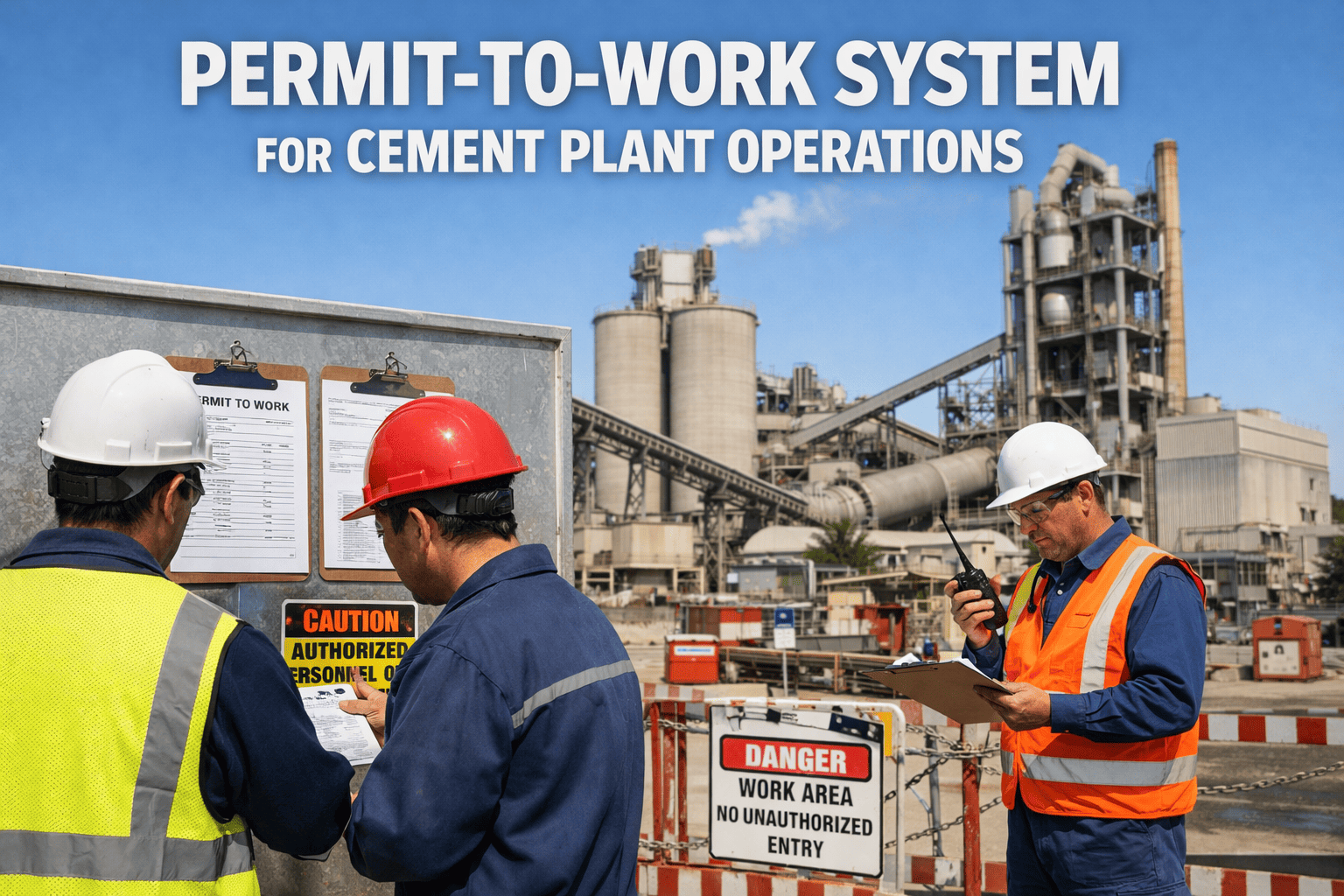
Cement plants are among the most hazardous industrial environments in the world — rotating kilns, high-voltage equipment, pressurized systems, and toxic dust create a lethal combination when energy isolation fails. Paper-based LOTO and permit-to-work systems are the #1 compliance gap cited in OSHA citations for cement manufacturers, with fines exceeding $100,000 per violation and — more critically — injuries that paper checklists simply cannot prevent. Digital PTW integrated with CMMS enforces proper isolation sequences, requires photo verification at each step, and auto-archives every permit for instant audit retrieval. If your plant is still running safety on clipboards, explore OxMaint's digital safety platform or book a 30-minute demo with a cement industry specialist.
Digital LOTO & Permit-to-Work: The Safety Upgrade Cement Plants Can't Delay
Paper permits get lost. Sequences get skipped. Auditors find gaps. One missed isolation step costs lives — and millions. Here's how digital PTW stops that.
Why Paper LOTO Fails in Cement Plants
Cement plants operate under extreme conditions — kilns run at 1,450°C, raw mills generate explosive dust, and conveyor systems span hundreds of meters. A paper-based LOTO system assumes technicians will always follow every step, in the right order, with the right documentation. That assumption has proven fatal across the industry. Here is where paper consistently breaks down:
Paper checklists allow technicians to check boxes without completing steps. Digital PTW requires photo evidence at each isolation point before the next step unlocks — physically impossible to bypass.
Paper permits fade, get wet, or disappear during shifts. During an OSHA inspection, missing documentation equals automatic non-compliance. Digital permits are auto-archived with timestamps and user signatures.
When an incoming crew doesn't know a permit is active on a specific piece of equipment, re-energization becomes possible. Digital PTW displays active permits on asset dashboards visible plant-wide in real time.
Regulators require proof of who authorized, verified, and closed every permit. Paper records require manual reconstruction. Digital systems generate complete audit-ready reports in seconds.
Is Your Cement Plant One Inspection Away from a Six-Figure Fine?
OxMaint's digital PTW system gives you audit-ready compliance from day one — with zero paper, zero gaps, and zero ambiguity on every energy isolation event.
How Digital LOTO Works in a Cement Plant CMMS
Work Request Triggers PTW
When a maintenance work order is raised in CMMS for a hazardous asset — kiln drive, raw mill, separator fan — the system automatically requires a PTW to be created before any work can begin. No permit, no work order release.
Digital Isolation Sequence
The system presents the asset-specific LOTO procedure — each energy source, isolation point, and verification step in sequence. Technicians confirm each step with a photo or digital signature. Steps cannot be reordered or skipped.
Multi-Level Authorization
High-risk work — confined space, hot work, electrical isolation above 480V — requires supervisor digital sign-off before the permit activates. Authorization is logged with timestamp and user ID in an immutable record.
Work Execution & Live Monitoring
Active permits are visible on all plant dashboards. Any attempt to operate isolated equipment triggers an alert. The system tracks work duration and alerts supervisors when permit time limits approach.
Permit Closure & Auto-Archive
When work is complete, re-energization follows a verified sequence — guards replaced, personnel cleared, isolation removed in order. The closed permit is auto-archived with full documentation, searchable forever.
Cement Plant Hazard Types That Require PTW — and What Digital Enforces
| Hazard Type | Cement Plant Examples | Paper Risk | Digital Control |
|---|---|---|---|
| Electrical Isolation | Kiln drive motors, preheater fans, cement mills | Steps skipped under time pressure | Mandatory photo at each lockout point |
| Confined Space Entry | Silos, preheater cyclones, clinker cooler | Gas testing not documented | Gas reading entry required before permit activates |
| Hot Work | Kiln shell welding, conveyor repairs near dust | Fire watch not verified | Standby assignment required, supervisor sign-off enforced |
| Pressurized Systems | Compressed air lines, hydraulic systems, raw gas | Residual pressure checks missed | Pressure reading logged as mandatory checkpoint |
| Mechanical Isolation | Conveyors, elevators, raw mill separators | Guard removal not tracked | Before/after photos with timestamp enforced |
Compliance Outcomes: What Plants Report After Going Digital
Every permit issued is auto-archived and retrievable in under 3 minutes for audits — compared to hours or impossibility with paper.
Enforced digital sequences eliminate step-skipping entirely. Completion of each checkpoint is required before the next appears.
Plants using digital PTW integrated with CMMS report significantly fewer near-miss incidents within the first year of deployment.
Frequently Asked Questions
Paper Permits Cost More Than You Think. Digital Pays for Itself After One Avoided Fine.
OxMaint's digital LOTO and permit-to-work system enforces every isolation step, captures photo evidence, and archives every permit for instant retrieval — turning your cement plant's biggest compliance liability into a documented strength.